
Items related to Goddess Power: Awakening the Wisdom of the Divine Feminine...
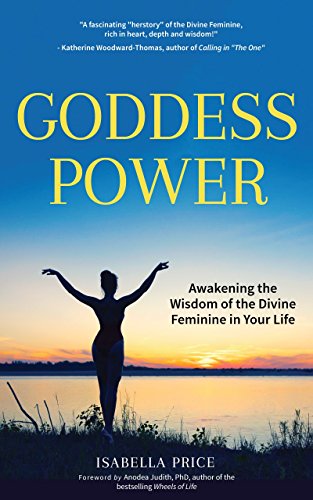
Goddess Power: Awakening the Wisdom of the Divine Feminine in Your Life (Feminine Energy Book, Women Empowerment, Sacred Woman, for Fans of Warrior Goddess) - Softcover
Synopsis
#1 New Release in New Age & Spirituality, Gaia ─ Feminine Empowerment
Path of the Goddess: At the dawn of religion, God was a Woman. The Divine Feminine is known by innumerable names and symbol-rich manifestations across the world's cultures. Throughout the ages the Goddess has been honored and worshiped as the Virgin Mary, Isis, Inanna, Asherah, Diana, Kuan Yin, Kali, Oshun, Athena, Pele, Sarasvati, Demeter, and White Buffalo Calf Woman, to mention just a few. Many conceptions of the Goddess are mysterious and seemingly paradoxical. Yet at its source, the Divine Feminine is one. Goddess Power takes you on a fascinating and, at times, surprising journey into the enduring essence of the Divine Feminine.
Inside this book you will learn:
- How the Goddess path offers an empowering message and inspiration
- The importance of re-establishing a healthy balance and integration of both the "masculine" and the "feminine" archetypes
- That the notion of God as archetypal "Sky-Father" is fairly recent in Western culture
- Why the wisdom of the Goddess/Sacred Feminine has been ignored, distorted, and oppressed for centuries
- How archetypes, mythic narratives, and qualities of Goddesses are alive within you and how they reveal intimate truths about yourself and others
- How Goddesses can serve as empowering guides in your personal and professional life
- Why especially black Goddesses/dark-skinned Mothers (e.g., Kali or Black Madonna) are a powerful symbol and catalyst for change in our times, both individually and collectively
- And much, much more!
"synopsis" may belong to another edition of this title.
About the Authors
Isabella Price, MA, is an international speaker, author, and higher education professional at JFK University where she teaches �World Spirituality� courses. Isabella is the author of the leading-edge book series �One Truth, Many Paths� on the world�s wisdom traditions, which includes her book I Am With Her on the Sacred Feminine. For over 25 years, she has been successfully teaching classes and workshops at JFK University, the California College of the Arts, and numerous other educational institutions and religious venues. She has traveled extensively and participated in numerous rituals from diverse wisdom traditions. She holds an MA in the humanities (global history and comparative religion) from the University of Zurich, Switzerland. She is also a certified SQ21 Spiritual Intelligence coach and teaches meditation to veterans suffering from PTSD and other community members. She lives in the San Francisco Bay Area.
Anodea Judith, PhD, is the founder and director of Sacred Centers and a groundbreaking thinker, writer, and spiritual teacher. She holds master and doctoral degrees in psychology and human health. Anodea spends much of her time teaching, offering workshops and trainings across North America, Central America, and Europe.
Excerpt. © Reprinted by permission. All rights reserved.
Goddess Power
Awakening the Wisdom of the Divine Feminine in Your Life
By Isabella PriceMango Media, Inc.
Copyright © 2017 Isabella Price
All rights reserved.
ISBN: 978-1-63353-673-9All rights reserved.
Contents
Foreword,
Introduction,
An Overview of Goddess Worship,
Goddess Belief Systems and the Body — Mind Split,
Controversies on the Evolution of Goddess Worship,
Goddess Worship and Integral Theory,
Goddess Worship and Spiritual Visionaries,
What is the Divine Feminine?,
Prehistoric Manifestations of the "Great Goddess",
Inanna/Ishtar in Ancient Mesopotamia,
Isis: Goddess of a Thousand Names,
Minoan Crete — The Flowering of Goddess Culture,
The African Goddess Oshun – Dancing River of Life,
The Virgin Mary –Return of the Goddess?,
Mary Magdalene: Forgotten Bride of Christianity?,
Shiva and Shakti: The Archetypal Union of the Feminine and Masculine,
Conclusion,
Acknowledgments,
Bibliography,
CHAPTER 1
AN OVERVIEW OF GODDESS WORSHIP
In 1976, art historian Merlin Stone wrote that at the dawn of religion God was a woman. She is referring to the Paleolithic period, more than twenty thousand years ago, when homo sapiens sapiens first responded with spiritual awe to the swelling of women's bellies and the miracle of life that came forth from their wombs. As our ancestors struggled to survive, they created carvings of the pregnant Mother as a sacred symbol imbued with life force. The Mother Goddess was viewed as the Divine Feminine, the great matrix of creation, with life — giving and sustaining powers. As the Charge of the Goddess so beautifully expresses, the Goddess is earth, the nurturing mother who brings forth the manifest world. She is the power of fertility, the womb of creation and creativity. As earth, the Goddess embodies all life; she is immanent or indwelling in all of creation. She is the tree, leaf, plant, wind, river, lake, bud, flower, fur, claw, and fang. She is the pregnant Paleolithic Mother, the Neolithic bird and snake goddess, or the "Lady of the Beasts" flanked by lions. The Goddess is present in the form of energy, even in seemingly inanimate objects such as rocks and stones. She governs the elemental forces of nature. Yet, she is also the celestial Goddess, the morning and evening star, or the moon that symbolizes women's menstrual cycles. The moon rules the tides of the oceans – the watery womb of the first microorganisms – and the waves of the lakes and rivers that are the arteries of Mother Earth. Moreover, the moon is symbolically associated with profound feelings and emotions that wash over us like waves.
As the moon, the Goddess has three aspects: As she waxes, she is the maiden or virgin; full, she is the mother; and as she wanes, she is the crone or wise woman. As the feminine triad of virgin, mother, and crone, infusing the manifest world with change and transformation, the Goddess is the living body of a sacred organic universe. She is life eternally attempting to reproduce, regenerate, and sustain itself – and she represents a force that is even more implacable than death, although death is ultimately an aspect of life as well.
As an expression of the mystery of the ever — unfolding life cycle, the Goddess also serves as a model for re — sacralizing woman's body and sexuality. As humans, we literally carry the biochemical components of Gaia, also known as Mother Earth, in our physical bodies. Goddess religion trusts the wisdom that comes through our bodies, and identifies sexuality as the expression of the creative life force of the universe. Sexuality is considered sacred because it is a sharing of energy that occurs while in passionate surrender to the power of the Goddess. As the Charge of the Goddess puts it, "All acts of love and pleasure are my rituals." In Goddess religion, flesh and spirit are one.
According to Starhawk, author, feminist, and cofounder of the Wiccan Reclaiming Collective, the symbolism of the Goddess is not a parallel structure to the archetype of "God the Father." The Goddess does not rule the world nor is she separate from it. She is the world, manifest in each being. The Goddess does not exclude the male: she contains him, as a pregnant woman contains a male child. Although the divine is ultimately seen as one, pagan rituals conceptualize the divine as having both female and male aspects. Two of the oldest forms of the divine – the great Goddess and her consort, the Horned God – illustrate this concept. The conception of a single divine force containing both male and female aspects can be found in the mythologies of many cultures. One of its most enduring expressions – still celebrated today with variations in numerous religious traditions – is the ritualistic sacred marriage originating from ancient Mesopotamia.
The Divine Feminine also represents death and dissolution. Just as everything originates from the Mother Goddess ...in the end, everything returns. Birth, growth, decay, and death are sacred stages within the life cycle. The Goddess also governs the destructive elemental forces of nature manifesting as volcanic eruptions and devastating floods. In her fierce and terrifying manifestations, the Goddess is the Dark Mother who dances on cremation grounds and appears at crossroads and pivotal junctures in our lives. She demands that we face our repressed "shadow" issues and embark on our arduous night journey of the soul, going beyond our attachments and limitations. The Dark Mother embodies the great dissolution: ego — death and physical death. She symbolizes the pearls of wisdom to be gleaned from the "Great Below." At the esoteric — mystical level, the Goddess invites us to delve into the mystery of Being, and Goddess worship helps us rediscover the infinite freedom of Being within our true Self. She is a bridge to this Self, which is the source of our innate talents and creativity, and encourages us to overcome limiting cultural and personal conditioning so we can manifest our fullest potential. To "know oneself" has since ancient times been the core principle within all pagan mystery religions. Aspirants were initiated into the essence of being which allowed them to see the true nature of reality. The Goddess is the ship on which we may sail the deep uncharted seas within. She is the gate through which we may pass into the eternal now.
At the exoteric — external level, the Charge of the Goddess – a core liturgy text – is read by pagan communities and Wiccan covens throughout the world. The term wicca derives from an Anglo — Saxon root word meaning to "bend or shape" and refers to the wise women – notably healers, teachers, poets, and midwives – who seek to shape the unseen to their will. Goddess — centered religions such as Wicca are a viable spiritual path that began at the dawn of human civilization. Today, these religions offer a potent constellation of psycho — spiritual, ecological, and political ideas focusing on the conception of femininity as divine. Many people consider a belief in the Divine Feminine to be an essential counter — balance to our overly masculinized contemporary culture.
After millennia of suppression of the Divine Feminine, as a result of the increasingly patriarchal paradigms that emerged in all systems of organized religion across the cultural spectrum, the Goddess is once again becoming a powerful symbol for what is most needed in our modern and postmodern times. Paganism and Wiccan rituals throughout the world honor and celebrate the Goddess as a catalyst for an emerging spirituality that is earth — centered and cares for the earth as a living organism, protects natural resources for future generations, and hopes to keep our populations in balance with the natural environment in the understanding that allof life is interrelated and inherently sacred. What affects one part, ultimately affects the whole in this great cosmic web. Such an understanding generally fosters more compassion and a stronger desire for social justice. The Goddess reminds us that our spirituality does not take us out of the world, but rather brings us more fully in.
GODDESS BELIEF SYSTEMS AND THE BODY — MIND SPLIT
The Goddess invites us to engage in this world by taking action to preserve all life on earth, to help alleviate poverty, to speak the truth about pain and suffering, and to resolve conflicts peacefully. Being on the path of the Goddess is consistent with a commitment to acting with integrity and generosity, to taking responsibility for the community of Being outside ourselves, and to becoming more attuned to our own embodied awareness. The primary focus of Goddess religion is on transforming through intimate interactions and common struggles to build harmonious multicultural societies among different ethnic groups. The same principles apply to gender relations. Goddess spirituality does not legitimize the rule of either sex by the other. In her groundbreaking study The Chalice and the Blade, Riane Eisler talks about the "partnership model," in which social relations are based on the principle of "linking" rather than "ranking" during the period of prehistory, that is, before the invention of the writing systems roughly by the end of the fourth millennium BCE. According to Eisler, cultural transformation theory suggests that the original direction of our cultural evolution was geared toward partnership but that, following a period of chaos and almost total cultural disruption, a fundamental social shift occurred. The title of Eisler's book derives from this dramatic turning point at the dawn of civilization when the cultural evolution of societies that worshiped the life — generating and nurturing powers of the universe – symbolized by the ancient chalice or grail – was interrupted by Indo — European invaders who worshiped the power of the blade, that is, the power to take rather than to give life. According to Eisler, it was the power of the blade that ultimately led to the establishment of patriarchal domination systems. Similarly, in her more recent book Urgent Message from Mother, feminist activist Jean Shinoda Bolen argues that the "feminine" – the Divine Mother – does indeed represent life while the "masculine" principle increasingly stands for death, as exemplified by the frightening accumulation of weapons of mass destruction over the last few decades.
The path of the Goddess stands in sharp contrast to the patriarchal conditioning that occurred over the centuries in basically all of the world's major religious systems. This conditioning led to a profound body — mind — split insofar as it repeatedly emphasized the necessity of transcending the manifest world of form considered inferior to Spirit. That is, the patriarchal religious traditions focused their teachings and practices on the transcendence of the human body, sexuality, and all the affairs of the so — called "mundane" world. With few exceptions, such as, for example, the tantric traditions, and ever since the great religious systems emerged during the period of what integral theory calls traditional — mythic consciousness, Spirit has been regarded as being incompatible with what we may call "embodied consciousness" or innate "body wisdom." And this is still a widely held belief today. This body — mind — split is the great paradox, the unresolved wound that lies at the core of the human condition and has been carried into our modern and postmodern times, as integral spiritual teachers and founders of the Waking Down in Mutuality approach, Saniel and Linda Bonder, have repeatedly emphasized.
CONTROVERSIES ON THE EVOLUTION OF GODDESS WORSHIP
Marija Gimbutas, pioneering archaeologist and cultural historian of Neolithic "Old Europe," has, since the 1970's, been a major authority for the Goddess quest. Gimbutas recounts a time before patriarchy, warfare, domination, and social stratification when humans lived together peacefully and were in harmony with nature. According to her, this was a period in which both men and women revered the feminine principle as the immanent power of renewal that carried life through creation, growth, decay, death, and, eventually, rebirth. Goddess — worshipping societies enjoyed material abundance and an equitable distribution of wealth. These societies existed without oppressive hierarchies of any kind, according to Gimbutas. She suggests that these egalitarian, peaceful communities emerged during the Paleolithic period and lasted well into the agricultural transition of the Neolithic; and she argues that cultures that worshipped the Goddess were not restricted to areas of the Balkans and the northeastern Mediterranean, but could be found worldwide.
In her work, Gimbutas places a great emphasis on the predominance of female figurines. She identifies these prehistoric objects as expressions of a "unitary Goddess" who governed the cycle of birth, death, and regeneration. The most basic argument for the theory of a "unitary Goddess" may be found in the fundamental questions that likely arose during the prehistoric period: "Where were we humans before we were born?" and "Where do we go after we die?" Obviously, our human ancestors observed that new life emerges from the body of woman. The basic biological fact that the life — giving powers rest in the female must have left them in a state of awe and wonderment at the great miracle of birth. It appears thus quite plausible that the earliest representations of supernatural powers should have taken a female rather than a male form. Certainly, it would have been natural for our ancestors to imagine the universe as an all — giving, all — caring Mother from whose womb life emerges, and back to which life eventually returns, like the process of rebirth in vegetative cycles. Thus it makes sense that women were respected, rather than perceived as subservient. These cultures conceptualized the powers governing the universe in female form, which led to qualities such as caring, compassion, and nonviolence being highly valued. That does not imply that these were matriarchal societies, that is, societies in which women dominated men. Rather, it appears likely that the sexes were perceived as complementing each other.
It should be noted that some feminist archaeologists and scholars have rejected the notion of a unitary "Great Goddess," and have been critical of Gimbutas' assertion that the prehistoric culture was "female — dominated." Their primary argument lies in the difficulty of any attempt to reconstruct prehistoric religious beliefs. This is mostly due to the lack of written records, a fact that leaves archaeological evidence open to a wide range of interpretation. Written sources are important to understanding the religion of a culture: they provide a context and an explanation for the use of any excavated objects. Feminist scholars such as Rosemary Radford Ruether have stressed that the predominance of female religious imagery does not necessarily mean that women enjoyed a higher status, as we see in contemporary India or during the medieval period in Europe. Finally, the validity of a theory asserting that successive incursions of Indo — European invaders were the sole cause for the transformation of Southern — European and Mediterranean cultures from a peaceful matrifocal orientation to a patriarchal and militaristic one, has also been questioned by non — feminist scholars and archaeologists. The path that led from the early Neolithic towns – in which agriculture, domesticated animals, textiles, pottery, and trade flourished – to the hierarchical, slave — owning cities of the Sumerian world with their royal and priestly classes, temples, palaces, and organized warfare a few millennia later, is not necessarily a straight evolutionary line but was likely a much more complex and multi — faceted process.
The major stimulus for this evolutionary process came – according to Radford Ruether and other feminist scholars – less from outside nomadic invaders on horseback, and more from gradual internal developments that were triggered by the accumulation of wealth in the hands of an elite. Another interesting approach comes from Leonard Shlain, author of The Alphabet versus the Goddess: The Conflict between Word and Image. Shlain proposes that the invention of script at around 3000 BCE, and the process of acquiring the skills of alphabetic literacy, reinforced the brain's linear, abstract, and predominantly "masculine" left hemisphere at the expense of the holistic, iconic, and "feminine" right one. This shift upset the balance between men and women, initiating the disappearance of Goddess worship, the abhorrence of images, and, finally, the decline of women's political status in the early stages of alphabetic literacy.
While this major historical controversy may never be fully resolved, it is nevertheless understandable that the idea of a primeval, peaceful, and matrifocal world in Europe and the Mediterranean area during Paleolithic and Neolithic times became popular in our postmodern time. Many people are drawn by the allure of a peaceful, egalitarian, and ecologically sustainable future. Clearly, this is an enormously appealing vision, particularly for women. By imagining an idyllic past, the exploitation of nature and patriarchal domination lose their claim to primacy. Further, the assertion that these patriarchal paradigms represent a so — called "natural order" is challenged. In fact, from the perspective of the proponents of a unitary "Great Goddess" theory, patriarchal domination just becomes a bad interlude that can, and should, be transcended in order to restore wholesome balance to our planet. Values such as equality, community, partnership, cooperation, and non — violence reflect what author and psychotherapist Anodea Judith, author of Waking the Global Heart, calls the archetypal "Dynamic Feminine."
(Continues...)
Excerpted from Goddess Power by Isabella Price. Copyright © 2017 Isabella Price. Excerpted by permission of Mango Media, Inc..
All rights reserved. No part of this excerpt may be reproduced or reprinted without permission in writing from the publisher.
Excerpts are provided by Dial-A-Book Inc. solely for the personal use of visitors to this web site.
"About this title" may belong to another edition of this title.
Search results for Goddess Power: Awakening the Wisdom of the Divine Feminine...

Seller Image
Goddess Power: Awakening the Wisdom of the Divine Feminine in Your Life (Feminine Energy Book, Women Empowerment, Sacred Woman, for Fans of Warrior Goddess)
Seller: Goodwill Books, Hillsboro, OR, U.S.A.
Seller rating 5 out of 5 stars

Condition: good. Signs of wear and consistent use. Seller Inventory # GICWV.1633536734.G
Stock Image
Goddess Power: Awakening the Wisdom of the Divine Feminine in Your Life (Feminine Energy Book, Women Empowerment, Sacred Woman, for Fans of Warrior Go
Seller: ThriftBooks-Dallas, Dallas, TX, U.S.A.
Seller rating 5 out of 5 stars
Paperback. Condition: Good. No Jacket. Pages can have notes/highlighting. Spine may show signs of wear. ~ ThriftBooks: Read More, Spend Less. Seller Inventory # G1633536734I3N00
Stock Image
Goddess Power: Awakening the Wisdom of the Divine Feminine in Your Life (Feminine Energy Book, Women Empowerment, Sacred Woman, for Fans of Warrior Go
Seller: ThriftBooks-Dallas, Dallas, TX, U.S.A.
Seller rating 5 out of 5 stars
Paperback. Condition: Very Good. No Jacket. May have limited writing in cover pages. Pages are unmarked. ~ ThriftBooks: Read More, Spend Less. Seller Inventory # G1633536734I4N00
Stock Image
Goddess Power: Awakening the Wisdom of the Divine Feminine in Your Life (Feminine Energy Book, Women Empowerment, Sacred Woman, for Fans of Warrior Goddess)
Seller: HPB-Ruby, Dallas, TX, U.S.A.
Seller rating 5 out of 5 stars
paperback. Condition: Very Good. Connecting readers with great books since 1972! Used books may not include companion materials, and may have some shelf wear or limited writing. We ship orders daily and Customer Service is our top priority! Seller Inventory # S_455590195
Stock Image
Goddess Power: Awakening the Wisdom of the Divine Feminine in Your Life (Feminine Energy Book, Women Empowerment, Sacred Woman, for Fans of Warrior Goddess)
Seller: St Vincent de Paul of Lane County, Eugene, OR, U.S.A.
Seller rating 5 out of 5 stars
Condition: Acceptable. paperback 100% of proceeds go to charity! Acceptable reading copy with obvious signs of use, wear, and/or cosmetic issues. Item is complete and remains readable despite notable condition issues. Seller Inventory # A-06-4341
Stock Image
Goddess Power: Awakening the Wisdom of the Divine Feminine in Your Life (Feminine Energy Book, Women Empowerment, Sacred Woman, for Fans of Warrior Goddess)
Seller: HPB Inc., Dallas, TX, U.S.A.
Seller rating 5 out of 5 stars
paperback. Condition: Very Good. Connecting readers with great books since 1972! Used books may not include companion materials, and may have some shelf wear or limited writing. We ship orders daily and Customer Service is our top priority! Seller Inventory # S_476471739
Seller Image
Goddess Power: Awakening the Wisdom of the Divine Feminine in Your Life (Feminine Energy Book, Women Empowerment, Sacred Woman, for Fans of Warrior Goddess)
Seller: WeBuyBooks, Rossendale, LANCS, United Kingdom
Seller rating 5 out of 5 stars
paperback. Condition: Like New. Most items will be dispatched the same or the next working day. An apparently unread copy in perfect condition. Dust cover is intact with no nicks or tears. Spine has no signs of creasing. Pages are clean and not marred by notes or folds of any kind. Seller Inventory # rev3631035716
Buy Used
£ 3.47
£ 4.95 shipping
Ships from United Kingdom to U.S.A.
Ships from United Kingdom to U.S.A.
Quantity: 1 available
Stock Image
Goddess Power: Awakening the Wisdom of the Divine Feminine in Your Life (Feminine Energy Book, Women Empowerment, Sacred Woman, for Fans of Warrior Goddess)
Seller: WorldofBooks, Goring-By-Sea, WS, United Kingdom
Seller rating 5 out of 5 stars
Paperback. Condition: Very Good. The book has been read, but is in excellent condition. Pages are intact and not marred by notes or highlighting. The spine remains undamaged. Seller Inventory # GOR010600569
Buy Used
£ 3.12
£ 5.60 shipping
Ships from United Kingdom to U.S.A.
Ships from United Kingdom to U.S.A.
Quantity: 1 available
Stock Image
Goddess Power: Awakening the Wisdom of the Divine Feminine in Your Life (Feminine Energy Book, Women Empowerment, Sacred Woman, for Fans of Warrior Goddess)
Seller: medimops, Berlin, Germany
Seller rating 5 out of 5 stars
Condition: very good. Gut/Very good: Buch bzw. Schutzumschlag mit wenigen Gebrauchsspuren an Einband, Schutzumschlag oder Seiten. / Describes a book or dust jacket that does show some signs of wear on either the binding, dust jacket or pages. Seller Inventory # M01633536734-V
Stock Image
Goddess Power : Awakening the Wisdom of the Divine Feminine in Your Life (Feminine Energy Book; Women Empowerment; Sacred Woman; for Fans of Warrior Goddess)
Print on DemandSeller: Ria Christie Collections, Uxbridge, United Kingdom
Seller rating 5 out of 5 stars
Condition: New. PRINT ON DEMAND Book; New; Fast Shipping from the UK. No. book. Seller Inventory # ria9781633536739_lsuk
Buy New
£ 11.70
£ 11.29 shipping
Ships from United Kingdom to U.S.A.
Ships from United Kingdom to U.S.A.
Quantity: Over 20 available