
Items related to Minimally Invasive Cardiac Surgery (Contemporary Cardiology)
Minimally Invasive Cardiac Surgery (Contemporary Cardiology) - Softcover
Book 54 of 78: Contemporary Cardiology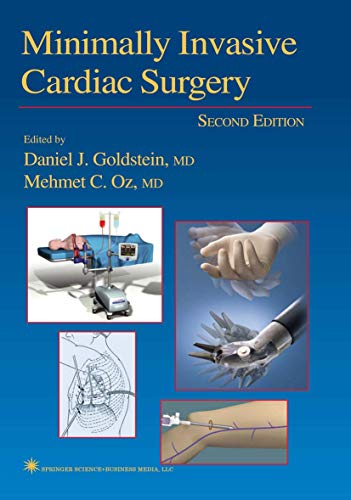
Synopsis
In 1962, Thomas Kuhne coined the term “paradigm shift” while arguing that human knowledge advances by quantum leaps with interspersed smaller steps. Preparation for the major advance is generally not a concerted effort by thought leaders. Rather, a few (or one) visionaries gain insights into a process and are able to definitely demonstrate the accuracy of their worldview. Often, the epiphany does not occur during the intellectual lifetime of the discoverers. Medicine has had numerous such “paradigm shifts” including the compelling reworking of Galen’s concepts of the body. Of note, the scientific world of the time explained the new views by arguing that the human body must have changed between the time of ancient Greece and modern Europe. The inauguration of cardiac surgery itself required profound shifts in medicine’s view of physiology. Yet, over the ensuing 40 years, the field was fine tuned so we could provide greater than 95% success rates in elective surgery with low cost and short h- pital stays. In some parts of the world, the procedures were viewed as commodities and prices dropped as providers were unable to differentiate the quality of their work. As patients and their physicians became more demanding, the desire to make the procedures “minimally invasive” grew. In effect, what we were really searching for was a life saving procedure that also preserved quality of life. In short, “minimally invasive” has really been a code phrase for procedures that disrupt our quality of life the least.
"synopsis" may belong to another edition of this title.
From the Back Cover
In this updated and expanded edition of Goldstein and Oz's much-praised classic survey, world experts comprehensively review the many innovations and changes that have occurred in the practice of minimally invasive cardiac surgery (MICS). The authors summarize the latest findings and results regarding such novel techniques as robotic surgery, hybrid revascularization, the use of off-pump coronary artery bypass grafting (OPCABG) in high-risk populations, and new less invasive surgical approaches to the treatment of atrial fibrillation. They also provide a medium-term update on the current status of MICS in dealing with valvular and congenital heart disease and offer a more comprehensive understanding of procedures like mid-CABGs with longer-term followup and randomized data to help tease out real benefits and limitations. In addition, the book addresses the economic impact of MICS and quality-of-life issues, and shows how surgeons are not only performing the old operations with new tools, but are also creating new procedures precisely adapted to the new tools.
With its state-of-the-art descriptions of each of the relevant procedures, Minimally Invasive Cardiac Surgery, Second Edition should be in the libraries of all cardiac surgery residency program directors, as well as in the pockets of all their training and graduating surgery residents.
"About this title" may belong to another edition of this title.
Search results for Minimally Invasive Cardiac Surgery (Contemporary Cardiology)

Stock Image
Minimally Invasive Cardiac Surgery (eng)
Print on DemandSeller: Brook Bookstore On Demand, Napoli, NA, Italy
Seller rating 5 out of 5 stars

Condition: new. Questo è un articolo print on demand. Seller Inventory # CG9TCUELUB
Buy New
£ 115.29
£ 6.87 shipping
Ships from Italy to U.S.A.
Ships from Italy to U.S.A.
Quantity: Over 20 available
Seller Image
Minimally Invasive Cardiac Surgery
Seller: moluna, Greven, Germany
Seller rating 5 out of 5 stars
Condition: New. Seller Inventory # 4256816
Buy New
£ 121.27
£ 42.09 shipping
Ships from Germany to U.S.A.
Ships from Germany to U.S.A.
Quantity: Over 20 available
Seller Image
Minimally Invasive Cardiac Surgery
Print on DemandSeller: BuchWeltWeit Ludwig Meier e.K., Bergisch Gladbach, Germany
Seller rating 5 out of 5 stars
Taschenbuch. Condition: Neu. This item is printed on demand - it takes 3-4 days longer - Neuware -In 1962, Thomas Kuhne coined the term 'paradigm shift' while arguing that human knowledge advances by quantum leaps with interspersed smaller steps. Preparation for the major advance is generally not a concerted effort by thought leaders. Rather, a few (or one) visionaries gain insights into a process and are able to definitely demonstrate the accuracy of their worldview. Often, the epiphany does not occur during the intellectual lifetime of the discoverers. Medicine has had numerous such 'paradigm shifts' including the compelling reworking of Galen's concepts of the body. Of note, the scientific world of the time explained the new views by arguing that the human body must have changed between the time of ancient Greece and modern Europe. The inauguration of cardiac surgery itself required profound shifts in medicine's view of physiology. Yet, over the ensuing 40 years, the field was fine tuned so we could provide greater than 95% success rates in elective surgery with low cost and short h- pital stays. In some parts of the world, the procedures were viewed as commodities and prices dropped as providers were unable to differentiate the quality of their work. As patients and their physicians became more demanding, the desire to make the procedures 'minimally invasive' grew. In effect, what we were really searching for was a life saving procedure that also preserved quality of life. In short, 'minimally invasive' has really been a code phrase for procedures that disrupt our quality of life the least. 496 pp. Englisch. Seller Inventory # 9781617374005
Seller Image
Minimally Invasive Cardiac Surgery
Print on DemandSeller: AHA-BUCH GmbH, Einbeck, Germany
Seller rating 5 out of 5 stars
Taschenbuch. Condition: Neu. nach der Bestellung gedruckt Neuware - Printed after ordering - In 1962, Thomas Kuhne coined the term 'paradigm shift' while arguing that human knowledge advances by quantum leaps with interspersed smaller steps. Preparation for the major advance is generally not a concerted effort by thought leaders. Rather, a few (or one) visionaries gain insights into a process and are able to definitely demonstrate the accuracy of their worldview. Often, the epiphany does not occur during the intellectual lifetime of the discoverers. Medicine has had numerous such 'paradigm shifts' including the compelling reworking of Galen's concepts of the body. Of note, the scientific world of the time explained the new views by arguing that the human body must have changed between the time of ancient Greece and modern Europe. The inauguration of cardiac surgery itself required profound shifts in medicine's view of physiology. Yet, over the ensuing 40 years, the field was fine tuned so we could provide greater than 95% success rates in elective surgery with low cost and short h- pital stays. In some parts of the world, the procedures were viewed as commodities and prices dropped as providers were unable to differentiate the quality of their work. As patients and their physicians became more demanding, the desire to make the procedures 'minimally invasive' grew. In effect, what we were really searching for was a life saving procedure that also preserved quality of life. In short, 'minimally invasive' has really been a code phrase for procedures that disrupt our quality of life the least. Seller Inventory # 9781617374005
Seller Image
Minimally Invasive Cardiac Surgery
Seller: preigu, Osnabrück, Germany
Seller rating 5 out of 5 stars
Taschenbuch. Condition: Neu. Minimally Invasive Cardiac Surgery | Daniel J. Goldstein (u. a.) | Taschenbuch | Contemporary Cardiology | xiv | Englisch | 2010 | Humana | EAN 9781617374005 | Verantwortliche Person für die EU: Humana Press in Springer Science + Business Media, Heidelberger Platz 3, 14197 Berlin, juergen[dot]hartmann[at]springer[dot]com | Anbieter: preigu. Seller Inventory # 107146606
Seller Image
Minimally Invasive Cardiac Surgery
Print on DemandSeller: buchversandmimpf2000, Emtmannsberg, BAYE, Germany
Seller rating 5 out of 5 stars
Taschenbuch. Condition: Neu. This item is printed on demand - Print on Demand Titel. Neuware -In 1962, Thomas Kuhne coined the term ¿paradigm shift¿ while arguing that human knowledge advances by quantum leaps with interspersed smaller steps. Preparation for the major advance is generally not a concerted effort by thought leaders. Rather, a few (or one) visionaries gain insights into a process and are able to definitely demonstrate the accuracy of their worldview. Often, the epiphany does not occur during the intellectual lifetime of the discoverers. Medicine has had numerous such ¿paradigm shifts¿ including the compelling reworking of Galen¿s concepts of the body. Of note, the scientific world of the time explained the new views by arguing that the human body must have changed between the time of ancient Greece and modern Europe. The inauguration of cardiac surgery itself required profound shifts in medicine¿s view of physiology. Yet, over the ensuing 40 years, the field was fine tuned so we could provide greater than 95% success rates in elective surgery with low cost and short h- pital stays. In some parts of the world, the procedures were viewed as commodities and prices dropped as providers were unable to differentiate the quality of their work. As patients and their physicians became more demanding, the desire to make the procedures ¿minimally invasive¿ grew. In effect, what we were really searching for was a life saving procedure that also preserved quality of life. In short, ¿minimally invasive¿ has really been a code phrase for procedures that disrupt our quality of life the least.Springer-Verlag GmbH, Tiergartenstr. 17, 69121 Heidelberg 496 pp. Englisch. Seller Inventory # 9781617374005
Stock Image
Minimally Invasive Cardiac Surgery
Seller: Books Puddle, New York, NY, U.S.A.
Seller rating 4 out of 5 stars

Condition: New. pp. 496 1st Edition. Seller Inventory # 263073030
Stock Image
Minimally Invasive Cardiac Surgery
Seller: Revaluation Books, Exeter, United Kingdom
Seller rating 5 out of 5 stars
Paperback. Condition: Brand New. 496 pages. 9.92x7.01x1.10 inches. In Stock. Seller Inventory # zk1617374008
Buy New
£ 205.28
£ 15 shipping
Ships from United Kingdom to U.S.A.
Ships from United Kingdom to U.S.A.
Quantity: 1 available
Stock Image
Minimally Invasive Cardiac Surgery
Print on DemandSeller: Majestic Books, Hounslow, United Kingdom
Seller rating 4 out of 5 stars
Condition: New. Print on Demand pp. 496 314 Illus. Seller Inventory # 5856217
Buy New
£ 219.62
£ 6.50 shipping
Ships from United Kingdom to U.S.A.
Ships from United Kingdom to U.S.A.
Quantity: 4 available
Stock Image
Minimally Invasive Cardiac Surgery
Print on DemandSeller: Biblios, Frankfurt am main, HESSE, Germany
Seller rating 4 out of 5 stars
Condition: New. PRINT ON DEMAND pp. 496. Seller Inventory # 183073036