
Items related to Faithless Execution: Building the Political Case for...
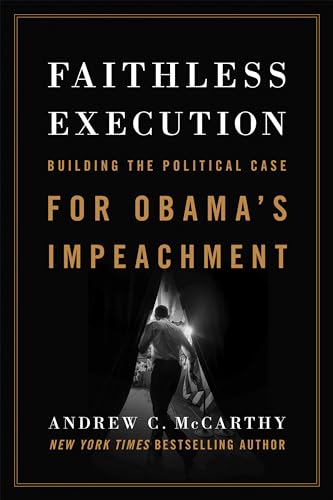
Synopsis
We still imagine ourselves a nation of laws, not of men. This is not merely an article of faith but a bedrock principle of the United States Constitution. Our founding compact provides a remedy against rulers supplanting the rule of law, and Andrew C. McCarthy makes a compelling case for using it.
The authors of the Constitution saw practical reasons to place awesome powers in a single chief executive, who could act quickly and decisively in times of peril. Yet they well understood that unchecked power in one person’s hands posed a serious threat to liberty, the defining American imperative. Much of the debate at the Philadelphia convention therefore centered on how to stop a rogue executive who became a law unto himself.
The Framers vested Congress with two checks on presidential excess: the power of the purse and the power of impeachment. They are potent remedies, and there are no others.
It is a straightforward matter to establish that President Obama has committed “high crimes and misdemeanors,” a term signifying maladministration and abuses of power by holders of high public trust. But making the legal case is insufficient for successful impeachment, leading to removal from office. Impeachment is a political matter and hinges on public opinion.
In Faithless Execution, McCarthy weighs the political dynamics as he builds a case, assembling a litany of abuses that add up to one overarching offense: the president’s willful violation of his solemn oath to execute the laws faithfully. The “fundamental transformation” he promised involves concentrating power into his own hands by flouting law—statutes, judicial rulings, the Constitution itself—and essentially daring the other branches of government to stop him. McCarthy contends that our elected representative are duty-bound to take up the dare.
What are “High Crimes and Misdemeanors”?
Impeachment is rare in American history—and for good reason. As the ultimate remedy against abuse of executive power, it is politically convulsive. And yet, as the Framers understood, it is a necessary protection if the rule of law is to be maintained.
But what are impeachable offenses? There is widespread confusion among the American people about the answer to this question.
Article II of the Constitution lists treason and bribery, along with “other high crimes and misdemeanors as the standard for impeachment. Despite what “crimes” and “misdemeanors” connote, the concept has precious little to do with violations of a penal code. Rather, it is about betrayal of the political trust reposed in the president to execute the laws faithfully and “preserve, protect and defend” our constitutional system, as his oath of office requires.
At the constitutional convention in 1787, the delegates concurred that the “high crimes and misdemeanors” standard captured the many “great and dangerous offenses” involving malfeasance, incompetence, and severe derelictions of duty that could undermine the constitutional order.
The Framers were clear that “high crimes and misdemeanors” involved misconduct that did not necessarily break penal laws; it might not even be considered criminal if committed by a civilian. It would apply strictly to “the misconduct of public men … or the abuse or violation of public trust,” as Alexander Hamilton put it. “High crimes and misdemeanors” are of a purely political nature as they “relate to injuries done immediately to the society itself.”
To be clear, “high crimes and misdemeanors” is not a standard conceived for normal law enforcement. It applies instead to oath, honor, and trust—notions that are more demanding of public officials than the black and white prohibitions of criminal law.
While the standard is high-minded it is not an abstraction. The Framers were very clear: betrayals of the constitutional order, dishonesty in the executive’s dealing with Congress, and concealment of dealings with foreign powers that could be injurious to the American people were among the most grievous, and impeachable, high crimes and misdemeanors.
Above all, the Framers had in view the president’s oath of allegiance to our system of government, a system in which the president’s highest duty is faithful execution of the laws. The mere attempt to subvert the constitution would be a breach of trust that warranted impeachment and removal.
A free country requires the rule of law. But the rule of law is a sham if lawlessness is rampant among those who govern. This was the deep political truth that the Framers of this country recognized in the providing for the impeachment of an errant executive. It is a truth that we ignore at our peril.
Faithless Execution Author Q&A
You are a well-known conservative commentator – how would you answer the accusation that Faithless Execution is just a partisan stunt?
McCarthy: Well, ‘conservative’ does not mean ‘Republican’—in fact, the book is not very flattering when it comes to GOP fecklessness in the face of the president’s lawlessness. But the main point is: Faithless Execution argues against partisan hackery. I analyze the legal case for impeachment as a former prosecutor who would not go to court without a sufficient case. And as far as the politics goes, I argue that, despite the sizable majority Republicans hold in the House, articles of impeachment should not be filed unless and until there is a strong public will to remove the president from power—one that transcends party lines.
Many Republicans say an effort to impeach Barack Obama is political suicide for the Republican Party. How do you respond to this?
McCarthy: The failure to pursue impeachment is likely to be suicide for the country, which is much more important than the political fate of the Republican Party. But, again, making the case for impeachment—which would probably help not only Republicans but any elected official who defends our constitutional framework—is not the same as moving forward with articles of impeachment, which should not happen absent public support.
How does the case for Barack Obama’s impeachment compare to the campaigns to impeach Nixon and Clinton?
McCarthy: Obama’s presidency is a willful, systematic attack on the constitutional system of separation of powers, an enterprise that aims to bring about a new regime of government by executive decree. This is exactly the kind of subversion the Framers designed the impeachment power to address. The Nixon and Clinton episodes involved misconduct that did not aim to undermine our constitutional framework.
You describe impeachment as a political and not a legal remedy. What’s the distinction?
McCarthy: Legally speaking, a president may be impeached for a single offense that qualifies as “high crimes and misdemeanors”—a breach of the profound public trust vested in the president, a violation of his constitutional duty to execute the laws faithfully. But real impeachment requires the public will to remove the president from office. You can have a thousand impeachable offenses, but without that political consensus, impeachment is not an appropriate remedy.
The authors of the Constitution saw practical reasons to place awesome powers in a single chief executive, who could act quickly and decisively in times of peril. Yet they well understood that unchecked power in one person’s hands posed a serious threat to liberty, the defining American imperative. Much of the debate at the Philadelphia convention therefore centered on how to stop a rogue executive who became a law unto himself.
The Framers vested Congress with two checks on presidential excess: the power of the purse and the power of impeachment. They are potent remedies, and there are no others.
It is a straightforward matter to establish that President Obama has committed “high crimes and misdemeanors,” a term signifying maladministration and abuses of power by holders of high public trust. But making the legal case is insufficient for successful impeachment, leading to removal from office. Impeachment is a political matter and hinges on public opinion.
In Faithless Execution, McCarthy weighs the political dynamics as he builds a case, assembling a litany of abuses that add up to one overarching offense: the president’s willful violation of his solemn oath to execute the laws faithfully. The “fundamental transformation” he promised involves concentrating power into his own hands by flouting law—statutes, judicial rulings, the Constitution itself—and essentially daring the other branches of government to stop him. McCarthy contends that our elected representative are duty-bound to take up the dare.
What are “High Crimes and Misdemeanors”?
Impeachment is rare in American history—and for good reason. As the ultimate remedy against abuse of executive power, it is politically convulsive. And yet, as the Framers understood, it is a necessary protection if the rule of law is to be maintained.
But what are impeachable offenses? There is widespread confusion among the American people about the answer to this question.
Article II of the Constitution lists treason and bribery, along with “other high crimes and misdemeanors as the standard for impeachment. Despite what “crimes” and “misdemeanors” connote, the concept has precious little to do with violations of a penal code. Rather, it is about betrayal of the political trust reposed in the president to execute the laws faithfully and “preserve, protect and defend” our constitutional system, as his oath of office requires.
At the constitutional convention in 1787, the delegates concurred that the “high crimes and misdemeanors” standard captured the many “great and dangerous offenses” involving malfeasance, incompetence, and severe derelictions of duty that could undermine the constitutional order.
The Framers were clear that “high crimes and misdemeanors” involved misconduct that did not necessarily break penal laws; it might not even be considered criminal if committed by a civilian. It would apply strictly to “the misconduct of public men … or the abuse or violation of public trust,” as Alexander Hamilton put it. “High crimes and misdemeanors” are of a purely political nature as they “relate to injuries done immediately to the society itself.”
To be clear, “high crimes and misdemeanors” is not a standard conceived for normal law enforcement. It applies instead to oath, honor, and trust—notions that are more demanding of public officials than the black and white prohibitions of criminal law.
While the standard is high-minded it is not an abstraction. The Framers were very clear: betrayals of the constitutional order, dishonesty in the executive’s dealing with Congress, and concealment of dealings with foreign powers that could be injurious to the American people were among the most grievous, and impeachable, high crimes and misdemeanors.
Above all, the Framers had in view the president’s oath of allegiance to our system of government, a system in which the president’s highest duty is faithful execution of the laws. The mere attempt to subvert the constitution would be a breach of trust that warranted impeachment and removal.
A free country requires the rule of law. But the rule of law is a sham if lawlessness is rampant among those who govern. This was the deep political truth that the Framers of this country recognized in the providing for the impeachment of an errant executive. It is a truth that we ignore at our peril.
Faithless Execution Author Q&A
You are a well-known conservative commentator – how would you answer the accusation that Faithless Execution is just a partisan stunt?
McCarthy: Well, ‘conservative’ does not mean ‘Republican’—in fact, the book is not very flattering when it comes to GOP fecklessness in the face of the president’s lawlessness. But the main point is: Faithless Execution argues against partisan hackery. I analyze the legal case for impeachment as a former prosecutor who would not go to court without a sufficient case. And as far as the politics goes, I argue that, despite the sizable majority Republicans hold in the House, articles of impeachment should not be filed unless and until there is a strong public will to remove the president from power—one that transcends party lines.
Many Republicans say an effort to impeach Barack Obama is political suicide for the Republican Party. How do you respond to this?
McCarthy: The failure to pursue impeachment is likely to be suicide for the country, which is much more important than the political fate of the Republican Party. But, again, making the case for impeachment—which would probably help not only Republicans but any elected official who defends our constitutional framework—is not the same as moving forward with articles of impeachment, which should not happen absent public support.
How does the case for Barack Obama’s impeachment compare to the campaigns to impeach Nixon and Clinton?
McCarthy: Obama’s presidency is a willful, systematic attack on the constitutional system of separation of powers, an enterprise that aims to bring about a new regime of government by executive decree. This is exactly the kind of subversion the Framers designed the impeachment power to address. The Nixon and Clinton episodes involved misconduct that did not aim to undermine our constitutional framework.
You describe impeachment as a political and not a legal remedy. What’s the distinction?
McCarthy: Legally speaking, a president may be impeached for a single offense that qualifies as “high crimes and misdemeanors”—a breach of the profound public trust vested in the president, a violation of his constitutional duty to execute the laws faithfully. But real impeachment requires the public will to remove the president from office. You can have a thousand impeachable offenses, but without that political consensus, impeachment is not an appropriate remedy.
"synopsis" may belong to another edition of this title.
About the Author
Andrew C. McCarthy was a top federal prosecutor involved in some of the most significant cases in recent history. Decorated with the Justice Department’s highest honors, he retired from government in 2003, after helping launch the 9/11 investigation. He is one of America’s most persuasive voices on national security issues and author of the bestsellers Willful Blindness: A Memoir of the Jihad and The Grand Jihad: How Islam and the Left Sabotage America. Currently, he is a policy fellow at the National Review Institute, a contributing editor at National Review, and a columnist for PJ Media.
"About this title" may belong to another edition of this title.
Search results for Faithless Execution: Building the Political Case for...

Stock Image
Faithless Execution: Building
Seller: World of Books (was SecondSale), Montgomery, IL, U.S.A.
Seller rating 5 out of 5 stars

Condition: Very Good. Item in very good condition! Textbooks may not include supplemental items i.e. CDs, access codes etc. Seller Inventory # 00102538437
Stock Image
Faithless Execution: Building
Seller: World of Books (was SecondSale), Montgomery, IL, U.S.A.
Seller rating 5 out of 5 stars
Condition: Good. Item in good condition. Textbooks may not include supplemental items i.e. CDs, access codes etc. Seller Inventory # 00103422318
Seller Image
Faithless Execution: Building the Political Case for Obama s Impeachment
Seller: 3Brothers Bookstore, Egg harbor township, NJ, U.S.A.
Seller rating 5 out of 5 stars
Condition: like_new. Book is in like new condition with only potential shelf wear. No marking or highlighting. Seller Inventory # EVV.1594037760.LN
Seller Image
Faithless Execution: Building the Political Case for Obama s Impeachment
Seller: Greenworld Books, Arlington, TX, U.S.A.
Seller rating 5 out of 5 stars
Condition: good. Fast Free Shipping â" Good condition. It may show normal signs of use, such as light writing, highlighting, or library markings, but all pages are intact and the book is fully readable. A solid, complete copy that's ready to enjoy. Seller Inventory # GWV.1594037760.G
Stock Image
Faithless Execution: Building the Political Case for Obama s Impeachment
Seller: World of Books Inc, Montgomery, IL, U.S.A.
Seller rating 4 out of 5 stars

Hardback. Condition: Good. We still imagine ourselves a nation of laws, not of men. This is not merely an article of faith but a bedrock principle of the United States Constitution. Our founding compact provides a remedy against rulers supplanting the rule of law, and Andrew C. McCarthy makes a compelling case for using it. The authors of the Constitution saw practical reasons to place awesome powers in a single chief executive, who could act quickly and decisively in times of peril. Yet they well understood that unchecked power in one person's hands posed a serious threat to liberty, the defining American imperative. Much of the debate at the Philadelphia convention therefore centered on how to stop a rogue executive who became a law unto himself. The Framers vested Congress with two checks on presidential excess: the power of the purse and the power of impeachment. They are potent remedies, and there are no others. It is a straightforward matter to establish that President Obama has committed "high crimes and misdemeanors," a term signifying maladministration and abuses of power by holders of high public trust. But making the legal case is insufficient for successful impeachment, leading to removal from office. Impeachment is a political matter and hinges on public opinion. In Faithless Execution, McCarthy weighs the political dynamics as he builds a case, assembling a litany of abuses that add up to one overarching offense: the president's willful violation of his solemn oath to execute the laws faithfully. The "fundamental transformation" he promised involves concentrating power into his own hands by flouting law--statutes, judicial rulings, the Constitution itself--and essentially daring the other branches of government to stop him. McCarthy contends that our elected representative are duty-bound to take up the dare. What are "High Crimes and Misdemeanors"? Impeachment is rare in American history--and for good reason. As the ultimate remedy against abuse of executive power, it is politically convulsive. And yet, as the Framers understood, it is a necessary protection if the rule of law is to be maintained. But what are impeachable offenses? There is widespread confusion among the American people about the answer to this question. Article II of the Constitution lists treason and bribery, along with "other high crimes and misdemeanors as the standard for impeachment. Despite what "crimes" and "misdemeanors" connote, the concept has precious little to do with violations of a penal code. Rather, it is about betrayal of the political trust reposed in the president to execute the laws faithfully and "preserve, protect and defend" our constitutional system, as his oath of office requires. At the constitutional convention in 1787, the delegates concurred that the "high crimes and misdemeanors" standard captured the many "great and dangerous offenses" involving malfeasance, incompetence, and severe derelictions of duty that could undermine the constitutional order. The Framers were clear that "high crimes and misdemeanors" involved misconduct that did not necessarily break penal laws; it might not even be considered criminal if committed by a civilian. It would apply strictly to "the misconduct of public men .or the abuse or violation of public trust," as Alexander Hamilton put it. "High crimes and misdemeanors" are of a purely political nature as they "relate to injuries done immediately to the society itself." To be clear, "high crimes and misdemeanors" is not a standard conceived for normal law enforcement. It applies instead to oath, honor, and trust--notions that are more demanding of public officials than the black and white prohibitions of criminal law. While the standard is high-minded it is not an abstraction. The Framers were very clear: betrayals of the constitutional order, dishonesty in the executive's dealing with Congress, and concealment of dealings with foreign powers that could be injurious to the American people were among the most grievous, and impeachable, high crimes and misdemeanors. Above all, the Framers had in view the president's oath of allegiance to our system of government, a system in which the president's highest duty is faithful execution of the laws. The mere attempt to subvert the constitution would be a breach of trust that warranted impeachment and removal. A free country requires the rule of law. But the rule of law is a sham if lawlessness is rampant among those who govern. This was the deep political truth that the Framers of this country recognized in the providing for the impeachment of an errant executive. It is a truth that we ignore at our peril. Faithless Execution Author Q&A You are a well-known conservative commentator -- how would you answer the accusation that Faithless Execution is just a partisan stunt? McCarthy: Well, 'conservative' does not mean 'Republican'--in fact, the book is not very flattering when it comes to GOP fecklessness in the face of the president's lawlessness. But the main point is: Faithless Execution argues against partisan hackery. I analyze the legal case for impeachment as a former prosecutor who would not go to court without a sufficient case. And as far as the politics goes, I argue that, despite the sizable majority Republicans hold in the House, articles of impeachment should not be filed unless and until there is a strong public will to remove the president from power--one that transcends party lines. Many Republicans say an effort to impeach Barack Obama is political suicide for the Republican Party. How do you respond to this? McCarthy: The failure to pursue impeachment is likely to be suicide for the country, which is much more important than the political fate of the Republican Party. But, again, making the case for impeachment--which would probably help not only Republicans but any elected official who defends our constitutional framework--is not the same as moving forward with articles of impeachment, which should not happen absent p. Seller Inventory # CIN1594037760G
Stock Image
Faithless Execution: Building the Political Case for Obama s Impeachment
Seller: World of Books Inc, Montgomery, IL, U.S.A.
Seller rating 4 out of 5 stars
Hardback. Condition: Very Good. We still imagine ourselves a nation of laws, not of men. This is not merely an article of faith but a bedrock principle of the United States Constitution. Our founding compact provides a remedy against rulers supplanting the rule of law, and Andrew C. McCarthy makes a compelling case for using it. The authors of the Constitution saw practical reasons to place awesome powers in a single chief executive, who could act quickly and decisively in times of peril. Yet they well understood that unchecked power in one person's hands posed a serious threat to liberty, the defining American imperative. Much of the debate at the Philadelphia convention therefore centered on how to stop a rogue executive who became a law unto himself. The Framers vested Congress with two checks on presidential excess: the power of the purse and the power of impeachment. They are potent remedies, and there are no others. It is a straightforward matter to establish that President Obama has committed "high crimes and misdemeanors," a term signifying maladministration and abuses of power by holders of high public trust. But making the legal case is insufficient for successful impeachment, leading to removal from office. Impeachment is a political matter and hinges on public opinion. In Faithless Execution, McCarthy weighs the political dynamics as he builds a case, assembling a litany of abuses that add up to one overarching offense: the president's willful violation of his solemn oath to execute the laws faithfully. The "fundamental transformation" he promised involves concentrating power into his own hands by flouting law--statutes, judicial rulings, the Constitution itself--and essentially daring the other branches of government to stop him. McCarthy contends that our elected representative are duty-bound to take up the dare. What are "High Crimes and Misdemeanors"? Impeachment is rare in American history--and for good reason. As the ultimate remedy against abuse of executive power, it is politically convulsive. And yet, as the Framers understood, it is a necessary protection if the rule of law is to be maintained. But what are impeachable offenses? There is widespread confusion among the American people about the answer to this question. Article II of the Constitution lists treason and bribery, along with "other high crimes and misdemeanors as the standard for impeachment. Despite what "crimes" and "misdemeanors" connote, the concept has precious little to do with violations of a penal code. Rather, it is about betrayal of the political trust reposed in the president to execute the laws faithfully and "preserve, protect and defend" our constitutional system, as his oath of office requires. At the constitutional convention in 1787, the delegates concurred that the "high crimes and misdemeanors" standard captured the many "great and dangerous offenses" involving malfeasance, incompetence, and severe derelictions of duty that could undermine the constitutional order. The Framers were clear that "high crimes and misdemeanors" involved misconduct that did not necessarily break penal laws; it might not even be considered criminal if committed by a civilian. It would apply strictly to "the misconduct of public men .or the abuse or violation of public trust," as Alexander Hamilton put it. "High crimes and misdemeanors" are of a purely political nature as they "relate to injuries done immediately to the society itself." To be clear, "high crimes and misdemeanors" is not a standard conceived for normal law enforcement. It applies instead to oath, honor, and trust--notions that are more demanding of public officials than the black and white prohibitions of criminal law. While the standard is high-minded it is not an abstraction. The Framers were very clear: betrayals of the constitutional order, dishonesty in the executive's dealing with Congress, and concealment of dealings with foreign powers that could be injurious to the American people were among the most grievous, and impeachable, high crimes and misdemeanors. Above all, the Framers had in view the president's oath of allegiance to our system of government, a system in which the president's highest duty is faithful execution of the laws. The mere attempt to subvert the constitution would be a breach of trust that warranted impeachment and removal. A free country requires the rule of law. But the rule of law is a sham if lawlessness is rampant among those who govern. This was the deep political truth that the Framers of this country recognized in the providing for the impeachment of an errant executive. It is a truth that we ignore at our peril. Faithless Execution Author Q&A You are a well-known conservative commentator -- how would you answer the accusation that Faithless Execution is just a partisan stunt? McCarthy: Well, 'conservative' does not mean 'Republican'--in fact, the book is not very flattering when it comes to GOP fecklessness in the face of the president's lawlessness. But the main point is: Faithless Execution argues against partisan hackery. I analyze the legal case for impeachment as a former prosecutor who would not go to court without a sufficient case. And as far as the politics goes, I argue that, despite the sizable majority Republicans hold in the House, articles of impeachment should not be filed unless and until there is a strong public will to remove the president from power--one that transcends party lines. Many Republicans say an effort to impeach Barack Obama is political suicide for the Republican Party. How do you respond to this? McCarthy: The failure to pursue impeachment is likely to be suicide for the country, which is much more important than the political fate of the Republican Party. But, again, making the case for impeachment--which would probably help not only Republicans but any elected official who defends our constitutional framework--is not the same as moving forward with articles of impeachment, which should not happen absent p. Seller Inventory # CIN1594037760VG
Stock Image
Faithless Execution : Building the Political Case for Obama's Impeachment
Seller: Better World Books, Mishawaka, IN, U.S.A.
Seller rating 5 out of 5 stars
Condition: Good. Pages intact with minimal writing/highlighting. The binding may be loose and creased. Dust jackets/supplements are not included. Stock photo provided. Product includes identifying sticker. Better World Books: Buy Books. Do Good. Seller Inventory # 4551549-6
Stock Image
Faithless Execution : Building the Political Case for Obama's Impeachment
Seller: Better World Books, Mishawaka, IN, U.S.A.
Seller rating 5 out of 5 stars
Condition: Very Good. Former library copy. Pages intact with possible writing/highlighting. Binding strong with minor wear. Dust jackets/supplements may not be included. Includes library markings. Stock photo provided. Product includes identifying sticker. Better World Books: Buy Books. Do Good. Seller Inventory # 8270636-75
Stock Image
Faithless Execution: Building the Political Case for Obama�s Impeachment
Seller: Wonder Book, Frederick, MD, U.S.A.
Seller rating 5 out of 5 stars
Condition: Very Good. Very Good condition. Very Good dust jacket. A copy that may have a few cosmetic defects. May also contain light spine creasing or a few markings such as an owner's name, short gifter's inscription or light stamp. Seller Inventory # O12H-00984
Stock Image
Faithless Execution: Building the Political Case for ObamaÂ's Impe
Seller: Hawking Books, Edgewood, TX, U.S.A.
Seller rating 4 out of 5 stars
Condition: Very Good. Very Good Condition. Five star seller - Buy with confidence! Seller Inventory # X1594037760X2