
Items related to Why Smart Executives Fail: And What You Can Learn from...
Synopsis
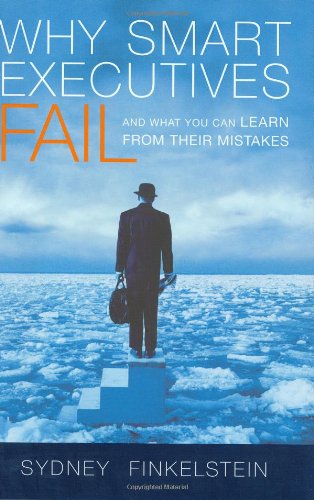
Identifies companies that made critical business mistakes that resulted in their downfalls soon after receiving recognition as successful empires, inviting corporate leaders to learn from the examples of others in order to avoid common vulnerabilities. 60,000 first printing.
"synopsis" may belong to another edition of this title.
About the Authors
Sydney Finkelstein is a professor of strategy and leadership at Dartmouth's Tuck School of Business. His writing has appeared in the Harvard Business Review and other business journals.
Sydney Finkelstein is Steven Roth Professor of Management at Dartmouth's Tuck School of Business.
"About this title" may belong to another edition of this title.
Search results for Why Smart Executives Fail: And What You Can Learn from...

Stock Image
Why Smart Executives Fail: And What You Can Learn from Their Mistakes
Seller: World of Books (was SecondSale), Montgomery, IL, U.S.A.
Seller rating 5 out of 5 stars

Hardback. Condition: Fair. Bob Pittman and AOL Time Warner. Jean Marie Messier and Vivendi. Jill Barad and Mattel. Dennis Kozlowski and Tyco. It's an all too common scenario. A great company breaks from the pack; the analysts are in love; the smiling CEO appears on the cover of Fortune. Two years later, the company is in flames, the pension plan is bleeding, the stock is worthless. What goes wrong in these cases? Usually it seems that top management made some incredibly stupid mistakes. But the people responsible are almost always remarkably intelligent and usually have terrific track records. Just as puzzling as the fact that brilliant managers can make bad mistakes is the way they so often magnify the damage. Once a company has made a serious mis-step, it often seems as though it can't do anything right. How does this happen? Instead of rectifying their mistakes, why do business leaders regularly make them worse? To answer these questions, Sydney Finkelstein has carried out the largest research project ever devoted to corporate mistakes and failures. In WHY SMART EXECUTIVES FAIL, he and his research team uncover-with startling clarity and unassailable documentation-the causes regularly responsible for major business breakdowns. He relates the stories of great business disasters and demonstrates that there are specific, identifiable ways in which many businesses regularly make themselves vulnerable to failure. The result is a truly indispensable, practical, must-read book that explains the mechanics of business failure, how to avoid them, and what to do if they happen. Seller Inventory # CIN1591840104A
Stock Image
Why Smart Executives Fail And
Seller: World of Books (was SecondSale), Montgomery, IL, U.S.A.
Seller rating 5 out of 5 stars
Condition: Very Good. Item in very good condition! Textbooks may not include supplemental items i.e. CDs, access codes etc. Seller Inventory # 00093288125
Stock Image
Why Smart Executives Fail: And What You Can Learn from Their Mistakes
Seller: World of Books (was SecondSale), Montgomery, IL, U.S.A.
Seller rating 5 out of 5 stars
Hardback. Condition: Good. Bob Pittman and AOL Time Warner. Jean Marie Messier and Vivendi. Jill Barad and Mattel. Dennis Kozlowski and Tyco. It's an all too common scenario. A great company breaks from the pack; the analysts are in love; the smiling CEO appears on the cover of Fortune. Two years later, the company is in flames, the pension plan is bleeding, the stock is worthless. What goes wrong in these cases? Usually it seems that top management made some incredibly stupid mistakes. But the people responsible are almost always remarkably intelligent and usually have terrific track records. Just as puzzling as the fact that brilliant managers can make bad mistakes is the way they so often magnify the damage. Once a company has made a serious mis-step, it often seems as though it can't do anything right. How does this happen? Instead of rectifying their mistakes, why do business leaders regularly make them worse? To answer these questions, Sydney Finkelstein has carried out the largest research project ever devoted to corporate mistakes and failures. In WHY SMART EXECUTIVES FAIL, he and his research team uncover-with startling clarity and unassailable documentation-the causes regularly responsible for major business breakdowns. He relates the stories of great business disasters and demonstrates that there are specific, identifiable ways in which many businesses regularly make themselves vulnerable to failure. The result is a truly indispensable, practical, must-read book that explains the mechanics of business failure, how to avoid them, and what to do if they happen. Seller Inventory # 00093865276
Stock Image
Why Smart Executives Fail: And What You Can Learn from Their Mistakes
Seller: Gulf Coast Books, Cypress, TX, U.S.A.
Seller rating 5 out of 5 stars
hardcover. Condition: Good. Seller Inventory # 1591840104-3-31106798
Stock Image
Why Smart Executives Fail: And What You Can Learn from Their Mistakes
Seller: Orion Tech, Kingwood, TX, U.S.A.
Seller rating 5 out of 5 stars
hardcover. Condition: Good. Seller Inventory # 1591840104-3-32545449
Stock Image
Why Smart Executives Fail: And What You Can Learn from Their Mistakes
Seller: Your Online Bookstore, Houston, TX, U.S.A.
Seller rating 5 out of 5 stars
hardcover. Condition: Fair. Seller Inventory # 1591840104-4-37111210
Seller Image
Why Smart Executives Fail: And What You Can Learn from Their Mistakes
Seller: Greenworld Books, Arlington, TX, U.S.A.
Seller rating 5 out of 5 stars
Condition: very_good. Fast Free Shipping â" Very Good condition book with a firm cover and clean pages. Shows normal use and some light wear or limited notes markings. A solid, nice copy to enjoy. Seller Inventory # GWV.1591840104.VG
Stock Image
Why Smart Executives Fail: And What You Can Learn from Their Mistakes
Published by
Portfolio Hardcover (edition First Edition), 2003
ISBN 10: 1591840104
ISBN 13: 9781591840107
Used
Hardcover
First Edition
Seller: BooksRun, Philadelphia, PA, U.S.A.
Seller rating 5 out of 5 stars
Hardcover. Condition: Very Good. First Edition. With dust jacket. It's a well-cared-for item that has seen limited use. The item may show minor signs of wear. All the text is legible, with all pages included. It may have slight markings and/or highlighting. Seller Inventory # 1591840104-11-1-29
Stock Image
Why Smart Executives Fail: And What You Can Learn from Their Mistakes
Seller: World of Books Inc, Montgomery, IL, U.S.A.
Seller rating 4 out of 5 stars

Hardback. Condition: Good. Bob Pittman and AOL Time Warner. Jean Marie Messier and Vivendi. Jill Barad and Mattel. Dennis Kozlowski and Tyco. It's an all too common scenario. A great company breaks from the pack; the analysts are in love; the smiling CEO appears on the cover of Fortune. Two years later, the company is in flames, the pension plan is bleeding, the stock is worthless. What goes wrong in these cases? Usually it seems that top management made some incredibly stupid mistakes. But the people responsible are almost always remarkably intelligent and usually have terrific track records. Just as puzzling as the fact that brilliant managers can make bad mistakes is the way they so often magnify the damage. Once a company has made a serious mis-step, it often seems as though it can't do anything right. How does this happen? Instead of rectifying their mistakes, why do business leaders regularly make them worse? To answer these questions, Sydney Finkelstein has carried out the largest research project ever devoted to corporate mistakes and failures. In WHY SMART EXECUTIVES FAIL, he and his research team uncover-with startling clarity and unassailable documentation-the causes regularly responsible for major business breakdowns. He relates the stories of great business disasters and demonstrates that there are specific, identifiable ways in which many businesses regularly make themselves vulnerable to failure. The result is a truly indispensable, practical, must-read book that explains the mechanics of business failure, how to avoid them, and what to do if they happen. Seller Inventory # CIN1591840104G
Stock Image
Why Smart Executives Fail: And What You Can Learn from Their Mistakes
Seller: World of Books Inc, Montgomery, IL, U.S.A.
Seller rating 4 out of 5 stars
Hardback. Condition: Very Good. Bob Pittman and AOL Time Warner. Jean Marie Messier and Vivendi. Jill Barad and Mattel. Dennis Kozlowski and Tyco. It's an all too common scenario. A great company breaks from the pack; the analysts are in love; the smiling CEO appears on the cover of Fortune. Two years later, the company is in flames, the pension plan is bleeding, the stock is worthless. What goes wrong in these cases? Usually it seems that top management made some incredibly stupid mistakes. But the people responsible are almost always remarkably intelligent and usually have terrific track records. Just as puzzling as the fact that brilliant managers can make bad mistakes is the way they so often magnify the damage. Once a company has made a serious mis-step, it often seems as though it can't do anything right. How does this happen? Instead of rectifying their mistakes, why do business leaders regularly make them worse? To answer these questions, Sydney Finkelstein has carried out the largest research project ever devoted to corporate mistakes and failures. In WHY SMART EXECUTIVES FAIL, he and his research team uncover-with startling clarity and unassailable documentation-the causes regularly responsible for major business breakdowns. He relates the stories of great business disasters and demonstrates that there are specific, identifiable ways in which many businesses regularly make themselves vulnerable to failure. The result is a truly indispensable, practical, must-read book that explains the mechanics of business failure, how to avoid them, and what to do if they happen. Seller Inventory # CIN1591840104VG