
Items related to The Writer's Mentor: A Guide to Putting Passion...
Synopsis
<p>In <i>The Writers Mentor</i>, bestselling author, teacher, and writing coach Cathleen Rountree addresses the most common dilemmas of both aspiring and professional writers. Written in a questionandanswer format, this book stands apart from other books on writing by its linking of practical information on effective writing strategies with inspirational stories from the lives of famous writers.</p><p>Cathleen Rountree responds to such questions as: How do I get ideas for writing? What should I do when I am stuck and just staring at a blank page? What is the best time of day to write? How do I set a writing schedule? What can I do to achieve a state of "flow" when writing?</p><p>In anwering these questions, she shares not only what she has learned from her own experiences in writing and publishing eight books, but also many of the writing secrets of famous literary figuresfrom fiction, nonfiction, and poetry. Included are tips from Anne Tyler, Mark Twain, Arthur Miller, Margaret Atwood, Tennessee Williams, Maya Angelou, Ernest Hemingway, Diane Ackerman, Virginia Woolf, Isabel Allende, Pablo Neruda, Doris Lessing, and more. Included in each chapter is a feature called "The Writer's Mentor Suggests," which gives readers a list of concrete suggestions and tips around the writing topic. A wonderful feature in every chapter is a look at the writing life through films such as The Shining, Bridget Jones' Diary, and Shakespeare in Love.</p>
"synopsis" may belong to another edition of this title.
Excerpt. © Reprinted by permission. All rights reserved.
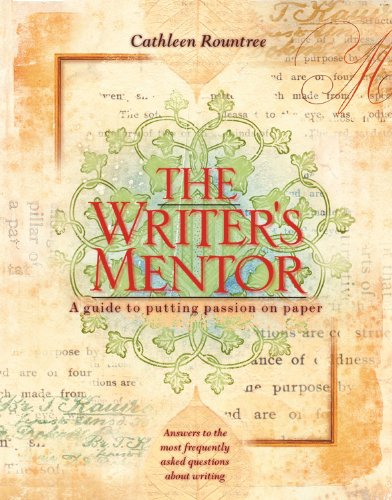
The Writer's Mentor
A Guide to Putting Passion on Paper
By Cathleen RountreeRed Wheel/Weiser, LLC
Copyright © 2002 Cathleen Rountree
All rights reserved.
ISBN: 978-1-57324-570-8All rights reserved.
Contents
| 1 INTRODUCTION | |
| 2 DIVINE INSPIRATION: MEETING THE MUSE | |
| 3 THE WRITING ENVIRONMENT: CREATING A SANCTUARY | |
| 4 WHEN TO WRITE: ASSESSING THE PRACTICALITIES OF WRITING | |
| 5 HOW: GETTING STARTED | |
| 6 THE CONTENT OF WRITING: KNOWING WHAT TO WRITE | |
| 7 WRITING AS A PRACTICE: KEEPING THE FOCUS | |
| 8 PAGE FRIGHT: OVERCOMING THE FEAR OF WRITING | |
| 9 WRITER'S BLOCK AND PROCRASTINATION: FREEING THE WRITER WITHIN | |
| 10 THE CRAFT OF WRITING: FINDING YOUR STYLE AND VOICE | |
| 11 THE LONELINESS OF THE LONG-DISTANCE WRITER: WRITING AS A SOLITARY EXPERIENCE | |
| 12 THE INNER LIFE OF THE WRITER: WRITING AS A LIFE CHOICE | |
| Postscript | |
| Acknowledgments | |
| Books on Writing | |
| Reference Works | |
| Web Sites | |
| Index | |
| About the Author | |
| Contacting Cathleen Rountree |
CHAPTER 1
Introduction
To live in the world of creation—to get into it—to frequent it and haunt it— tothink intensely and fruitfully—to woo combinations and inspirations into beingby a depth and continuity of attention and meditation—this is the only thing.
—HENRY JAMES
If you speak with passion, many of us will listen. We need stories to live, allof us. We live by story. Yours enlarges the circle.
—RICHARD RHODES
Jean Cocteau, the French poet, novelist, playwright, painter, and filmmaker,once was asked what he would save first if his house caught fire. The surrealistand everyday madman answered, "The fire." What I think he was saying is that inboth our professional and our personal lives, what counts is passion—the fire.When I first began thinking about writing The Writer's Mentor, this anecdotesprang to life for me because so much about writing has to do with passion: thedrive and desire, the love and commitment, the turbulence and torment, the zealand mania, the choice and resolution.
In a gorgeous essay that won first place in a writing contest in California in1999, Leslie Cole refers to writing in the third millennium as an "Erotic Act.""The sound of a pen scratching out a thought on rough paper will be a majorturn-on.... The motion of a pen as it moves across paper will be the new tango,and the curve and fall of a graceful script will be compared to water fallingover stones.... It will be a map, a choreography of what is wished for."
The term passion may denote any feeling or emotion, especially that of apowerful or compelling nature (such as desire, anger, jealousy, devotion, orinspiration). To put passion on paper is first to fully embody an emotion andsecond to tame it through words. But in its essential form, passion means "tosuffer," as in the passion or sufferings of Christ on the cross and theirsubsequent revivification in "passion plays." (A form of playing with passion?)It is in this conjunction of meanings that I refer to "passion."
"Writing is easy," Madeleine L'Engle, the author of more than fifty books offiction and nonfiction, once told me—herself paraphrasing the famous, nowdeceased baseball writer Red Smith—"all you have to do is sit down at thetypewriter and sweat blood." I have heard similar aphorisms from other writersduring many years of interviewing such accomplished writers as Doris Lessing,Isabel Allende, Fay Weldon, Natalie Goldberg, Christopher Lehman-Haupt, MaxineHong Kingston, Ursula LeGuin, Gloria Steinem, Jean Shinoda Bolen, ColetteDowling, Andrew Sarris, Carolyn Heilbrun, Deena Metzger, Molly Haskell, OliverStone, Tess Gallagher, Betty Friedan, Susan Griffin, Marion Woodman, and RianeEisler. Nevertheless, those of us who are drawn to writing continue to "sweatblood" while creating art. We have a love/hate relationship to writing. We putour passion on paper.
No, good writing does not come easily. It was Nathaniel West who wrote, "Easyreading is damned hard writing." In an interview with John Berendt, the authorof Midnight in the Garden of Good and Evil, he remembers an occasion thirtyyears before, when he was sent by Esquire magazine to record a conversationbetween novelists William Styron and James Jones. Styron asked Jones how he feltwhen each day he sat down to write. "It's like learning how to write all overagain!" Styron agreed. And the two proceeded to commiserate about what hard workwriting is.
Writing is hard work, and it's terrifying, to boot, but if you are compelled to"think intensely and fruitfully" and to express those thoughts in words, it canalso be one of the most rewarding ways to engage with yourself and the world.With much effort and good fortune you may reach the juncture in your writinglife at which you must write; because, if you don't, as Gail Sher describes inOne Continuous Mistake, "You will feel something terribly important is missingfrom your life—and nothing, including prayer, meditation, exercise, money orlove will make up for it."
Writing takes a single-minded effort. An effort that includes believing inyourself (not in those internal saboteurs: self-doubt and uncertainty); trustingyour own instincts (first learning how to access those instincts); becomingcomfortable with the uncomfortable (the complicated, grueling, solitary,sometimes boring) nature of writing; and making the existential choice to facethat insolent blank page every day. No one (except you) has any stake in whetheryou write or not. It's simply a choice that you make again and again. As RichardFord has written, "Writing is indeed dark and lonely, but no one really has todo it.... You can stop anywhere, anytime, and no one will care or ever know."And the sad truth is that you must be willing to write poorly in order toimprove. (And even then there are no guarantees.) "Nothing is art at first,"wrote Walter Mosley.
My interest in writing and publishing began when I was thirty-eight years old.For the sake of love, I'd uprooted myself to Los Angeles from Berkeley, where Ihad lived for nearly twenty years. I'd attended the University of California(receiving degrees in History of Art and Practice of Fine Art, Painting) as asingle mother, raised an only child, and owned and operated a restaurant. Ifound that, away from my familiar lifestyle and friends in Berkeley, I had tore-invent myself for my new life in LA.
Never before had I thought much about age, but suddenly, in Southern California,I felt obsolete and old. During that summer of 1986, 1 struggled to find peopletoward whom I felt some affinity. In my quest for role models, I soon discoveredthat there were countless other women on the same search—a search for identityand creative expression. As it happened, I found many of them through a womanwho was to become a close friend and my writing mentor, Deena Metzger, who livedin the mountains northeast of Los Angeles in Topanga Canyon. I began making myweekly treks to Deena's Wednesday evening writers' group. That's where it allbegan.
From conception to publication, it took me five years to believe in myselfenough and to develop the necessary discipline to complete my first book, OnWomen Turning 40: Coming into Our Fullness. I received at least fifteenrejections from publishers, but I persisted because I knew that On Women Turning40 was a worthwhile project. The writing of it had become my lifeline to myselfand simultaneously to something—thankfully—beyond myself. I became a crusader,and my cause made my life meaningful. During my early forties, while writingthat first book, both my father and my maternal grandmother died. The death oftwo immediate family members brought the gift of an awareness of mortality alongwith a sense of urgency into my life. I knew that the moment was now—not"later." By the time the forties book was off and running, I was hooked on thewriting life. And since then I have written eight books, including the one youare now reading.
During the course of writing this book I went through a long period of grievingfor my beloved companion, Sienna, a ten-year-old Springer Spaniel who within twoweeks had gone from a robust health and spirit to physically excruciating painand an all-too-sud-den death at high noon on Good Friday. After Sienna'spassing, my old demon depression resurfaced with a vengeance, and, in addition,I had one physical ailment after another—from foot surgery and severe back painsto pneumonia. I look back on that year as "lost."
Writing became impossible for me—call it fear of writing, procrastination,resistance—I could not, would not, write. As I missed one deadline after another(June to August to October and finally back to June, again—of the followingyear), both my agent and my editor supported me as best they could by repeatedlyextending the projected due date of my manuscript.
Leslie, my steadfast editor, continued to assure me that the process of writingthis book would, like a wayward migrating monarch, find its own course. Thecreative process does have its own agenda, and what we as writers can do istrust and hold a spirit of gratitude for being able to do this work.
It feels important to share this information with you, the reader becausewhenever you cannot/will not write—for whatever reason— just know that I andmany other writers have been there, too. And as I am writing these words foryou, I am also writing them for myself. For every day I face at least one of thequestions that organize the chapters of this book. The internal wrestling thattakes place when we have to learn "how to write all over again" continues eachday.
There is a healing power of the pen, to which I can personally attest. And, asscientific proof, the New York Times recently published an article about a studydone at the State University of New York-Stony Brook. Seventy participantssuffering from asthma or arthritis were asked to write about the most stressfulexperience they had undergone, such as the death of a loved one, a problem in arelationship, or a serious accident. The results showed that almost half of thewriters experienced a lessening of their symptoms for several months after thestudy took place. But they also found that in order for the relief to continue,writing a minimum of four days a week, fifteen minutes a day, is necessary.Novelist Russell Banks summed up a similar personal experience, when in aninterview he said, "Writing in some way saved my life. It brought to my life akind of order and discipline."
Through my work as a writer's mentor and writing consultant—a sort of midwife toother people's creative projects—one of the most important principles I'velearned is that writing is a two-person job. The dilemma inherent in the act ofwriting is that it is an essentially solitary endeavor. And yet what everywriter—budding or otherwise—longs for is someone to assuage their loneliness,caress their hand, embrace their psyche, satisfy each of their questions astheir fingers jitterbug across a 1940 Royal Deluxe typewriter, pummel a computerkeyboard, or compose with a gold-embossed Waterman on rose-scented mauve paper.
Short of bringing cappuccino and Godiva chocolates to you personally, it is mygoal—as a published author who has extensively interviewed several dozen writersand has had many years' experience as a facilitator of writing groups and as acoach and consultant in my own Writer's Mentor service to other aspiringwriters—to offer a comforting voice, an inspiring presence, and an experiencedguide during your many hours of setting words on paper.
Friends, colleagues, students, and clients often ask me about my life as a fulltimewriter: what keeps me hooked after eight books, in spite of the endlesshours, the financial struggles, the aloneness engendered by spending most of mywaking hours in a room by myself, the uncertainty of knowing whether a publisherwill be interested in any one of my proposed book ideas or—if they are— whetherthe reading public will buy it, and the necessity for selfinvention with eachnew project. The Writer's Mentor is my canon of solutions to these manychallenges.
The author of All We Know of Heaven, Brother Remy Rougeau, a Benedictine monk,said in an interview that "monks and writers lead very similar lives. We spendour best time in retreat from the world, anxious to make something of our richexperiences." It is this deep engagement with the world of ideas and feelings,the "depth and continuity of attention and meditation—this is the only thing"that keeps me coming back to the keyboard, attempting to understand and makesense of myself and the world around me.
And even having a keen familiarity of the economic uncertainty inherent in mostwriters' lives, I often remember what Clark Gable's character, Gay—in the 1960film The Misfits, written by Arthur Miller—repeated to his drifter cowboybuddies when money got tight: "It beats wages." Yes, that and much, much more.
What would I save first if my house caught fire? Like Jean Cocteau, I would savethe fire: my passion for putting words on paper.
* * *
How to use this Book
My wish is that you will use this book in the way that is best suited to yourindividual needs. Of course, it is your option to read straight through from theintroduction to the final chapter or to dip into chapter 5 when you "aren't inthe mood to write" or chapter 9 when you find yourself procrastinating orchapter 12 when you begin to wonder what your goals are as a writer. Mysuggestion is to read quickly through the entire book—front to back—so that youhave a feel for the content and style, and then to refer to specific questionsas inspiration and/or a guide to help you through rough periods.
Chapters 2 through 12 are arranged in the order that people often approach thewriting process:
Chapter 2: DIVINE INSPIRATION explores the nature of creativity and offersmethods to stir your writer's imagination.
Chapter 3: THE WRITING ENVIRONMENT provides suggestions and support for creatingthe best possible environment to serve and encourage your writing pursuit.
Chapter 4: WHEN TO WRITE assesses the practicalities of writing and explores howto integrate the work habits that best suit your lifestyle.
Chapter 5: HOW gives examples of several writers' rituals for beginning thewriting day and some pointers on what to do about days when you "don't feel likewriting."
Chapter 6: THE CONTENT OF WRITING offers suggestions for deciding on what youwant to write and what form it will take.
Chapter 7: WRITING AS A PRACTICE explores how to build your writer's "muscle,"how to attain the state of "flow" in your writing, and how the act of puttingpassion on paper can be a process of self-discovery.
Chapter 8: PAGE FRIGHT proposes courage as an alternative to the paralyzing fearthat most writers face as they stare at a blank page.
Chapter 9: WRITER'S BLOCK AND PROCRASTINATION perceives these seemingly twintormentors as periods of gestation and incubation and part of your internalcreative forces.
Chapter 10: THE CRAFT OF WRITING provides concrete methods for improving yourdescriptive writing through conceptualizing metaphors, developing an instinctfor specificity, and sharpening your rewriting and revising skills.
Chapter 11: THE LONELINESS OF THE LONG-DISTANCE WRITER explores the physical—andsometimes emotional and spiritual— isolation inherent in the writing life andhow to survive it.
Chapter 12: THE INNER LIFE OF THE WRITER probes the existential nature of thewriting life and confronts issues faced by writers every day, such ascommitment, financial expectation, contribution, and goals.
The format of The Writer's Mentor is question and answer. The questions rangefrom the most basic and practical concerns—How can I find time to write? Whereshould I write? What should I write? Should I share my writing with others?—tothe more abstract, penetrating issues—Where does inspiration come from? What isa writing practice? How do I stay motivated? How do I face the blank page? Thesenearly sixty questions are those most often asked by my writing clients andstudents, and by beginning and intermediate writers in general. The Writer'sMentor provides an easy reference to these topics, such as when, where, what,why.
Each chapter is composed of several questions germane to that chapter's subjectmatter. Each question is followed by a quote relevant to the specific topic. Thebulk of the text is the answer to the question. The response may be an examplefrom my own writing practice and/or experience, an anecdote about one of myclients, an illustration taken from one of my interviews with a well-knownwriter, or from interviews and biographies I've read of other writers. Forexample, I will never forget when I asked Fay Weldon, the popular Englishnovelist, where she gets her ideas for her novels (nearly thirty to date). Fay,who likens the creative process to giving birth, said cheerfully, "It remindsone that there is always more where that came from and there is never anyshortage of ideas or the ability to create."
(Continues...)
Excerpted from The Writer's Mentor by Cathleen Rountree. Copyright © 2002 Cathleen Rountree. Excerpted by permission of Red Wheel/Weiser, LLC.
All rights reserved. No part of this excerpt may be reproduced or reprinted without permission in writing from the publisher.
Excerpts are provided by Dial-A-Book Inc. solely for the personal use of visitors to this web site.
"About this title" may belong to another edition of this title.
Search results for The Writer's Mentor: A Guide to Putting Passion...

Stock Image
The Writer's Mentor: A Guide to Putting Passion on Paper
Seller: World of Books (was SecondSale), Montgomery, IL, U.S.A.
Seller rating 5 out of 5 stars

Condition: Good. Item in good condition. Textbooks may not include supplemental items i.e. CDs, access codes etc. Seller Inventory # 00095589089
Stock Image
The Writer's Mentor: A Guide to Putting Passion on Paper
Published by
Red Wheel (edition First Edition), 2002
ISBN 10: 1573245704
ISBN 13: 9781573245708
Used
Paperback
First Edition
Seller: BooksRun, Philadelphia, PA, U.S.A.
Seller rating 5 out of 5 stars
Paperback. Condition: Fair. First Edition. The item might be beaten up but readable. May contain markings or highlighting, as well as stains, bent corners, or any other major defect, but the text is not obscured in any way. Seller Inventory # 1573245704-7-1
Stock Image
The Writer's Mentor : A Guide to Putting Passion on Paper
Seller: Better World Books, Mishawaka, IN, U.S.A.
Seller rating 5 out of 5 stars
Condition: Good. Pages intact with minimal writing/highlighting. The binding may be loose and creased. Dust jackets/supplements are not included. Stock photo provided. Product includes identifying sticker. Better World Books: Buy Books. Do Good. Seller Inventory # 9949829-6
Stock Image
The Writer's Mentor: A Guide to Putting Passion on Paper
Seller: ThriftBooks-Atlanta, AUSTELL, GA, U.S.A.
Seller rating 5 out of 5 stars
Paperback. Condition: Good. No Jacket. Pages can have notes/highlighting. Spine may show signs of wear. ~ ThriftBooks: Read More, Spend Less. Seller Inventory # G1573245704I3N00
Stock Image
The Writer's Mentor: A Guide to Putting Passion on Paper
Seller: Once Upon A Time Books, Siloam Springs, AR, U.S.A.
Seller rating 4 out of 5 stars

paperback. Condition: Good. This is a used book in good condition and may show some signs of use or wear . This is a used book in good condition and may show some signs of use or wear . Seller Inventory # mon0001194049
Stock Image
The Writer's Mentor A Guide to Putting Passion on Paper
Published by
Conari Press, Berkley, CA, 2002
ISBN 10: 1573245704
ISBN 13: 9781573245708
Used
Paperback
Seller: Yesterday's Books, Richmond, IN, U.S.A.
Seller rating 5 out of 5 stars
Paperback. Condition: G+. No Jacket. 273 pp, the book and contents are clean and solid, there is a remainder mark on the bottom of page edges, the covers have only very light wear on corners. Seller Inventory # 000109
Seller Image
THE WRITER'S MENTOR A GUIDE TO PUTTING PASSION ON PAPER
Published by
Conari Press, Berkley, CA, 2002
ISBN 10: 1573245704
ISBN 13: 9781573245708
Used
Paperback
First Edition
Seller: poor man's rare books (mrbooks) IOBA NJB, Vineland, NJ, U.S.A.
Seller rating 3 out of 5 stars

Paperback. Condition: As New with no dust jacket. First Edition. We fit archival quality clear acrylic covers for additional protection whenever possible. ; 8vo 8" - 9" tall; 271 pages; Laid in information and publication announcement. Seller Inventory # 25292
Stock Image
The Writer's Mentor: A Guide to Putting Passion on Paper (Paperback)
Published by
Red Wheel/Weiser, Berkeley, CA, 2002
ISBN 10: 1573245704
ISBN 13: 9781573245708
New
Paperback
Seller: Grand Eagle Retail, Bensenville, IL, U.S.A.
Seller rating 5 out of 5 stars
Paperback. Condition: new. Paperback. Written in question-and-answer format, The Writers Mentor addresses the most common dilemmas of both aspiring and professional writers, such as, How do I get ideas for writing? What should I do when Im stuck and staring at a blank page? How do I achieve a state of flow in my writing? Cathleen Rountree responds to these questions by sharing her own experiences as well as the writing secrets of famous literary figures. Each section ends with a feature called The Writers Mentor Suggests, which gives readers a list of concrete suggestions around the writing topic. Practical writing strategies are linked with inspirational stories from the lives of famous writers. Shipping may be from multiple locations in the US or from the UK, depending on stock availability. Seller Inventory # 9781573245708
Stock Image
The Writer's Mentor: A Guide to Putting Passion on Paper
Seller: Revaluation Books, Exeter, United Kingdom
Seller rating 5 out of 5 stars
Paperback. Condition: Brand New. 256 pages. 9.00x7.00x0.50 inches. In Stock. Seller Inventory # __1573245704
Buy New
£ 14.73
£ 10 shipping
Ships from United Kingdom to U.S.A.
Ships from United Kingdom to U.S.A.
Quantity: 1 available
Stock Image
The Writer's Mentor: A Guide to Putting Passion on Paper
Seller: SHIMEDIA, Brooklyn, NY, U.S.A.
Seller rating 4 out of 5 stars
Condition: New. Satisfaction Guaranteed or your money back. Seller Inventory # 1573245704