
Items related to The End of the Refugee Cycle? Refugee Repatriation...
Synopsis
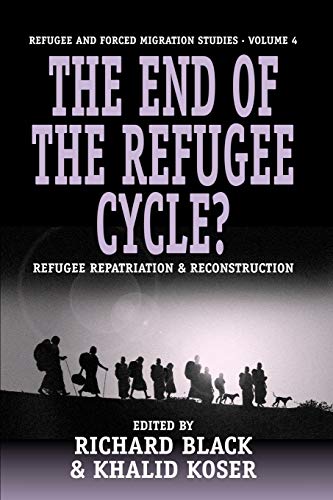
Chosen by The Humanitarian Times as one of the Top Ten Titles on Humanitarian Issues of 1998. At the start of the 1990s, there was great optimism that the end of the Cold War might also mean the end of the "refugee cycle" - both a breaking of the cycle of violence, persecution and flight, and the completion of the cycle for those able to return to their homes. The 1990s, it was hoped, would become the "decade of repatriation." However, although over nine million refugees were repatriated worldwide between 1991 and 1995, there are reasons to believe that it will not necessarily be a durable solution for refugees. It certainly has become clear that "the end of the refugee cycle" has been much more complex, and ultimately more elusive, than expected. The changing constructions and realities of refugee repatriation provide the backdrop for this book which presents new empirical research on examples of refugee repatriation and reconstruction. Apart from providing up-to-date material, it also fills a more fundamental gap in the literature which has tended to be based on pedagogical reasoning rather than actual field research. Adopting a global perspective, this volume draws together conclusions from highly varied experiences of refugee repatriation and defines repatriation and reconstruction as part of a wider and interrelated refugee cycle of displacement, exile and return. The contributions come from authors with a wealth of relevant practical and academic experience, spanning the continents of Africa, Asia, Central America, and Europe. Richard Black is Lecturer in Human Geography at the School of African and Asian Studies, University of Sussex, where he moved in 1995 from King's College, London. Khalid Koser is Research Fellow in the School of African and Asian Studies, University of Sussex and was previously Research Fellow in the Migration Research Unit at University College, London.
"synopsis" may belong to another edition of this title.
About the Authors
Richard Black is Lecturer in Human Geography at the School of African and Asian Studies, University of Sussex, where he moved in 1995 from King's College, London.
Khalid Koser is Research Fellow in the School of African and Asian Studies, University of Sussex and was previously Research Fellow in the Migration Research Unit at University College, London.
"About this title" may belong to another edition of this title.
Search results for The End of the Refugee Cycle? Refugee Repatriation...

Stock Image
The End of the Refugee Cycle? : Refugee Repatriation and Reconstruction
Published by
Berghahn Books, Incorporated, 1999
ISBN 10: 1571817158
ISBN 13: 9781571817150
Used
Softcover
Seller: Better World Books Ltd, Dunfermline, United Kingdom
Seller rating 5 out of 5 stars

Condition: Good. Pages intact with minimal writing/highlighting. The binding may be loose and creased. Dust jackets/supplements are not included. Stock photo provided. Product includes identifying sticker. Better World Books: Buy Books. Do Good. Seller Inventory # 67676492-20
Buy Used
£ 6.48
£ 5 shipping
Ships from United Kingdom to U.S.A.
Ships from United Kingdom to U.S.A.
Quantity: 1 available
Stock Image
The End of the Refugee Cycle? : Refugee Repatriation and Reconstruction
Published by
Berghahn Books, Incorporated, 1999
ISBN 10: 1571817158
ISBN 13: 9781571817150
Used
Softcover
Seller: Better World Books, Mishawaka, IN, U.S.A.
Seller rating 5 out of 5 stars
Condition: Good. Former library copy. Pages intact with minimal writing/highlighting. The binding may be loose and creased. Dust jackets/supplements are not included. Includes library markings. Stock photo provided. Product includes identifying sticker. Better World Books: Buy Books. Do Good. Seller Inventory # GRP97855855
Stock Image
The End of the Refugee Cycle? Refugee Repatriation and Reconstruction
Seller: PBShop.store US, Wood Dale, IL, U.S.A.
Seller rating 5 out of 5 stars
PAP. Condition: New. New Book. Shipped from UK. Established seller since 2000. Seller Inventory # CX-9781571817150
Stock Image
The End of the Refugee Cycle?
Seller: PBShop.store UK, Fairford, GLOS, United Kingdom
Seller rating 5 out of 5 stars
PAP. Condition: New. New Book. Shipped from UK. Established seller since 2000. Seller Inventory # CX-9781571817150
Buy New
£ 27.67
£ 4.16 shipping
Ships from United Kingdom to U.S.A.
Ships from United Kingdom to U.S.A.
Quantity: 15 available
Seller Image
End of the Refugee Cycle? : Refugee Repatriation and Reconstruction
Seller: GreatBookPrices, Columbia, MD, U.S.A.
Seller rating 5 out of 5 stars
Condition: New. Seller Inventory # 3342064-n
Seller Image
The End of the Refugee Cycle?
Published by
Berghahn Books, Incorporated, US, 1999
ISBN 10: 1571817158
ISBN 13: 9781571817150
New
Paperback
Seller: Rarewaves USA, HEBRON, KY, U.S.A.
Seller rating 5 out of 5 stars
Paperback. Condition: New. At the start of the 1990s, there was great optimism that the end of the Cold War might also mean the end of the "refugee cycle" - both a breaking of the cycle of violence, persecution and flight, and the completion of the cycle for those able to return to their homes. The 1990s, it was hoped, would become the "decade of repatriation." However, although over nine million refugees were repatriated worldwide between 1991 and 1995, there are reasons to believe that it will not necessarily be a durable solution for refugees. It certainly has become clear that "the end of the refugee cycle" has been much more complex, and ultimately more elusive, than expected. The changing constructions and realities of refugee repatriation provide the backdrop for this book which presents new empirical research on examples of refugee repatriation and reconstruction. Apart from providing up-to-date material, it also fills a more fundamental gap in the literature which has tended to be based on pedagogical reasoning rather than actual field research. Adopting a global perspective, this volume draws together conclusions from highly varied experiences of refugee repatriation and defines repatriation and reconstruction as part of a wider and interrelated refugee cycle of displacement, exile and return. The contributions come from authors with a wealth of relevant practical and academic experience, spanning the continents of Africa, Asia, Central America, and Europe. Seller Inventory # LU-9781571817150
Stock Image
The End Of The Refugee Cycle
Seller: Basi6 International, Irving, TX, U.S.A.
Seller rating 5 out of 5 stars
Condition: Brand New. New. US edition. Expediting shipping for all USA and Europe orders excluding PO Box. Excellent Customer Service. Seller Inventory # ABEOCT25-172307
Seller Image
End of the Refugee Cycle? : Refugee Repatriation and Reconstruction
Seller: GreatBookPrices, Columbia, MD, U.S.A.
Seller rating 5 out of 5 stars
Condition: As New. Unread book in perfect condition. Seller Inventory # 3342064
Stock Image
The End of the Refugee Cycle?: Refugee Repatriation and Reconstruction
Published by
Berghahn Books, Incorporated, 1999
ISBN 10: 1571817158
ISBN 13: 9781571817150
New
Paperback / softback
Seller: THE SAINT BOOKSTORE, Southport, United Kingdom
Seller rating 5 out of 5 stars
Paperback / softback. Condition: New. New copy - Usually dispatched within 4 working days. Seller Inventory # B9781571817150
Buy New
£ 28.10
£ 14.53 shipping
Ships from United Kingdom to U.S.A.
Ships from United Kingdom to U.S.A.
Quantity: 12 available
Seller Image
End of the Refugee Cycle? : Refugee Repatriation and Reconstruction
Seller: GreatBookPricesUK, Woodford Green, United Kingdom
Seller rating 5 out of 5 stars
Condition: New. Seller Inventory # 3342064-n
Buy New
£ 35.43
£ 15 shipping
Ships from United Kingdom to U.S.A.
Ships from United Kingdom to U.S.A.
Quantity: Over 20 available