
Items related to The Endtimes of Human Rights
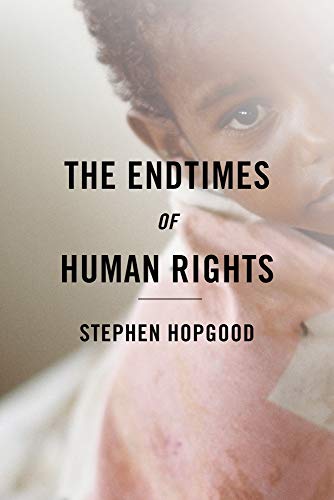
Synopsis
"We are living through the endtimes of the civilizing mission. The ineffectual International Criminal Court and its disastrous first prosecutor, Luis Moreno-Ocampo, along with the failure in Syria of the Responsibility to Protect are the latest pieces of evidence not of transient misfortunes but of fatal structural defects in international humanism. Whether it is the increase in deadly attacks on aid workers, the torture and 'disappearing' of al-Qaeda suspects by American officials, the flouting of international law by states such as Sri Lanka and Sudan, or the shambles of the Khmer Rouge tribunal in Phnom Penh, the prospect of one world under secular human rights law is receding. What seemed like a dawn is in fact a sunset. The foundations of universal liberal norms and global governance are crumbling."―from The Endtimes of Human RightsIn a book that is at once passionate and provocative, Stephen Hopgood argues, against the conventional wisdom, that the idea of universal human rights has become not only ill adapted to current realities but also overambitious and unresponsive. A shift in the global balance of power away from the United States further undermines the foundations on which the global human rights regime is based. American decline exposes the contradictions, hypocrisies and weaknesses behind the attempt to enforce this regime around the world and opens the way for resurgent religious and sovereign actors to challenge human rights.Historically, Hopgood writes, universal humanist norms inspired a sense of secular religiosity among the new middle classes of a rapidly modernizing Europe. Human rights were the product of a particular worldview (Western European and Christian) and specific historical moments (humanitarianism in the nineteenth century, the aftermath of the Holocaust). They were an antidote to a troubling contradiction―the coexistence of a belief in progress with horrifying violence and growing inequality. The obsolescence of that founding purpose in the modern globalized world has, Hopgood asserts, transformed the institutions created to perform it, such as the International Committee of the Red Cross and recently the International Criminal Court, into self-perpetuating structures of intermittent power and authority that mask their lack of democratic legitimacy and systematic ineffectiveness. At their best, they provide relief in extraordinary situations of great distress; otherwise they are serving up a mixture of false hope and unaccountability sustained by "human rights" as a global brand.The Endtimes of Human Rights is sure to be controversial. Hopgood makes a plea for a new understanding of where hope lies for human rights, a plea that mourns the promise but rejects the reality of universalism in favor of a less predictable encounter with the diverse realities of today's multipolar world.
"synopsis" may belong to another edition of this title.
About the Author
Stephen Hopgood is Professor of International Relations, SOAS, University of London. He is the author of Keepers of the Flame: Understanding Amnesty International, also from Cornell, and American Foreign Environmental Policy and the Power of the State.
"About this title" may belong to another edition of this title.
Search results for The Endtimes of Human Rights

Stock Image
The Endtimes of Human Rights
Published by
Cornell University Press, 2015
ISBN 10: 1501700669
ISBN 13: 9781501700668
Used
Softcover
Seller: World of Books (was SecondSale), Montgomery, IL, U.S.A.
Seller rating 5 out of 5 stars

Condition: Good. Item in good condition. Textbooks may not include supplemental items i.e. CDs, access codes etc. Seller Inventory # 00103364740
Stock Image
The Endtimes of Human Rights
Published by
Cornell University Press, 2015
ISBN 10: 1501700669
ISBN 13: 9781501700668
Used
Paperback
Seller: Midtown Scholar Bookstore, Harrisburg, PA, U.S.A.
Seller rating 5 out of 5 stars
Paperback. Condition: Acceptable. Some pages are torn and dirty. Cover is heavily worn with dents and tears. Acceptable - This is a significantly damaged book. It should be considered a reading copy only. Please order this book only if you are interested in the content and not the condition. May be ex-library. PAPERBACK Standard-sized. Seller Inventory # ash061826-04
Stock Image
The Endtimes of Human Rights
Published by
Cornell University Press, 2015
ISBN 10: 1501700669
ISBN 13: 9781501700668
Used
Paperback
Seller: Midtown Scholar Bookstore, Harrisburg, PA, U.S.A.
Seller rating 5 out of 5 stars
Paperback. Condition: Good. Good - Bumped and creased book with tears to the extremities, but not affecting the text block, may have remainder mark or previous owner's name - GOOD PAPERBACK Standard-sized. Seller Inventory # M1501700669Z3
Stock Image
The Endtimes of Human Rights
Published by
Cornell University Press, 2015
ISBN 10: 1501700669
ISBN 13: 9781501700668
Used
Softcover
First Edition
Seller: Better World Books, Mishawaka, IN, U.S.A.
Seller rating 5 out of 5 stars
Condition: Good. 1st Edition. Pages intact with minimal writing/highlighting. The binding may be loose and creased. Dust jackets/supplements are not included. Stock photo provided. Product includes identifying sticker. Better World Books: Buy Books. Do Good. Seller Inventory # 19031194-75
Stock Image
The Endtimes of Human Rights
Published by
Cornell University Press, 2015
ISBN 10: 1501700669
ISBN 13: 9781501700668
Used
Paperback
Seller: HPB-Emerald, Dallas, TX, U.S.A.
Seller rating 5 out of 5 stars
Paperback. Condition: Very Good. Connecting readers with great books since 1972! Used books may not include companion materials, and may have some shelf wear or limited writing. We ship orders daily and Customer Service is our top priority! Seller Inventory # S_482443739
Stock Image
The Endtimes of Human Rights
Published by
Cornell University Press, 2015
ISBN 10: 1501700669
ISBN 13: 9781501700668
New
Softcover
Seller: Lakeside Books, Benton Harbor, MI, U.S.A.
Seller rating 5 out of 5 stars
Condition: New. Brand New! Not Overstocks or Low Quality Book Club Editions! Direct From the Publisher! We're not a giant, faceless warehouse organization! We're a small town bookstore that loves books and loves it's customers! Buy from Lakeside Books! Seller Inventory # OTF-9781501700668
Stock Image
The Endtimes of Human Rights
Published by
Cornell University Press, 2015
ISBN 10: 1501700669
ISBN 13: 9781501700668
Used
Soft cover
Seller: Book Dispensary, Concord, ON, Canada
Seller rating 5 out of 5 stars
Soft cover. Condition: Very Good. VERY GOOD softcover, no marks in text, tight uncreased spine, clean exterior. Book. Seller Inventory # 135457
Seller Image
The Endtimes of Human Rights (Paperback or Softback)
Published by
Cornell University Press 11/10/2015, 2015
ISBN 10: 1501700669
ISBN 13: 9781501700668
New
Paperback or Softback
Seller: BargainBookStores, Grand Rapids, MI, U.S.A.
Seller rating 5 out of 5 stars
Paperback or Softback. Condition: New. The Endtimes of Human Rights. Book. Seller Inventory # BBS-9781501700668
Stock Image
The Endtimes of Human Rights Format: Paperback
Published by
University of North Carolina Press, 2015
ISBN 10: 1501700669
ISBN 13: 9781501700668
New
Softcover
Seller: INDOO, Avenel, NJ, U.S.A.
Seller rating 5 out of 5 stars
Condition: New. Brand New. Seller Inventory # 9781501700668
Seller Image
The Endtimes of Human Rights
Published by
Cornell University Press, US, 2015
ISBN 10: 1501700669
ISBN 13: 9781501700668
New
Paperback
Seller: Rarewaves USA, HEBRON, KY, U.S.A.
Seller rating 5 out of 5 stars
Paperback. Condition: New. "We are living through the endtimes of the civilizing mission. The ineffectual International Criminal Court and its disastrous first prosecutor, Luis Moreno-Ocampo, along with the failure in Syria of the Responsibility to Protect are the latest pieces of evidence not of transient misfortunes but of fatal structural defects in international humanism. Whether it is the increase in deadly attacks on aid workers, the torture and 'disappearing' of al-Qaeda suspects by American officials, the flouting of international law by states such as Sri Lanka and Sudan, or the shambles of the Khmer Rouge tribunal in Phnom Penh, the prospect of one world under secular human rights law is receding. What seemed like a dawn is in fact a sunset. The foundations of universal liberal norms and global governance are crumbling."-from The Endtimes of Human Rights In a book that is at once passionate and provocative, Stephen Hopgood argues, against the conventional wisdom, that the idea of universal human rights has become not only ill adapted to current realities but also overambitious and unresponsive. A shift in the global balance of power away from the United States further undermines the foundations on which the global human rights regime is based. American decline exposes the contradictions, hypocrisies and weaknesses behind the attempt to enforce this regime around the world and opens the way for resurgent religious and sovereign actors to challenge human rights. Historically, Hopgood writes, universal humanist norms inspired a sense of secular religiosity among the new middle classes of a rapidly modernizing Europe. Human rights were the product of a particular worldview (Western European and Christian) and specific historical moments (humanitarianism in the nineteenth century, the aftermath of the Holocaust). They were an antidote to a troubling contradiction-the coexistence of a belief in progress with horrifying violence and growing inequality. The obsolescence of that founding purpose in the modern globalized world has, Hopgood asserts, transformed the institutions created to perform it, such as the International Committee of the Red Cross and recently the International Criminal Court, into self-perpetuating structures of intermittent power and authority that mask their lack of democratic legitimacy and systematic ineffectiveness. At their best, they provide relief in extraordinary situations of great distress; otherwise they are serving up a mixture of false hope and unaccountability sustained by "human rights" as a global brand. The Endtimes of Human Rights is sure to be controversial. Hopgood makes a plea for a new understanding of where hope lies for human rights, a plea that mourns the promise but rejects the reality of universalism in favor of a less predictable encounter with the diverse realities of today's multipolar world. Seller Inventory # LU-9781501700668