
Items related to The Color of Love: Racial Features, Stigma, and Socializatio...
The Color of Love: Racial Features, Stigma, and Socialization in Black Brazilian Families (Louann Atkins Temple Women & Culture Series) - Softcover
Synopsis
Winner, Section on the Sociology of Emotions Outstanding Recent Contribution (Book) Award, American Sociological Association, 2016
Charles Horton Cooley Award for Recent Book, Society for the Study of Symbolic Interaction, 2017
Best Publication Award, Section on Body and Embodiment, American Sociological Association (ASA), 2018
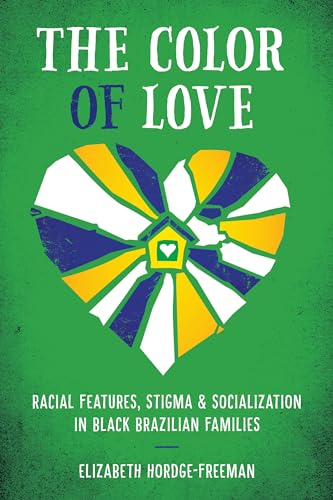
The Color Of Love reveals the power of racial hierarchies to infiltrate our most intimate relationships. Delving far deeper than previous sociologists have into the black Brazilian experience, Elizabeth Hordge-Freeman examines the relationship between racialization and the emotional life of a family. Based on interviews and a sixteen-month ethnography of ten working-class Brazilian families, this provocative work sheds light on how families simultaneously resist and reproduce racial hierarchies. Examining race and gender, Hordge-Freeman illustrates the privileges of whiteness by revealing how those with “blacker” features often experience material and emotional hardships. From parental ties, to sibling interactions, to extended family and romantic relationships, the chapters chart new territory by revealing the connection between proximity to whiteness and the distribution of affection within families.
Hordge-Freeman also explores how black Brazilian families, particularly mothers, rely on diverse strategies that reproduce, negotiate, and resist racism. She frames efforts to modify racial features as sometimes reflecting internalized racism, and at other times as responding to material and emotional considerations. Contextualizing their strategies within broader narratives of the African diaspora, she examines how Salvador’s inhabitants perceive the history of the slave trade itself in a city that is referred to as the “blackest” in Brazil. She argues that racial hierarchies may orchestrate family relationships in ways that reflect and reproduce racial inequality, but black Brazilian families actively negotiate these hierarchies to assert their citizenship and humanity.
"synopsis" may belong to another edition of this title.
About the Author
ELIZABETH HORDGE-FREEMAN, a 2015–2016 Fulbright Scholar, is an assistant professor of sociology with a joint appointment in the Institute for the Study of Latin America & the Caribbean at the University of South Florida.
"About this title" may belong to another edition of this title.
Search results for The Color of Love: Racial Features, Stigma, and Socializatio...

Stock Image
The Color of Love : Racial Features, Stigma, and Socialization in Black Brazilian Families
Published by
University of Texas Press, 2015
ISBN 10: 1477307885
ISBN 13: 9781477307885
Used
Softcover
Seller: Better World Books, Mishawaka, IN, U.S.A.
Seller rating 5 out of 5 stars

Condition: Very Good. Former library copy. Pages intact with possible writing/highlighting. Binding strong with minor wear. Dust jackets/supplements may not be included. Includes library markings. Stock photo provided. Product includes identifying sticker. Better World Books: Buy Books. Do Good. Seller Inventory # 40583195-75
Stock Image
The Color of Love: Racial Features, Stigma, and Socialization in Black Brazilian Families
Published by
University of Texas Press, 2015
ISBN 10: 1477307885
ISBN 13: 9781477307885
Used
Paperback
Seller: ThriftBooks-Atlanta, AUSTELL, GA, U.S.A.
Seller rating 5 out of 5 stars
Paperback. Condition: Fair. No Jacket. Readable copy. Pages may have considerable notes/highlighting. ~ ThriftBooks: Read More, Spend Less. Seller Inventory # G1477307885I5N00
Stock Image
The Color of Love: Racial Features, Stigma, and Socialization in Black Brazilian Families (Louann Atkins Temple Women & Culture Series)
Published by
University of Texas Press, 2015
ISBN 10: 1477307885
ISBN 13: 9781477307885
Used
paperback
Seller: HPB Inc., Dallas, TX, U.S.A.
Seller rating 5 out of 5 stars
paperback. Condition: Very Good. Connecting readers with great books since 1972! Used books may not include companion materials, and may have some shelf wear or limited writing. We ship orders daily and Customer Service is our top priority! Seller Inventory # S_477152013
Stock Image
The Color of Love: Racial Features, Stigma, and Socialization in Black Brazilian Families (Louann Atkins Temple Women & Culture Series)
Published by
University of Texas Press, 2015
ISBN 10: 1477307885
ISBN 13: 9781477307885
Used
Paperback
Seller: Textbook Bookie, Little Rock, AR, U.S.A.
Seller rating 5 out of 5 stars
Paperback. Condition: Very Good. Book in Very Good condition. Seller Inventory # 9781477307885-very_good
Stock Image
The Color of Love: Racial Features, Stigma, and Socialization in Black Brazilian Families (Louann Atkins Temple Women & Culture Series)
Published by
University of Texas Press, 2015
ISBN 10: 1477307885
ISBN 13: 9781477307885
Used
paperback
Seller: Textbooks_Source, Columbia, MO, U.S.A.
Seller rating 5 out of 5 stars
paperback. Condition: Good. Ships same day or next business day! UPS shipping available (Priority Mail for AK/HI/APO/PO Boxes). Used sticker and some writing and/or highlighting. Used books may not include working access code. Used books will not include dust jackets. Seller Inventory # 002064421U
Stock Image
Color of Love : Racial Features, Stigma and Socialization in Black Brazilian Families
Published by
University of Texas Press, 2015
ISBN 10: 1477307885
ISBN 13: 9781477307885
Used
Softcover
Seller: GreatBookPrices, Columbia, MD, U.S.A.
Seller rating 5 out of 5 stars
Condition: good. May show signs of wear, highlighting, writing, and previous use. This item may be a former library book with typical markings. No guarantee on products that contain supplements Your satisfaction is 100% guaranteed. Twenty-five year bookseller with shipments to over fifty million happy customers. Seller Inventory # 24193604-5
Seller Image
Color of Love : Racial Features, Stigma and Socialization in Black Brazilian Families
Published by
University of Texas Press, 2015
ISBN 10: 1477307885
ISBN 13: 9781477307885
Used
Softcover
Seller: GreatBookPrices, Columbia, MD, U.S.A.
Seller rating 5 out of 5 stars
Condition: As New. Unread book in perfect condition. Seller Inventory # 24193604
Stock Image
The Color of Love
Published by
MU - University of Texas Press, 2015
ISBN 10: 1477307885
ISBN 13: 9781477307885
New
PAP
Seller: PBShop.store UK, Fairford, GLOS, United Kingdom
Seller rating 5 out of 5 stars
PAP. Condition: New. New Book. Shipped from UK. Established seller since 2000. Seller Inventory # FW-9781477307885
Buy New
£ 24.21
£ 5.02 shipping
Ships from United Kingdom to U.S.A.
Ships from United Kingdom to U.S.A.
Quantity: 15 available
Seller Image
Color of Love : Racial Features, Stigma and Socialization in Black Brazilian Families
Published by
University of Texas Press, 2015
ISBN 10: 1477307885
ISBN 13: 9781477307885
New
Softcover
Seller: GreatBookPrices, Columbia, MD, U.S.A.
Seller rating 5 out of 5 stars
Condition: New. Seller Inventory # 24193604-n
Seller Image
The Color of Love
Published by
University of Texas Press, US, 2015
ISBN 10: 1477307885
ISBN 13: 9781477307885
New
Paperback
Seller: Rarewaves.com USA, London, LONDO, United Kingdom
Seller rating 5 out of 5 stars
Paperback. Condition: New. Winner, Section on the Sociology of Emotions Outstanding Recent Contribution (Book) Award, American Sociological Association, 2016 Charles Horton Cooley Award for Recent Book, Society for the Study of Symbolic Interaction, 2017 Best Publication Award, Section on Body and Embodiment, American Sociological Association (ASA), 2018The Color Of Love reveals the power of racial hierarchies to infiltrate our most intimate relationships. Delving far deeper than previous sociologists have into the black Brazilian experience, Elizabeth Hordge-Freeman examines the relationship between racialization and the emotional life of a family. Based on interviews and a sixteen-month ethnography of ten working-class Brazilian families, this provocative work sheds light on how families simultaneously resist and reproduce racial hierarchies. Examining race and gender, Hordge-Freeman illustrates the privileges of whiteness by revealing how those with "blacker" features often experience material and emotional hardships. From parental ties, to sibling interactions, to extended family and romantic relationships, the chapters chart new territory by revealing the connection between proximity to whiteness and the distribution of affection within families.Hordge-Freeman also explores how black Brazilian families, particularly mothers, rely on diverse strategies that reproduce, negotiate, and resist racism. She frames efforts to modify racial features as sometimes reflecting internalized racism, and at other times as responding to material and emotional considerations. Contextualizing their strategies within broader narratives of the African diaspora, she examines how Salvador's inhabitants perceive the history of the slave trade itself in a city that is referred to as the "blackest" in Brazil. She argues that racial hierarchies may orchestrate family relationships in ways that reflect and reproduce racial inequality, but black Brazilian families actively negotiate these hierarchies to assert their citizenship and humanity. Seller Inventory # LU-9781477307885
Buy New
£ 30.13
Free Shipping
Ships from United Kingdom to U.S.A.
Ships from United Kingdom to U.S.A.
Quantity: 3 available