
Items related to Courts and Elites in the Hellenistic Empires: The Near...
Courts and Elites in the Hellenistic Empires: The Near East After the Achaemenids, C. 330 to 30 Bce (Edinburgh Studies in Ancient P) - Softcover
Book 6 of 11: Edinburgh Studies in Ancient Persia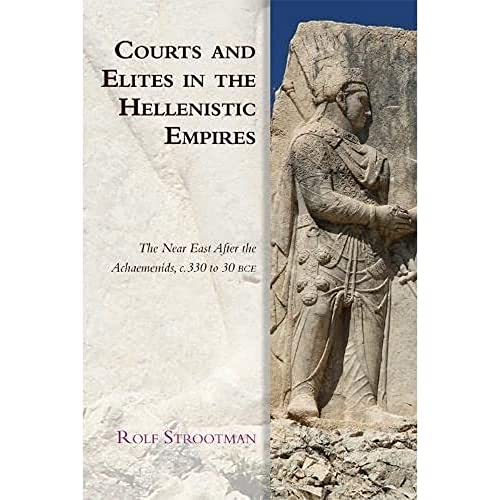
Synopsis
The first complete study of royal courts in the post-Achaemenid Near East. Rolf Strootman brings together various aspects of court culture in the Macedonian empires of the post-Achaemenid Near East. During the Hellenistic Period (c. 330-30 BCE), Alexander the Great and his successors reshaped their Persian and Greco-Macedonian legacies to create a new kind of rulership that was neither 'western' nor 'eastern' and would profoundly influence the later development of court culture and monarchy in both the Roman West and Iranian East.
Drawing on the socio-political models of Norbert Elias and Charles Tilly, After the Achaemenids shows how the Hellenistic dynastic courts were instrumental in the integration of local elites in the empires, and the (re)distribution of power, wealth, and status. It analyses the competition among courtiers for royal favour and the, not always successful, attempts of the Hellenistic rulers to use these struggles to their own advantage. Demonstrates the interrelationships of the three competing 'Hellenistic' empires of the Seleukids, Antigonids and Ptolemies. Casts new light on the phenomenon of Hellenistic Kingship by approaching it from the angle of the court. Covers topics such as palace architecture, royal women, court ceremonial, and coronation ritual.
"synopsis" may belong to another edition of this title.
About the Author
Rolf Strootman graduated in ancient history and archaeology at the University of Leiden. In 2007 he received his PhD for a study of court culture in the Hellenistic period. He is currently a lecturer at the History Department of the University of Utrecht. His research and teaching focus on empire, monarchical ritual and cultural encounters in the Near East, Iran and Central Asia, and on modern western perceptions of the Middle East.
From the Back Cover
'Rolf Strootman tells the fascinating story of the Hellenistic Near East as seen through the eyes of those in power. Theoretically informed and brilliantly written, this is a masterly biography of a political institution.' Michael Sommer, Carl von Ossietzky University of Oldenburg The first complete study of royal courts in the Hellenistic Near East Rolf Strootman brings together various aspects of court culture in the Macedonian empires of the post-Achaemenid Near East. During the Hellenistic Period (c. 330 to 30 BCE), Alexander the Great and his successors reshaped their Persian and Greco-Macedonian legacies to create a new kind of rulership that was neither 'western' nor 'eastern' and would profoundly influence the development of court culture and monarchy in both the Roman West and Iranian East. Drawing on the socio-political models of Norbert Elias and Charles Tilly, this book shows how the Macedonian dynastic courts were instrumental in the integration of local elites in the Hellenistic empires, and the (re)distribution of power, wealth and status. It analyses the competition among courtiers for royal favour and the, not always successful, attempts of the Hellenistic rulers to use these struggles to their own advantage. Rolf Strootman is Associate Professor of Ancient History at the University of Utrecht. Cover image: Antiochos I of Kommagene shaking hands with Herakles (detail). First-century BCE relief from Arsameia (c) Klaus-Peter Simon/Wikimedia Commons. Cover design: [EUP logo] www.euppublishing.com
"About this title" may belong to another edition of this title.
Search results for Courts and Elites in the Hellenistic Empires: The Near...

Seller Image
Courts and Elites in the Hellenistic Empires : The Near East After the Achaemenids, C. 330 to 30 Bce
Published by
Edinburgh University Press, 2020
ISBN 10: 1474474802
ISBN 13: 9781474474801
Used
Softcover
Seller: GreatBookPrices, Columbia, MD, U.S.A.
Seller rating 5 out of 5 stars

Condition: As New. Unread book in perfect condition. Seller Inventory # 40538802
Stock Image
Courts and Elites in the Hellenistic Empires: The Near East After the Achaemenids, C. 330 to 30 Bce (Edinburgh Studies in Ancient P)
Published by
Edinburgh University Press 2020-06-04, 2020
ISBN 10: 1474474802
ISBN 13: 9781474474801
New
Paperback
Seller: Chiron Media, Wallingford, United Kingdom
Seller rating 5 out of 5 stars
Paperback. Condition: New. Brand new book, sourced directly from publisher. Dispatch time is 24-48 hours from our warehouse. Book will be sent in robust, secure packaging to ensure it reaches you securely. Seller Inventory # 6666-GRD-9781474474801
Buy New
£ 26.10
£ 6.49 shipping
Ships from United Kingdom to U.S.A.
Ships from United Kingdom to U.S.A.
Quantity: 2 available
Stock Image
Courts and Elites in the Hellenistic Empires
Seller: PBShop.store UK, Fairford, GLOS, United Kingdom
Seller rating 5 out of 5 stars
PAP. Condition: New. New Book. Shipped from UK. Established seller since 2000. Seller Inventory # GB-9781474474801
Buy New
£ 28.47
£ 5.02 shipping
Ships from United Kingdom to U.S.A.
Ships from United Kingdom to U.S.A.
Quantity: 2 available
Stock Image
Courts and Elites in the Hellenistic Empires: The Near East After the Achaemenids, C. 330 to 30 Bce (Edinburgh Studies in Ancient P) (Edinburgh Studies in Ancient Persia)
Published by
Edinburgh University Press 2020-06-04, 2020
ISBN 10: 1474474802
ISBN 13: 9781474474801
New
Paperback
Seller: Chiron Media, Wallingford, United Kingdom
Seller rating 5 out of 5 stars
Paperback. Condition: New. Brand new book, sourced directly from publisher. Dispatch time is 6-7 days from our warehouse. Book will be sent in robust, secure packaging to ensure it reaches you securely. Seller Inventory # 6666-MAC-9781474474801
Buy New
£ 27.10
£ 6.49 shipping
Ships from United Kingdom to U.S.A.
Ships from United Kingdom to U.S.A.
Quantity: 1 available
Seller Image
Courts and Elites in the Hellenistic Empires : The Near East After the Achaemenids, C. 330 to 30 Bce
Published by
Edinburgh University Press, 2020
ISBN 10: 1474474802
ISBN 13: 9781474474801
New
Softcover
Seller: GreatBookPrices, Columbia, MD, U.S.A.
Seller rating 5 out of 5 stars
Condition: New. Seller Inventory # 40538802-n
Stock Image
Courts and Elites in the Hellenistic Empires (Paperback)
Published by
Edinburgh University Press, Edinburgh, 2020
ISBN 10: 1474474802
ISBN 13: 9781474474801
New
Paperback
Seller: Grand Eagle Retail, Bensenville, IL, U.S.A.
Seller rating 5 out of 5 stars
Paperback. Condition: new. Paperback. Rolf Strootman brings together various aspects of court culture in the Macedonian empires of the post-Achaemenid Near East. During the Hellenistic Period (c. 330-30 BCE), Alexander the Great and his successors reshaped their Persian and Greco-Macedonian legacies to create a new kind of rulership that was neither western nor eastern and would profoundly influence the later development of court culture and monarchy in both the Roman West and Iranian East.Drawing on the socio-political models of Norbert Elias and Charles Tilly, After the Achaemenids shows how the Hellenistic dynastic courts were instrumental in the integration of local elites in the empires, and the (re)distribution of power, wealth, and status. It analyses the competition among courtiers for royal favour and the, not always successful, attempts of the Hellenistic rulers to use these struggles to their own advantage.It demonstrates the interrelationships of the three competing Hellenistic empires of the Seleukids, Antigonids and Ptolemies, casts new light on the phenomenon of Hellenistic Kingship by approaching it from the angle of the court and covers topics such as palace architecture, royal women, court ceremonial, and coronation ritual. Rolf Strootman brings together various aspects of court culture in the Macedonian empires of the post-Achaemenid Near East. Shipping may be from multiple locations in the US or from the UK, depending on stock availability. Seller Inventory # 9781474474801
Seller Image
Courts and Elites in the Hellenistic Empires
Published by
Edinburgh University Press, GB, 2020
ISBN 10: 1474474802
ISBN 13: 9781474474801
New
Paperback
Seller: Rarewaves.com USA, London, LONDO, United Kingdom
Seller rating 5 out of 5 stars
Paperback. Condition: New. Rolf Strootman brings together various aspects of court culture in the Macedonian empires of the post-Achaemenid Near East. During the Hellenistic Period (c. 330-30 BCE), Alexander the Great and his successors reshaped their Persian and Greco-Macedonian legacies to create a new kind of rulership that was neither 'western' nor 'eastern' and would profoundly influence the later development of court culture and monarchy in both the Roman West and Iranian East.Drawing on the socio-political models of Norbert Elias and Charles Tilly, After the Achaemenids shows how the Hellenistic dynastic courts were instrumental in the integration of local elites in the empires, and the (re)distribution of power, wealth, and status. It analyses the competition among courtiers for royal favour and the, not always successful, attempts of the Hellenistic rulers to use these struggles to their own advantage.It demonstrates the interrelationships of the three competing 'Hellenistic' empires of the Seleukids, Antigonids and Ptolemies, casts new light on the phenomenon of Hellenistic Kingship by approaching it from the angle of the court and covers topics such as palace architecture, royal women, court ceremonial, and coronation ritual. Seller Inventory # LU-9781474474801
Buy New
£ 35.34
Free Shipping
Ships from United Kingdom to U.S.A.
Ships from United Kingdom to U.S.A.
Quantity: 1 available
Seller Image
Courts and Elites in the Hellenistic Empires
Published by
Edinburgh University Press, GB, 2020
ISBN 10: 1474474802
ISBN 13: 9781474474801
New
Paperback
Seller: Rarewaves USA, HEBRON, KY, U.S.A.
Seller rating 5 out of 5 stars
Paperback. Condition: New. Rolf Strootman brings together various aspects of court culture in the Macedonian empires of the post-Achaemenid Near East. During the Hellenistic Period (c. 330-30 BCE), Alexander the Great and his successors reshaped their Persian and Greco-Macedonian legacies to create a new kind of rulership that was neither 'western' nor 'eastern' and would profoundly influence the later development of court culture and monarchy in both the Roman West and Iranian East.Drawing on the socio-political models of Norbert Elias and Charles Tilly, After the Achaemenids shows how the Hellenistic dynastic courts were instrumental in the integration of local elites in the empires, and the (re)distribution of power, wealth, and status. It analyses the competition among courtiers for royal favour and the, not always successful, attempts of the Hellenistic rulers to use these struggles to their own advantage.It demonstrates the interrelationships of the three competing 'Hellenistic' empires of the Seleukids, Antigonids and Ptolemies, casts new light on the phenomenon of Hellenistic Kingship by approaching it from the angle of the court and covers topics such as palace architecture, royal women, court ceremonial, and coronation ritual. Seller Inventory # LU-9781474474801
Stock Image
Courts & Elites The Hellenistic Empires (Edinburgh Studies in Ancient P)
Published by
Edinburgh University Press, 2020
ISBN 10: 1474474802
ISBN 13: 9781474474801
New
Softcover
Seller: Majestic Books, Hounslow, United Kingdom
Seller rating 4 out of 5 stars

Condition: New. pp. 344. Seller Inventory # 385377389
Buy New
£ 32.72
£ 6.50 shipping
Ships from United Kingdom to U.S.A.
Ships from United Kingdom to U.S.A.
Quantity: 3 available
Stock Image
Courts and Elites in the Hellenisti
Published by
Edinburgh University Press, 2020
ISBN 10: 1474474802
ISBN 13: 9781474474801
New
Softcover
Seller: Brook Bookstore On Demand, Napoli, NA, Italy
Seller rating 5 out of 5 stars
Condition: new. Seller Inventory # 7a9d5a675917c8c3570390159a6eed49