
Items related to Advances in Soil Science: Volume 2
Synopsis
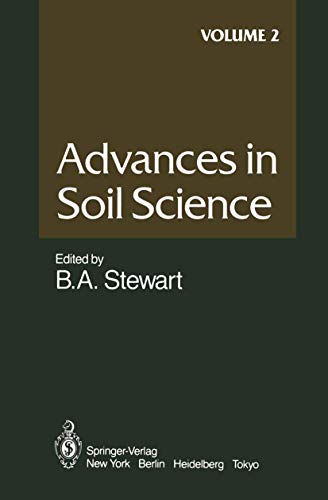
The world population in 1930 was 2 billion. It reached 3 billion in 1960, stands at 4. 6 billion today, and is expected to reach 6 billion by the end of the century. The food and fiber needs of such a rapidly increasing population are enormous. One of the most basic resources, perhaps the most basic of all, for meeting these needs is the soil. There is an urgent need to improve and protect this resource on which the future of mankind directly depends. We must not only learn how to use the soil to furnish our immediate needs, but also ensure that the ability of the soil to sustain food production in the future is unimpaired. This is indeed a mammoth task; a 1977 United Nations survey reported that almost one-fifth of the world's is now being steadily degraded. The diversity of soil makes it cropland necessary for research to be conducted in many locations. There are basic principles, however, that are universal. This, Advances in Soil Sciences, presents clear and concise reviews in all areas of soil science for everyone interested in this basic resource and man's influence on it. The purpose of the series is to provide a forum for leading scientists to analyze and summarize the available scientific information on a subject, assessing its importance and identifying additional research needs. But most importantly, the contributors will develop principles that have practical applications to both developing and developed agricultures.
"synopsis" may belong to another edition of this title.
Search results for Advances in Soil Science: Volume 2

Stock Image
Advances in Soil Science (eng)
Print on DemandSeller: Brook Bookstore On Demand, Napoli, NA, Italy
Seller rating 5 out of 5 stars

Condition: new. Questo è un articolo print on demand. Seller Inventory # CL7EVTWUUG
Buy New
£ 39.81
£ 4.60 shipping
Ships from Italy to U.S.A.
Ships from Italy to U.S.A.
Quantity: Over 20 available
Stock Image
Advances in Soil Science (Paperback)
Published by
Springer-Verlag New York Inc., New York, NY, 2011
ISBN 10: 1461295580
ISBN 13: 9781461295587
New
Paperback
Seller: Grand Eagle Retail, Bensenville, IL, U.S.A.
Seller rating 5 out of 5 stars
Paperback. Condition: new. Paperback. The world population in 1930 was 2 billion. It reached 3 billion in 1960, stands at 4. 6 billion today, and is expected to reach 6 billion by the end of the century. The food and fiber needs of such a rapidly increasing population are enormous. One of the most basic resources, perhaps the most basic of all, for meeting these needs is the soil. There is an urgent need to improve and protect this resource on which the future of mankind directly depends. We must not only learn how to use the soil to furnish our immediate needs, but also ensure that the ability of the soil to sustain food production in the future is unimpaired. This is indeed a mammoth task; a 1977 United Nations survey reported that almost one-fifth of the world's is now being steadily degraded. The diversity of soil makes it cropland necessary for research to be conducted in many locations. There are basic principles, however, that are universal. This, Advances in Soil Sciences, presents clear and concise reviews in all areas of soil science for everyone interested in this basic resource and man's influence on it. The purpose of the series is to provide a forum for leading scientists to analyze and summarize the available scientific information on a subject, assessing its importance and identifying additional research needs. But most importantly, the contributors will develop principles that have practical applications to both developing and developed agricultures. We must not only learn how to use the soil to furnish our immediate needs, but also ensure that the ability of the soil to sustain food production in the future is unimpaired. This, Advances in Soil Sciences, presents clear and concise reviews in all areas of soil science for everyone interested in this basic resource and man's influence on it. Shipping may be from multiple locations in the US or from the UK, depending on stock availability. Seller Inventory # 9781461295587
Stock Image
Advances in Soil Science: Volume 2
Seller: California Books, Miami, FL, U.S.A.
Seller rating 5 out of 5 stars
Condition: New. Seller Inventory # I-9781461295587
Seller Image
Advances in Soil Science
Published by
Springer, Springer Okt 2011, 2011
ISBN 10: 1461295580
ISBN 13: 9781461295587
New
Taschenbuch
Seller: BuchWeltWeit Ludwig Meier e.K., Bergisch Gladbach, Germany
Seller rating 5 out of 5 stars
Taschenbuch. Condition: Neu. This item is printed on demand - it takes 3-4 days longer - Neuware -The world population in 1930 was 2 billion. It reached 3 billion in 1960, stands at 4. 6 billion today, and is expected to reach 6 billion by the end of the century. The food and fiber needs of such a rapidly increasing population are enormous. One of the most basic resources, perhaps the most basic of all, for meeting these needs is the soil. There is an urgent need to improve and protect this resource on which the future of mankind directly depends. We must not only learn how to use the soil to furnish our immediate needs, but also ensure that the ability of the soil to sustain food production in the future is unimpaired. This is indeed a mammoth task; a 1977 United Nations survey reported that almost one-fifth of the world's is now being steadily degraded. The diversity of soil makes it cropland necessary for research to be conducted in many locations. There are basic principles, however, that are universal. This, Advances in Soil Sciences, presents clear and concise reviews in all areas of soil science for everyone interested in this basic resource and man's influence on it. The purpose of the series is to provide a forum for leading scientists to analyze and summarize the available scientific information on a subject, assessing its importance and identifying additional research needs. But most importantly, the contributors will develop principles that have practical applications to both developing and developed agricultures. 248 pp. Englisch. Seller Inventory # 9781461295587
Stock Image
Advances in Soil Science: Volume 2
Seller: Ria Christie Collections, Uxbridge, United Kingdom
Seller rating 5 out of 5 stars
Condition: New. In English. Seller Inventory # ria9781461295587_new
Buy New
£ 55.95
£ 9.37 shipping
Ships from United Kingdom to U.S.A.
Ships from United Kingdom to U.S.A.
Quantity: Over 20 available
Stock Image
Advances in Soil Science: Volume 2
Published by
Springer-Verlag New York Inc., 2011
ISBN 10: 1461295580
ISBN 13: 9781461295587
New
Paperback / softback
Seller: THE SAINT BOOKSTORE, Southport, United Kingdom
Seller rating 5 out of 5 stars
Paperback / softback. Condition: New. This item is printed on demand. New copy - Usually dispatched within 5-9 working days. Seller Inventory # C9781461295587
Buy New
£ 57.65
£ 14.91 shipping
Ships from United Kingdom to U.S.A.
Ships from United Kingdom to U.S.A.
Quantity: Over 20 available
Stock Image
Advances in Soil Science: Vol 2
Seller: Revaluation Books, Exeter, United Kingdom
Seller rating 5 out of 5 stars
Paperback. Condition: Brand New. 235 pages. 9.00x6.25x0.75 inches. In Stock. Seller Inventory # x-1461295580
Buy New
£ 65.68
£ 10 shipping
Ships from United Kingdom to U.S.A.
Ships from United Kingdom to U.S.A.
Quantity: 2 available
Seller Image
Advances in Soil Science
Print on DemandSeller: moluna, Greven, Germany
Seller rating 5 out of 5 stars
Condition: New. Dieser Artikel ist ein Print on Demand Artikel und wird nach Ihrer Bestellung fuer Sie gedruckt. The world population in 1930 was 2 billion. It reached 3 billion in 1960, stands at 4. 6 billion today, and is expected to reach 6 billion by the end of the century. The food and fiber needs of such a rapidly increasing population are enormous. One of the m. Seller Inventory # 4192060
Buy New
£ 41.66
£ 40.97 shipping
Ships from Germany to U.S.A.
Ships from Germany to U.S.A.
Quantity: Over 20 available
Seller Image
Advances in Soil Science : Volume 2
Print on DemandSeller: AHA-BUCH GmbH, Einbeck, Germany
Seller rating 5 out of 5 stars
Taschenbuch. Condition: Neu. nach der Bestellung gedruckt Neuware - Printed after ordering - The world population in 1930 was 2 billion. It reached 3 billion in 1960, stands at 4. 6 billion today, and is expected to reach 6 billion by the end of the century. The food and fiber needs of such a rapidly increasing population are enormous. One of the most basic resources, perhaps the most basic of all, for meeting these needs is the soil. There is an urgent need to improve and protect this resource on which the future of mankind directly depends. We must not only learn how to use the soil to furnish our immediate needs, but also ensure that the ability of the soil to sustain food production in the future is unimpaired. This is indeed a mammoth task; a 1977 United Nations survey reported that almost one-fifth of the world's is now being steadily degraded. The diversity of soil makes it cropland necessary for research to be conducted in many locations. There are basic principles, however, that are universal. This, Advances in Soil Sciences, presents clear and concise reviews in all areas of soil science for everyone interested in this basic resource and man's influence on it. The purpose of the series is to provide a forum for leading scientists to analyze and summarize the available scientific information on a subject, assessing its importance and identifying additional research needs. But most importantly, the contributors will develop principles that have practical applications to both developing and developed agricultures. Seller Inventory # 9781461295587
Stock Image
Advances in Soil Science (Paperback)
Published by
Springer-Verlag New York Inc., New York, NY, 2011
ISBN 10: 1461295580
ISBN 13: 9781461295587
New
Paperback
Seller: CitiRetail, Stevenage, United Kingdom
Seller rating 5 out of 5 stars
Paperback. Condition: new. Paperback. The world population in 1930 was 2 billion. It reached 3 billion in 1960, stands at 4. 6 billion today, and is expected to reach 6 billion by the end of the century. The food and fiber needs of such a rapidly increasing population are enormous. One of the most basic resources, perhaps the most basic of all, for meeting these needs is the soil. There is an urgent need to improve and protect this resource on which the future of mankind directly depends. We must not only learn how to use the soil to furnish our immediate needs, but also ensure that the ability of the soil to sustain food production in the future is unimpaired. This is indeed a mammoth task; a 1977 United Nations survey reported that almost one-fifth of the world's is now being steadily degraded. The diversity of soil makes it cropland necessary for research to be conducted in many locations. There are basic principles, however, that are universal. This, Advances in Soil Sciences, presents clear and concise reviews in all areas of soil science for everyone interested in this basic resource and man's influence on it. The purpose of the series is to provide a forum for leading scientists to analyze and summarize the available scientific information on a subject, assessing its importance and identifying additional research needs. But most importantly, the contributors will develop principles that have practical applications to both developing and developed agricultures. We must not only learn how to use the soil to furnish our immediate needs, but also ensure that the ability of the soil to sustain food production in the future is unimpaired. This, Advances in Soil Sciences, presents clear and concise reviews in all areas of soil science for everyone interested in this basic resource and man's influence on it. This item is printed on demand. Shipping may be from our UK warehouse or from our Australian or US warehouses, depending on stock availability. Seller Inventory # 9781461295587
Buy New
£ 55.49
£ 37 shipping
Ships from United Kingdom to U.S.A.
Ships from United Kingdom to U.S.A.
Quantity: 1 available