
Items related to Ecological Impacts of Non-Native Invertebrates and...
Synopsis
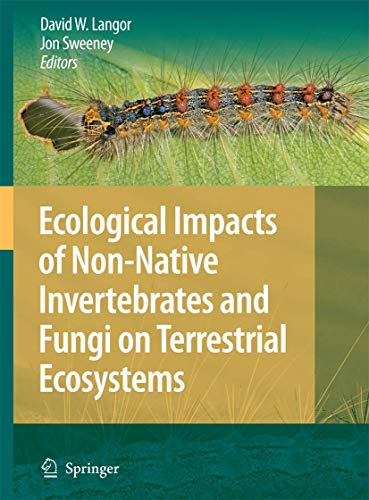
Since the arrival of Europeans about 500 years ago, an estimated 50,000 non-native species have been introduced to North America (including Hawaii). Non-native species figure prominently in our lives, often as ornamentals, sources of food or pests. Although many introduced species are beneficial, there is increasing awareness of the enormous economic costs associated with non-native pests. In contrast, the ecological impacts of non-native species have received much less public and scientific attention, despite the fact that invasion by exotic species ranks second to habitat destruction as a cause of species loss. In particular, there is little information about the ecological impacts of hyper-diverse groups such as terrestrial fungi and invertebrates.
A science symposium, Ecological impacts of non-native invertebrates and fungi on terrestrial ecosystems, held in 2006, brought together scientists from the USA and Canada to review the state of knowledge in this field of work. Additional reviews were solicited following the symposium. The resulting set of review/synthesis papers and case studies represents a cross-section of work on ecological impacts of non-native terrestrial invertebrates and fungi. Although there is a strong focus on Canadian work, there is also significant presentation of work in the northern USA and Europe.
"synopsis" may belong to another edition of this title.
From the Back Cover
Since the arrival of Europeans about 500 years ago, an estimated 50,000 non-native species have been introduced to North America (including Hawaii). Non-native species figure prominently in our lives, often as ornamentals, sources of food or pests. Although many introduced species are beneficial, there is increasing awareness of the enormous economic costs associated with non-native pests. In contrast, the ecological impacts of non-native species have received much less public and scientific attention, despite the fact that invasion by exotic species ranks second to habitat destruction as a cause of species loss. In particular, there is little information about the ecological impacts of hyper-diverse groups such as terrestrial fungi and invertebrates. A science symposium, Ecological impacts of non-native invertebrates and fungi on terrestrial ecosystems, held in 2006, brought together scientists from the USA and Canada to review the state of knowledge in this field of work. Additional reviews were solicited following the symposium. The resulting set of review/synthesis papers and case studies represents a cross-section of work on ecological impacts of non-native terrestrial invertebrates and fungi. Although there is a strong focus on Canadian work, there is also significant presentation of work in the northern USA and Europe.
"About this title" may belong to another edition of this title.
Other Popular Editions of the Same Title

Search results for Ecological Impacts of Non-Native Invertebrates and...

Stock Image
Ecological Impacts of Non-Native Invertebrates and
Seller: Basi6 International, Irving, TX, U.S.A.
Seller rating 5 out of 5 stars

Condition: Brand New. New. Delivery takes 25-30 days. Excellent Customer Service. Seller Inventory # POD-203361
Stock Image
Ecological Impacts of Non-Native Invertebrates and Fungi on Terrestrial Ecosystems
Seller: GreatBookPrices, Columbia, MD, U.S.A.
Seller rating 5 out of 5 stars
Condition: As New. Unread book in perfect condition. Seller Inventory # 6091708
Stock Image
Ecological Impacts of Non-Native Invertebrates and Fungi on Terrestrial Ecosystems
Seller: Ria Christie Collections, Uxbridge, United Kingdom
Seller rating 5 out of 5 stars
Condition: New. In. Seller Inventory # ria9781402096792_new
Buy New
£ 96.88
£ 11.98 shipping
Ships from United Kingdom to U.S.A.
Ships from United Kingdom to U.S.A.
Quantity: Over 20 available
Stock Image
Ecological Impacts of Non-Native Invertebrates and Fungi on Terrestrial Ecosystems
Seller: GreatBookPricesUK, Woodford Green, United Kingdom
Seller rating 5 out of 5 stars
Condition: New. Seller Inventory # 6091708-n
Buy New
£ 96.87
£ 15 shipping
Ships from United Kingdom to U.S.A.
Ships from United Kingdom to U.S.A.
Quantity: Over 20 available
Seller Image
Ecological Impacts of Non-Native Invertebrates and Fungi on Terrestrial Ecosystems
Published by
Springer Netherlands Feb 2009, 2009
ISBN 10: 1402096798
ISBN 13: 9781402096792
New
Hardcover
Seller: BuchWeltWeit Ludwig Meier e.K., Bergisch Gladbach, Germany
Seller rating 5 out of 5 stars
Buch. Condition: Neu. This item is printed on demand - it takes 3-4 days longer - Neuware -Since the arrival of Europeans about 500 years ago, an estimated 50,000 non-native species have been introduced to North America (including Hawaii). Non-native species figure prominently in our lives, often as ornamentals, sources of food or pests. Although many introduced species are beneficial, there is increasing awareness of the enormous economic costs associated with non-native pests. In contrast, the ecological impacts of non-native species have received much less public and scientific attention, despite the fact that invasion by exotic species ranks second to habitat destruction as a cause of species loss. In particular, there is little information about the ecological impacts of hyper-diverse groups such as terrestrial fungi and invertebrates.A science symposium, Ecological impacts of non-native invertebrates and fungi on terrestrial ecosystems, held in 2006, brought together scientists from the USA and Canada to review the state of knowledge in this field of work. Additional reviews were solicited following the symposium. The resulting set of review/synthesis papers and case studies represents a cross-section of work on ecological impacts of non-native terrestrial invertebrates and fungi. Although there is a strong focus on Canadian work, there is also significant presentation of work in the northern USA and Europe. 164 pp. Englisch. Seller Inventory # 9781402096792
Seller Image
Ecological Impacts of Non-Native Invertebrates and Fungi on Terrestrial Ecosystems
Seller: GreatBookPrices, Columbia, MD, U.S.A.
Seller rating 5 out of 5 stars
Condition: New. Seller Inventory # 6091708-n
Seller Image
Ecological Impacts of Non-Native Invertebrates and Fungi on Terrestrial Ecosystems
Seller: GreatBookPricesUK, Woodford Green, United Kingdom
Seller rating 5 out of 5 stars
Condition: As New. Unread book in perfect condition. Seller Inventory # 6091708
Buy Used
£ 107.89
£ 15 shipping
Ships from United Kingdom to U.S.A.
Ships from United Kingdom to U.S.A.
Quantity: Over 20 available
Seller Image
Ecological Impacts of Non-Native Invertebrates and Fungi on Terrestrial Ecosystems
Print on DemandSeller: moluna, Greven, Germany
Seller rating 5 out of 5 stars
Condition: New. Dieser Artikel ist ein Print on Demand Artikel und wird nach Ihrer Bestellung fuer Sie gedruckt. State-of-the art reviewsBest treatment of this topic availableAddresses impacts of a range of exotic organisms in terrestrial ecosystemsSince the arrival of Europeans about 500 years ago, an estimated 50,000 non-native species ha. Seller Inventory # 4095981
Buy New
£ 81.17
£ 41.84 shipping
Ships from Germany to U.S.A.
Ships from Germany to U.S.A.
Quantity: Over 20 available
Stock Image
Ecological Impacts of Non-Native Invertebrates and Fungi on Terrestrial Ecosystems
Seller: Buchpark, Trebbin, Germany
Seller rating 5 out of 5 stars
Condition: Sehr gut. Zustand: Sehr gut | Sprache: Englisch | Produktart: Bücher | Since the arrival of Europeans about 500 years ago, an estimated 50,000 non-native species have been introduced to North America (including Hawaii). Non-native species figure prominently in our lives, often as ornamentals, sources of food or pests. Although many introduced species are beneficial, there is increasing awareness of the enormous economic costs associated with non-native pests. In contrast, the ecological impacts of non-native species have received much less public and scientific attention, despite the fact that invasion by exotic species ranks second to habitat destruction as a cause of species loss. In particular, there is little information about the ecological impacts of hyper-diverse groups such as terrestrial fungi and invertebrates.A science symposium, Ecological impacts of non-native invertebrates and fungi on terrestrial ecosystems, held in 2006, brought together scientists from the USA and Canada to review the state of knowledge in this field of work. Additional reviews were solicited following the symposium. The resulting set of review/synthesis papers and case studies represents a cross-section of work on ecological impacts of non-native terrestrial invertebrates and fungi. Although there is a strong focus on Canadian work, there is also significant presentation of work in the northern USA and Europe. Seller Inventory # 4947447/12
Stock Image
Ecological Impacts of Non-native Invertebrates and Fungi on Terrestrial Ecosystems
Seller: Revaluation Books, Exeter, United Kingdom
Seller rating 5 out of 5 stars
Hardcover. Condition: Brand New. 1st edition. 158 pages. 10.50x7.75x0.50 inches. In Stock. Seller Inventory # x-1402096798
Buy New
£ 128.39
£ 12.50 shipping
Ships from United Kingdom to U.S.A.
Ships from United Kingdom to U.S.A.
Quantity: 2 available