
Of Alien Kings and Perpetual Kin: Contradiction and Ambiguity in Ruwund (Lunda) Symbolic Thought: v. 1 (Anthropology Matters): 0 - Hardcover
Synopsis
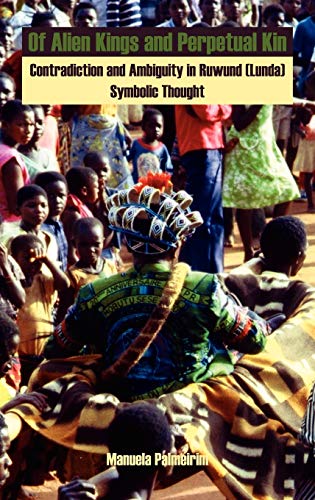
Of Alien Kings and Perpetual Kin presents a detailed understanding and analysis of the ideology of kingship among the Aruwund (Lunda) of southern Democratic Republic of the Congo. In doing so the text is drawn into addressing a range of important regional themes: the debate on the concept of the 'culture hero' in central African traditions of state formation; the system of 'perpetual kinship'; issues of hierarchy; and the symbolic use of space in royal ritual. All these lead to an analysis that stresses the fluidity and ambiguity of symbolic thought. In this, this innovative work questions the heuristic and theoretical validity of the concept of 'opposition' as used in theoretical models applied to the study of symbolism in which terms are self-contained and mutually exclusive.
"synopsis" may belong to another edition of this title.
Excerpt. © Reprinted by permission. All rights reserved.
Prologue
This book is about symbolic paradoxes, logical disruptions and mythical conundrums. It is a journey through an ideological and symbolic thought in which mythical heroines are sterile mothers, at once the king’s mothers and his spouses; where the sovereign is proclaimed both a foreigner and a native, the son and the father, a kin and an affine, at once different and identical; where power is seen to have been usurped as well as founded with the connivance of insiders; and where kingship is construed as a system which, generating from within, can only conceive of itself by resorting to an element coming from outside. Such intrinsic contradiction and ambiguity, here claimed as an inextricable constituent of Ruwund symbolism, far from revealing a loose and baffled thought are of a structuring nature and conceal a coherence the tenacity of which cannot be easily tamed to fit models of analysis of a dichotomous and classificatory nature.
Using an idiom of ‘perpetual kinship’, by means of which characters of a mythical nature identify with their predecessors, the Ruwund symbolic thought moves in a universe of blurred identities, where mythical heroes merge into one another and with actual existing title-holders to produce an overwhelming fluidity and suppleness. Such suppleness and ambiguity, which I suspect are intrinsic to all symbolic systems, do not welcome the questioning for authenticity by historians as well as defy neat categorizations and the fixity of the analytical concept of ‘opposition’ as it has been used in theoretical models applied to the study of symbolism. I address two of these models in particular, L. de Heusch’s and L. Dumont’s (both authors having represented, regardless of this, a continuous source of inspiration to me) and in so doing my work can be viewed to share a similar spirit of other studies which call our attention to the circularity, ambiguity and reversibility of symbolic thought and question the heuristic and theoretical validity of a concept of opposition where terms are self-contained and mutually exclusive (such as Barnes 1985, Gomes da Silva 1989a, 1989b, 1993, 1994 and Ramos 1997, in particular).
This text hopes to demonstrate that symbolic looseness and ambiguity, skilful at playing meaning against itself, constitute the only logical instruments able to both create and convey the intricacy and endless array of significant subtleties that may be said to constitute a ‘system of thought’ (for meaning is indeed in-terminable).1 But in addition to this, I believe that the ethnographic case presented shows how on the grounds of this pliability systems of thought allow room for different claims and interpretations, for some negotiation. In this sense, symbolic systems are of a dynamic nature and, as it is affirmed for hierarchy (see Chapter 4), constantly in the making.
"About this title" may belong to another edition of this title.
Search results for Of Alien Kings and Perpetual Kin: Contradiction and...

Seller Image
Of Alien Kings and Perpetual Kin: Contradiction and Ambiguity in Ruwund (Lunda) Symbolic Thought
Published by
Sean Kingston Publishing, Wantage, 2006
ISBN 10: 0954557271
ISBN 13: 9780954557270
Used
Hardcover
Seller: PsychoBabel & Skoob Books, Didcot, United Kingdom
Seller rating 5 out of 5 stars

Hardcover. Condition: Very Good. Dust Jacket Condition: No Dust Jacket. Hardcover with printed boards, no dust jacket, in very good condition. Board corners and spine head are bumped. Boards are clean, binding is sound and pages are clear. LW. Used. Seller Inventory # 546199
Buy Used
£ 39
£ 12.50 shipping
Ships from United Kingdom to U.S.A.
Ships from United Kingdom to U.S.A.
Quantity: 1 available
Stock Image
Of Alien Kings and Perpetual Kin Contradiction and Ambiguity in Ruwund Lunda Symbolic Thought v 1 Anthropology Matters
Published by
Sean Kingston Publishing, 2006
ISBN 10: 0954557271
ISBN 13: 9780954557270
New
Hardcover
Seller: PBShop.store UK, Fairford, GLOS, United Kingdom
Seller rating 4 out of 5 stars

HRD. Condition: New. New Book. Delivered from our UK warehouse in 4 to 14 business days. THIS BOOK IS PRINTED ON DEMAND. Established seller since 2000. Seller Inventory # L1-9780954557270
Buy New
£ 61.14
£ 5.02 shipping
Ships from United Kingdom to U.S.A.
Ships from United Kingdom to U.S.A.
Quantity: Over 20 available
Stock Image
Of Alien Kings and Perpetual Kin Contradiction and Ambiguity in Ruwund Lunda Symbolic Thought v 1 Anthropology Matters
Published by
Sean Kingston Publishing, 2006
ISBN 10: 0954557271
ISBN 13: 9780954557270
New
Hardcover
Seller: PBShop.store US, Wood Dale, IL, U.S.A.
Seller rating 5 out of 5 stars
HRD. Condition: New. New Book. Shipped from UK. THIS BOOK IS PRINTED ON DEMAND. Established seller since 2000. Seller Inventory # L1-9780954557270
Stock Image
Of Alien Kings and Perpetual Kin: Contradiction and Ambiguity in Ruwund (Lunda) Symbolic Thought (Anthropology Matters)
Published by
Sean Kingston Publishing, 2006
ISBN 10: 0954557271
ISBN 13: 9780954557270
New
Hardcover
Seller: Ria Christie Collections, Uxbridge, United Kingdom
Seller rating 5 out of 5 stars
Condition: New. In. Seller Inventory # ria9780954557270_new
Buy New
£ 61.05
£ 11.98 shipping
Ships from United Kingdom to U.S.A.
Ships from United Kingdom to U.S.A.
Quantity: Over 20 available
Stock Image
Of Alien Kings and Perpetual Kin: Contradiction and Ambiguity in Ruwund (Lunda) Symbolic Thought
Published by
Sean Kingston Publishing, 2006
ISBN 10: 0954557271
ISBN 13: 9780954557270
New
Hardcover
Seller: THE SAINT BOOKSTORE, Southport, United Kingdom
Seller rating 5 out of 5 stars
Hardback. Condition: New. This item is printed on demand. New copy - Usually dispatched within 5-9 working days. Seller Inventory # C9780954557270
Buy New
£ 70.98
£ 15.54 shipping
Ships from United Kingdom to U.S.A.
Ships from United Kingdom to U.S.A.
Quantity: Over 20 available
Seller Image
Of Alien Kings and Perpetual Kin
Published by
Sean Kingston Publishing, 2006
ISBN 10: 0954557271
ISBN 13: 9780954557270
New
Hardcover
Seller: moluna, Greven, Germany
Seller rating 5 out of 5 stars
Gebunden. Condition: New. Dieser Artikel ist ein Print on Demand Artikel und wird nach Ihrer Bestellung fuer Sie gedruckt. Covers anthropology, Africa, Congo, kinship, kingship, and ritual.KlappentextOf Alien Kings and Perpetual Kin presents a detailed understanding and analysis of the ideology of kingship among the Aruwund (Lunda) of southern Democratic. Seller Inventory # 447106422
Buy New
£ 74.25
£ 42.37 shipping
Ships from Germany to U.S.A.
Ships from Germany to U.S.A.
Quantity: Over 20 available
Seller Image
Of Alien Kings and Perpetual Kin | Contradiction and Ambiguity in Ruwund (Lunda) Symbolic Thought
Published by
Sean Kingston Publishing, 2006
ISBN 10: 0954557271
ISBN 13: 9780954557270
New
Hardcover
Seller: preigu, Osnabrück, Germany
Seller rating 5 out of 5 stars
Buch. Condition: Neu. Of Alien Kings and Perpetual Kin | Contradiction and Ambiguity in Ruwund (Lunda) Symbolic Thought | Manuela Palmeirim | Buch | Gebunden | Englisch | 2006 | Sean Kingston Publishing | EAN 9780954557270 | Verantwortliche Person für die EU: Libri GmbH, Europaallee 1, 36244 Bad Hersfeld, gpsr[at]libri[dot]de | Anbieter: preigu Print on Demand. Seller Inventory # 102216258
Seller Image
Of Alien Kings and Perpetual Kin : Contradiction and Ambiguity in Ruwund (Lunda) Symbolic Thought
Published by
Sean Kingston Publishing, 2006
ISBN 10: 0954557271
ISBN 13: 9780954557270
New
Hardcover
Seller: AHA-BUCH GmbH, Einbeck, Germany
Seller rating 5 out of 5 stars
Buch. Condition: Neu. nach der Bestellung gedruckt Neuware - Printed after ordering - Of Alien Kings and Perpetual Kin presents a detailed understanding and analysis of the ideology of kingship among the Aruwund (Lunda) of southern Democratic Republic of the Congo. In doing so the text is drawn into addressing a range of important regional themes: the debate on the concept of the 'culture hero' in central African traditions of state formation; the system of 'perpetual kinship'; issues of hierarchy; and the symbolic use of space in royal ritual. All these lead to an analysis that stresses the fluidity and ambiguity of symbolic thought. In this, this innovative work questions the heuristic and theoretical validity of the concept of 'opposition' as used in theoretical models applied to the study of symbolism in which terms are self-contained and mutually exclusive. Seller Inventory # 9780954557270