
Items related to The Wholeness of Nature: Goethe's Way of Science
Synopsis
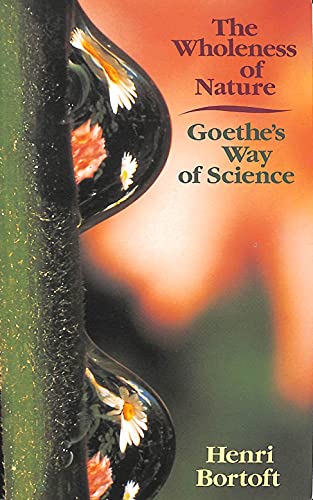
The scientific work of Johann Wolfgang von Goethe (1749-1832) represents a style of learning and understanding which is largely ignored today. Modern science tends to break objects down in a purely analytical way; by contrast, Goethe was interested in the 'whole' of a phenomenon, and in particular the relationship between the object and the observer.
In this illuminating study, Henri Bortoft examines the phenomenological and cultural roots of Goethe's approach to science. He argues that Goethe's insights, far from belonging to the past, represent the foundation for a future science respectful of nature.
"synopsis" may belong to another edition of this title.
About the Author
Henri Bortoft (1938-2012) was a physicist with an interest in the history of science and continental philosophy. He also authored Taking Appearance Seriously (Floris Books, 2012).
"About this title" may belong to another edition of this title.
Search results for The Wholeness of Nature: Goethe's Way of Science

Stock Image
THE WHOLENESS OF NATURE; GOETHE'S WAY OF SCIENCE
Published by
Floris Books, Great Barrington, MA, 1996
ISBN 10: 0863152384
ISBN 13: 9780863152382
Used
Soft cover
Seller: Artis Books & Antiques, Calumet, MI, U.S.A.
Seller rating 5 out of 5 stars

Soft cover. Condition: Near Fine. Dust Jacket Condition: No Dust Jacket. PHILOSOPHY. 419pp. Biblio. Notes. 8vo. Seller Inventory # 100691
Stock Image
The Wholeness of Nature Goethe
Seller: World of Books (was SecondSale), Montgomery, IL, U.S.A.
Seller rating 5 out of 5 stars
Condition: Good. Item in good condition. Textbooks may not include supplemental items i.e. CDs, access codes etc. Seller Inventory # 00102422132
Stock Image
The Wholeness of Nature
Seller: PBShop.store UK, Fairford, GLOS, United Kingdom
Seller rating 5 out of 5 stars
PAP. Condition: Used - Very Good. Used - Like New Book. Shipped from UK. Established seller since 2000. Seller Inventory # P1-9780863152382
Buy Used
£ 15.52
£ 5.02 shipping
Ships from United Kingdom to U.S.A.
Ships from United Kingdom to U.S.A.
Quantity: 1 available
Stock Image
The Wholeness of Nature: Goethe's Way of Science
Seller: World of Books Inc, Montgomery, IL, U.S.A.
Seller rating 2 out of 5 stars

Paperback. Condition: Good. The scientific work of Johann Wolfgang von Goethe (1749-1832) represents a style of learning and understanding which is largely ignored today. Modern science tends to break objects down in a purely analytical way; by contrast, Goethe was interested in the 'whole' of a phenomenon, and in particular the relationship between the object and the observer.In this illuminating study, Henri Bortoft examines the phenomenological and cultural roots of Goethe's approach to science. He argues that Goethe's insights, far from belonging to the past, represent the foundation for a future science respectful of nature. Seller Inventory # CIN0863152384G
Stock Image
The Wholeness of Nature
Seller: PBShop.store UK, Fairford, GLOS, United Kingdom
Seller rating 5 out of 5 stars
PAP. Condition: New. New Book. Shipped from UK. Established seller since 2000. Seller Inventory # BS-9780863152382
Buy New
£ 17.52
£ 5.02 shipping
Ships from United Kingdom to U.S.A.
Ships from United Kingdom to U.S.A.
Quantity: 15 available
Seller Image
The Wholeness of Nature
Seller: Rarewaves.com USA, London, LONDO, United Kingdom
Seller rating 5 out of 5 stars
Paperback. Condition: New. The scientific work of Johann Wolfgang von Goethe (1749-1832) represents a style of learning and understanding which is largely ignored today. Modern science tends to break objects down in a purely analytical way; by contrast, Goethe was interested in the 'whole' of a phenomenon, and in particular the relationship between the object and the observer.In this illuminating study, Henri Bortoft examines the phenomenological and cultural roots of Goethe's approach to science. He argues that Goethe's insights, far from belonging to the past, represent the foundation for a future science respectful of nature. Seller Inventory # LU-9780863152382
Buy New
£ 23.68
Free Shipping
Ships from United Kingdom to U.S.A.
Ships from United Kingdom to U.S.A.
Quantity: Over 20 available
Seller Image
The Wholeness of Nature (Paperback)
Seller: Grand Eagle Retail, Bensenville, IL, U.S.A.
Seller rating 5 out of 5 stars
Paperback. Condition: new. Paperback. The scientific work of Johann Wolfgang von Goethe (1749-1832) represents a style of learning and understanding which is largely ignored today. The approach of modern science is largely detached, intellectual and analytical, and it is increasingly recognized that many of our contemporary problems stem from the resulting divorce from nature. By contrast, Goethe's way of science pursued understanding through the experience of the 'authentic wholeness' of what was observed. Working with the intuitive mode of consciousness, Goethe aimed at an encounter with the whole phenomenon in its relationship with the observer. In his way of seeing, rather than dividing merely in order to categorize, we should investigate the parts of an object in order to reveal the true nature of the whole. In this invaluable study, Henri Bortoft examines the phenomenological and cultural roots of Goethe's ways of science. He argues that Goethe's insights, far from belonging to the past, represent the foundation for a future science.This new science of nature, involving other human faculties besides the analytical mind, can provide understanding and explanation in a way which our present scientific attitudes, and the culture they serve, desperately lack. Examines the phenomenological and cultural roots of Goethe's approach to science, and argues that Goethe's insights represent the foundation for a future science of nature. Shipping may be from multiple locations in the US or from the UK, depending on stock availability. Seller Inventory # 9780863152382
Seller Image
The Wholeness Of Nature: Goethe's Way Of Science
Seller: Book Haven, Wellington, WLG, New Zealand
Seller rating 5 out of 5 stars
Paperback. Condition: Good. The scientific work of Johann Wolfgang von Goethe (1749-1832) represents a style of learning and understanding which is largely ignored today. The approach of modern science is largely detached, intellectual and analytical, and it is increasingly recognized that many of our contemporary problems stem from the resulting divorce from nature. By contrast, Goethe's way of science pursued understanding through the experience of the 'authentic wholeness' of what was observed. Working with the intuitive mode of consciousness, Goethe aimed at an encounter with the whole phenomenon in its relationship with the observer. In his way of seeing, rather than dividing merely in order to categorize, we should investigate the parts of an object in order to reveal the true nature of the whole. In this invaluable study, Henri Bortoft examines the phenomenological and cultural roots of Goethe's ways of science. Soiling to bottom of text block; pencil markings in first part of book. 407 pages. Seller Inventory # 1594797
Buy Used
£ 8.29
£ 18.50 shipping
Ships from New Zealand to U.S.A.
Ships from New Zealand to U.S.A.
Quantity: 1 available
Stock Image
The Wholeness of Nature: Goethe's Way of Science
Seller: Majestic Books, Hounslow, United Kingdom
Seller rating 4 out of 5 stars

Condition: New. Seller Inventory # 3524473
Buy New
£ 21.30
£ 6.50 shipping
Ships from United Kingdom to U.S.A.
Ships from United Kingdom to U.S.A.
Quantity: 3 available
Stock Image
Wholeness of Nature
Published by
Floris Books, 1996
ISBN 10: 0863152384
ISBN 13: 9780863152382
New
Softcover
First Edition
Seller: Kennys Bookshop and Art Galleries Ltd., Galway, GY, Ireland
Seller rating 5 out of 5 stars
Condition: New. 1996. First Edition. Paperback. Examines the phenomenological and cultural roots of Goethe's approach to science, and argues that Goethe's insights represent the foundation for a future science of nature. Num Pages: 432 pages, Illustrations, port. BIC Classification: PDA; PDX. Category: (G) General (US: Trade). Dimension: 234 x 157 x 24. Weight in Grams: 688. . . . . . Seller Inventory # V9780863152382