
Synopsis
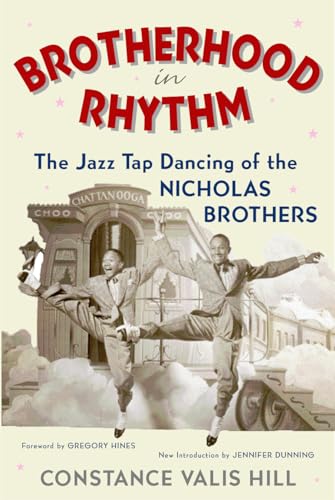
Tap dancing legends Fayard (b. 1914) and Harold (1918-2000) Nicholas amazed crowds with their performances in musicals and films from the 30s to the 80s. They performed with Gene Kelly in The Pirate, with Cab Calloway in Stormy Weather, with Dorothy Dandridge (Harold's wife) in Sun Valley Serenade, and with a number of other stars on the stage and on the screen. Author Hill not only guides readers through the brothers' showstopping successes and the repressive times in which their dancing won them universal acclaim, she also offers extensive insight into the history and choreography of tap dancing, bringing readers up to speed on the art form in which the Nicholas Brothers excelled.
"synopsis" may belong to another edition of this title.
About the Author
Constance Valis Hill's articles and reviews have appeared in such publications as Dance Magazine, The Village Voice, and Dance Research Journal. She lives in Albany, New York. Gregory Hines is a world-renowned tap dancer and actor.
Excerpt. © Reprinted by permission. All rights reserved.
Brotherhood in Rhythm
The Jazz Tap Dancing of the Nicholas BrothersBy Constance Valis HillCooper Square Publishers
Copyright © 2002 Constance Valis HillAll right reserved.
ISBN: 9780815412151
Chapter One
Born
into Jazz
Fayard Nicholas was born in Mobile, Alabama, on October 28,1914, twelve weeks after the Austro-Hungarian declaration of waron Serbia and amidst the succession of declarations of war byother European countries that exploded into World War I.Harold Nicholas was born in Winston-Salem, North Carolina, onMarch 17, 1921, in the wake of the Great War. In Paris a yearbefore Fayard's birth, Igor Stravinsky's dissonant and pulsatingscore for the Ballets Russes' Le Sacre du printemps had instigatedoutraged members of the audience to stomp their feet and beateach other over the head, their strokes synchronized with thebeat of the music. Their response to the rhythm-driven syncopationsin Stravinsky's jazz-influenced score echoed the volatilepredisposition of a people on the brink of war. In the span of timebetween the Nicholas brothers' births, with its mixed moods ofanxiety and optimism over what the future would bring, a newform of music emerged?jazz?that reshaped American cultureand influenced European culture with its sudden turns, shocks,and swift changes of pace. English critic R.W.S. Mendl describedjazz as being the product of a restless age, "when men and womenare still too much disturbed to be content with a tranquil existence ...America is turning out her merchandise at an unprecedentedspeed, and the whole world is rushing helter skelter inunknown directions." Symbolic of the new age, jazz served as areminder, Ralph Ellison wrote, that "the world is ever unexplored,and that while a complete mastery of life is mere illusion,the real secret of the game is to make life swing."
Jazz Music: The Teens Through the Twenties
Jazz invaded Europe on New Year's Day in 1918 when, after theU.S. declaration of war (on Germany, April 2, 1917; on Austria-Hungary,December 7, 1917), hundreds of thousands of blackAmerican soldiers were drafted and shipped overseas to France.The American armies brought not only musicians and Americanrecordings but also, as Colonel William Heyward boasted, "thebest damn brass band in the United States Army." The 369thInfantry Regiment Band was led by James Reese Europe, who,born in Mobile, Alabama, was a classically trained musician; hehad studied violin and piano as a child. In New York in 1910, hehad organized the Clef Club, a professional black musicians' association,and in 1913, with his Society Orchestra, he became thefirst African American to make a recording.
James Reese Europe's 369th Infantry Band, dubbed the Hell-fighters,featured Chicago's leading cornetist, Jacon Frank deBraithe, as soloist; Harlem's most beloved tap dancer, Bill "Bojangles"Robinson, as drum major; and a group of multitalentedmusicians, some recruited from as far as Puerto Rico, who couldsing, dance, and perform a number of entertainments. The bandprided itself on playing anything?from ragtime cakewalks tonovelty music specialties with instrumental effects and "barnyard"imitations to the classics. In the winter of 1918, they traveled twothousand miles throughout France with a program that beganwith a French march, followed by favorite overtures and vocalselections by a male quartet, and continued with John PhilipSousa's "Stars and Stripes Forever," as well as arrangements ofsouthern plantation melodies. Then came the fireworks, a soul-rousingrendition of "Memphis Blues." Noble Sissle, a drummajor in the band, recalls the moment Europe's baton camecrashing down on the opening note:
Cornet and clarinet players began to manipulate notes as the drummers struck the stride, their shoulders shaking in time to their syncopated rags. Then it seemed the whole audience began to sway and dignified French officers began to pat their feet, along with the American general, who had temporarily lost his style and grace. The audience could stand it no longer, the jazz germ hit them and it seemed to find the vital spot, loosening all muscles and causing what is known in America as "an eagle rocking it."
The Hellfighters did not play jazz in the strictest sense, but arough blend of brass band music and ragtime that James Europehad developed years earlier for the popular American ballroomdance team of Vernon and Irene Castle. With them he had createdthe fox-trot and many other popular dance steps that had had amajor part in initiating the Jazz Age. James Europe's "syncopatedmusic," as it was called, was dance music. Although most of it, likeragtime, was notated?only a few of the solos were improvised?thefiercely insistent beat, built-in syncopation, and deliberatelypitched notes of this ragtime-jazz blend were in dramatic contrastto the painstaking formalities of European dance music. The dancing,not simply the jazz music, became the reigning obsession ofthe Parisian Jazz Age.
After the war ended in 1918, the general public in Paris turnedout nightly by the thousands to dance the fox-trot. When theCasino de Paris reopened its doors with the revue Laissez-lestomber! (Let them drop!) and with an American band composedof banjos, big nickel tubas, and motorcycle horns, the audience,wrote Jean Cocteau, "rose from their seats and with head, chestand arms, followed the rhythm." No one knew for sure what jazzwas, but the music meant dancing that was energetic, with roomfor full body movement and personal expression. The streets andalleys of Montmartre became the center of Parisian jazz, thougheverywhere in Paris American bands were playing a rough versionof jazz that made people move.
If the boulevards of Montmartre, as the center of postwarParisian jazz, had become a transatlantic reflection of Harlem,Harlem itself and New York had become the source for "hot" jazzrhythms. "Hot" was the term used in the 1920s to suggest qualitiesof speed, excitement, and intensity, as well as to distinguishjazz from other music genres.
Jazz had not originated in New York City, but some claim thatit was "discovered" there around 1917, when the all-white OriginalDixieland Jass [sic] Band made its debut at Reisenweber's Cabaretin midtown Manhattan. The group of five New Orleans musicians,which included Nick LaRocca (cornet), Eddie Edwards(trombone), Larry Shields (clarinet), Henry Ragas (piano), andTony Sbarbaro (drums), played their "jass" by ear and as "hot" asthey could; their melodies, Variety reported, were "quite conduciveto making the dancers on the floor loosen up and go the limit intheir stepping." ODJB was at the right place at the right time: thegroup made the first out-and-out jazz recordings to be issued onthe RCA Victor label's popular phonograph-record lists and soldin the millions.
A richer and more developed form of jazz was already beingplayed by black musicians in New Orleans at least ten years earlier.Marshall Stearns reports that the words "jas," "jass," and later"jazz" turned up in Chicago in the middle teens, along with otherwords like "boogie," "swing," and "rock"; all were descriptive ofmusical styles with origins in turn-of-the-century Negro slang.And in a Negro cabaret in Chicago, so J. A. Rogers writes, therewas a wild and reckless musician named Jasbo Brown who playedextravagant and risque interpretations of the blues on his trombone,to the delight of patrons who shouted, "More, Jasbo. MoreJas, more." Still, it was in New York in the twenties where jazz?inits route up the Mississippi River from New Orleans at theturn of the century to Kansas City, Chicago, and points west andeast in the teens?heartily took hold. The interesting story is notso much about where jazz was first named or recorded but howit evolved from ragtime.
Although it is difficult to pinpoint exactly when popular tastesturned to jazz, James Lincoln Collier describes the transition as acentral rhythmic discovery: "In the first years of the twentiethcentury, some person or persons in the black and black Creolesubculture tried the epochal experiment of making the doublespeed secondary pulse in ragtime explicit [by] putting a four-beattap under a two-beat rag." Virtually all rags were written induple time (or 2/4 time signature), most based on march forms.At some point early in the century, black musicians began to playragtime in 4/4 time. The rhythmic transition from ragtime tojazz is best understood by listening to a representative samplingof jazz that was recorded over a ten-year period. For example, listento "Castle Walk," recorded by James Reese Europe and hisSociety Orchestra in the mid-teens; "Dippermouth Blues,"recorded by Joe "King" Oliver and his Creole Jazz Band in theearly twenties; and "Sugar Foot Stomp," recorded by FletcherHenderson and his Orchestra in the mid-to-late twenties. Theseselections not only present the rhythmic shift from 2/4 to 4/4time, but underline the salient features of jazz as it was played inthe twenties.
If James Reese Europe is a transitional figure in the prehistory ofjazz, his "Castle Walk," written with Ford Dabney and recorded in1914, documents one of the earliest styles of American jazz. Writtenas a 2/4 time rag, the music was accompaniment to Vernon andIrene Castle's popular ballroom dances, marked by an unmistakablerhythmic excitement and vitality. "Instead of coming down on thebeat, as everyone else did, we went up," Irene Castle rememberedabout the dance. "The result was a step almost like a skip." Theinstrumentation, which included large sections of violins, banjos,and mandolins, was dominated by the drumming of BuddyGilmore, whose drum set included not only snare and bass drumsbut an assortment of cymbals, wood blocks, and cowbells. ThoughJames Europe's pieces were referred to as "syncopated music," thelively and unrelenting tempo smoothed out the more choppyragtime rhythm. The music was played "as written" but with anunmistakable exuberance, both in the way the instrumental sections"shout" back and forth to each other and in the way the instrumentsplay the lead in unison but then trade back and forth, trying tooutdo each other in the variations. The melody was not only doubledfor all the melodic instruments but was paralled rhythmicallyby the snare drum. Altogether, the music expressed a rough excitementand rhythmic momentum that carried its dancers and audienceswiftly and merrily along.
In "Dippermouth Blues," recorded in 1923 by Joe "King" Oliverand his Creole Jazz Band, one hears a group of improvising, blues-orientedplayers who are reflexively attuned both to one anotherand to the collective power of their instruments. Oliver's jazz bandincluded Lil Harden (piano), Johnny Dodds (clarinet), HonoréDutrey (trombone), Bill Johnson (banjo), "Baby" Dodds (drums),and on cornet both "King" Oliver and Louis Armstrong (afterwhose nickname, "Dippermouth," the song was named).
They played in what has been described as a dense, NewOrleans polyphonic style, a continuous polyphony in which thewind players were rarely at rest. This instrumental twelve-barblues featured ensemble passages, as well as the anguished solo ofJohnny Dodds for two choruses and the joyous solo of Oliver forthree. Between these solos, the ensemble chorus reverberatedwith Armstrong's horn playing. Unlike the 2/4 ragtime rhythm of"Castle Walk," which gave the music a smooth-trotting beat,"Dippermouth" was written in 4/4 time and played at a farbrisker tempo. Oliver's "wa-wa" effects over three chorus solosand Dodds's highly expressive vibrato, which was slightly beneathtrue pitch, created a deep blues feeling and furthered the music'sexpressivity.
Twelve years younger than "King" Oliver, Fletcher Hendersongrew up in a southern, middle-class black family. He migrated toNew York in 1920 and by the late twenties led the most influentialblack jazz orchestra in the United States. "Sugar Foot Stomp,"first recorded in 1925, was based on Oliver's "DippermouthBlues," which came via Louis Armstrong, who played with Henderson'sband in 1925 and 1926. To that composition, arrangerDon Redman had added a sixteen-bar secondary theme, alteringthe structure of the music from ABC to AABBCC, with a concludingchorus of AABA.
Drawing directly from the call-and-response tradition ofAfrican-American Protestant churches, Redman fused ensemblework with individual solos, which resulted in an arrangement ofdriving energy. The opening chorus is a sweeping melodic statementby the saxophones, which is interjected with sharp brassnotes. Clarinet trio choruses alternate with sustaining "symphonic"sections; and these in turn are alternated with solo orsemi-improvised passages, the most dominant being an extendedcornet solo to which the response is laid in by the brass. Thedrums catch the cornet's spirit and swing with flowing backbeatson the cymbal.
Henderson's band was essentially a "dance orchestra." Settingthe framework for future big-band arrangements, it combined thewritten harmonies of European classical music with the moreimprovised African-American tradition, harnessing the whole toa swinging 4/4 dance beat. The distinguishing features of jazz,as the music developed from the mid-teens through the twenties,included faster tempos, complex rhythms played against a steadyfour beat, a move away from New Orleans-style polyphonicplaying and toward arranged solo and group passages that werepartially improvised, call-and-response between instruments orgroups of instruments, and a pronounced instrumental expressivityreminiscent of the human voice?this in large part due tothe absorption by jazz of the blues.
The blues took form in the late nineteenth century as a musicalsynthesis that combined "worksongs, group seculars, fieldhollers, sacred harmonies, proverbial wisdom, folk philosophy,political commentary, ribald humor and elegiac lament." The"classic blues," which first began to be recorded in the early twenties,crystallized into eight-, twelve-, and sixteen-bar forms, inwhich singers like Bessie Smith, "in competition with vaudevilleacts of dancing girls, freaks and midgets, actors and medicineshows, sang plaintive commentaries on unrequited love andtransformed everyday travails into song and poetry." When thevogue for blues reached its height in the mid-twenties, its majormarket was among blacks and its most important blues singerswere black women.
Bessie Smith (1897-1937) is acknowledged to be the greatest ofall "classic blues" singers and the first important jazz singer of thetwenties to bring emotional intensity and personal expression toblues singing. "St. Louis Blues," composed by W C. Handy in 1914,sold three quarters of a million records in the first six months afterit was recorded by Smith in 1925, and her recording represents thepinnacle of blues performance. The song centers around the wailof a lovestruck woman for her lost man and uses a folk blues three-linestanza to create a twelve-measure strain that combines ragtimesyncopation with a real melody in the spiritual tradition.
Smith recorded "St. Louis Blues" with Louis Armstrong, whosesensitive and mournful trumpet playing is heard on the recordingand echoes a woman's pain over her man. The sheer weight Smithput on the melody is staggering; taking the song at a slow tempoand dragging out the blue notes on "Feeling tomorrow like I feeltoday," she got through the entire chorus just once on the two-and-a-half-minuterecord. The recording demonstrates the absorptionof blues musicianship?with its vamps and riffs, breaks andfills, call-and-response sequencing, idiomatic syncopation, anddrum-oriented vocals?by jazz musicians, who would also speedup the blues and make the music suitable for dancing.
In the southern jookjoints, or "jooks," where the blues wereplayed in the late nineteenth and early twentieth centuries, theresponse to the blues included "bumping and bouncing, draggingand stomping, hopping and jumping ... and shaking and shouting.Even while the blues was being performed as an act in avariety show on a vaudeville stage in the teens and twenties, themost immediate and customary response consisted of tappingfeet, clapping hands, rocking, and rolling the hips. Whetherplayed fast or slow, then, twenties blues were stomping blues,with the souls of black folk emanating through the body.
Twenties Jazz and the Harlem Renaissance
The experience of World War I, some fifty years after Emancipation,ushered in an important period of change in the culture andconsciousness of African Americans, in which they became self-assertiveand socially conscious, many for the first time. They proclaimedthemselves deserving of respect, having shed "the costumeof the shuffling darky, the uncle or aunty, the subservient and docileretainer, the clown" to become "intelligent, articulate, self-assured"citizens in their own right. Returning from a war that was supposedto end all wars, and that also guaranteed to all the right ofself-determination, African-American soldiers paraded up NewYork City's Lenox Avenue in Harlem after their return, marching tothe same syncopated jazz rhythms that had helped them liberate theFrench during the war. These soldiers sought in Harlem a newcapital for their race, a platform from which a new black voicewould be heard around the world. The geographical shift inAfrican-American leadership from the Tuskegee Institute inAlabama to New York reflected a transformation from the "oldNegro" of the South to the "New Negro" of the northern industrialcity. The locus of activity that cradled this symbolic "black rebirth,"or renaissance, found its center in New York, with its largest blackconcentration in uptown Manhattan.
James Weldon Johnson established himself in Harlem in theteens, and in a few short years, after an enormous success in writingsongs and plays for the musical stage, he became an organizer andpropagandist for the African-American cause and the first blackexecutive secretary of the National Association for the Advancementof Colored People (NAACP). W.E.B. Du Bois also came toHarlem in the teens. As editor of the Crisis, a monthly publicationof the NAACP, he became identified in the minds of the magazine'swide national readership with the spirit of black protest andself-assertion. In the twenties, Johnson and Du Bols were joined bya group of young intellectuals who thought of themselves as"thinkers, strivers, doers ... cultured." These men aspired to "highculture," as opposed to the culture of the common man, which theyhoped to mine for novels, plays, and symphonies. They put a highpremium on "rediscovering" folk materials to document and celebratetheir cultural heritage and to use as sources of inspirationand points of departure for artistic creation.
The arts, so it was strategized, would be used as a means ofsecuring economic, social, and cultural equality with whitecitizens; and once black artists made their mark, equality wouldemerge on all fronts. At the same time, the black heritage was toremain central to their efforts. To this end, the leaders of theHarlem Renaissance encouraged the adaptation of folk materialsto create "high art," with the purpose of replacing existing valueswith their newly formulated ones. To advance the movement,James Weldon Johnson and Alain Locke issued a call for youngartists, "New Negroes," to come to Harlem. The phrase gainedcurrency in 1925, after the publication of Alain Locke's The NewNegro: A Reinterpretation, and was applied to younger writers,artists, intellectuals, and political activists whose work was seen ascreating more positive conceptions of black identity and culture.
The lure of success brought young African-American artistsfrom all over the country to Harlem in the twenties. The youngpoet Langston Hughes was drawn to the black metropolis afterhaving published his first poem, "The Negro Speaks of Rivers," inthe June 1921 the Crisis. It resurrected the form, force, and pathosof the Negro spiritual for the modern reader. The writer ZoraNeale Hurston, whose collection of folk tales and customs delineatedthe distinctive features of black folk expression, also came toHarlem in the early twenties. So did the painter Aaron Douglas,whose highly stylized designs?stark black-and-white silhouettes,angular and lithe human forms, and wavelike dancing figures thatevoked a kinetic energy?signalled modern black expression inAfrican-inspired art.
Jazz musicians also came to New York in great numbers, if notin response to the "call" of Locke and Johnson, then to that of thecity and its exciting creative opportunities. When W. C. Handycame to New York in 1918, for example, he headed straight forHarlem. And what a "big old good-looking, easy-going, proud-walkingHarlem" it was. As he tells it:
I strolled through the principal streets of Harlem and on 135th Street, near the old Lincoln Theatre, I saw a sign on the door. It read: "Harlem Musicians' Association." I paused to listen to a saxophone sextet and walked in, wondering whom I would meet and if anyone would know me. I was instantly recognized.
Eubie Blake and Chick Webb came to New York from Baltimore,Louis Armstrong from New Orleans, Duke Ellington from Washington,D.C., and Fletcher Henderson from Atlanta. These musicians,whose initial rise to fame helped promote the flowering ofblack expression in the twenties, also translated Negro folk materialand drew on black vernacular sources to produce their ownoriginal blues compositions and jazz arrangements.
Alone among the forms of African-American expressiveproduction in the 1920s, which included the visual (painting,sculpture, graphics), literary (poetry, plays, novels and short stories,journalism), and performance arts (play production, choreography,musical composition), jazz was treated with a grudgingrespect by the cultural leaders of the Harlem Renaissance. NathanHuggins comments that except for Langston Hughes, none ofthe Harlem intellectuals took jazz seriously. And John Grazianoacknowledges that in the 1920s black musical theatre never rose tothe "high art" expectations that spokesmen envisioned and was,therefore, not truly accepted by them.
Jazz was popular in design and commercial in intent; it thereforewas never intended to serve as "high art" or to develop intoa "serious" art form like the other renaissance arts. Nor did jazzproject the appropriate intellectual image of the "New Negro."For the renaissance intellectual, who sought to redefine theNegro within America's cultural mainstream, jazz seemed to bethe very antithesis of high culture.
The historian Lawrence Levine writes that jazz was the productof a new age, while "culture" was the product of tradition, thecreation of centuries; jazz was raucous and discordant, whereasculture was harmonious, embodying order and reason; jazz wasaccessible and spontaneous, whereas culture was exclusive andcomplex, available only through hard study and training; jazzwas interactive, a participatory music in which the audienceplayed an important role, whereas culture established boundariesthat relegated the audience to the primarily passive role of listeningto or looking at the creations of "true" artists. While jazz wasfrequently played in the midst of noisy, hand-clapping and foot-stompingaudiences, those who came to witness culture did so inart museums, symphony halls, and opera houses.
Despite its relegation to a "low" art form, jazz permeatedHarlem in the twenties and was at the very center of the renaissancemovement. Jazz was in the background of, as well as thesetting for, the renaissance novels; it was the dance music heardin cabarets, the blues and ragtime music of speakeasies, and thespirituals and art songs of recital and concert halls. Discussing thecentral role of jazz in the Harlem Renaissance movement withEubie Blake, Nathan Huggins asked: "You are saying that whitepeople were coming uptown following the music, and it was thesense of the music that was at the center of the Renaissance?"Blake agreed, answering that indeed it was "the music and theentertainment." As the theme of novels, poems, and paintings,jazz performance and its vernacular became evocative of both themodern sensibility, in general, and the black experience, in particular,and provided a general ethos and a style for the intellectualclimate of the renaissance. As the metaphor for the fierceindependence that defined the "New Negro," jazz was, inLangston Hughes's words, the "tom-tom of the revolt":
Let the blare of Negro jazz bands and the bellowing voice of Bessie Smith singing Blues penetrate the closed ears of the colored near-intellectuals until they listen and perhaps understand.... We younger Negro artists who create now intend to express our dark-skinned selves without fear or shame. If white people are pleased we are glad. If they are not, it doesn't matter. We know we are beautiful.
If there was any one jazz artist who realized the dreams of therenaissance theoreticians, it was Duke Ellington. When Locke wasproclaiming the arrival of the "New Negro," and when CounteeCullen and Hughes were publishing their first volumes of poetry,Ellington was honing his skills as a bandleader and gaining a reputationas a gifted young Negro pianist, composer, and orchestraleader. Whether playing "jungle music" at the Cotton Club inHarlem, in which he used blue notes, expressive growls, and animalsounds from muted horns and hot jazz rhythms, or creating for hisorchestra soaring harmonies transcribed from the most poignant ofNegro spirituals, Ellington stretched his musicianship to new limits.At the same time, he remained rooted in the fertile artistic soilof his people.
Writing about Ellington in the late 1920s, jazz critic R. D.Darrell observed in his essay "Black Beauty" that there was "nothingof the raucous exuberance of the Negro jazz" in Ellington'smusic, and that "for all of its fluidity and rhapsodic freedom, itwas no improvisation, tossed off by a group of talented virtuosiwho would never be able to play it twice in the same way."Darrell's praise, however, belied the musician's deepest source ofinspiration. "The history of my people," Ellington wrote in 1931,"is a history of a people hindered, handicapped and often sorelyoppressed." He continued:
The music of my race is ... the result of our transplantation to American soil, and was our reaction in the plantation days to the tyranny we endured. Jazz is something more than just dance music. We dance it not as a mere diversion or social accomplishment. It expresses our personality, our souls react to the elemental but eternal rhythm ... the dance is timeless and unhampered by lineal form.
Ellington celebrated Harlem in his music. His compositionsdescribed its echoes ("Echoes of Harlem") and airshafts ("HarlemAirshaft"), and his songs advised people to stop off there ("Takethe A Train"). These joyous evocations of Harlem's sounds, streetlife, and citizens, along with his more than fifty other originalcompositions written in the twenties, reflect Ellington's deeppride in the African-American heritage and prove him to be thequintessential renaissance artist and jazz pioneer.
Jazz Dance:
From the Teens Through the Twenties
Jazz music and jazz dance developed together along parallel linesas inseparable agents; performed together, one lent creative inspirationto the other's development. The earliest forms of jazzmusic were the spirituals, work songs, and blues?all rooted inboth West African and Anglo-American music and dance traditions.They evolved through an amalgamation process that beganwhen the first African slaves arrived in the American colonies.One of the earliest forms of jazz dance was tap dance, which wasalso rooted in both British and West African music and dance traditions.Tap dance evolved as its own amalgamated form duringa period of three hundred years in America. These vernacularmusic and dance forms, which evolved into what was called jazzin the 1920s, developed directly from ragtime, blues, the brass andmarching bands, and the popular dance music of the turn of thetwentieth century.
Clorindy or The Origin of the Cakewalk (1898) was a musical onthe Broadway stage at the turn of the century exemplifying theearly style of jazz dance performed by black musical artists. Composedby Will Marion Cook, with lyrics by Paul Laurence Dunbar,it showed how the cakewalk dance came about in Louisianain the early 1880s. Cook had been classically trained at theNational Conservatory in New York, but he also had an intimateknowledge of spirituals and ring-shouts from the black community.He also had assimilated the idioms of popular commercialsongs (coon songs and rags) and of sentimental, artistic, andsemiartistic songs and marches. In his amalgamated musicalproduct, Clorindy, the songs were to be delivered by "heavenlyNegro voices." His music was marked by the distinctly syncopatedrhythms of ragtime, the general term for turn-of-the-centuryblack popular music, which was distinguished by arhythmic excitement with offbeat accents. The music was theproduct of an unprecedented borrowing and blending of melodicand harmonic complexities, which combined syncopation(derived from Africa) and melodic chromatism (derived fromEurope).
Clorindy's cast of forty was led by actor-comedian ErnestHogan, who also staged the dances. Although Hogan's blackfacemakeup and boisterous physical style were clearly in the minstreltradition, the eccentric movements that he used to punctuate thelyrics were derived from black vernacular dance. In his extremelyfunny delivery of "Who Dat Say Chicken in Dis Crowd," he punctuatedDunbar's lyrics in Negro dialect ("Dam de lan', let thewhite folks rule it! / I'se a-looking fo' mah pullet") with offbeatcocks of the head, shuffling pigeon-wings, and sliding buzzardlopes, instigated by the ragtime syncopations. Hogan's choreographyfor "Hottest Coon in Dixie" derived from the dance knownas the strut, a cocky stride created by plantation slaves, who presumablyimitated and exaggerated the authoritative gait of thewhite master.
Clorindy demonstrates the influence of ragtime on jazz dance,while In Dahomey (1902) shows emerging forms of jazz tap dancecreated by the musical comedy team of Williams and Walker. BertWilliams played the role of a low-shuffling fool in this musicalcomedy. Wearing blackface makeup and shoes that extended fartherthan his already large feet, he shuffled along in a hopelessway, always the butt of fortune. "My bad luck started when I wasborn ... they named me after my papa and that same day mypapa died," he bemoaned in "I'm a Jonah Man," while interspersinga series of grotesque slides between the choruses and makingan already slouched body look pathetic. His combination of alazy grind, or mooche, with swiveling hips introduced an earlystyle of jazz dance that was comic as well as rhythmically expressive.In contrast to Williams, George Walker played the role ofthe high-strutting dandy. He was the "spic and span Negro, thelast word in tailoring, the highest stepper in the smart coonworld" who turned his cocky, striding strut into a high-prancingcakewalk. After varying the walk more than a dozen times, hethen repeated all the variations to the shrieking applause of thecrowd. In "Cakewalk Jig," these comedians' buck-and-wings,eccentric slides, twists and rubber-legging cakewalks were dancedto a "ragged" jig that was sped up and syncopated.
Ragtime dancing reached the ballroom in the teens. Its developmentduring this period was accelerated when James ReeseEurope dazzled New Yorkers with his syncopated orchestralarrangements. Syncopated music, which was played along theeastern seaboard before World War I, stimulated New York musiciansinto experimenting with new sounds as public dancingincreased dramatically and black vernacular dances provided thebasis for new ballroom fads that swept the dance halls, theatres,and cabarets. The dance-jazz music in this period featured an"ostinato of equally-accented percussive quarter note chords thatsupported a highly syncopated melodic line," making the musicexciting while regulating the rhythm of the stepping. From 1910to 1920, Americans went "dance mad" with the fox-trot, that syncopatedragtime dance that bounced couples along the floor withhops, kicks, and capers. At the same time, some hundred black-based"animal" dances, like the turkey trot, monkey glide,chicken scratch, bunny hug, and bullfrog hop, were danced toragtime rhythms. While dance bands in the downtown New Yorkclubs were "jassing up" by adding speed and syncopation to thegrizzly bear and the kangaroo dip for their white clientele,uptown in Harlem the audiences were rocking back and forthwith low croons, screaming with delight, waving their hands, andvigorously pounding their palms together in response to jazzrhythms.
Darktown Follies, J. Leubrie Hill's all-black musical revue,which opened at the Lafayette Theatre in 1914, may have been, asCarl Van Vechten writes, an "imitation of the white man's theatre,"with its "dash of tenor" voices and "sprinkling of girls inlong satin gowns." The greater part of this "Negro ballet in ebonyand ivory and rose," however, expressed an inexorable rhythm byits dancers, who "stepped about and clapped their hands and`grew mad with their bodies' and grinned and shouted."
Once the show was underway, the rhythm spread from oneside of the stage to the other; it seemed that even the scenery,stage boards, and footlights flickered to it. The show, whichintroduced the "Texas Tommy," prototype of the Lindy Hop, alsoflashed with new styles of tap dancing. One was Eddie Rector'ssmooth style of "stage dancing"; the other was the more acrobaticand high-flying style of Toots Davis, whose "Over the Top" and"Through the Trenches" were named for wartime combat maneuvers.In the finale of "At the Ball," the entire company spiraledinto a stomping circle dance that resembled a coiled serpent.
After watching the fiftieth repetition of "At the Ball," VanVechten wrote: "The rhythm dominated me so completely thatfor days afterwards, I subconsciously adapted whatever I wasdoing to its demands." Darktown Follies began, James WeldonJohnson wrote, "the nightly migration to Harlem in search forentertainment." Florenz Ziegfeld, who night after night "satadmiringly in a box at this show, drinking in the details of theadmirable stage direction, the spontaneity of the performers, theircharacteristic lax ease, and the delightfully abandoned tunes,"bought the show wholesale and moved it to Broadway for hisZiegfeld Follies of 1914. Black vernacular dance rhythms were thustransplanted to Times Square.
Twenties Jazz Dance
By the Jazz Age twenties, many dancers had discovered the rhythmicpower of jazz. In this decade, in which jazz became a popularnighttime entertainment, performed in the newly designedcabarets and on large stages, the style of tap dance known as "jazztap" emerged as the most rhythmically complex form. This formof dance, also called "rhythm tap," was distinguished by its intricaterhythmic motifs, the use of polyrhythms, multiple meters,and elements of swing, or offbeat phrasing with a suspension ofthe beat.
Setting itself apart from all earlier forms of tap dance, jazz tapdance matched its speed to that of jazz music, often doubling it.Here was an extremely rapid yet subtle form of drum dancingthat demanded the dancer's center to be lifted, with the weightbalanced between the balls and heels of both feet. While thedancer's alignment was upright and vertical, there was a markedangularity in the body line that allowed the swift downward driveof weight. By the end of the twenties, jazz tap dancing wouldbe considered by some as the most "modern" form of stagedance.
Shuffle Along, which opened in New York at the 63rd StreetTheatre on May 23, 1921, is said to have single-handedly broughtblack musical theatre back to Broadway. This all-black musical,with music by Eubie Blake and lyrics by Noble Sissle, introducedthe most exciting form of jazz dancing that had ever been seen onthe Broadway stage. Blake's musical score provided a foot-stompingorgy of giddy rhythms that spanned traditional andearly jazz styles. From the plantation melodies of "Bandana Days"and "Oriental Blues" and the ragged "Syncopation Stenos" to theboogie woogie-style "If You Haven't Been Vamped by a Brown-skinYou Haven't Been Vamped at All" and "Simply Full of Jazz,"these song-and-dance numbers had audiences shouting for moretap routines, buck-and-wings, and precision dances. The tapdancing by the sixteen-girl chorus line, which included the youngJosephine Baker, combined stepping and kicking with stylishsocial dances and twisting shimmies. "Every sinew in their bodiesdanced," Alan Dale wrote in the New York American, "everytendon in their frames responded to their extreme energy. Theyrevelled in their work; they simply pulsed with it, and there wasno let-up at all."
The jazz dancing in Shuffle Along was never specifically referredto as "tap dance," according to the meticulous research of blackmusical theatre historian John Graziano. Various styles of percussivestepping belonging to the genre of jazz tap dance were,however, often described and singled out as the most excitingaspects of the dancing in Shuffle Along. "Jimtown's Fisticuffs," theboxing match performed by Flournoy Miller and Aubry Lyles, astwo would-be mayors, had these rivals swinging and knockingeach other down, jumping over each other's backs, and finishingeach round with buck-and-wings and time steps. The title song,"Shuffle Along," was a song-and-dance number featuring the JimtownPedestrians. The Traffic Cop was played by Charlie Davis,who performed a high-speed buck-and-wing dance that staggeredthe audience. Elsewhere in the musical, Tommy Woods did aslow-motion acrobatic dance that began with time-step variations,which included flips that landed right on the beat of themusic; Ulysses "Slow Kid" Thompson, a well-known tap dancer,performed eccentric softshoe and legomania.
The most obvious reference to tap dance in Shuffle Along is the"shuffle" of the title, a rapid and rhythmic brushing step that ismost basic in tap dancing. "Shuffle" also refers to the stereotypeof the "shufflin'" old plantation slave who, accused of being lazyand venal, dragged and scraped his feet noisily along the ground.This trait was further exaggerated by white, and then black, minstreldancers, who, in imitation of the stereotype, shuffled andslid across the stage. While the book in Shuffle Along purveyed theold caricature of the black shufflin' fool, the musical part of theshow embodied a new image, that of "the black dancer as a rhythmicallypropulsive source of energy." Tap dance was thus resurrectedand re-created from its nineteenth-century minstrelorigins. Critics have agreed that Shuffle Along "pioneered" jazz inmusicals. Musical comedy on Broadway in the twenties took ona new rhythmic life as chorus girls learned to dance to the newrhythms.
The rhythmic revolution that began with Shuffle Along in 1921continued on Broadway with Strut Miss Lizzie (1922) and Liza(1922), then especially with Runnin' Wild (1923), in which a newtap-dancing version of the Charleston was performed while thechorus beat out the time with hand clapping and foot patting. Ablack vernacular dance originating in the South, the Charlestonwas learned by Noble Sissle in Savannah, Georgia, as early as1905; the Whitman Sisters claim to have used the Charleston intheir act in 1911; and the eccentric dancer "Rubberlegs" Williamsreportedly won a Charleston contest in Atlanta in 1920. Butfor Broadway audiences, the Charleston was absolutely new inthe twenties because the beating out of complex rhythms hadnever before occurred on a New York stage. The "Charleston"number in Runnin' Wild, proclaimed one critic, "pronouncedthe beat for the lost generation, and liberated the world of jazzmovement."
Lew Leslie's Dixie to Broadway (1924) featured the singingof Florence Mills and the tap dancing of U. S. "Slow Kid"Thompson, but the high point of the revue was the virtuoso tapdancer Johnny Nitt, of whose performance in "Prisoners Up toDate" the New York Sun wrote: "The dark Mr. Nit [sic], with atoothful smile slides quietly into the rhythm and gives himself toan artful, beautifully competent soft shoe dance.... The lisp ofhis feet on the floor is rhythm's self." In lauding dancers as"beautifully competent," critics by the mid-twenties showed thatjazz tapping was beginning to be perceived as an "artful" form ofmusical expression. With its distinctive northern and urban focus,Dixie to Broadway, in Alan Woll's view, "presented the modernNew Negro, the new vision of the Harlem Renaissance," This isevidenced by a publicity release of the revue stating:
It isn't Africa anymore than it is the South. It is America, jazzing, dancing America. Instead of the simplicity of a backward people, there is the same hard sophistication that is the bone and sinew of every revue.
With eight or more black musical hits on Broadway, from ShuffleAlong in 1921 to Dixie to Broadway in 1924, all stage dancingunderwent a change: the steps in jazz tap dancing became moreintricate, daring, and perilous, and jazz dancing in generalbecame more rhythmic, with the introduction of inventive andcomplex manipulations of time.
While jazz tap dancing continued to be singled out and praisedin these black Broadway musicals and revues of the twenties, itwas not until Lew Leslie's Blackbirds of 1928 that it began to be distinguishedas the most rhythmically complex "cream" of jazzdancing. Blackbirds starred Bill "Bojangles" Robinson. Though hewas a veteran showman in vaudeville and the most beloveddancer in the black community, the fifty-year-old performer was"discovered" by Broadway audiences when Blackbirds opened andwas immediately pronounced "King of Tap Dancers."
Born in Richmond, Virginia, in 1878, Robinson had earnednickels and dimes by dancing and scat singing in the street. Hehad begun his career performing as a member of a "pickaninny"chorus, and by the twenties he was the headliner on both theKeith and the Orpheum circuits, as he was at New York's prestigiousPalace Theatre. In Blackbirds, Robinson performed hisfamous "Stair Dance," which he had introduced in vaudevillearound 1918. Dancing up and down a flight of stairs in his split-soledclog shoes (the wooden half-sole, attached from the toe tothe ball of the foot, was left loose), each step was tuned to adifferent pitch and used a different rhythm. As he danced to cleanfour- and eight-bar phrases followed by a two-bar break, Robinson'staps were delicate, articulate, and intelligible. Whether interweavingbuck or time steps with whimsical skating steps or littlecrossover steps danced on the balls of the feet, the dancing wasupright and rhythmically swinging. The light and exacting footworkbrought tap dance "up on its toes" from an earlier, earthier,more flat-footed shuffling style.
Langston Hughes, describing these tap rhythms as "humanpercussion," believed that no dancer had ever developed the art oftap dancing to a more delicate perfection than Robinson, whocould create "little running trills of rippling softness or terrificsyncopated rolls of mounting sound, rollicking little nuances oftap-tap-toe, or staccato runs like a series of gun-shots." ReviewingBlackbirds of 1928, Mary Austin observed that the postures ofRobinson's lithe body and the motions of his slender cane punctuatedhis rhythmic patter and restored for his audience "a primalfreshness of rhythmic coordination" that was fundamental to art:
Those swift vanishings from the stage to wipe away the sweat of muscles constrained to their uttermost, and bright returns, all the intriguing quality of bird flight, are as carefully studied as the lifting and placing of the cane are faithfully rehearsed.
Broadway had not only discovered Robinson but had becomenewly enamored of his strikingly modern rhythm dance.
"In that delicate concealment of effort?the noblesse of the aristocracyof art," wrote Austin, "he offers his audience the greatdesideratum of modern art, a clean shortcut to areas of enjoymentlong closed to us by the accumulated rubbish of the cultureroute." Like Johnny Nitt and the dancers in Dixie to Broadwaywho presented a modern "New Negro" and a new vision of theHarlem Renaissance, Robinson interpreted Negro folk rhythms,transforming them into a sleekly modern black expression. "ABojangles performance is excellent vaudeville," wrote Alain Locke."But listen with closed eyes, and it becomes an almost symphoniccomposition of sounds. What the eye sees is the tawdry Americanconvention; what the ear hears is the priceless African heritage."
When the tap dancing of Bill Robinson in Blackbirds of 1928 wasbeing hailed in New York as a delicately perfected art, fourteen-year-oldFayard Nicholas and his seven-year-old brother, Harold,were on the threshold of launching professional careers as jazzdancers in Philadelphia. The dancers were too young to travel toNew York to see the great Bojangles in Blackbirds of 1928, norcould they imagine that in a few short years they would be headlinersin Blackbirds of 1936, in its London revival, or that theywould appear with Robinson in the Hollywood film The BigBroadcast of 1936 and eventually assume his roles at the CottonClub.
They did know, however, that Robinson was one of the greatestof all living tap dancers. They had seen him perform, alongwith hundreds of other jazz dancers, singers, and musicians, inthe black vaudeville theatres of Philadelphia. Fayard Nicholas,born the year that Florenz Ziegfeld brought Darktown Follies toBroadway for his Ziegfeld Follies of 1914, was ushered into the JazzAge listening to the syncopated rhythms, ragtime, and showtunes his mother played on the piano. Harold Nicholas, who wasborn in 1921, the year Shuffle Along opened on Broadway, remembersthe rhythms his father played on the drums. As children inthe Jazz Age, the Nicholas boys could not help but absorb themusic, the dance, and the spirit of jazz, their parents being professionaljazz musicians who played in the pit orchestra bands inblack vaudeville theatres. Raised on the music of "King" Oliver'sCreole Jazz Band, Fayard had heard the recordings of BessieSmith singing "St. Louis Blues." He knew the sound of DukeEllington and his orchestra from listening to the radio. And hehad seen Louis Armstrong perform; he once shouted to thefamous cornetist and trumpeter to play his favorite song, "WhenIt's Sleepy Time Down South." Jazz drew the brothers to Harlemin the early thirties, where they were quickly assimilated into thecreative fervor of the Harlem Renaissance as it entered whatwould be its twilight years.
When the Nicholas brothers arrived, they found themselvescollaborating, working, and performing with those musical artistswho shaped the elements of folk music into more sophisticatedmusical forms. Like them, the Nicholases would transform blackvernacular dance, with its stomps and buck-and-wing tapping,into a modern black expression. Through their tap dancing, thebrothers transposed the syncopated African-American pulse intoa modern jazz expression of exquisite elegance, which in timewould develop into the classic American jazz dance form.
Continues...
Excerpted from Brotherhood in Rhythmby Constance Valis Hill Copyright © 2002 by Constance Valis Hill. Excerpted by permission.
All rights reserved. No part of this excerpt may be reproduced or reprinted without permission in writing from the publisher.
Excerpts are provided by Dial-A-Book Inc. solely for the personal use of visitors to this web site.
"About this title" may belong to another edition of this title.
Other Popular Editions of the Same Title

Search results for Brotherhood In Rhythm: The Jazz Tap Dancing of the...

Stock Image
Brotherhood in Rhythm: The Jazz Tap Dancing of the Nicholas Brothers
Seller: ThriftBooks-Dallas, Dallas, TX, U.S.A.
Seller rating 5 out of 5 stars

Paperback. Condition: Very Good. No Jacket. Former library book; May have limited writing in cover pages. Pages are unmarked. ~ ThriftBooks: Read More, Spend Less. Seller Inventory # G0815412150I4N10
Stock Image
Brotherhood in Rhythm: The Jazz Tap Dancing of the Nicholas Brothers
Seller: ThriftBooks-Dallas, Dallas, TX, U.S.A.
Seller rating 5 out of 5 stars
Paperback. Condition: Very Good. No Jacket. May have limited writing in cover pages. Pages are unmarked. ~ ThriftBooks: Read More, Spend Less. Seller Inventory # G0815412150I4N00
Stock Image
Brotherhood in Rhythm: The Jazz Tap Dancing of the Nicholas Brothers
Seller: ThriftBooks-Atlanta, AUSTELL, GA, U.S.A.
Seller rating 5 out of 5 stars
Paperback. Condition: Very Good. No Jacket. May have limited writing in cover pages. Pages are unmarked. ~ ThriftBooks: Read More, Spend Less. Seller Inventory # G0815412150I4N00
Stock Image
Brotherhood in Rhythm: The Jazz Tap Dancing of the Nicholas Brothers
Seller: ThriftBooks-Atlanta, AUSTELL, GA, U.S.A.
Seller rating 5 out of 5 stars
Paperback. Condition: Very Good. No Jacket. Former library book; May have limited writing in cover pages. Pages are unmarked. ~ ThriftBooks: Read More, Spend Less. Seller Inventory # G0815412150I4N10
Stock Image
Brotherhood in Rhythm: The Jazz Tap Dancing of the Nicholas Brothers
Seller: ThriftBooks-Reno, Reno, NV, U.S.A.
Seller rating 5 out of 5 stars
Paperback. Condition: Very Good. No Jacket. May have limited writing in cover pages. Pages are unmarked. ~ ThriftBooks: Read More, Spend Less. Seller Inventory # G0815412150I4N00
Stock Image
Brotherhood in Rhythm The Jazz
Seller: World of Books (was SecondSale), Montgomery, IL, U.S.A.
Seller rating 5 out of 5 stars
Condition: Very Good. Item in very good condition! Textbooks may not include supplemental items i.e. CDs, access codes etc. Seller Inventory # 00103311569
Stock Image
Brotherhood in Rhythm : The Jazz Tap Dancing of the Nicholas Brothers
Published by
Cooper Square Publishing, LLC, 2002
ISBN 10: 0815412150
ISBN 13: 9780815412151
Used
Softcover
Seller: Better World Books, Mishawaka, IN, U.S.A.
Seller rating 5 out of 5 stars
Condition: Very Good. 1 Edition. Pages intact with possible writing/highlighting. Binding strong with minor wear. Dust jackets/supplements may not be included. Stock photo provided. Product includes identifying sticker. Better World Books: Buy Books. Do Good. Seller Inventory # 5327705-75
Stock Image
Brotherhood In Rhythm: The Jazz Tap Dancing of the Nicholas Brothers
Seller: HPB-Emerald, Dallas, TX, U.S.A.
Seller rating 5 out of 5 stars
Paperback. Condition: Very Good. Connecting readers with great books since 1972! Used books may not include companion materials, and may have some shelf wear or limited writing. We ship orders daily and Customer Service is our top priority! Seller Inventory # S_466930502
Seller Image
Brotherhood in Rhythm : The Jazz Tap Dancing of the Nicholas Brothers
Seller: GreatBookPrices, Columbia, MD, U.S.A.
Seller rating 5 out of 5 stars
Condition: New. Seller Inventory # 214551-n
Stock Image
Brotherhood In Rhythm
Seller: California Books, Miami, FL, U.S.A.
Seller rating 4 out of 5 stars

Condition: New. Seller Inventory # I-9780815412151