
Items related to Perfect Parenting: The Dictionary of 1,000 Parenting...
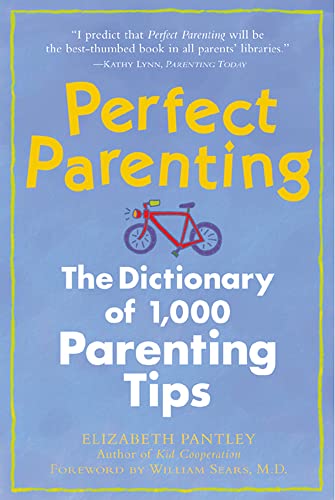
Synopsis
Your go-to guide for your parenting questions, from the author of the breakthrough No-Cry series
"Perfect Parenting will give you the tools you need to feel confident as you raise your children. This handy reference book may become an indispensable part of your family's life."
-- from the foreword by William Sears, M.D.
Perfect Parenting is parenting with a plan. It is based on:
- action, not reaction
- thoughtfulness, not anger
- knowledge, not chance
- common sense, not nonsense
You'll learn what to do about back talk, dawdling, interrupting, stubbornness, whining. You'll find ways to get your kids to do the chores, stop ignoring you, and clean up their own messes. You'll even learn what to do about other people's children! Elizabeth Pantley designed a questionnaire addressing discipline problems and sent it to hundreds of parents. Their answers shaped this book to make it the most useful, practical book on discipline available today.
"synopsis" may belong to another edition of this title.
About the Author
McGraw-Hill authors represent the leading experts in their fields and are dedicated to improving the lives, careers, and interests of readers worldwide
Excerpt. © Reprinted by permission. All rights reserved.
Perfect Parenting
The Dictionary of 1,000 Parenting Tips
By ELIZABETH PANTLEYThe McGraw-Hill Companies, Inc.
Copyright © 1999 Better Beginnings, Inc.
All rights reserved.
ISBN: 978-0-8092-2847-8All rights reserved.
Contents
| FOREWORD | |
| ACKNOWLEDGMENTS | |
| INTRODUCTION | |
| A | |
| ACCIDENT PRONE | |
| AGGRESSION | |
| ALLOWANCES | |
| ANGER | |
| APOLOGIES | |
| ARGUING, with parent | |
| ATHLETIC LESSONS/PRACTICE, not wanting to continue | |
| ATHLETICS, poor sport | |
| B | |
| BABY-SITTERS | |
| BABY TALK | |
| BACK TALK | |
| BAD DREAMS | |
| BATH | |
| BATHROOM JOKES | |
| BEDROOMS | |
| BEDTIME | |
| BED-WETTING | |
| BELCHING | |
| BICYCLE | |
| BIRTHDAY | |
| BITING | |
| BLAMING | |
| BOASTING | |
| BOREDOM | |
| BOSSINESS | |
| BRAGGING/BOASTING | |
| BREAKFAST, won't eat | |
| BREAKING THINGS | |
| BRUSHING OF HAIR | |
| BRUSHING OF TEETH | |
| BULLY | |
| C | |
| CABIN FEVER | |
| CANDY | |
| CAR | |
| CARELESSNESS | |
| CAR POOL, bad behavior | |
| CHEATING | |
| CHORES | |
| CLASSROOM BEHAVIOR | |
| CLINGING | |
| CLOTHING | |
| CLOWNING | |
| CLUMSINESS | |
| COMPETITIVENESS | |
| COMPLAINING | |
| COMPUTER GAMES | |
| COOPERATE, won't | |
| CRYING | |
| D | |
| DARK, fear of | |
| DAWDLING | |
| DAY CARE | |
| DEFIANCE | |
| DIAPER, doesn't want changed | |
| DIETING | |
| DIRTY JOKES | |
| DIRTY WORDS | |
| DISRESPECT | |
| DOESN'T COME WHEN CALLED | |
| DRESSING | |
| E | |
| EATING | |
| F | |
| FEARS | |
| FIGHTING | |
| FINGERNAIL BITING | |
| FOOD | |
| FORGETFULNESS | |
| FRIENDS | |
| FUSSING | |
| G | |
| GIFTS | |
| GIMMEES | |
| GLASSES | |
| GRANDPARENTS | |
| H | |
| HABITS, bad | |
| HAIR BRUSHING | |
| HAIRCUTS | |
| HAIR PULLING | |
| HATE, expressions of | |
| HITTING | |
| HOME ALONE | |
| HOMEWORK | |
| HUMOR, inappropriate | |
| I | |
| INTERRUPTING | |
| J | |
| JOBS | |
| JOKING | |
| JUNK FOOD EXCESSES | |
| K | |
| KICKING | |
| L | |
| LATCHKEY RESPONSIBILITIES | |
| LAZINESS | |
| LISTENING, not | |
| LOSING | |
| LOUDNESS | |
| LYING | |
| M | |
| MANNERS | |
| MASTURBATION | |
| MATERIALISM | |
| MEALTIME MISBEHAVIOR | |
| MEANNESS | |
| MEDICATION, taking | |
| MESS, kid's constant | |
| MONEY | |
| MOODINESS | |
| MORNING CHAOS | |
| MOVING | |
| MUSIC LESSONS | |
| N | |
| NAGGING | |
| NAIL BITING OR NAIL PICKING | |
| NAKEDNESS | |
| NAME-CALLING | |
| NANNY | |
| NAP, won't take one | |
| NEIGHBORS | |
| NEW BABY | |
| NIGHTMARES | |
| NIGHT TERRORS | |
| NOISE, excessive | |
| NOSE PICKING | |
| NOSINESS | |
| NOT COMING WHEN CALLED | |
| NUDITY | |
| O | |
| OBESITY | |
| OTHER PEOPLE'S CHILDREN | |
| OVEREATING | |
| P | |
| PARTIES | |
| PERFECTIONISM | |
| PET CARE | |
| PICKY EATER | |
| POLITENESS | |
| POOR SPORT | |
| POTTY TRAINING | |
| PRIVACY | |
| PROCRASTINATION | |
| PROMISES, doesn't keep | |
| PUBLIC BEHAVIOR | |
| PUT DOWNS | |
| Q | |
| QUARRELLING | |
| QUITTING | |
| R | |
| READ, doesn't want to | |
| RESPECT, teaching | |
| RESTAURANTS | |
| ROUGHHOUSING | |
| RUDE COMMENTS | |
| S | |
| SASSING | |
| SCHOOL | |
| SEAT BELT | |
| SELF-ESTEEM, low | |
| SELFISH BEHAVIOR | |
| SEPARATION ANXIETY | |
| SEXUALITY | |
| SHARING | |
| SHOPLIFTING | |
| SHOPPING | |
| SHOWING OFF | |
| SHYNESS | |
| SIBLINGS | |
| SLEEP | |
| SLOPPINESS | |
| SNACKS | |
| SPITTING | |
| SPORTS, reluctance to play | |
| STARING | |
| STEALING | |
| STRONG-WILLED CHILD | |
| STUBBORNNESS | |
| SULKING | |
| SWEARING | |
| T | |
| TABLE MANNERS | |
| TALKING BACK | |
| TANTRUMS | |
| TATTLING | |
| TEACHER | |
| TEASING | |
| TEETH BRUSHING | |
| TELEPHONE INTERRUPTIONS | |
| TELEVISION, watches too much | |
| TEMPER TANTRUMS | |
| TOILET TRAINING | |
| TOOTH BRUSHING | |
| TOYS | |
| TRAVEL | |
| TRIPS | |
| V | |
| VACATIONS | |
| VEGETABLES, won't eat them | |
| VIDEO GAMES, excessive use of | |
| W | |
| WANDERING IN PUBLIC PLACES | |
| WASTEFULNESS | |
| WEIGHT | |
| WHINING | |
| WORK, doesn't want parent to | |
| Y | |
| YELLING AND SCREAMING | |
| RECOMMENDED READING | |
| ADDITIONAL INFORMATION |
Excerpt
CHAPTER 1
A
ALLOWANCES
See also * Chores, money and * Money
SITUATION
Should my children get an allowance? How much should I give them? Should it betied to chores, performance, or behavior?
THINK ABOUT IT
The purpose of allowance is to teach kids how to handle money. They can learnfrom early experiences how to make money decisions when the amounts are smalland the decisions are simple. Children from kindergarten age on can begin tounderstand the significance of money and its value to them. Given thisopportunity, children will be less likely to grow into adults with empty bankaccounts and an alphabetical assortment of credit cards.
SOLUTIONS
1 It's best not to tie allowance to chores. If you do, there may come a daywhen the child doesn't need or want your money and can logically pass on thechores. How would you respond if your child says, "I don't need my allowancethis week, Dad, so I won't be doing the dishes or taking out the trash."(See also Chores.) From this, I shudder to think why you would tieallowance to performance or behavior!
2 How much allowance to give a child has little to do with how much youhave to give and more to do with what the child's money needsare. Does the child buy lunch at school, school supplies, or clothes? Or isallowance purely "pocket money"? Does the child receive money from othersources, such as from relatives? It's a good idea to give a child enough moneyto purchase his necessities and just a little more for extras.
3 Help your child create a budget. Discuss the value of having a setamount for spending, short-term savings, and long-term savings. Ask your childif he has a particular item he would like to save for. Find out the cost of theitem and divide the total cost by the weekly (or monthly) amount he's willing toput aside for it. Make a graph to show the steps toward reaching his goal.Celebrate success!
4 Let your child open a bank account for savings. Look for a bank thatoffers a special child's program. Typically, these programs include a newsletterand special incentives. Shop around for the best program. Encourage your childto set a goal for a savings amount, and plan a reward to celebrate when the goalhas been reached.
5 A junior- or senior-high-school-aged child can have allowancesdeposited directly into a personal checking account. This gives a young personpractice in using and managing a bank account. At first, give the child one ortwo checks at a time and teach him how to balance his checkbook. Over time, andwith practice, he'll be able to take charge of the account. A big caution: Untila parent is sure the child can handle this responsibility properly, the accountshould be in both names, and the monthly statements should be reviewed together.
ALLOWANCES, and raises
See also * Chores, money and * Materialism * Money
SITUATION
My child wants a "raise." How can I make the decision of whether to increase herallowance?
THINK ABOUT IT
When your child asks for more money, it's easy to give a knee-jerk yes-or-noresponse. Instead, use this as a golden opportunity to teach an important lessonabout money.
SOLUTIONS
1 Ask the child to provide you with a written budget of what the money isneeded for, along with a written request for a raise explaining why it'sdesired. If the child is able to present a logical, well-thought-out request,it's safe to say she's ready for a bigger allowance.
2 Ask the child to create an extra "job" for which she can be paid. Thisshould not be a regular household chore but something extra. Some ideas mightinclude baby-sitting younger siblings, taking over one of the parent's currentchores (such as doing the laundry), or providing a service for a parent'sbusiness (such as envelope stuffing, sorting, or filing).
3 Suggest that the child look outside the family for work. Theneighborhood is typically a fertile ground for children's fledgling businesses.Some ideas are car washing, yard weeding, baby-sitting, housecleaning, petsitting, pet walking, or pet-poop pickup (a good choice because the neighborsare very willing to let someone else do it!).
4 Often the child is actually receiving sufficient allowance but isunskilled in money management. Help the child create a budget and an accountinglog to record and monitor spending.
ANGER, child's
See also * Arguing, with parent * Back talk * Disrespect * FightingHate, expressions of * Meanness * Respect, teaching * Self-esteem, low *Siblings, fighting
SITUATION
My child can't control his angry emotions. He tends to lash out at others,verbally and physically.
THINK ABOUT IT
As a parent educator, one of my most popular lectures is entitled "Understandingand Managing Your Anger." Ask yourself, "If hundreds of adults attend a classabout anger management, how can I expect my child to learn how to control hisanger on his own?"
SOLUTIONS
1 Avoid responding to your child's anger with anger of your own. Your angerwill tend to escalate your child's sour mood. Instead, control your own angerfirst. (See also Anger, parent's.) Reply to your child in a calm, even-tempered voice. You will be better able to direct your child's actions, andyou'll be modeling the behavior you wish to see in your child.
2 Your child needs to learn that although angry emotions are normal,there are acceptable and unacceptable ways of dealing with them. You can helpyour child learn this by acknowledging the reason he's angry. Often, justknowing that you understand his feelings can calm him down. For example, what ifyour child is angry because his brother took his bike without asking, and he'sshouting and swearing? Calmly acknowledge the reason for his anger by sayingsomething like, "I know it's frustrating when Alex takes your things withoutasking." This will often cause a pause in your child's behavior as he pondersthis new response from you. Next, ask a question that directs your child'sthinking in a more productive way: "How do you think you can get him to rememberto ask?" If he responds in an angry way, prompt him in a more positivedirection: "Getting angry won't get your point across. What do you think will?"Stay with him and guide him through the resolution process.
3 If a child's angry behavior is out of line, immediately stop him andsend him to his room to cool off. Don't try to deal with the behavior at thepeak of his anger. Later, when he's calmed down, take the time to let him know,specifically, what he did that you disapprove of. Engage him in a conversationto develop a plan for avoiding the behavior in the future.
4 Talk to your child about his anger. Tell him that it's important forhim to learn how to control his temper. Suggest that the first thing he shoulddo is learn to get control of himself before he does or says things that areinappropriate. Let your child know, in advance, that the next time he explodesin anger, you'll help him by asking him to go to his room to cool off. Advisehim that if he doesn't immediately do as asked, he will lose a privilege for therest of the day, such as using the telephone, watching TV, or playing withfriends.
5 Help your child develop an "anger control plan." At a quiet time, havea discussion about anger. Brainstorm to come up with a list of things he can dowhen he feels himself losing control. For example, he could put on hisheadphones and listen to music, go outside and throw a few basketballs, or takea shower. Have him write down the ideas on an index card and put them in a handyplace. Encourage and support him when he uses some of the ideas. You mightchoose a code word that you can use to let him know his anger is getting out ofcontrol and he needs a cooling-off period. Either he or you can use the word tosignal a pause in the conversation and allow him time to get himself together.
ANGER, parent's
See also * Arguing, with parent * Cooperate, won't * DisrespectIntroduction * Listening, not * Respect, teaching
SITUATION
I find myself getting angry with my kids much too often. I can't seem to helpmyself—they really know how to push my buttons. When they purposelydisobey me, or are outright disrespectful, I fly off the handle. How can Icontrol my own anger when it's the kids' misbehavior that makes me so mad?
THINK ABOUT IT
Is it your children's misbehavior that makes you angry? Or is it yourview of their behavior that creates angry feelings? There's a big difference.The first question suggests that you have no control over your emotions oractions. The second implies that by changing your view, you can change yourreaction.
SOLUTIONS
1 Put some space between you and the child who's pushing your buttons. Whenyou feel your anger rising, either put your child in timeout or put yourselfthere! A few minutes away from the source of your angry feelings can help youcalm down enough to address the situation rationally. Nothing can be solved in afit of anger. You'll be better off if you take the time to calm down and thenapproach your child from a position of strength.
2 Learn more about child development by reading a book or taking aclass. If you learn that your child's current behavior is age-appropriate andnormal, you'll be less likely to overreact to the behavior. It's amazing howalike children are, and just knowing that your kid is responding in a typicalway can help you handle the issue with a level head.
3 If your anger causes you to strike out at your child, you'll need tolearn ways to control your outbursts. A creative solution is to channel yourphysical reaction into a burst of applause! Seriously, when you feel yourselfabout to strike, simply clap your hands, good and hard and fast, while youexpress your feelings of anger. Try it now! Pretend you're angry, clap yourhands, and tell your imaginary child how you feel. You'll find that in additionto releasing your pent-up anger, it sends a very clear message to your child.
4 Act—don't react. Take the time to think about the things thatmake you angry. Put together a list of family rules. Enumerate the consequencesfor breaking the rules. Communicate clear expectations to your children. Decidein advance what methods of discipline you will use. If you have a plan up front,you'll be less likely to lose control when your children misbehave.
5 When you find yourself ready to put your hands around your kid andshake him, do put your hands around him—and love him. Embrace him. Ifpossible, do this in front of a mirror or reflective window. A few minutes ofquiet, while you embrace your child, will often temper your angry feelings withthe strong feeling of love between you.
HELPFUL READING
Kid Cooperation, by Elizabeth PantleyChapter 7, "Why Do I Get So Angry? How Can I Stop?"
When Anger Hurts Your Kids, by Matthew McKay et al.
APOLOGIES
See also * Manners, at home * Manners, in public * Respect, teaching
SITUATION
My child won't apologize when she hurts someone or when she does somethingwrong.
THINK ABOUT IT
Children aren't born knowing how to apologize—it's a learned skill. Mostchildren will feel guilt or remorse over their actions, but some find itembarrassing or difficult to say they're sorry.
SOLUTIONS
1 It helps to teach a child how to apologize. For example, if your childthrows a baseball that hits another child, quietly say, "I know that was anaccident, but it's polite to say, 'I'm sorry the ball hit you. Are you OK?'"
2 Teach your child that actions speak as loudly as words. If your childshrugs out an insincere "Sorry," gently correct this behavior by saying, "Yourbrother is crying. It would be nice if you put your arm around him and say, 'I'msorry I hurt you.'"
3 Teach your child how to make amends after saying "I'm sorry." Forexample, if your child throws a toy that hits another child, encourage her torun in to the house and get an ice pack. If your child breaks a sibling's toy,help your child mend the broken toy.
4 If your child stubbornly refuses to say "I'm sorry," you can give herownership of the problem by directing her activities. "Katya, when you have madeTasha feel better you are welcome to play. Until then, please take a time-out inyour bedroom."
5 Model the behavior you want to instill in your child. Children learnmost by our example!
! If your child continually misbehaves and shows no guilt or remorse overnegative or hurtful behaviors, it's a good idea to discuss this issue with afamily therapist or counselor.
ARGUING, with parent
See also * Back talk * Disrespect * Introduction * Respect, teaching
SITUATION
I know my kid's going to grow up to be a lawyer! He argues whenever he's askedto do something. He debates his rights when he's asked to stop doing something.He pleads his case when I tell him he can't do something. He disputes every rulewe create. How can I put an end to this?
THINK ABOUT IT
It takes two to argue. Your child cannot "argue" by himself. That's called"mumbling."
SOLUTIONS
1 Practice stating your case, then being quiet. Ignore your child'sargumentative comments, and walk away if you must. Let your child get used toyour word being "final."
2 As long as it's respectful, sometimes let your child have the lastword. Often, a statement such as "Why do I have to do it?" doesn't require ananswer, nor deserve one. Often, a child's mutterings really mean, "I'll do it'cause I have to, but I don't like it."
3 Some children really do enjoy debating an issue. If your child is likethis, set ground rules for when and how issues can be debated, for instance, noraising of voices, no name-calling, quiet listening to the other person's pointof view. This behavior provides excellent practice for learning how to negotiatein life. In addition, your child must understand that some things cannotbe argued, that there are some things the parents must decide. Have a standardreply for when an issue cannot be debated, such as, "This is not open fordiscussion."
4 Get in the habit of offering your child choices instead of issuingcommands. Children who are argumentative will have less opportunity to practicethe skill if you offer a choice. For example, instead of saying "Do yourhomework, right now," offer a choice, such as, "What would you like to do first,your homework or the dishes?" (If the response is "Neither," you can smilesweetly and say, "That wasn't one of the choices. Homework or dishes?")
(Continues...)
(Continues...)
Excerpted from Perfect Parenting by ELIZABETH PANTLEY. Copyright © 1999 by Better Beginnings, Inc.. Excerpted by permission of The McGraw-Hill Companies, Inc..
All rights reserved. No part of this excerpt may be reproduced or reprinted without permission in writing from the publisher.
Excerpts are provided by Dial-A-Book Inc. solely for the personal use of visitors to this web site.
"About this title" may belong to another edition of this title.
Search results for Perfect Parenting: The Dictionary of 1,000 Parenting...

Stock Image
Perfect Parenting
Seller: World of Books (was SecondSale), Montgomery, IL, U.S.A.
Seller rating 5 out of 5 stars

Condition: Very Good. Item in very good condition! Textbooks may not include supplemental items i.e. CDs, access codes etc. Seller Inventory # 00062655534
Stock Image
Perfect Parenting
Seller: World of Books (was SecondSale), Montgomery, IL, U.S.A.
Seller rating 5 out of 5 stars
Condition: Good. Item in good condition. Textbooks may not include supplemental items i.e. CDs, access codes etc. Seller Inventory # 00056728178
Seller Image
Perfect Parenting
Seller: Greenworld Books, Arlington, TX, U.S.A.
Seller rating 5 out of 5 stars
Condition: good. Fast Free Shipping â" Good condition. It may show normal signs of use, such as light writing, highlighting, or library markings, but all pages are intact and the book is fully readable. A solid, complete copy that's ready to enjoy. Seller Inventory # GWV.0809228475.G
Stock Image
Perfect Parenting
Published by
McGraw Hill (edition 1), 1998
ISBN 10: 0809228475
ISBN 13: 9780809228478
Used
Paperback
Seller: BooksRun, Philadelphia, PA, U.S.A.
Seller rating 5 out of 5 stars
Paperback. Condition: Fair. 1. The item might be beaten up but readable. May contain markings or highlighting, as well as stains, bent corners, or any other major defect, but the text is not obscured in any way. Seller Inventory # 0809228475-7-1-13
Stock Image
Perfect Parenting
Seller: Evergreen Goodwill, Seattle, WA, U.S.A.
Seller rating 5 out of 5 stars
paperback. Condition: Acceptable. Seller Inventory # mon0000746493
Stock Image
Perfect Parenting
Seller: Evergreen Goodwill, Seattle, WA, U.S.A.
Seller rating 5 out of 5 stars
paperback. Condition: Good. Seller Inventory # mon0000762178
Stock Image
Perfect Parenting: the Dictionary of 1,000 Parenting Tips
Published by
McGraw-Hill Education, 1998
ISBN 10: 0809228475
ISBN 13: 9780809228478
Used
Softcover
First Edition
Seller: Better World Books, Mishawaka, IN, U.S.A.
Seller rating 5 out of 5 stars
Condition: Very Good. 1st Edition. Pages intact with possible writing/highlighting. Binding strong with minor wear. Dust jackets/supplements may not be included. Stock photo provided. Product includes identifying sticker. Better World Books: Buy Books. Do Good. Seller Inventory # 12011060-6
Stock Image
Perfect Parenting: the Dictionary of 1,000 Parenting Tips
Published by
McGraw-Hill Education, 1998
ISBN 10: 0809228475
ISBN 13: 9780809228478
Used
Softcover
First Edition
Seller: Better World Books, Mishawaka, IN, U.S.A.
Seller rating 5 out of 5 stars
Condition: Good. 1st Edition. Pages intact with minimal writing/highlighting. The binding may be loose and creased. Dust jackets/supplements are not included. Stock photo provided. Product includes identifying sticker. Better World Books: Buy Books. Do Good. Seller Inventory # 4883558-75
Stock Image
Perfect Parenting: The Dictionary of 1,000 Parenting Tips
Seller: ThriftBooks-Dallas, Dallas, TX, U.S.A.
Seller rating 5 out of 5 stars
Paperback. Condition: As New. No Jacket. Pages are clean and are not marred by notes or folds of any kind. ~ ThriftBooks: Read More, Spend Less. Seller Inventory # G0809228475I2N00
Stock Image
Perfect Parenting: The Dictionary of 1,000 Parenting Tips
Seller: ThriftBooks-Dallas, Dallas, TX, U.S.A.
Seller rating 5 out of 5 stars
Paperback. Condition: Very Good. No Jacket. May have limited writing in cover pages. Pages are unmarked. ~ ThriftBooks: Read More, Spend Less. Seller Inventory # G0809228475I4N00