
Items related to Modern Forests: Statemaking and Environmental Change...
Synopsis
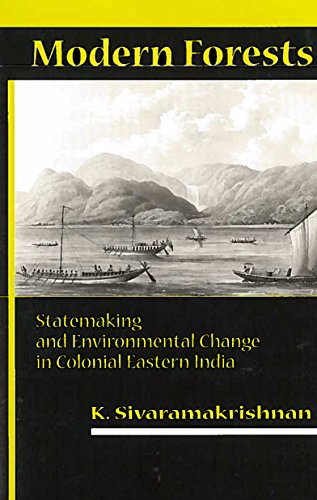
Modern Forests is an environmental, institutional, and cultural history of forestry in colonial eastern India. By carefully examining the influence of regional political formations and biogeographic processes on land and forest management, this book offers an analysis of the interrelated social and biophysical factors that influenced landscape change.
"synopsis" may belong to another edition of this title.
About the Author
K. Sivaramakrishnan is Assistant Professor of Anthropology at the University of Washington.
From the Back Cover
Modern Forests is an environmental, institutional, and cultural history of forestry in colonial eastern India. By carefully examining the influence of regional political formations and biogeographic processes on land and forest management, this book offers an analysis of the interrelated social and biophysical factors that influenced landscape change. Through a cultural analysis of powerful landscape representations, Modern Forests reveals the contention, debates, and uncertainty that persisted for two hundred years of colonial rule as forests were identified, classified, and brought under different regimes of control and were transformed to serve a variety of imperial and local interests.
The author examines the regionally varied conditions that generated widely different kinds of forest management systems, and the ways in which certain ideas and forces became dominant at various times. Through this emphasis on regional socio-political processes and ecologies, the author offers a new way to write environmental history. Instead of making a sharp distinction between third-world and first-world experiences in forest management, the book suggests a potential for cross-continental comparative studies through regional analyses.
The book also offers an approach to historical anthropology that does not make apolitical separations between foreign and indigenous views of the world of nature, insisting instead that different cultural repertoires for discerning the natural, and using it, can be fashioned out of shared concerns within and across social groups. The politics of such cultural construction, the book argues, must be studied through institutional histories and ethnographies of statemaking. In conclusion, the author offers a genealogy of development as it can be traced from forest conservation in colonial eastern India.
From the Inside Flap
Modern Forests is an environmental, institutional, and cultural history of forestry in colonial eastern India. By carefully examining the influence of regional political formations and biogeographic processes on land and forest management, this book offers an analysis of the interrelated social and biophysical factors that influenced landscape change. Through a cultural analysis of powerful landscape representations, Modern Forests reveals the contention, debates, and uncertainty that persisted for two hundred years of colonial rule as forests were identified, classified, and brought under different regimes of control and were transformed to serve a variety of imperial and local interests.
The author examines the regionally varied conditions that generated widely different kinds of forest management systems, and the ways in which certain ideas and forces became dominant at various times. Through this emphasis on regional socio-political processes and ecologies, the author offers a new way to write environmental history. Instead of making a sharp distinction between third-world and first-world experiences in forest management, the book suggests a potential for cross-continental comparative studies through regional analyses.
The book also offers an approach to historical anthropology that does not make apolitical separations between foreign and indigenous views of the world of nature, insisting instead that different cultural repertoires for discerning the natural, and using it, can be fashioned out of shared concerns within and across social groups. The politics of such cultural construction, the book argues, must be studied through institutional histories and ethnographies of statemaking. In conclusion, the author offers a genealogy of development as it can be traced from forest conservation in colonial eastern India.
"About this title" may belong to another edition of this title.
Search results for Modern Forests: Statemaking and Environmental Change...

Stock Image
Modern Forests: Statemaking and Environmental Change in Colonial Eastern India
Published by
Stanford University Press, 1999
ISBN 10: 0804735638
ISBN 13: 9780804735636
Used
Hardcover
Seller: Midtown Scholar Bookstore, Harrisburg, PA, U.S.A.
Seller rating 5 out of 5 stars

Hardcover. Condition: Very Good. Very Good - Crisp, clean, unread book with some shelfwear/edgewear, may have a remainder mark - NICE Standard-sized. Seller Inventory # M0804735638Z2
Stock Image
Modern Forests: Statemaking and Environmental Change in Colonial Eastern India
Published by
Stanford University Press, 1999
ISBN 10: 0804735638
ISBN 13: 9780804735636
Used
Hardcover
Seller: Midtown Scholar Bookstore, Harrisburg, PA, U.S.A.
Seller rating 5 out of 5 stars
Hardcover. Condition: Good. HARDCOVER Good - Bumped and creased book with tears to the extremities, but not affecting the text block, may have remainder mark or previous owner's name - GOOD Standard-sized. Seller Inventory # M0804735638Z3
Stock Image
Modern Forests: Statemaking and Environmental Change in Colonial Eastern India
Published by
Stanford University Press 06/1999, 1999
ISBN 10: 0804735638
ISBN 13: 9780804735636
Used
Hardcover
Seller: Sainsbury's Books Pty. Ltd., Camberwell, VIC, Australia
Seller rating 4 out of 5 stars

Hard cover Fine in Fine dust jacket. Unknown printing. 288 p. ; 1. 27" x 8. 82" x 5. 89". Seller Inventory # 53635
Buy Used
£ 10.81
£ 18.19 shipping
Ships from Australia to U.S.A.
Ships from Australia to U.S.A.
Quantity: 1 available
Stock Image
Modern Forests: Statemaking and Environmental Change in Colonial Eastern India [Hardcover] Sivaramakrishnan, K.
Published by
Stanford University Press, 1999
ISBN 10: 0804735638
ISBN 13: 9780804735636
New
Hardcover
Seller: GridFreed, San Diego, CA, U.S.A.
Seller rating 5 out of 5 stars
Condition: New. In shrink wrap. Seller Inventory # 20-03507
Stock Image
Modern Forests: Statemaking and Environmental Change in Colonial Eastern India
Published by
Stanford University Press, 1999
ISBN 10: 0804735638
ISBN 13: 9780804735636
New
Hardcover
Seller: DeckleEdge LLC, Albuquerque, NM, U.S.A.
Seller rating 5 out of 5 stars
hardcover. Condition: new. Seller Inventory # Shelfdream0804735638
Seller Image
Modern Forests : Statemaking and Environmental Change in Colonial Eastern India
Published by
Stanford University Press, 1999
ISBN 10: 0804735638
ISBN 13: 9780804735636
New
Hardcover
Seller: GreatBookPrices, Columbia, MD, U.S.A.
Seller rating 5 out of 5 stars
Condition: New. Seller Inventory # 252235-n
Seller Image
Modern Forests
Published by
Stanford University Press, US, 1999
ISBN 10: 0804735638
ISBN 13: 9780804735636
New
Hardcover
Seller: Rarewaves USA, HEBRON, KY, U.S.A.
Seller rating 5 out of 5 stars
Hardback. Condition: New. Modern Forests is an environmental, institutional, and cultural history of forestry in colonial eastern India. By carefully examining the influence of regional political formations and biogeographic processes on land and forest management, this book offers an analysis of the interrelated social and biophysical factors that influenced landscape change. Through a cultural analysis of powerful landscape representations, Modern Forests reveals the contention, debates, and uncertainty that persisted for two hundred years of colonial rule as forests were identified, classified, and brought under different regimes of control and were transformed to serve a variety of imperial and local interests. The author examines the regionally varied conditions that generated widely different kinds of forest management systems, and the ways in which certain ideas and forces became dominant at various times. Through this emphasis on regional socio-political processes and ecologies, the author offers a new way to write environmental history. Instead of making a sharp distinction between third-world and first-world experiences in forest management, the book suggests a potential for cross-continental comparative studies through regional analyses. The book also offers an approach to historical anthropology that does not make apolitical separations between foreign and indigenous views of the world of nature, insisting instead that different cultural repertoires for discerning the natural, and using it, can be fashioned out of shared concerns within and across social groups. The politics of such cultural construction, the book argues, must be studied through institutional histories and ethnographies of statemaking. In conclusion, the author offers a genealogy of development as it can be traced from forest conservation in colonial eastern India. Seller Inventory # LU-9780804735636
Seller Image
Modern Forests : Statemaking and Environmental Change in Colonial Eastern India
Published by
Stanford University Press, 1999
ISBN 10: 0804735638
ISBN 13: 9780804735636
New
Hardcover
Seller: GreatBookPricesUK, Woodford Green, United Kingdom
Seller rating 5 out of 5 stars
Condition: New. Seller Inventory # 252235-n
Buy New
£ 136.36
£ 15 shipping
Ships from United Kingdom to U.S.A.
Ships from United Kingdom to U.S.A.
Quantity: Over 20 available
Seller Image
Modern Forests : Statemaking and Environmental Change in Colonial Eastern India
Published by
Stanford University Press, 1999
ISBN 10: 0804735638
ISBN 13: 9780804735636
Used
Hardcover
Seller: GreatBookPrices, Columbia, MD, U.S.A.
Seller rating 5 out of 5 stars
Condition: As New. Unread book in perfect condition. Seller Inventory # 252235
Seller Image
Modern Forests : Statemaking and Environmental Change in Colonial Eastern India
Published by
Stanford University Press, 1999
ISBN 10: 0804735638
ISBN 13: 9780804735636
Used
Hardcover
Seller: GreatBookPricesUK, Woodford Green, United Kingdom
Seller rating 5 out of 5 stars
Condition: As New. Unread book in perfect condition. Seller Inventory # 252235
Buy Used
£ 155.46
£ 15 shipping
Ships from United Kingdom to U.S.A.
Ships from United Kingdom to U.S.A.
Quantity: Over 20 available