
Items related to Class Conflict and Economic Development in Chile, 1958-1973
Synopsis
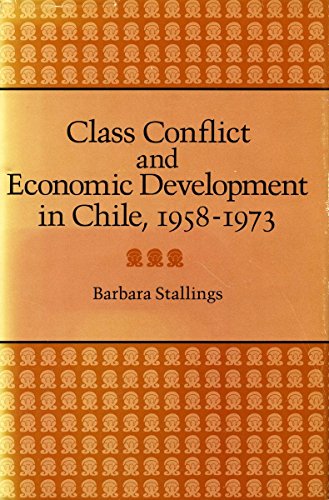
This account of the interplay of politics and economics in Chile in three successive administrations ending with the 1973 coup suggests that social class plays a major role in determining the outcome of economic policies in Latin America. As the author demonstrates, the nature of the class alliance that controls the state apparatus in Chile, together with the actions of foreign capital, determines not only the type of economic policies followed, but their outcomes as well. A comparison of the three regimes of Jorge Alessandri (1958-64), Eduardo Frei (1964-70), and Salvador Allende (1970-73) is especially important because they represent the main approaches to economic development available to all Third World countries today. The three regimes are compared in terms of policies on property relations, government expenditure, credit, investment, wages, prices, employment, and foreign investment. The outcomes are analyzed through data on economic growth and income distribution. In a concluding chapter, the author comments on the meaning of the Chilean experience for other countries.
"synopsis" may belong to another edition of this title.
About the Author
Barbara Stallings is the William R. Rhodes Research Professor at the Watson Institute for International Studies at Brown University.
"About this title" may belong to another edition of this title.
Search results for Class Conflict and Economic Development in Chile, 1958-1973

Stock Image
Class Conflict and Economic Development in Chile, 1958-1973
Published by
Stanford University Press, 1978
ISBN 10: 0804709785
ISBN 13: 9780804709781
Used
Hardcover
Seller: ThriftBooks-Atlanta, AUSTELL, GA, U.S.A.
Seller rating 5 out of 5 stars

Hardcover. Condition: Good. No Jacket. Missing dust jacket; Pages can have notes/highlighting. Spine may show signs of wear. ~ ThriftBooks: Read More, Spend Less. Seller Inventory # G0804709785I3N01
Seller Image
Class Conflict and Economic Development in Chile, 1958-1973
Published by
Stanford University Press, 1978
ISBN 10: 0804709785
ISBN 13: 9780804709781
Used
Hardcover
Seller: Fables Books, Goshen, IN, U.S.A.
Seller rating 5 out of 5 stars
Condition: good. A former college library book with all the expected stamps, stickers and markings. Some shelf, storage or usage wear present. The binding is tight and all pages are present. Missing dustjacket. The pages appear unmarked. Pictures available upon request. Individually inspected by Scott. Thanks for supporting an independent bookseller! Seller Inventory # FBV.0804709785.G
Stock Image
Class Conflict and Economic Development in Chile, 1958-1973
Published by
Stanford University Press, 1978
ISBN 10: 0804709785
ISBN 13: 9780804709781
Used
Hardcover
Seller: Paper Oddities, Wantage, NJ, U.S.A.
Seller rating 2 out of 5 stars

Condition: Fair. 1978 Stanford. Hardcover copy is in good, solid condition, DJ shows wear/tearing, text has highlighting,a good copy. We take great pride in accurately describing the condition of our books and media, ship within 48 hours, and offer a 100% money back guarantee. Customers purchasing more than one item from us may be entitled to a shipping discount. Seller Inventory # 1M5000006Y0H_ns
Stock Image
Class Conflict and Economic Development in Chile, 1958-1973
Published by
Stanford University Press, 1978
ISBN 10: 0804709785
ISBN 13: 9780804709781
New
Hardcover
Seller: BennettBooksLtd, Los Angeles, CA, U.S.A.
Seller rating 5 out of 5 stars
hardcover. Condition: New. In shrink wrap. Looks like an interesting title! Seller Inventory # Q-0804709785
Seller Image
Class Conflict and Economic Development in Chile, 1958-1973
Published by
Stanford University Press, US, 1978
ISBN 10: 0804709785
ISBN 13: 9780804709781
New
Hardcover
Seller: Rarewaves USA, HEBRON, KY, U.S.A.
Seller rating 5 out of 5 stars
Hardback. Condition: New. This account of the interplay of politics and economics in Chile in three successive administrations ending with the 1973 coup suggests that social class plays a major role in determining the outcome of economic policies in Latin America. As the author demonstrates, the nature of the class alliance that controls the state apparatus in Chile, together with the actions of foreign capital, determines not only the type of economic policies followed, but their outcomes as well. A comparison of the three regimes of Jorge Alessandri (1958-64), Eduardo Frei (1964-70), and Salvador Allende (1970-73) is especially important because they represent the main approaches to economic development available to all Third World countries today. The three regimes are compared in terms of policies on property relations, government expenditure, credit, investment, wages, prices, employment, and foreign investment. The outcomes are analyzed through data on economic growth and income distribution. In a concluding chapter, the author comments on the meaning of the Chilean experience for other countries. Seller Inventory # LU-9780804709781
Stock Image
Class Conflict and Economic Development in Chile, 1958-1973
Seller: Revaluation Books, Exeter, United Kingdom
Seller rating 5 out of 5 stars
Hardcover. Condition: Brand New. 1st edition. 316 pages. 9.00x6.00x1.00 inches. In Stock. Seller Inventory # x-0804709785
Buy New
£ 95.43
£ 12.50 shipping
Ships from United Kingdom to U.S.A.
Ships from United Kingdom to U.S.A.
Quantity: 2 available
Seller Image
Class Conflict and Economic Development in Chile, 1958-1973
Published by
Stanford University Press, US, 1978
ISBN 10: 0804709785
ISBN 13: 9780804709781
New
Hardcover
Seller: Rarewaves USA United, HEBRON, KY, U.S.A.
Seller rating 5 out of 5 stars
Hardback. Condition: New. This account of the interplay of politics and economics in Chile in three successive administrations ending with the 1973 coup suggests that social class plays a major role in determining the outcome of economic policies in Latin America. As the author demonstrates, the nature of the class alliance that controls the state apparatus in Chile, together with the actions of foreign capital, determines not only the type of economic policies followed, but their outcomes as well. A comparison of the three regimes of Jorge Alessandri (1958-64), Eduardo Frei (1964-70), and Salvador Allende (1970-73) is especially important because they represent the main approaches to economic development available to all Third World countries today. The three regimes are compared in terms of policies on property relations, government expenditure, credit, investment, wages, prices, employment, and foreign investment. The outcomes are analyzed through data on economic growth and income distribution. In a concluding chapter, the author comments on the meaning of the Chilean experience for other countries. Seller Inventory # LU-9780804709781
Seller Image
Class Conflict and Economic Development in Chile, 1958-1973
Seller: moluna, Greven, Germany
Seller rating 5 out of 5 stars
Condition: New. Offers an account of the interplay of politics and economics in Chile in three successive administrations ending with the 1973 coup suggests that social class plays a major role in determining the outcome of economic policies in Latin America.Ü. Seller Inventory # 595013534
Buy New
£ 75.99
£ 41.09 shipping
Ships from Germany to U.S.A.
Ships from Germany to U.S.A.
Quantity: Over 20 available
Stock Image
Class Conflict And Economic Development In Chile, 1958-1973
Published by
Stanford University Press, 1978
ISBN 10: 0804709785
ISBN 13: 9780804709781
New
Hardcover
Seller: Books Puddle, Woodside, NY, U.S.A.
Seller rating 4 out of 5 stars

Condition: New. pp. 316. Seller Inventory # 2650562250
Seller Image
Class Conflict and Economic Development in Chile, 1958-1973
Published by
Stanford University Press Jun 1978, 1978
ISBN 10: 0804709785
ISBN 13: 9780804709781
New
Hardcover
Seller: AHA-BUCH GmbH, Einbeck, Germany
Seller rating 5 out of 5 stars
Buch. Condition: Neu. Neuware - This account of the interplay of politics and economics in Chile in three successive administrations ending with the 1973 coup suggests that social class plays a major role in determining the outcome of economic policies in Latin America. As the author demonstrates, the nature of the class alliance that controls the state apparatus in Chile, together with the actions of foreign capital, determines not only the type of economic policies followed, but their outcomes as well. A comparison of the three regimes of Jorge Alessandri (1958-64), Eduardo Frei (1964-70), and Salvador Allende (1970-73) is especially important because they represent the main approaches to economic development available to all Third World countries today. The three regimes are compared in terms of policies on property relations, government expenditure, credit, investment, wages, prices, employment, and foreign investment. The outcomes are analyzed through data on economic growth and income distribution. In a concluding chapter, the author comments on the meaning of the Chilean experience for other countries. Seller Inventory # 9780804709781