
Items related to First Time Dad: The Stuff You Really Need to Know
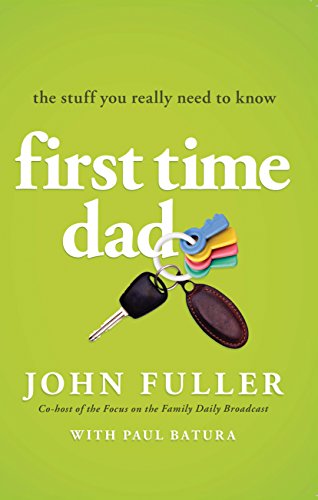
Synopsis
With over 40 million books sold, bestselling author Josh McDowell is no stranger to creatively presenting biblical truth. Now, partnering with fellow apologist Dave Sterrett, Josh introduces a new series targeted at the intersection of story and truth.
The Coffee House Chronicles are short, easily devoured novellas aimed at answering prevalent spiritual questions. Each book in the series tackles a long-contested question of the faith, and then answer these questions with truth through relationships and dialogue in each story.
In Who is Jesus, Really?: A Dialogue on God, Man, and Grace, the group of students now meeting at the coffee house at a college town in Texas come face-to-face with the implications of the person and works of Jesus Christ. Their questions and conversations lead them to creatively respond to a well-known Atheist about Jesus' claims and actions. The other two books in the series: Is the Bible True, Really? and Did the Resurrection Happen, Really? continue the unfolding story at the college campus and the coffee house down the road.
"synopsis" may belong to another edition of this title.
About the Author
JOHN FULLER is vice president of Audio and New Media at Focus on the Family and co-host of the daily “Focus on the Family” broadcast. He leads the team that produces more than a dozen Focus programs reaching millions of listeners around the world. Many of these features and podcasts are also available at www.focusonthefamily.com. A media veteran of more than 30 years, John writes and speaks about creativity, media trends, influential leadership, excellence, and social media. As a father of six, he writes and speaks about strong marriages and effective parenting. John and his wife Dena are also advocates for orphan care and adoption. John has a M.A. from the University of Northern Colorado, and serves as an elected member of the board of the National Religious Broadcasters.
Excerpt. © Reprinted by permission. All rights reserved.
first-time dad
the stuff you really need to knowBy JOHN FULLER PAUL BATURAMoody Publishers
Copyright © 2011 John FullerAll right reserved.
ISBN: 978-0-8024-8750-6
Contents
Chapter 1: Great Expectations..................................9Chapter 2: What Fatherhood Is All About........................21Chapter 3: Time and Priorities.................................31Chapter 4: Break the Chain.....................................45Chapter 5: How a Baby Affects Your Family......................59Chapter 6: Loving Your Wife....................................69Chapter 7: Loving Your Baby's Mother...........................79Chapter 8: Boys-n-Girls........................................89Chapter 9: Helping Your Child Succeed..........................105Chapter 10: The Keys to Your Child's Heart.....................119Chapter 11: Spiritual Formation................................135Chapter 12: Blink..............................................149Addendum.......................................................158Notes..........................................................165Acknowledgments................................................167
Chapter One
Great Expectations
I am giddy; expectation whirls me round. —William Shakespeare
FROM THE MOMENT you learned about the pregnancy (or that you were going to adopt), you've been anticipating that little one. This chapter will help you deal with your fears and expectations about your coming years as a dad—and offer practical suggestions for managing the many changes headed your way.
On a recent Saturday morning, I found myself facing a tedious chore. After too many years, it was time to weed out the files in our home office. I'm not sure what I expected to find, but in a matter of minutes, I found myself awash in wonderful memories.
My wife, Dena, had saved physician records going back twenty years, and am I glad she did. The documents tracked our struggle to become parents and recorded her numerous visits, early in our marriage, with the obstetrician-gynecologist. We were anxious to have kids, but conception eluded us time and again.
Our season of infertility spanned nearly two years. That's relatively brief compared to the anguish many couples face when trying to conceive, but it was still a painful season for us. At the time, it consumed us. But now, two decades and six children later, I realized how the years had softened the memories of that emotional time. I had forgotten the difficulties and disappointments, the months of tears and sorrow as we faced another door closing on our hopes to become parents.
My mind wandered back as I read the doctor's notes, and I smiled as I remembered that day when, after years of waiting, we finally had a positive pregnancy test! It was almost unbelievable. Really? Yes, the test is positive! What joy—we were (finally!) going to be parents!
Now What?
As the news began to sink in, our heads began to swirl. We knew we were headed for changes. Big changes! But we didn't know what those changes might be—or how we would weather them. We knew just enough to know that you don't know what you don't know.
On the positive side, we were confident we had a strong marriage and that this next stage of life—parenting—was something we were ready to experience. Despite our many questions, we expected it would be a pretty easy progression—a transition we believed we were prepared to handle and succeed at.
Those expectations would soon meet reality.
For the next six or seven months, much of what we did together and talked about was centered on the "Little Fuller" we'd be welcoming into the world. We were excited! All was right with our world—or at least there was nothing wrong that our new child couldn't make right.
Little did we know that in only a few months we'd be stretched so tight and worn so thin we'd feel as if we would break. I could never have imagined we'd be arguing over the baby—and all kinds of things that now seem silly. I couldn't know how little sleep I'd learn to operate on. There was no way to prepare for the doubts and insecurities I would feel as a new dad. But fatigue, as Abraham Lincoln said, makes cowards of men.
But wait! We were in love. We got along famously! How could a baby pull us apart? And parenting—it can't be that hard; what's there to know? The answers to those questions are the inspiration for this book. It's never easy being a father—it's even more difficult being a first-time father. And keeping your marriage strong while you learn, on the job, takes a lot of effort.
Looking back over those old medical records, I came to a stark realization. Although I didn't know it at the time, I was sitting on a fault line, oblivious to the seismic changes coming our way.
Immediate Adjustments
Some of the changes we made prior to our child's birth seemed insignificant. Our conversations changed from "the two of us" to "the three of us." We started thinking about the car—it was a small hatchback—and wondered where we'd put the car seat and the stroller. We started thinking about the house and yard. The baby's room would need some paint and preparation, and the backyard wasn't adequately fenced—would we be comfortable letting the baby play back there?
Clearly "the baby" would need a lot of stuff. A bassinet, clothing, a stroller, car seat, diapers, etc. We had a lot of shopping to do. We reveled in discussing the "best" things to get and enjoyed visiting stores trying to find great deals. Of course, new things meant we had to rearrange our house to make room. The spare bedroom in our modest house became the nursery. Painting and cleaning together, we prepared to become first-time parents.
Thoughts about what life would be like with "Junior" occupied our minds and our conversations. What would he or she (we didn't know the baby's gender) be like? What name would we choose? Would she have Dena's brunette hair or my blond locks? What would we have to do to meet his needs? How would we help her to be happy and to eventually grow into the adult God intended? We sifted through a variety of expectations about children and about being parents.
We started reading pregnancy books that showed the baby's growth and the ongoing effects on Mom's body. We took "husband-coached childbirth" classes so we could welcome this baby into the world in the best manner possible. We checked out baby name books and parenting books from the library. We listened to radio programs like Focus on the Family to learn about parenthood concerns. We talked and spent time with experienced parents. We tried our best to prepare for the new responsibility we'd undertake in a few months. We knew there was a lot we didn't know, so we endeavored to learn as much as possible.
Ready! Ready!
If you visit the Amtrak level of New York City's Penn Station, you'll notice a large schedule board that hangs from the ceiling. At rush hour, crowds gather there, sometimes several people deep, to await their train's track assignment. People are eager to make a beeline for the train to get a good seat. Just prior to the boarding announcement, a voice bellows from the speakers: "Ready! Ready! Ready! Ready!" The passengers grab their bags and brace themselves for the sprint downstairs.
That's a lot how we felt in those days leading up to Dakota's arrival. We were ready. Our bags were packed, and we had one in each hand. If having a child is akin to a college final, we were prepared to ace the exam. Within months we were set to take on the biggest responsibility we'd ever known, the most significant work a person can do. We knew that raising a child is a fearful and wonderful job, one that never really ends, but one for which we were as prepared as we could be.
Or so we thought.
Simply thinking, reading, and talking about our new roles of dad and mom wasn't enough. Looking back, I realize just how little I really knew about being a dad when our firstborn entered the world.
Once Dakota arrived we found ourselves feeling confident and capable one day—then perplexed and overwhelmed the next. There were times we screamed in frustration or cried with sorrow about our inability to meet this child's needs. There were moments we wondered how we'd make it through another sleepless night. (That's when I discovered coffee!) There would be long evenings at home when we wished we could find or afford a babysitter for even a few hours respite from this child's demands. Why didn't he sleep? He needed around-the-clock care, and I constantly found myself fumbling my responsibilities.
Isn't this baby thing supposed to be natural and intuitive? Can't we just figure this out?
What should I have done differently? What might have helped me—and our newly expanded family—more than buying baby gear, reading about the birthing process, and having a plan for taking off work those first few days? What had I missed?
For starters, it would have helped to understand my expectations.
Great Expectations
Let's get honest. What do you expect about parenting? What will family life be like for you? How will a baby affect your marriage? What will fatherhood do for—and to—you? Will you find fulfillment? Excitement? Satisfaction? Closure? Will your child bring out the best in you? Do you fear how you might react to parenting challenges because your own childhood wasn't pretty? What do you think fatherhood will be all about?
These are important questions because your expectations affect your parenting style, your interactions with your child and your wife, and your self-assessments about your effectiveness as a dad.
Do you expect parenting to come naturally and be easy? Do you think having a child will present exciting new challenges that will bring fulfillment and satisfaction? Do you think you'll have days of frustration and exhaustion? Is the opportunity to shape a little life exhilarating? Will you wonder if you will be a good dad or if you will totally blow it?
Well, the answers to all of the above are likely to be "Yes"!
Reviewing my journal entries early in my parenting journey, I had wonderful and well-meaning expectations. I also experienced plenty of differing emotions. There were joyous times early on, and as our son grew there were also some pretty trying times. We delighted in being a mom and dad, but occasionally we asked what in the world we'd gotten ourselves into. Some days being a father seemed perfectly natural, and other days I'd scratch my head and wonder what I was supposed to do next. At times we loved having a little one to care for, at other times we longed for the good old days.
Time has taught me one of the most important things is this: The emotional roller coaster I found myself on was perfectly normal. You can expect to have alternating joy and heartache as you raise your child. That will happen. You'll most likely have many great days as a dad, when you feel that you really know what you are doing and that you are successful as a father. You'll also have days when you'll wonder how—or even if—you can go on. There will be days you'll think you've totally failed. Every father has his moments of glory, as well as his moments of doubt.
The Time Machine
Let's look at a historical figure—one who had plenty of expectations because he had to wait for years to become a dad. In the first book of the Bible, we see that Abraham and his wife, Sarah, had a long, fruitful life—but no children together. That changed when an angel announced that, despite their advanced years, things were going to change—drastically!
Sarah, who was in her nineties, laughed at the angel's announcement that she would give birth within a year. Abraham reacted similarly, but you can be sure he was pondering the news, remembering God's promise that he'd have many descendants. After years of waiting, and being past the age of having kids, Abe (who was one hundred years old) had to be wondering what was happening—and what would happen in the coming months.
As the days approached, Abraham must have run through the disappointments of the past years as he waited for God to deliver on His promise. When first pondering his future as a father, did Abraham think about the joy of raising a child, playing hide-and-seek, telling stories, perhaps hunting together, and maybe even envision the practical benefits of children in that culture (like taking care of the parents in their old age)?
Now a century old, Abraham must also have thought this to be an impossible fulfillment to his decades of dreaming. And what about the timing? I can hear him talking with the Creator. "God, how could You wait so long? You are aware of my age, aren't You?"
Here's a man who has waited decades to share parenthood with his wife. During that time he surely anticipated what life would be like when Sarah finally delivered their first child. Now he'd be a hundred years old and raising a newborn! Talk about unfulfilled dreams. At Abraham's age, how could he possibly protect—or play with—his long-awaited child?
The Serenity of Sovereignty
At the risk of serving up a cliché, the sooner we accept that God's ways are not always our wishes, the better off we'll be. As we can see from Abraham's example, dads have long had problems with unrealistic and unmet expectations about fatherhood. In the process of dealing with those expectations, we dads often make mistakes and have to face a lot of failings. What's a new dad to do?
First, take heart: Children are very forgetful—and also very forgiving. Although I made every possible mistake, and feared for years that I had permanently scarred him, my oldest son recently told me he thinks I've been a good dad. This was a pleasant surprise! It was also a wonderful gift from God to let me know I had not done as poor a job at fathering as I had felt.
Despite my shortcomings, my oldest, on whom I had practiced all my first-time dad experiments, felt loved enough to affirm me. What joy (and relief)!
Tackling Fears
Each of us brings baggage to our parenting. It's inevitable. But you have a choice: You don't have to hold on to that baggage.
If your own childhood was picture-perfect and wonderfully memorable, you'll probably enter into parenthood with optimistic expectations that you'll be a fine dad and that raising a child will be easy. If you'd rather put your childhood memories far, far away, you'll likely doubt your ability as a parent. You also might be anxious about parenting because of fears you'll duplicate your parents' mistakes.
If there's one man who should have feared being a dad, it would be my friend Jim Daly, whose father left the family when Jim was five. After a couple of years in which Jim lacked an adult male figure in his life, Jim's mom married a man who was hostile toward her five kids. The day of his mom's funeral (she died from cancer when Jim was nine), that stepfather walked out of the home and left the children to fend for themselves. In a few short years, Jim had experienced terrible modeling by those two men. His biological dad showed selfishness and a lack of accountability to his family. His stepdad repeated that example.
When Jim became a man, who could have blamed him for fearing he'd repeat those patterns of parenting?
The good news is that, with God's help, Jim Daly is a fine father to two young boys. He makes time for them, he loves them in ways they can appreciate, and he loves their mom and models a wonderful Christian marriage to his kids. While quick to admit he isn't perfect, Jim is breaking the chain of bad living and making a huge difference in the lives of his wife and children. He shows that a new family tree can be planted, and that fear doesn't have to prevent a man from becoming a good dad.
Practical Advice
How can you properly approach the role of dad? Here are some ideas to consider:
1. Read quality books and watch videos about parenting. There are dozens of good resources from well-regarded experts, and I'll refer to many of my favorites throughout First-Time Dad. Take advantage of the seasoned, wise advice of others.
2. Spend time with experienced parents. Watch them. Watch their kids. Make mental notes. Write things down. Launch conversations from their experiences with their kids. Find a mentor couple to walk you through the coming days, someone to offer experienced perspectives to help you as a new dad.
3. Discuss with your spouse your hopes, fears, and expectations about being a new parent. Talk about your pasts. Address your expectations about how you will approach this monumental task. Make sure that, where you have differences, you've talked those through and come to a shared understanding of areas of common ground you can agree on.
(Continues...)
Excerpted from first-time dadby JOHN FULLER PAUL BATURA Copyright © 2011 by John Fuller. Excerpted by permission of Moody Publishers. All rights reserved. No part of this excerpt may be reproduced or reprinted without permission in writing from the publisher.
Excerpts are provided by Dial-A-Book Inc. solely for the personal use of visitors to this web site.
"About this title" may belong to another edition of this title.
Search results for First Time Dad: The Stuff You Really Need to Know

Stock Image
First Time Dad: The Stuff You
Seller: World of Books (was SecondSale), Montgomery, IL, U.S.A.
Seller rating 5 out of 5 stars

Condition: Acceptable. Item in acceptable condition! Textbooks may not include supplemental items i.e. CDs, access codes etc. Seller Inventory # 00102464991
Stock Image
First Time Dad: The Stuff You
Seller: World of Books (was SecondSale), Montgomery, IL, U.S.A.
Seller rating 5 out of 5 stars
Condition: Good. Item in good condition. Textbooks may not include supplemental items i.e. CDs, access codes etc. Seller Inventory # 00091358702
Stock Image
First Time Dad: The Stuff You
Seller: World of Books (was SecondSale), Montgomery, IL, U.S.A.
Seller rating 5 out of 5 stars
Condition: Very Good. Item in very good condition! Textbooks may not include supplemental items i.e. CDs, access codes etc. Seller Inventory # 00100717089
Stock Image
First Time Dad: The Stuff You Really Need to Know
Seller: Gulf Coast Books, Cypress, TX, U.S.A.
Seller rating 5 out of 5 stars
Paperback. Condition: Good. Seller Inventory # 0802487505-3-15924916
Stock Image
First Time Dad: The Stuff You Really Need to Know
Published by
Moody Publishers, 2011
ISBN 10: 0802487505
ISBN 13: 9780802487506
Used
Soft cover
First Edition
Seller: BRT Resales, DeLand, FL, U.S.A.
Seller rating 5 out of 5 stars
Soft cover. Condition: Very Good. 1st Edition. Very Good Paperback 0802487505. Seller Inventory # Boxi9
Seller Image
First Time Dad: The Stuff You Really Need to Know
Seller: Zoom Books East, Glendale Heights, IL, U.S.A.
Seller rating 5 out of 5 stars
Condition: very_good. Book is in very good condition and may include minimal underlining highlighting. The book can also include "From the library of" labels. May not contain miscellaneous items toys, dvds, etc. . We offer 100% money back guarantee and 24 7 customer service. Seller Inventory # ZEV.0802487505.VG
Seller Image
First Time Dad: The Stuff You Really Need to Know
Seller: Zoom Books Company, Lynden, WA, U.S.A.
Seller rating 5 out of 5 stars
Condition: very_good. Book is in very good condition and may include minimal underlining highlighting. The book can also include "From the library of" labels. May not contain miscellaneous items toys, dvds, etc. . We offer 100% money back guarantee and 24 7 customer service. Seller Inventory # ZBV.0802487505.VG
Seller Image
First Time Dad: The Stuff You Really Need to Know
Seller: Zoom Books East, Glendale Heights, IL, U.S.A.
Seller rating 5 out of 5 stars
Condition: good. Book is in good condition and may include underlining highlighting and minimal wear. The book can also include "From the library of" labels. May not contain miscellaneous items toys, dvds, etc. . We offer 100% money back guarantee and 24 7 customer service. Seller Inventory # ZEV.0802487505.G
Stock Image
First Time Dad: The Stuff You Really Need to Know
Published by
Moody Publishers (edition First Edition), 2011
ISBN 10: 0802487505
ISBN 13: 9780802487506
Used
Paperback
First Edition
Seller: BooksRun, Philadelphia, PA, U.S.A.
Seller rating 5 out of 5 stars
Paperback. Condition: Very Good. First Edition. It's a well-cared-for item that has seen limited use. The item may show minor signs of wear. All the text is legible, with all pages included. It may have slight markings and/or highlighting. Seller Inventory # 0802487505-8-1
Seller Image
First Time Dad: The Stuff You Really Need to Know
Seller: Greenworld Books, Arlington, TX, U.S.A.
Seller rating 5 out of 5 stars
Condition: good. Fast Free Shipping â" Good condition. It may show normal signs of use, such as light writing, highlighting, or library markings, but all pages are intact and the book is fully readable. A solid, complete copy that's ready to enjoy. Seller Inventory # GWV.0802487505.G