
Synopsis
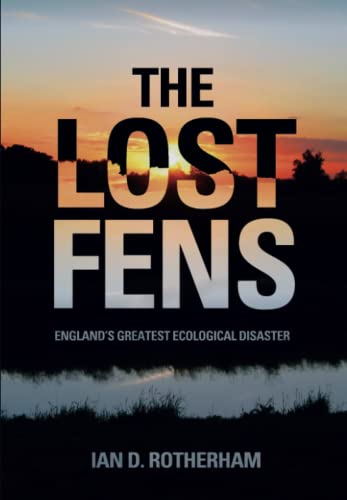
The loss of the great fenlands of eastern England is the greatest single removal of ecology in our history. So thorough was the process that most visitors to the regions, or even people living there, have little idea of what has gone. For many, the Fenlands are the vast expansive flatlands of intensive farming, the ‘breadbaskets’ of Britain. Lost are the vast flocks of wetland birds that filled the evening skies in winter, the frozen wetlands and the fen skaters of the winter, and the abundant black terns or breeding wading birds of the summer months. However, pause a while off main roads and consider place names and road names: Fenny Lane, The Withies, Commonside, Reed Holme, Fen Common, Turbary Lane, Wildmore, Adventurers’ Fen, Wicken Fen, and more; they tell a story of a landscape now gone but once hugely important. The Fens bred revolution and civil war and paid the penalty. They nurtured religious non-conformism with global impact. After 1066, the Saxons withheld the Normans’ onslaught, and in the 1970s, unting’s Beavers took action against twentieth-century invaders. The fenscapes, neither water nor land but something in-between, breed independence and, if necessary, dissention. This story is of politically and economically driven ecological catastrophe and loss. So much has gone, but we do not even know fully what was there before. With global environmental change, and especially climate change, fenlands once again have major roles in our sustainable futures.
"synopsis" may belong to another edition of this title.
About the Author
Ian Rotherham is a Professor of Environmental Geography and a Reader in Tourism & Environmental Change at Sheffield Hallam University. An ecologist and landscape historian by training, he is an authority on wetlands and their history, on their management and, more recently, on associated tourism and economics. He has researched and written on a wide range of environmental and historical topics, with over 350 academic papers, books, and articles to his name.
"About this title" may belong to another edition of this title.
Other Popular Editions of the Same Title

Search results for The Lost Fens: England's Greatest Ecological Disaster

Stock Image
The Lost Fens: England's Greatest Ecological Disaster
Seller: WorldofBooks, Goring-By-Sea, WS, United Kingdom
Seller rating 5 out of 5 stars

Paperback. Condition: Very Good. The book has been read, but is in excellent condition. Pages are intact and not marred by notes or highlighting. The spine remains undamaged. Seller Inventory # GOR007215761
Buy Used
£ 11.02
£ 5.60 shipping
Ships from United Kingdom to U.S.A.
Ships from United Kingdom to U.S.A.
Quantity: 3 available
Seller Image
The Lost Fens: England's Greatest Ecological Disaster
Seller: WeBuyBooks, Rossendale, LANCS, United Kingdom
Seller rating 5 out of 5 stars
Condition: Good. Most items will be dispatched the same or the next working day. A copy that has been read but remains in clean condition. All of the pages are intact and the cover is intact and the spine may show signs of wear. The book may have minor markings which are not specifically mentioned. Seller Inventory # rev6002181237
Buy Used
£ 6.76
£ 10.30 shipping
Ships from United Kingdom to U.S.A.
Ships from United Kingdom to U.S.A.
Quantity: 1 available
Stock Image
The Lost Fens. England's Greatest Ecological Disaster
Published by
Stroud, The History Press 2013, 2013
ISBN 10: 0752486993
ISBN 13: 9780752486994
Used
Softcover
Seller: Antiquariaat Schot, Hendrik-Ido-Ambacht, Netherlands
Seller rating 5 out of 5 stars
206 p. Paperback (Fine copy.). Seller Inventory # 011314
Buy Used
£ 9.19
£ 21.55 shipping
Ships from Netherlands to U.S.A.
Ships from Netherlands to U.S.A.
Quantity: 1 available
Stock Image
The Lost Fens: England's Greatest Ecological Disaster
Seller: Kennys Bookshop and Art Galleries Ltd., Galway, GY, Ireland
Seller rating 5 out of 5 stars
Condition: New. Num Pages: 208 pages, 8 colour plates, 35 black & white illustrations, 16 colour illustrations. BIC Classification: 1DBKEA; HBJD1; RNF; WQH. Category: (G) General (US: Trade). Dimension: 170 x 246 x 13. Weight in Grams: 546. . 2013. Paperback. . . . . Seller Inventory # V9780752486994
Stock Image
The Lost Fens: England's Greatest Ecological Disaster
Published by
The History Press 2013-04-01, 2013
ISBN 10: 0752486993
ISBN 13: 9780752486994
New
Paperback
Seller: Chiron Media, Wallingford, United Kingdom
Seller rating 5 out of 5 stars
Paperback. Condition: New. Seller Inventory # 6666-GRD-9780752486994
Buy New
£ 18.58
£ 15.49 shipping
Ships from United Kingdom to U.S.A.
Ships from United Kingdom to U.S.A.
Quantity: 1 available
Stock Image
The Lost Fens: England's Greatest Ecological Disaster
Seller: Ria Christie Collections, Uxbridge, United Kingdom
Seller rating 5 out of 5 stars
Condition: New. In. Seller Inventory # ria9780752486994_new
Buy New
£ 22.33
£ 11.98 shipping
Ships from United Kingdom to U.S.A.
Ships from United Kingdom to U.S.A.
Quantity: 1 available
Seller Image
The Lost Fens
Published by
The History Press Ltd, GB, 2013
ISBN 10: 0752486993
ISBN 13: 9780752486994
New
Paperback
Seller: Rarewaves.com USA, London, LONDO, United Kingdom
Seller rating 5 out of 5 stars
Paperback. Condition: New. The loss of the great fenlands of eastern England is the greatest single removal of ecology in our history. So thorough was the process that most visitors to the regions, or even people living there, have little idea of what has gone. For many, the Fenlands are the vast expansive flatlands of intensive farming, the 'breadbaskets' of Britain. Lost are the vast flocks of wetland birds that filled the evening skies in winter, the frozen wetlands and the fen skaters of the winter, and the abundant black terns or breeding wading birds of the summer months. However, pause a while off main roads and consider place names and road names: Fenny Lane, The Withies, Commonside, Reed Holme, Fen Common, Turbary Lane, Wildmore, Adventurers' Fen, Wicken Fen, and more; they tell a story of a landscape now gone but once hugely important. The Fens bred revolution and civil war and paid the penalty. They nurtured religious non-conformism with global impact. After 1066, the Saxons withheld the Normans' onslaught, and in the 1970s, unting's Beavers took action against twentieth-century invaders. The fenscapes, neither water nor land but something in-between, breed independence and, if necessary, dissention. This story is of politically and economically driven ecological catastrophe and loss. So much has gone, but we do not even know fully what was there before. With global environmental change, and especially climate change, fenlands once again have major roles in our sustainable futures. Seller Inventory # LU-9780752486994
Buy New
£ 34.98
Free Shipping
Ships from United Kingdom to U.S.A.
Ships from United Kingdom to U.S.A.
Quantity: 1 available
Stock Image
The Lost Fens: England's Greatest Ecological Disaster
Seller: Revaluation Books, Exeter, United Kingdom
Seller rating 5 out of 5 stars
Paperback. Condition: Brand New. 207 pages. 9.75x6.75x0.50 inches. In Stock. Seller Inventory # __0752486993
Buy New
£ 24.03
£ 12.50 shipping
Ships from United Kingdom to U.S.A.
Ships from United Kingdom to U.S.A.
Quantity: 1 available
Stock Image
The Lost Fens: England's Greatest Ecological Disaster
Seller: Kennys Bookstore, Olney, MD, U.S.A.
Seller rating 5 out of 5 stars
Condition: New. Num Pages: 208 pages, 8 colour plates, 35 black & white illustrations, 16 colour illustrations. BIC Classification: 1DBKEA; HBJD1; RNF; WQH. Category: (G) General (US: Trade). Dimension: 170 x 246 x 13. Weight in Grams: 546. . 2013. Paperback. . . . . Books ship from the US and Ireland. Seller Inventory # V9780752486994
Stock Image
The Lost Fens: England's Greatest Ecological Disaster
Published by
The History Press Ltd, 2013
ISBN 10: 0752486993
ISBN 13: 9780752486994
New
Paperback / softback
Seller: THE SAINT BOOKSTORE, Southport, United Kingdom
Seller rating 5 out of 5 stars
Paperback / softback. Condition: New. New copy - Usually dispatched within 3 working days. Seller Inventory # B9780752486994
Buy New
£ 23.54
£ 16.75 shipping
Ships from United Kingdom to U.S.A.
Ships from United Kingdom to U.S.A.
Quantity: 2 available