
Items related to World Poverty and Human Rights
Synopsis
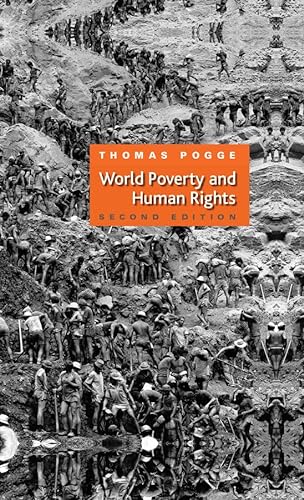
Some 2.5 billion human beings live in severe poverty, deprived of such essentials as adequate nutrition, safe drinking water, basic sanitation, adequate shelter, literacy, and basic health care. One third of all human deaths are from poverty-related causes: 18 million annually, including over 10 million children under five.
However huge in human terms, the world poverty problem is tiny economically. Just 1 percent of the national incomes of the high-income countries would suffice to end severe poverty worldwide. Yet, these countries, unwilling to bear an opportunity cost of this magnitude, continue to impose a grievously unjust global institutional order that foreseeably and avoidably perpetuates the catastrophe. Most citizens of affluent countries believe that we are doing nothing wrong.
Thomas Pogge seeks to explain how this belief is sustained. He analyses how our moral and economic theorizing and our global economic order have adapted to make us appear disconnected from massive poverty abroad. Dispelling the illusion, he also offers a modest, widely sharable standard of global economic justice and makes detailed, realistic proposals toward fulfilling it.
Thoroughly updated, the second edition of this classic book incorporates responses to critics and a new chapter introducing Pogge's current work on pharmaceutical patent reform.
"synopsis" may belong to another edition of this title.
About the Author
Thomas Pogge is Professor of Philosophy and International Affairs at Yale University, Professorial Fellow in the Centre for Applied Philosophy and Public Ethics at the Australian National University, Research Director in the Centre for the Study of Mind in Nature at the University of Oslo, and Adjunct Professor in the Centre for Professional Ethics at the University of Central Lancashire.
From the Back Cover
Some 2.5 billion human beings live in severe poverty, deprived of such essentials as adequate nutrition, safe drinking water, basic sanitation, adequate shelter, literacy, and basic health care. One third of all human deaths are from poverty-related causes: 18 million annually, including over 10 million children under five.
However huge in human terms, the world poverty problem is tiny economically. Just 1 percent of the national incomes of the high-income countries would suffice to end severe poverty worldwide. Yet, these countries, unwilling to bear an opportunity cost of this magnitude, continue to impose a grievously unjust global institutional order that foreseeably and avoidably perpetuates the catastrophe. Most citizens of affluent countries believe that we are doing nothing wrong.
Thomas Pogge seeks to explain how this belief is sustained. He analyses how our moral and economic theorizing and our global economic order have adapted to make us appear disconnected from massive poverty abroad. Dispelling the illusion, he also offers a modest, widely sharable standard of global economic justice and makes detailed, realistic proposals toward fulfilling it.
Thoroughly updated, the second edition of this classic book incorporates responses to critics and a new chapter introducing Pogge's current work on pharmaceutical patent reform.
From the Inside Flap
Some 2.5 billion human beings live in severe poverty, deprived of such essentials as adequate nutrition, safe drinking water, basic sanitation, adequate shelter, literacy, and basic health care. One third of all human deaths are from poverty-related causes: 18 million annually, including over 10 million children under five.
However huge in human terms, the world poverty problem is tiny economically. Just 1 percent of the national incomes of the high-income countries would suffice to end severe poverty worldwide. Yet, these countries, unwilling to bear an opportunity cost of this magnitude, continue to impose a grievously unjust global institutional order that foreseeably and avoidably perpetuates the catastrophe. Most citizens of affluent countries believe that we are doing nothing wrong.
Thomas Pogge seeks to explain how this belief is sustained. He analyses how our moral and economic theorizing and our global economic order have adapted to make us appear disconnected from massive poverty abroad. Dispelling the illusion, he also offers a modest, widely sharable standard of global economic justice and makes detailed, realistic proposals toward fulfilling it.
Thoroughly updated, the second edition of this classic book incorporates responses to critics and a new chapter introducing Pogge's current work on pharmaceutical patent reform.
"About this title" may belong to another edition of this title.
Search results for World Poverty and Human Rights

Stock Image
World Poverty and Human Rights
Seller: HPB-Red, Dallas, TX, U.S.A.
Seller rating 5 out of 5 stars

hardcover. Condition: Good. Connecting readers with great books since 1972! Used textbooks may not include companion materials such as access codes, etc. May have some wear or writing/highlighting. We ship orders daily and Customer Service is our top priority! Seller Inventory # S_450218644
Stock Image
World Poverty and Human Rights
Seller: Books Puddle, Woodside, NY, U.S.A.
Seller rating 4 out of 5 stars

Condition: New. pp. 364. Seller Inventory # 264226799
Seller Image
World Poverty and Human Rights
Seller: GreatBookPrices, Columbia, MD, U.S.A.
Seller rating 5 out of 5 stars
Condition: New. Seller Inventory # 5234799-n
Stock Image
World Poverty and Human Rights
Print on DemandSeller: PBShop.store UK, Fairford, GLOS, United Kingdom
Seller rating 5 out of 5 stars
HRD. Condition: New. New Book. Delivered from our UK warehouse in 4 to 14 business days. THIS BOOK IS PRINTED ON DEMAND. Established seller since 2000. Seller Inventory # L1-9780745641430
Buy New
£ 68.34
£ 5.87 shipping
Ships from United Kingdom to U.S.A.
Ships from United Kingdom to U.S.A.
Quantity: Over 20 available
Stock Image
World Poverty and Human Rights
Seller: Majestic Books, Hounslow, United Kingdom
Seller rating 4 out of 5 stars
Condition: New. pp. 364 9:B&W 6 x 9 in or 229 x 152 mm Case Laminate on Creme w/Gloss Lam. Seller Inventory # 3653936
Buy New
£ 68.48
£ 6.50 shipping
Ships from United Kingdom to U.S.A.
Ships from United Kingdom to U.S.A.
Quantity: 1 available
Seller Image
World Poverty and Human Rights
Seller: GreatBookPrices, Columbia, MD, U.S.A.
Seller rating 5 out of 5 stars
Condition: As New. Unread book in perfect condition. Seller Inventory # 5234799
Stock Image
World Poverty and Human Rights
Seller: GreatBookPricesUK, Woodford Green, United Kingdom
Seller rating 5 out of 5 stars
Condition: New. Seller Inventory # 5234799-n
Buy New
£ 68.33
£ 15 shipping
Ships from United Kingdom to U.S.A.
Ships from United Kingdom to U.S.A.
Quantity: Over 20 available
Stock Image
World Poverty and Human Rights
Seller: Ria Christie Collections, Uxbridge, United Kingdom
Seller rating 5 out of 5 stars
Condition: New. In English. Seller Inventory # ria9780745641430_new
Buy New
£ 72.88
£ 11.29 shipping
Ships from United Kingdom to U.S.A.
Ships from United Kingdom to U.S.A.
Quantity: Over 20 available
Seller Image
World Poverty and Human Rights
Seller: GreatBookPricesUK, Woodford Green, United Kingdom
Seller rating 5 out of 5 stars
Condition: As New. Unread book in perfect condition. Seller Inventory # 5234799
Buy Used
£ 72.61
£ 15 shipping
Ships from United Kingdom to U.S.A.
Ships from United Kingdom to U.S.A.
Quantity: Over 20 available
Seller Image
World Poverty and Human Rights
Published by
John Wiley and Sons Ltd, GB, 2008
ISBN 10: 0745641431
ISBN 13: 9780745641430
New
Hardcover
Seller: Rarewaves.com USA, London, LONDO, United Kingdom
Seller rating 5 out of 5 stars
Hardback. Condition: New. Some 2.5 billion human beings live in severe poverty, deprived of such essentials as adequate nutrition, safe drinking water, basic sanitation, adequate shelter, literacy, and basic health care. One third of all human deaths are from poverty-related causes: 18 million annually, including over 10 million children under five. However huge in human terms, the world poverty problem is tiny economically. Just 1 percent of the national incomes of the high-income countries would suffice to end severe poverty worldwide. Yet, these countries, unwilling to bear an opportunity cost of this magnitude, continue to impose a grievously unjust global institutional order that foreseeably and avoidably perpetuates the catastrophe. Most citizens of affluent countries believe that we are doing nothing wrong. Thomas Pogge seeks to explain how this belief is sustained. He analyses how our moral and economic theorizing and our global economic order have adapted to make us appear disconnected from massive poverty abroad. Dispelling the illusion, he also offers a modest, widely sharable standard of global economic justice and makes detailed, realistic proposals toward fulfilling it. Thoroughly updated, the second edition of this classic book incorporates responses to critics and a new chapter introducing Pogge's current work on pharmaceutical patent reform. Seller Inventory # LU-9780745641430
Buy New
£ 91.91
Free Shipping
Ships from United Kingdom to U.S.A.
Ships from United Kingdom to U.S.A.
Quantity: Over 20 available