
Items related to The Conservation Constitution: The Conservation Movement...
The Conservation Constitution: The Conservation Movement and Constitutional Change, 1870-1930 (Environment and Society) - Hardcover
Book 3 of 4: Environment and Society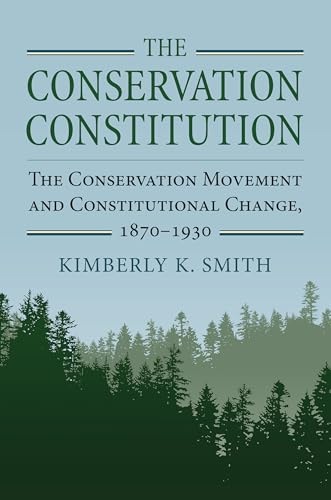
Synopsis
Over the course of the twentieth century, the United States emerged as a global leader in conservation policy―negotiating the first international conservation treaties, pioneering the idea of the national park, and leading the world in creating a modern environmental regulatory regime. And yet, this is a country famously committed to the ideals of limited government, decentralization, and strong protection of property rights. How these contradictory values have been reconciled, not always successfully, is what Kimberly K. Smith Sets out to explain in The Conservation Constitution―a book that brings to light the roots of contemporary constitutional conflict over environmental policy.
In the mid-nineteenth century, most Progressive Era conservation policies would have been considered unconstitutional. Smith traces how, between 1870 and 1930, the conservation movement reshaped constitutional doctrine to its purpose―how, specifically, courts and lawyers worked to expand government authority to manage wildlife, forest and water resources, and pollution. Her work, which highlights a number of important Supreme Court decisions often overlooked in accounts of this period, brings the history of environmental management more fully into the story of the US Constitution. At the same time, illuminating the doctrinal innovation in the Progressives’ efforts, her book reveals the significance of constitutional history to an understanding of the government’s role in environmental management.
"synopsis" may belong to another edition of this title.
About the Author
Kimberly K. Smith is professor of environmental studies and political science at Carleton College. She is the author of many books including Governing Animals: Animal Welfare and the Liberal State and, also from Kansas, African American Environmental Thought: Foundations, Wendell Berry and the Agrarian Tradition: A Common Grace, and The Dominion of Voice: Riot, Reason, and Romance in Antebellum Politics, winner of the 2000 Merle Curti Intellectual History Award from the Organization of American Historians.
"About this title" may belong to another edition of this title.
Search results for The Conservation Constitution: The Conservation Movement...

Stock Image
The Conservation Constitution: The Conservation Movement and Constitutional Change, 1870-1930
Published by
University Press of Kansas, 2019
ISBN 10: 0700628444
ISBN 13: 9780700628445
Used
Hardcover
Seller: ThriftBooks-Atlanta, AUSTELL, GA, U.S.A.
Seller rating 5 out of 5 stars

Hardcover. Condition: Fair. No Jacket. Readable copy. Pages may have considerable notes/highlighting. ~ ThriftBooks: Read More, Spend Less. Seller Inventory # G0700628444I5N00
Stock Image
The Conservation Constitution: The Conservation Movement and Constitutional Change, 1870-1930 (Environment and Society)
Published by
University Press of Kansas, 2019
ISBN 10: 0700628444
ISBN 13: 9780700628445
New
Hardcover
Seller: GoldBooks, Denver, CO, U.S.A.
Seller rating 5 out of 5 stars
Hardcover. Condition: new. New Copy. Customer Service Guaranteed. Seller Inventory # 47Z46_36_0700628444
Stock Image
THE CONSERVATION CONSTITUTION
Published by
University of Nebraska Press, 2019
ISBN 10: 0700628444
ISBN 13: 9780700628445
New
Hardcover
Seller: INDOO, Avenel, NJ, U.S.A.
Seller rating 5 out of 5 stars
Condition: New. Brand New. Seller Inventory # 9780700628445
Stock Image
The Conservation Constitution (Hardcover)
Published by
University Press of Kansas, Kansas, 2019
ISBN 10: 0700628444
ISBN 13: 9780700628445
New
Hardcover
Seller: Grand Eagle Retail, Bensenville, IL, U.S.A.
Seller rating 5 out of 5 stars
Hardcover. Condition: new. Hardcover. Over the course of the twentieth century, the United States emerged as a global leader in conservation policynegotiating the first international conservation treaties, pioneering the idea of the national park, and leading the world in creating a modern environmental regulatory regime. And yet, this is a country famously committed to the ideals of limited government, decentralization, and strong protection of property rights. How these contradictory values have been reconciled, not always successfully, is what Kimberly K. Smith Sets out to explain in The Conservation Constitutiona book that brings to light the roots of contemporary constitutional conflict over environmental policy.In the mid-nineteenth century, most Progressive Era conservation policies would have been considered unconstitutional. Smith traces how, between 1870 and 1930, the conservation movement reshaped constitutional doctrine to its purposehow, specifically, courts and lawyers worked to expand government authority to manage wildlife, forest and water resources, and pollution. Her work, which highlights a number of important Supreme Court decisions often overlooked in accounts of this period, brings the history of environmental management more fully into the story of the US Constitution. At the same time, illuminating the doctrinal innovation in the Progressives efforts, her book reveals the significance of constitutional history to an understanding of the governments role in environmental management. Over the course of the twentieth century, the United States emerged as a global leader in conservation policy. And yet, this is a country famously committed to the ideals of limited government. How these contradictory values have been reconciled is what Kimberly Smith sets out to explain in The Conservation Constitution. Shipping may be from multiple locations in the US or from the UK, depending on stock availability. Seller Inventory # 9780700628445
Stock Image
Conservation Constitution The
Published by
University Press of Kansas, 2019
ISBN 10: 0700628444
ISBN 13: 9780700628445
New
Hardcover
Seller: Kennys Bookshop and Art Galleries Ltd., Galway, GY, Ireland
Seller rating 5 out of 5 stars
Condition: New. Seller Inventory # V9780700628445
Buy New
£ 75.08
£ 8.17 shipping
Ships from Ireland to U.S.A.
Ships from Ireland to U.S.A.
Quantity: Over 20 available
Stock Image
The Conservation Constitution The Conservation Movement and Constitutional Change, 18701930
Seller: Revaluation Books, Exeter, United Kingdom
Seller rating 5 out of 5 stars
Hardcover. Condition: Brand New. 333 pages. 9.00x6.25x1.25 inches. In Stock. Seller Inventory # x-0700628444
Buy New
£ 82.66
£ 12.50 shipping
Ships from United Kingdom to U.S.A.
Ships from United Kingdom to U.S.A.
Quantity: 2 available
Stock Image
Conservation Constitution The
Published by
University Press of Kansas, 2019
ISBN 10: 0700628444
ISBN 13: 9780700628445
New
Hardcover
Seller: Kennys Bookstore, Olney, MD, U.S.A.
Seller rating 5 out of 5 stars
Condition: New. Seller Inventory # V9780700628445
Seller Image
The Conservation Constitution: The Conservation Movement and Constitutional Change, 1870-1930
Seller: moluna, Greven, Germany
Seller rating 5 out of 5 stars
Gebunden. Condition: New. Over the course of the twentieth century, the United States emerged as a global leader in conservation policy. And yet, this is a country famously committed to the ideals of limited government. How these contradictory values have been reconciled is what Kim. Seller Inventory # 285688870
Buy New
£ 66.01
£ 42.12 shipping
Ships from Germany to U.S.A.
Ships from Germany to U.S.A.
Quantity: Over 20 available
Stock Image
The Conservation Constitution: The Conservation Movement and Constitutional Change, 1870-1930 (Environment and Society)
Published by
University Press of Kansas, 2019
ISBN 10: 0700628444
ISBN 13: 9780700628445
New
Hardcover
Seller: Books Puddle, Woodside, NY, U.S.A.
Seller rating 4 out of 5 stars

Condition: New. Seller Inventory # 26389527122
Stock Image
The Conservation Constitution: The Conservation Movement and Constitutional Change, 1870-1930 (Environment and Society)
Published by
University Press of Kansas, 2019
ISBN 10: 0700628444
ISBN 13: 9780700628445
New
Hardcover
Seller: Majestic Books, Hounslow, United Kingdom
Seller rating 4 out of 5 stars
Condition: New. Seller Inventory # 390072717
Buy New
£ 112.36
£ 6.50 shipping
Ships from United Kingdom to U.S.A.
Ships from United Kingdom to U.S.A.
Quantity: 1 available