
The Mirror and the Mind: A History of Self-Recognition in the Human Sciences: 7 (Princeton Modern Knowledge) - Hardcover
Synopsis
How the classic mirror test served as a portal for scientists to explore questions of self-awareness
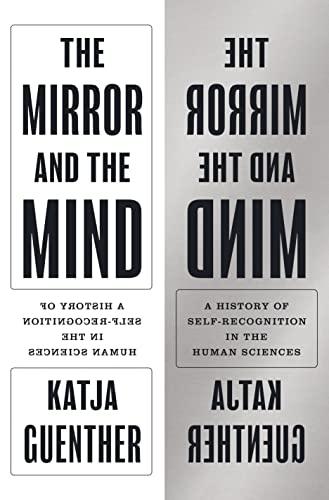
Since the late eighteenth century, scientists have placed subjects―humans, infants, animals, and robots―in front of mirrors in order to look for signs of self-recognition. Mirrors served as the possible means for answering the question: What makes us human? In The Mirror and the Mind, Katja Guenther traces the history of the mirror self-recognition test, exploring how researchers from a range of disciplines―psychoanalysis, psychiatry, developmental and animal psychology, cybernetics, anthropology, and neuroscience―came to read the peculiar behaviors elicited by mirrors. Investigating the ways mirrors could lead to both identification and misidentification, Guenther looks at how such experiments ultimately failed to determine human specificity.
The mirror test was thrust into the limelight when Charles Darwin challenged the idea that language sets humans apart. Thereafter the mirror, previously a recurrent if marginal scientific tool, became dominant in attempts to demarcate humans from other animals. But because researchers could not rely on language to determine what their nonspeaking subjects were experiencing, they had to come up with significant innovations, including notation strategies, testing protocols, and the linking of scientific theories across disciplines. From the robotic tortoises of Grey Walter and the mark test of Beulah Amsterdam and Gordon Gallup, to anorexia research and mirror neurons, the mirror test offers a window into the emergence of such fields as biology, psychology, psychiatry, animal studies, cognitive science, and neuroscience.
The Mirror and the Mind offers an intriguing history of experiments in self-awareness and the advancements of the human sciences across more than a century.
"synopsis" may belong to another edition of this title.
About the Author
Katja Guenther is professor of the history of science at Princeton University. She is the author of Localization and Its Discontents: A Genealogy of Psychoanalysis and the Neuro Disciplines. She lives in Princeton, New Jersey.
"About this title" may belong to another edition of this title.
Other Popular Editions of the Same Title

Search results for The Mirror and the Mind: A History of Self-Recognition...

Stock Image
The Mirror and the Mind: A History of Self-Recognition in the Human Sciences (Princeton Modern Knowledge)
Published by
Princeton University Press, 2022
ISBN 10: 0691237255
ISBN 13: 9780691237251
Used
Hardcover
Seller: BookHolders, Towson, MD, U.S.A.
Seller rating 5 out of 5 stars

Condition: Good. [ No Hassle 30 Day Returns ][ Ships Daily ] [ Underlining/Highlighting: NONE ] [ Writing: NONE ] [ Edition: Reprint ] Publisher: Princeton Pub Date: 1/1/2022 Binding: hardcover Pages: 296 Reprint edition. Seller Inventory # 6938919
Stock Image
The Miror and the Mind. A History of Self-Recognition in the Human Sciences
Published by
Princeton University Press, Princeton, N.J. and Oxford, 2022
ISBN 10: 0691237255
ISBN 13: 9780691237251
Used
Hardcover
Seller: Research Ink, Takoma Park, MD, U.S.A.
Seller rating 4 out of 5 stars

Hardback. Condition: Very Good. x + 296 pp. dj. book. Seller Inventory # 40272
Seller Image
THE MIRROR AND THE MIND: A History Of Self-Recognition In The Human Sciences (uncorrected proof)
Published by
Princeton University Press, Princeton and Oxford, 2022
ISBN 10: 0691237255
ISBN 13: 9780691237251
Used
Wraps
First Edition
Seller: Frey Fine Books, Rougemont, NC, U.S.A.
Seller rating 5 out of 5 stars
Wraps. Condition: Near Fine. 1st edition. Uncorrected proof, 2022. Near Fine. 8vo., 283 pp., with black & white images. Bound in publishers white, black & grey stiff wraps. Very slight signs of shelf wear, otherwise clean and unmarked. Seller Inventory # 28887
Stock Image
Mirror and the Mind,The: A History of SE
Published by
Princeton University Press, 2022
ISBN 10: 0691237255
ISBN 13: 9780691237251
Used
Hardcover
Seller: The Next Page, Calgary, AB, Canada
Seller rating 4 out of 5 stars
Hardcover. Condition: Like New. Seller Inventory # 978069123725R
Stock Image
The Mirror and the Mind
Published by
Princeton University Press, 2022
ISBN 10: 0691237255
ISBN 13: 9780691237251
New
Hardcover
Seller: PBShop.store UK, Fairford, GLOS, United Kingdom
Seller rating 5 out of 5 stars
HRD. Condition: New. New Book. Shipped from UK. Established seller since 2000. Seller Inventory # WP-9780691237251
Buy New
£ 28.60
£ 5.87 shipping
Ships from United Kingdom to U.S.A.
Ships from United Kingdom to U.S.A.
Quantity: 15 available
Stock Image
Mirror and the Mind : A History of Self-recognition in the Human Sciences
Published by
Princeton University Press, 2022
ISBN 10: 0691237255
ISBN 13: 9780691237251
New
Hardcover
Seller: GreatBookPrices, Columbia, MD, U.S.A.
Seller rating 5 out of 5 stars
Condition: New. Seller Inventory # 44190695-n
Seller Image
The Mirror and the Mind
Published by
Princeton University Press, US, 2022
ISBN 10: 0691237255
ISBN 13: 9780691237251
New
Hardcover
Seller: Rarewaves USA, OSWEGO, IL, U.S.A.
Seller rating 5 out of 5 stars
Hardback. Condition: New. How the classic mirror test served as a portal for scientists to explore questions of self-awarenessSince the late eighteenth century, scientists have placed subjects-humans, infants, animals, and robots-in front of mirrors in order to look for signs of self-recognition. Mirrors served as the possible means for answering the question: What makes us human? In The Mirror and the Mind, Katja Guenther traces the history of the mirror self-recognition test, exploring how researchers from a range of disciplines-psychoanalysis, psychiatry, developmental and animal psychology, cybernetics, anthropology, and neuroscience-came to read the peculiar behaviors elicited by mirrors. Investigating the ways mirrors could lead to both identification and misidentification, Guenther looks at how such experiments ultimately failed to determine human specificity.The mirror test was thrust into the limelight when Charles Darwin challenged the idea that language sets humans apart. Thereafter the mirror, previously a recurrent if marginal scientific tool, became dominant in attempts to demarcate humans from other animals. But because researchers could not rely on language to determine what their nonspeaking subjects were experiencing, they had to come up with significant innovations, including notation strategies, testing protocols, and the linking of scientific theories across disciplines. From the robotic tortoises of Grey Walter and the mark test of Beulah Amsterdam and Gordon Gallup, to anorexia research and mirror neurons, the mirror test offers a window into the emergence of such fields as biology, psychology, psychiatry, animal studies, cognitive science, and neuroscience.The Mirror and the Mind offers an intriguing history of experiments in self-awareness and the advancements of the human sciences across more than a century. Seller Inventory # LU-9780691237251
Stock Image
Mirror and the Mind : A History of Self-recognition in the Human Sciences
Published by
Princeton University Press, 2022
ISBN 10: 0691237255
ISBN 13: 9780691237251
Used
Hardcover
Seller: GreatBookPrices, Columbia, MD, U.S.A.
Seller rating 5 out of 5 stars
Condition: As New. Unread book in perfect condition. Seller Inventory # 44190695
Stock Image
The Mirror and the Mind A History of SelfRecognition in the Human Sciences
Seller: Revaluation Books, Exeter, United Kingdom
Seller rating 5 out of 5 stars
Hardcover. Condition: Brand New. 296 pages. 9.25x6.12x1.20 inches. In Stock. Seller Inventory # 0691237255
Buy New
£ 22.70
£ 12.50 shipping
Ships from United Kingdom to U.S.A.
Ships from United Kingdom to U.S.A.
Quantity: 1 available
Stock Image
The Mirror and the Mind
Published by
Princeton University Press, 2022
ISBN 10: 0691237255
ISBN 13: 9780691237251
New
Hardcover
Seller: PBShop.store US, Wood Dale, IL, U.S.A.
Seller rating 5 out of 5 stars
HRD. Condition: New. New Book. Shipped from UK. Established seller since 2000. Seller Inventory # WP-9780691237251