
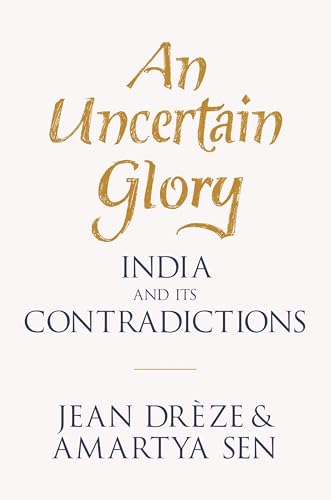
Items related to An Uncertain Glory: India and Its Contradictions
Synopsis
Why India's problems won't be solved by rapid economic growth alone
When India became independent in 1947 after two centuries of colonial rule, it immediately adopted a firmly democratic political system, with multiple parties, freedom of speech, and extensive political rights. The famines of the British era disappeared, and steady economic growth replaced the economic stagnation of the Raj. The growth of the Indian economy quickened further over the last three decades and became the second fastest among large economies. Despite a recent dip, it is still one of the highest in the world. Maintaining rapid as well as environmentally sustainable growth remains an important and achievable goal for India. In An Uncertain Glory, two of India's leading economists argue that the country's main problems lie in the lack of attention paid to the essential needs of the people, especially of the poor, and often of women. There have been major failures both to foster participatory growth and to make good use of the public resources generated by economic growth to enhance people's living conditions. There is also a continued inadequacy of social services such as schooling and medical care as well as of physical services such as safe water, electricity, drainage, transportation, and sanitation. In the long run, even the feasibility of high economic growth is threatened by the underdevelopment of social and physical infrastructure and the neglect of human capabilities, in contrast with the Asian approach of simultaneous pursuit of economic growth and human development, as pioneered by Japan, South Korea, and China. In a democratic system, which India has great reason to value, addressing these failures requires not only significant policy rethinking by the government, but also a clearer public understanding of the abysmal extent of social and economic deprivations in the country. The deep inequalities in Indian society tend to constrict public discussion, confining it largely to the lives and concerns of the relatively affluent. Drèze and Sen present a powerful analysis of these deprivations and inequalities as well as the possibility of change through democratic practice."synopsis" may belong to another edition of this title.
About the Author
Jean Drèze has lived in India since 1979 and became an Indian citizen in 2002. He has taught at the London School of Economics and the Delhi School of Economics, and he is now a visiting professor at Allahabad University. He is the coauthor (with Amartya Sen) of Hunger and Public Action and India: Development and Participation. Amartya Sen is the Thomas W. Lamont University Professor and professor of economics and philosophy at Harvard University. He won the Nobel Prize in Economics in 1998. His many books include Development as Freedom, Rationality and Freedom, The Argumentative Indian, Identity and Violence, and The Idea of Justice.
From the Back Cover
"India is a great success story of economic growth and poverty decline, but it remains the home of global poverty, and half of its children are profoundly malnourished. This paradox of poverty and plenty poses one of the great intellectual and moral challenges of the day. We can ask for no better guides to it than a philosopher and an activist, both distinguished economists, and both with unparalleled knowledge of India's glories and its shames."--Angus Deaton, author of The Great Escape: Health, Wealth, and the Origins of Inequality
"This important book provides a comprehensive and probing analysis of the Indian economy and its enormous potential. What makes this such an engaging book is that it is a deeply sympathetic and, for that very reason, a deeply critical evaluation of contemporary India. The book's combination of economics, politics, history, and law makes it a fascinating read."--Kaushik Basu, chief economist of the World Bank
"About this title" may belong to another edition of this title.
Search results for An Uncertain Glory: India and Its Contradictions

Stock Image
An Uncertain Glory: India and its Contradictions
Published by
Princeton University Press, 2015
ISBN 10: 0691165521
ISBN 13: 9780691165523
Used
Paperback
Seller: World of Books (was SecondSale), Montgomery, IL, U.S.A.
Seller rating 5 out of 5 stars

Paperback. Condition: Good. When India became independent in 1947 after two centuries of colonial rule, it immediately adopted a firmly democratic political system, with multiple parties, freedom of speech, and extensive political rights. The famines of the British era disappeared, and steady economic growth replaced the economic stagnation of the Raj. The growth of the Indian economy quickened further over the last three decades and became the second fastest among large economies. Despite a recent dip, it is still one of the highest in the world. Maintaining rapid as well as environmentally sustainable growth remains an important and achievable goal for India. In An Uncertain Glory, two of India's leading economists argue that the country's main problems lie in the lack of attention paid to the essential needs of the people, especially of the poor, and often of women. There have been major failures both to foster participatory growth and to make good use of the public resources generated by economic growth to enhance people's living conditions. There is also a continued inadequacy of social services such as schooling and medical care as well as of physical services such as safe water, electricity, drainage, transportation, and sanitation. In the long run, even the feasibility of high economic growth is threatened by the underdevelopment of social and physical infrastructure and the neglect of human capabilities, in contrast with the Asian approach of simultaneous pursuit of economic growth and human development, as pioneered by Japan, South Korea, and China. In a democratic system, which India has great reason to value, addressing these failures requires not only significant policy rethinking by the government, but also a clearer public understanding of the abysmal extent of social and economic deprivations in the country. The deep inequalities in Indian society tend to constrict public discussion, confining it largely to the lives and concerns of the relatively affluent. Dreze and Sen present a powerful analysis of these deprivations and inequalities as well as the possibility of change through democratic practice. Seller Inventory # 00109261955
Stock Image
An Uncertain Glory : India and Its Contradictions
Published by
Princeton University Press, 2015
ISBN 10: 0691165521
ISBN 13: 9780691165523
Used
Softcover
Seller: Better World Books, Mishawaka, IN, U.S.A.
Seller rating 5 out of 5 stars
Condition: Good. Pages intact with minimal writing/highlighting. The binding may be loose and creased. Dust jackets/supplements are not included. Stock photo provided. Product includes identifying sticker. Better World Books: Buy Books. Do Good. Seller Inventory # 4213418-6
Stock Image
An Uncertain Glory: India and its Contradictions
Published by
Princeton University Press, 2015
ISBN 10: 0691165521
ISBN 13: 9780691165523
Used
Paperback
Seller: World of Books Inc, Montgomery, IL, U.S.A.
Seller rating 4 out of 5 stars

Paperback. Condition: Good. When India became independent in 1947 after two centuries of colonial rule, it immediately adopted a firmly democratic political system, with multiple parties, freedom of speech, and extensive political rights. The famines of the British era disappeared, and steady economic growth replaced the economic stagnation of the Raj. The growth of the Indian economy quickened further over the last three decades and became the second fastest among large economies. Despite a recent dip, it is still one of the highest in the world. Maintaining rapid as well as environmentally sustainable growth remains an important and achievable goal for India. In An Uncertain Glory, two of India's leading economists argue that the country's main problems lie in the lack of attention paid to the essential needs of the people, especially of the poor, and often of women. There have been major failures both to foster participatory growth and to make good use of the public resources generated by economic growth to enhance people's living conditions. There is also a continued inadequacy of social services such as schooling and medical care as well as of physical services such as safe water, electricity, drainage, transportation, and sanitation. In the long run, even the feasibility of high economic growth is threatened by the underdevelopment of social and physical infrastructure and the neglect of human capabilities, in contrast with the Asian approach of simultaneous pursuit of economic growth and human development, as pioneered by Japan, South Korea, and China. In a democratic system, which India has great reason to value, addressing these failures requires not only significant policy rethinking by the government, but also a clearer public understanding of the abysmal extent of social and economic deprivations in the country. The deep inequalities in Indian society tend to constrict public discussion, confining it largely to the lives and concerns of the relatively affluent. Dreze and Sen present a powerful analysis of these deprivations and inequalities as well as the possibility of change through democratic practice. Seller Inventory # CIN0691165521G
Stock Image
An Uncertain Glory: India and its Contradictions
Published by
Princeton University Press, 2015
ISBN 10: 0691165521
ISBN 13: 9780691165523
Used
Paperback
Seller: Academybookshop, Long Island City, NY, U.S.A.
Seller rating 4 out of 5 stars
Paperback. Condition: Good. This book is in used condition. It may come with a dent, a tear, or a crease. No missing pages, clean pages. Seller Inventory # A-Gj6-31880
Stock Image
An Uncertain Glory: India and its Contradictions
Published by
Princeton University Press, 2015
ISBN 10: 0691165521
ISBN 13: 9780691165523
Used
Paperback
Seller: Textbook Bookie, Little Rock, AR, U.S.A.
Seller rating 5 out of 5 stars
Paperback. Condition: Good. Book in Good condition. Seller Inventory # 9780691165523-good
Seller Image
Uncertain Glory : India and Its Contradictions
Published by
Princeton University Press, 2015
ISBN 10: 0691165521
ISBN 13: 9780691165523
Used
Softcover
Seller: GreatBookPrices, Columbia, MD, U.S.A.
Seller rating 5 out of 5 stars
Condition: good. May show signs of wear, highlighting, writing, and previous use. This item may be a former library book with typical markings. No guarantee on products that contain supplements Your satisfaction is 100% guaranteed. Twenty-five year bookseller with shipments to over fifty million happy customers. Seller Inventory # 23054064-5
Stock Image
An Uncertain Glory: India and its Contradictions
Published by
Princeton University Press, 2015
ISBN 10: 0691165521
ISBN 13: 9780691165523
Used
paperback
Seller: My Dead Aunt's Books, Hyattsville, MD, U.S.A.
Seller rating 5 out of 5 stars
paperback. Condition: As New. Unmarked trade paperback. Seller Inventory # 119962
Stock Image
An Uncertain Glory: India and its Contradictions
Published by
Princeton University Press, 2015
ISBN 10: 0691165521
ISBN 13: 9780691165523
Used
paperback
Seller: Textbooks_Source, Columbia, MO, U.S.A.
Seller rating 5 out of 5 stars
paperback. Condition: Good. Ships in a BOX from Central Missouri! May not include working access code. Will not include dust jacket. Has used sticker(s) and some writing or highlighting. UPS shipping for most packages, (Priority Mail for AK/HI/APO/PO Boxes). Seller Inventory # 001774687U
Stock Image
India and its Contradictions Uncertain Glory An Uncertain Glory Format: Paperback
Published by
Princeton University Press, 2015
ISBN 10: 0691165521
ISBN 13: 9780691165523
Used
Softcover
Seller: INDOO, Avenel, NJ, U.S.A.
Seller rating 5 out of 5 stars
Condition: As New. Unread copy in mint condition. Seller Inventory # PG9780691165523
Stock Image
India and its Contradictions Uncertain Glory An Uncertain Glory Format: Paperback
Published by
Princeton University Press, 2015
ISBN 10: 0691165521
ISBN 13: 9780691165523
New
Softcover
Seller: INDOO, Avenel, NJ, U.S.A.
Seller rating 5 out of 5 stars
Condition: New. Seller Inventory # 9780691165523