
Items related to Yoga in Practice: 34 (Princeton Readings in Religions)
Yoga in Practice: 34 (Princeton Readings in Religions) - Softcover
Book 15 of 15: Princeton Readings in Religions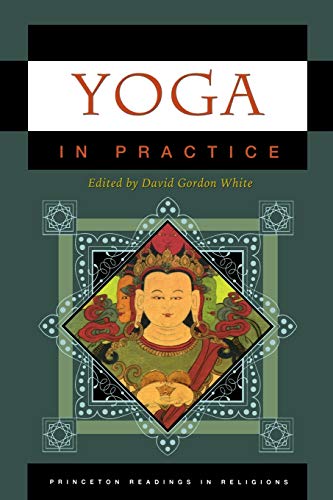
Synopsis
Primary texts in yoga, from ancient times to today
Yoga is a body of practice that spans two millennia and transcends the boundaries of any single religion, geographic region, or teaching lineage. In fact, over the centuries there have been many "yogas"―yogas of battlefield warriors, of itinerant minstrels and beggars, of religious reformers, and of course, the yogas of mind and body so popular today. Yoga in Practice is an anthology of primary texts drawn from the diverse yoga traditions of India, greater Asia, and the West. This one-of-a-kind sourcebook features elegant translations of Hindu, Buddhist, Jain, and even Islamic yogic writings, many of them being made available in English for the very first time. Collected here are ancient, colonial, and modern texts reflecting a broad range of genres, from an early medical treatise in Sanskrit to Upanishadic verses on sacred sounds; from a Tibetan catechetical dialogue to funerary and devotional songs still sung in India today; and from a 1930s instructional guide by the grandfather of contemporary yoga to the private papers of a pioneer of tantric yoga in America.
Emphasizing the lived experiences to be found in the many worlds of yoga, Yoga in Practice includes David Gordon White's informative general introduction as well as concise introductions to each reading by the book's contributors.
"synopsis" may belong to another edition of this title.
About the Author
David Gordon White is the J. F. Rowny Professor of Comparative Religion at the University of California, Santa Barbara. His books include Sinister Yogis and Tantra in Practice (Princeton).
From the Back Cover
"This volume fills a vacuum in yoga studies. An indispensable resource for teachers and students, it is also of immeasurable value to every thinking yoga practitioner. Through an astute selection of key texts, White effectively demonstrates that yoga is a collection of vibrant, disparate, and distinctive traditions, and he also highlights continuities that unite ideas and practices of yoga through two thousand years of history."--Suzanne Newcombe, Inform, based at the London School of Economics and Political Science
"Yoga in Practice deals with a topic of great academic significance and broad popular appeal, and the contributors are solid scholars who know their material inside out. Yoga is a global phenomenon, and this collection provides clarification of key points and careful contextualization of the history of ideas that has produced yoga. There are really no other books comparable in range, presentation, or quality."--Joseph S. Alter, University of Pittsburgh
"This anthology makes available a wide variety of translations of primary sources on yoga, especially texts focused on practice, and places each in the broader context of the Indian traditions of yoga. The volume breaks new ground by including little-known texts and offering new perspectives on more familiar ones. Many of these texts are unavailable in translation elsewhere."--David Carpenter, Saint Joseph's University
Excerpt. © Reprinted by permission. All rights reserved.
YOGA IN PRACTICE
PRINCETON UNIVERSITY PRESS
Copyright © 2012 Princeton University PressAll right reserved.
ISBN: 978-0-691-14086-5
Contents
Contents by Tradition.....................................................................................................................................viiContents by Country.......................................................................................................................................ixContributors..............................................................................................................................................xiIntroduction ? David Gordon White....................................................................................................................1Note for Instructors ? David Gordon White............................................................................................................24Foundational Yoga Texts...................................................................................................................................291. The Path to Liberation through Yogic Mindfulness in Early Ayurveda ? Dominik Wujastyk.............................................................312. A Prescription for Yoga and Power in the Mahabharata ? James L. Fitzgerald........................................................................433. Yoga Practices in the Bhagavadgita ? Angelika Malinar.............................................................................................584. Patañjala Yoga in Practice ? Gerald James Larson.............................................................................................735. Yoga in the Yoga Upanisads: Disciplines of the Mystical OM Sound ? Jeffrey Clark Ruff.............................................................976. The Sevenfold Yoga of the Yogavasistha ? Christopher Key Chapple..................................................................................1177. A Fourteenth-century Persian Account of Breath Control and Meditation ? Carl W. Ernst.............................................................133Yoga in Jain, Buddhist, and Hindu Tantric Traditions......................................................................................................1418. A Digambara Jain Description of the Yogic Path to Deliverance ? Paul Dundas.......................................................................1439. Saraha's Queen Dohas ? Roger R. Jackson...........................................................................................................16210. The Questions and Answers of Vajrasattva ? Jacob P. Dalton.......................................................................................18511. The Six-Phased Yoga of the Abbreviated Wheel of Time Tantra (Laghukalacakratantra) according to Vajrapani ? Vesna A. Wallace.....................20412. eroticism and cosmic transformation as Yoga: The Atmatattva of the Vaisnava Sahajiyas of Bengal ? Glen Alexander Hayes...........................22313. The transport of the Hamsas: A Sakta rasalila as Rajayoga in Eighteenth-century Benares ? Somadeva Vasudeva......................................242Yoga of the Nath Yogis....................................................................................................................................25514. The Original Goraksasataka ? James Mallinson.....................................................................................................25715. Nath Yogis, Akbar, and the "Balnath Tilla" ? William R. Pinch....................................................................................27316. Yogic Language in Village Performance: Hymns of the Householder Naths ? Ann Grodzins Gold and Daniel Gold........................................289Yoga in the Colonial and Post-Colonial Periods............................................................................................................30717. The Yoga System of the Josmanis ? Sthaneshwar Timalsina..........................................................................................30918. Songs to the Highest God (Isvara) of Samkhya-Yoga ? Knut A. Jacobsen.............................................................................32519. Yoga Makaranda of T. Krishnamacharya ? Mark Singleton, M. Narasimhan, and M. A. Jayashree........................................................33720. Theos Bernard and the early Days of tantric Yoga in america ? Paul G. Hackett....................................................................35321. Universalist and Missionary Jainism: Jain Yoga of the Terapanthi Tradition ? Olle Qvarnström and Jason Birch................................365Glossary of Foreign Terms.................................................................................................................................383Index.....................................................................................................................................................389
Chapter One
The Path to Liberation through Yogic Mindfulness in early Ayurveda
Dominik Wujastyk
It can come as a surprise to discover that buried in one of the earliest medical treatises in Sanskrit is a short tract on the yogic path to liberation. This tract—a mere thirty-nine verses—occurs in the chapter on the embodied Person (Sarirasthana) in the Compendium of Caraka (Carakasamhita). The Compendium is a medical encyclopedia and perhaps the earliest surviving complete treatise on classical indian medicine. it is even more surprising to find that this yogic tract contains several references to Buddhist meditation and a previously unknown eightfold path leading to the recollection or mindfulness that is the key to liberation. Finally, Caraka's yoga tract almost certainly predates the famous classical yoga system of Patañjali. Let us explore these points in turn.
Classical Indian medicine, ayurveda ("the knowledge for long life"), is based on the body of medical theory and practice that was first collected and synthesized in several great medical encyclopedias, including especially the The Compendium of Caraka and The Compendium of Susruta (Susrutasamhita). However, there are traces of the formation of this medical system to be found in earlier Sanskrit and Pali literature. The first occurrence of the Sanskrit word ayurveda in indian history is in the Mahabharata epic. The epic also refers to medicine as having eight components, a term that is so standard in later literature that the science "with eight components" (astanga) becomes a synonym for medicine. These components include topics such as therapeutics, pediatrics, possession, surgery, and toxicology.
But the very earliest reference in indian literature to a form of medicine that is unmistakably a forerunner of ayurveda is found in the teachings of the Buddha (probably fl. ca. 480–400 BCE, but these dates are still debated). as far as we know, it was not yet called ayurveda, but the basic concepts were the same as those that later formed the foundations of ayurveda. The Pali Buddhist canon as we have it today probably dates from about 250 Bce, and records a fairly trustworthy account of what the Buddha said. in the collection of Buddhist sermons called the "connected Sayings" (Samyutta Nikaya), there is a story that tells how the Buddha was approached by a monk called Sivako who asked him whether disease is caused by bad actions performed in the past, in other words by bad karma. The Buddha said no, that bad karma is only part of the picture and that diseases may be caused by any of eight factors. The factors he listed were bile, phlegm, wind, and their pathological combination, changes of the seasons, the stress of unusual activities, external agency, as well as the ripening of bad karma. This is the first moment in documented indian history that these medical categories and explanations are combined in a clearly systematic manner. The term "pathological combination" (Pali sannipata) is particularly telling: this is a technical term from ayurveda that is as specific as a modern establishment doctor saying something like "hemoglobin levels." This term signals clearly that the Buddha's list of disease-causes emanates from a milieu in which a body of systematic technical medical knowledge existed. And it is these very factors that later became the cornerstone of classical Indian medical theory, or ayurveda. The historical connection between the ascetic traditions—such as Buddhism and ayurveda—is an important one.
What is the date of the Compendium of Caraka? The chronology of this work is complex. The text already declares itself to be the work of three people. an early text by agnivesa was edited (pratisamskrta) by caraka. caraka's work was later completed by Drdhabala. Jan Meulenbeld has surveyed the key historical issues with great care in his History of Indian Medical Literature. After assessing the Nyaya, Vaisesika, and Buddhist materials that appear in Caraka's Compendium, Meulenbeld concludes that, "Caraka cannot have lived later than about AD 150–200 and not much earlier than 100 BC."
How does this dating relate to the early history of classical yoga? is the yoga tract in Caraka's Compendium to be dated before or after the classical yoga of Patañjali? In his authoritative new edition of the "Samadhi" chapter of Patañjali's work on yoga, Philipp Maas (2006) has provided a compelling reassessment of the authorship, title, and date of the texts commonly known as the Yoga Sutra and the Vyasabhasya, but which call themselves collectively the Patañjalayogasastra, or Patañjali's Teaching on Yoga. Based on careful arguments and evidence, Maas makes three main assertions:
1. The text of the Patañjalayogasastra, i.e., the undivided Sutra and its commentary the Bhasya, is a single composition that can be traced back to a single author.
2. That author can be called Patañjali.
3. This unified text can be plausibly dated to about 400 ce.
Maas shows that the earliest references to "Vedavyasa" as the author of a Bhasya occur at the end of the first millennium, in the works of Vacaspatimisra (fl. ca. 975–1000), in his Tattvavaisaradi; and Ksemaraja (fl. ca. 950–1050), in his Svacchandatantroddyota. From the eleventh century onward, authors such as Madhava (fifteenth-century Sarvadarsanasamgraha) routinely refer to Patañjali's Yogasastra, his Samkhyapravacana or his Yoga Sutra, and to Vyasa as the author of the Bhasya.
However, the earliest of these revisionist authors, Vacaspati, also refers elsewhere to Patañjali as the author of a part of the Bhasya. Vacaspati was apparently uncertain as to whether sutra and bhasya were by the same author or not. in fact, this view was reasonably widespread amongst early authors such as Sridhara in his ca. 991 CE Nyayakandali, abhinavagupta in his ca. 950 ce Abhinavabharati, and many others. Maas also shows that the earliest form of the work's title in manuscript chapter colophons was probably Patañjalayogasastrasamkhyapravacana, "Patañjali's Samkhya teaching that is the treatise on Yoga." Working from this as well as internal textual arguments, Maas concludes that Patañjali took materials about yoga from older sources, and added his own explanatory passages to create the unified work that, since about 1100 CE, has been considered the work of two people. The extracts were designated as sutras and ascribed to Patañjali, while the explanations and additional remarks were regarded as a bhasya and ascribed to Vyasa (meaning "the editor" in Sanskrit).
As for the all-important issue of the date of the Patañjalayogasastra, Maas notes that it is partly a matter of guesswork, but refers to the plausible citations by Magha (in his 600–800 ce Sisupalavadha), Vrsabhadeva (fl. ca. 650 CE), and gaudapada (in his ca. 500 CE commentary on Isvarakrsna's Samkhyakarikas). Maas therefore argues that the Patañjalayogasastra was, by the beginning of the sixth century, regarded as an authoritative representation of yoga philosophy. Such a reputation would have taken at least some time to become established. The earliest possible date for the Patañjalayogasastra is Patañjali's apparent engagement with the Vijñanavada teaching of Vasubandhu in the fourth century, as already proposed long ago by Woods (1914). Maas's final opinion is that the composition of the Patañjalayogasastra can be placed in the period between 325 and 425 CE.
Whatever the nuances of the arguments, it is beyond reasonable doubt that the Compendium of caraka precedes the Patañjalayogasastra, that the yoga tract in the Compendium is older than Patañjali's yoga system, and that it pro pounds a yoga system that has closer links to Vaisesika philosophy than to the Samkhya of Patañjali's system.
Caraka's Yoga Tract
In the yoga tract in his chapter on the origin and structure of the human being, the Sarirasthana, caraka first frames yoga as both spiritual liberation and the means of attaining it. Verses 138–39 are a direct citation from the Vaisesikasutra. caraka continues with a description of the supernatural powers that accrue to the practitioner of yoga as a result of his self-discipline and the power of his concentration. This is very much in line with Patañjali's teaching on siddhis, and indeed with common ideas of the result of yoga practice across indian literature.
Among the earliest sources of the idea that supernatural powers result from meditation are the descriptions in the Buddhist canonical text, the Samaññaphalasutta of the Digha Nikaya, when characterizing the monk who has completed the four meditations (Pali jhana). The powers arise from being integrated (samahita), and are as follows:
1. body-power (kayavasa), or the power to self-multiply, vanish, fly through walls, even touch the sun or moon
2. knowledge from divine hearing (dibbasotañana)
3. mind-reading (cetopariyañana)
4. the recollection of past lives (pubbenivasanussatiñana)
5. divine seeing (dibbacakkhu)
6. knowledge of the destruction of the bad influences (asavakkhaya)
Many of the key terms used in this list of six powers are the same as those used in caraka's yoga tract when he describes the eight powers that yoga practice can produce.
Most interesting of all, caraka frames a new eightfold practice leading to recollection (Skt. smrti), and places recollection at the very center of yogic practice. For caraka, it is recollection that leads to yoga, and yoga that leads to the acquisition of supernatural powers and to ultimate liberation.
The language and conceptualization of this passage in the medical literature places it squarely within the tradition of the Buddhist mindfulness meditation (Pali satipatthana), often practiced today under the name vipassana. as gyatso (1992) has shown, in the Buddhist tradition, the Pali term sati (Sanskrit smrti) can denote memory in two quite distinct senses. First, it denotes memory as the simple bringing-to-mind of events that happened at an earlier period in time, the mental act required to answer such questions as, "what did i have for breakfast?" in a second sense, it means the deepening of one's consciousness, of one's experiential awareness of the present moment. This is the alert selfrecollection that people experience at special or shocking moments in life, or as a result of deliberate forms of meditation practice. Sometimes, such moments of recollection or mindfulness generate long-term memories of the first type, which are referred to as "flashbulb memories."
The Pali compound word sati-patthana, the meditational practice leading to recollection or mindfulness, corresponds to the Sanskrit smrti-upasthana. and in verse 146, caraka's text uses these very words to describe the one practice that leads to all the other moral and spiritual practices he has listed. They arise from "abiding in the memory of reality," or in Sanskrit tattva-smrter upasthanat. In the following verse, 147, caraka inverts the cause-effect relation: it is the practice of the virtues listed in 143–44 that leads to recollection. Finally, verse 147 also identifies the final goal of recollection with freedom from suffering, Sanskrit duhkha, again the central doctrine of Buddhism. This theme of suffering and impermanence is picked up again in verses 152 and 153 in completely Buddhist terms. Caraka's use of these keywords taken directly from the Buddhist meditational and doctrinal milieu shows unambiguously that his yoga tract is an adaptation of extremely old ascetic material known to us mainly from Buddhism.
Given all this, it is all the more surprising that the comment at the end of verse 149 identifies recollection with the ordinary-language meaning of memory, i.e., calling to mind previous experience. It is tempting to see this comment as an addition by an author who was not familiar with the Buddhist understanding of recollection or mindfulness that underlies this tract.
Since recollection is at the center of Caraka's method of yoga, the eightfold path to recollection that he outlines in verses 148 and 149 is of special interest. This appears to be a very early "eightfold path" whose origins and detailed meaning are obscure and require further study. it bears no apparent relation to other early forms of yogic path, such as the sixfold path of the Maitrayaniya Upanisad, or the eightfold path of Patañjali's Patañjalayogasastra. The first four of caraka's eight steps to mindfulness concern the deepening of perception and discrimination. The fifth step could mean an attachment to sattva in the sense of the Samkhya guna of purity, although at the end of verse 141 the same word means, as it often does, "mind." The sixth step, practice, could refer to practicing mindfulness, but it could also point to memorization in the ordinary sense. The seventh step, the yoga of knowledge, brings to mind the famous teachings of the Bhagavadgita on this subject, where liberation is attainable through true gnosis. But caraka's Compendium elsewhere shows no awareness of the Gita. The last step, "what is heard again," is syntactically a little odd, since it is not exactly a procedural step in a path. But it was clearly intended as the eighth "step." it again suggests memorization, rather than mindfulness in the Buddhist sense.
The last part of verse 151 raises new questions. The philosophers of the Samkhya school have normally been presumed to be those who "count" or "reckon" (samkhya-) the twenty-five tattvas or evolutes of the universe's creation. However, in verse 151, caraka has the Samkhyas counting not tattvas, but dharmas. This strongly suggests the use of the word dharma, or Pali dhamma, in the sense of "entity," "fundamental phenomenon," or even more neutrally "thing," and might even suggest the enumerative and descriptive characteristics of the Buddhist abhidharma literature. The connection with Samkhya continues with verse 153, which is a direct parallel of Samkhyakarika 64.
Caraka's yoga tract is an early and profoundly syncretic text about the path of yoga. Its citations from Vaisesika and Samkhya treatises show its willingness to synthesize across philosophical divides. But it is the Buddhist technical vocabulary and the text's focus on mindfulness as the most important yogic practice leading to liberation that strikes us most strongly. This suggests that Caraka integrated into his medical treatise an archaic yoga method that owed its origins to Buddhist traditions of cultivating smrti.
Caraka's yoga tract did not go unnoticed within the Sanskrit literary tradition itself. in the fourth or fifth century it was copied by the author the Yajñavalkyasmrti, and from there again into yet another work, the Visnusmrti. in this way, its ideas gained a readership far beyond physicians.
The passage below is translated from the Carakasamhita, Sarirasthana 1, verses 137–55. The Sanskrit edition used is the standard vulgate edition: Jadavji trikamji acarya, ed., Maharsina Punarvasuno padista, tacchisyenag nivesena pranita, Caraka Drdhabalabhyam pratisamskrta Carakasamhita, sri Cakrapani datta viracitaya ayurvedadipikavyakhyaya samvalita, 3rd ed. (Bombay: nirnaya Sagara Press, 1941). earlier translations of this passage, none of which develop its wider significance, include Priya Vrat Sharma, Caraka-Samhita: Agnivesa's Treatise Refined and Annotated by Caraka and Redacted by Drdhabala (text with English translation), 4 vols. Varanasi: chaukhambha orientalia 1981–1994), vol. 1, pp. 409–11; and ram Karan Sharma and Vaidya Bhagwan Dash, Agnivesa's Caraka Samhita (Text with English Translation and Critical Exposition Based on Cakrapani Datta's Ayurveda Dipika), 7 vols. (Varanasi: chowkhamba Sanskrit Series office, 1976–2002), vol. 2, pp. 345–50.
(Continues...)
Excerpted from YOGA IN PRACTICE Copyright © 2012 by Princeton University Press. Excerpted by permission of PRINCETON UNIVERSITY PRESS. All rights reserved. No part of this excerpt may be reproduced or reprinted without permission in writing from the publisher.
Excerpts are provided by Dial-A-Book Inc. solely for the personal use of visitors to this web site.
"About this title" may belong to another edition of this title.
Search results for Yoga in Practice: 34 (Princeton Readings in Religions)

Stock Image
Yoga in Practice (Princeton Readings in Religions)
Published by
Princeton University Press, 2011
ISBN 10: 0691140863
ISBN 13: 9780691140865
Used
paperback
Seller: Sugarhouse Book Works, LLC, Salt Lake City, UT, U.S.A.
Seller rating 5 out of 5 stars

paperback. Condition: Good. As pictured. Light cover wear. Carefully packed and promptly shipped. Seller Inventory # B23S204852
Stock Image
Yoga in Practice (Princeton Readings in Religions, 34)
Published by
Princeton University Press, 2011
ISBN 10: 0691140863
ISBN 13: 9780691140865
Used
paperback
Seller: HPB-Red, Dallas, TX, U.S.A.
Seller rating 5 out of 5 stars
paperback. Condition: Good. Connecting readers with great books since 1972! Used textbooks may not include companion materials such as access codes, etc. May have some wear or writing/highlighting. We ship orders daily and Customer Service is our top priority! Seller Inventory # S_478101573
Stock Image
Yoga in Practice (Princeton Readings in Religions)
Published by
Princeton University Press, 2011
ISBN 10: 0691140863
ISBN 13: 9780691140865
Used
paperback
Seller: Half Price Books Inc., Dallas, TX, U.S.A.
Seller rating 5 out of 5 stars
paperback. Condition: Very Good. Connecting readers with great books since 1972! Used books may not include companion materials, and may have some shelf wear or limited writing. We ship orders daily and Customer Service is our top priority! Seller Inventory # S_472260807
Stock Image
Yoga in Practice (Princeton Readings in Religions)
Published by
Princeton University Press, 2011
ISBN 10: 0691140863
ISBN 13: 9780691140865
Used
paperback
Seller: agoodealofbooks, Ypsilanti, MI, U.S.A.
Seller rating 4 out of 5 stars

paperback. Condition: Very Good. very clean softcover. no marks. clean text. solid binding. very light wear. ISBN matches listing Fast service with confirmation, no international or priority orders over 4lbs. Seller Inventory # mon0000187288
Seller Image
Yoga in Practice
Published by
Princeton University Press, 2011
ISBN 10: 0691140863
ISBN 13: 9780691140865
Used
Softcover
Seller: GreatBookPrices, Columbia, MD, U.S.A.
Seller rating 5 out of 5 stars
Condition: As New. Unread book in perfect condition. Seller Inventory # 5720487
Stock Image
Yoga in Practice
Seller: PBShop.store UK, Fairford, GLOS, United Kingdom
Seller rating 5 out of 5 stars
PAP. Condition: New. New Book. Shipped from UK. Established seller since 2000. Seller Inventory # WP-9780691140865
Buy New
£ 34.76
£ 5.02 shipping
Ships from United Kingdom to U.S.A.
Ships from United Kingdom to U.S.A.
Quantity: 5 available
Seller Image
Yoga in Practice
Published by
Princeton University Press, 2011
ISBN 10: 0691140863
ISBN 13: 9780691140865
New
Softcover
Seller: GreatBookPrices, Columbia, MD, U.S.A.
Seller rating 5 out of 5 stars
Condition: New. Seller Inventory # 5720487-n
Seller Image
Yoga in Practice
Published by
Princeton University Press, US, 2011
ISBN 10: 0691140863
ISBN 13: 9780691140865
New
Paperback
Seller: Rarewaves.com USA, London, LONDO, United Kingdom
Seller rating 5 out of 5 stars
Paperback. Condition: New. Yoga is a body of practice that spans two millennia and transcends the boundaries of any single religion, geographic region, or teaching lineage. In fact, over the centuries there have been many "yogas"--yogas of battlefield warriors, of itinerant minstrels and beggars, of religious reformers, and of course, the yogas of mind and body so popular today. Yoga in Practice is an anthology of primary texts drawn from the diverse yoga traditions of India, greater Asia, and the West. This one-of-a-kind sourcebook features elegant translations of Hindu, Buddhist, Jain, and even Islamic yogic writings, many of them being made available in English for the very first time. Collected here are ancient, colonial, and modern texts reflecting a broad range of genres, from an early medical treatise in Sanskrit to Upanishadic verses on sacred sounds; from a Tibetan catechetical dialogue to funerary and devotional songs still sung in India today; and from a 1930s instructional guide by the grandfather of contemporary yoga to the private papers of a pioneer of tantric yoga in America.Emphasizing the lived experiences to be found in the many worlds of yoga, Yoga in Practice includes David Gordon White's informative general introduction as well as concise introductions to each reading by the book's contributors. Seller Inventory # LU-9780691140865
Buy New
£ 41.57
Free Shipping
Ships from United Kingdom to U.S.A.
Ships from United Kingdom to U.S.A.
Quantity: 3 available
Stock Image
Yoga in Practice (eng)
Published by
Princeton University Press, 2011
ISBN 10: 0691140863
ISBN 13: 9780691140865
New
Softcover
Seller: Brook Bookstore On Demand, Napoli, NA, Italy
Seller rating 5 out of 5 stars
Condition: new. Seller Inventory # 408343e25ac9efe1018bd6596430e0d0
Seller Image
Yoga in Practice (Paperback or Softback)
Published by
Princeton University Press 11/20/2011, 2011
ISBN 10: 0691140863
ISBN 13: 9780691140865
New
Paperback or Softback
Seller: BargainBookStores, Grand Rapids, MI, U.S.A.
Seller rating 5 out of 5 stars
Paperback or Softback. Condition: New. Yoga in Practice. Book. Seller Inventory # BBS-9780691140865