
Items related to The IMF and Economic Development
Synopsis
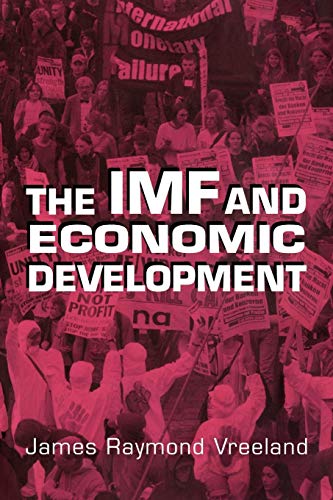
This book argues that governments enter IMF programs for economic and political reasons.
"synopsis" may belong to another edition of this title.
Product Description
The IMF and Economic Development This book argues that governments enter IMF programs for economic and political reasons.
Review
'A must-read for anyone who wants a better understanding of global politics and the impact of the IMF in particular.' New Statesman
'Vreeland's book is worth a look as it pieces together some interesting case studies, weaves an intriguing tale of political motives, and provides a concise and readable discussion of his attempt to measure the impact of IMF programs on economic growth.' Finance & Development
'Vreeland's The IMF and Economic Development contains novel and important findings regarding the impact of IMF programmes upon participant countries ... engaging ...' Cambridge Review of International Affairs
'... this is a valuable contribution to the debate on development policies both in its specific findings and its welcome reminder that the challenges of development are still best viewed through a political economy lens.' Development and Change
'After applying rigorous statistical and analytical methods, Vreeland arrives at some significant, and for the IMF, sobering conclusions ... Vreeland raises new questions that have important policy implications. He lays out new avenues of research and concludes with some suggestions for IMF reform.' Development Policy Review
"About this title" may belong to another edition of this title.
Search results for The IMF and Economic Development

Stock Image
The IMF and Economic Development
Published by
Cambridge University Press, 2003
ISBN 10: 0521016959
ISBN 13: 9780521016957
Used
Paperback
Seller: World of Books (was SecondSale), Montgomery, IL, U.S.A.
Seller rating 5 out of 5 stars

Paperback. Condition: Good. Why do governments turn to the International Monetary Fund (IMF) and with what effects? This book argues that governments enter IMF programs for economic and political reasons, and finds that the effects are negative on economic growth and income distribution. By bringing in the IMF, governments gain political leverage - via conditionality - to push through unpopular policies. Note that if governments desiring conditions are more likely to participate, estimating program effects is not straightforward: one must control for the potentially unobserved political determinants of selection. This book addresses the selection problem using a dynamic bivariate version of the Heckman model analyzing cross-national time-series data. The main finding is that the negative effects of IMF programs on economic growth are mitigated for certain constituencies since programs also have distributional consequences. But IMF programs doubly hurt the least well off in society: they lower growth and shift the income distribution upward. Seller Inventory # 00105955687
Stock Image
The IMF and Economic Development
Published by
Cambridge University Press, 2003
ISBN 10: 0521016959
ISBN 13: 9780521016957
Used
Paperback
Seller: World of Books (was SecondSale), Montgomery, IL, U.S.A.
Seller rating 5 out of 5 stars
Paperback. Condition: Very Good. Why do governments turn to the International Monetary Fund (IMF) and with what effects? This book argues that governments enter IMF programs for economic and political reasons, and finds that the effects are negative on economic growth and income distribution. By bringing in the IMF, governments gain political leverage - via conditionality - to push through unpopular policies. Note that if governments desiring conditions are more likely to participate, estimating program effects is not straightforward: one must control for the potentially unobserved political determinants of selection. This book addresses the selection problem using a dynamic bivariate version of the Heckman model analyzing cross-national time-series data. The main finding is that the negative effects of IMF programs on economic growth are mitigated for certain constituencies since programs also have distributional consequences. But IMF programs doubly hurt the least well off in society: they lower growth and shift the income distribution upward. Seller Inventory # 00101089940
Stock Image
The IMF and Economic Development
Published by
Cambridge University Press, 2003
ISBN 10: 0521016959
ISBN 13: 9780521016957
Used
Softcover
Seller: Better World Books: West, Reno, NV, U.S.A.
Seller rating 5 out of 5 stars
Condition: Good. Former library copy. Pages intact with minimal writing/highlighting. The binding may be loose and creased. Dust jackets/supplements are not included. Includes library markings. Stock photo provided. Product includes identifying sticker. Better World Books: Buy Books. Do Good. Seller Inventory # 9274762-20
Stock Image
The IMF and Economic Development
Published by
Cambridge University Press, 2003
ISBN 10: 0521016959
ISBN 13: 9780521016957
Used
Softcover
Seller: Better World Books, Mishawaka, IN, U.S.A.
Seller rating 5 out of 5 stars
Condition: Fine. Used book that is in almost brand-new condition. May contain a remainder mark. Better World Books: Buy Books. Do Good. Seller Inventory # 18379096-75
Stock Image
The IMF and Economic Development
Published by
Cambridge University Press, 2003
ISBN 10: 0521016959
ISBN 13: 9780521016957
Used
Paperback
Seller: ThriftBooks-Dallas, Dallas, TX, U.S.A.
Seller rating 5 out of 5 stars
Paperback. Condition: Very Good. No Jacket. May have limited writing in cover pages. Pages are unmarked. ~ ThriftBooks: Read More, Spend Less. Seller Inventory # G0521016959I4N00
Stock Image
The IMF and Economic Development
Published by
Cambridge University Press, 2003
ISBN 10: 0521016959
ISBN 13: 9780521016957
Used
Paperback
Seller: World of Books Inc, Montgomery, IL, U.S.A.
Seller rating 4 out of 5 stars

Paperback. Condition: Good. Why do governments turn to the International Monetary Fund (IMF) and with what effects? This book argues that governments enter IMF programs for economic and political reasons, and finds that the effects are negative on economic growth and income distribution. By bringing in the IMF, governments gain political leverage - via conditionality - to push through unpopular policies. Note that if governments desiring conditions are more likely to participate, estimating program effects is not straightforward: one must control for the potentially unobserved political determinants of selection. This book addresses the selection problem using a dynamic bivariate version of the Heckman model analyzing cross-national time-series data. The main finding is that the negative effects of IMF programs on economic growth are mitigated for certain constituencies since programs also have distributional consequences. But IMF programs doubly hurt the least well off in society: they lower growth and shift the income distribution upward. Seller Inventory # CIN0521016959G
Stock Image
The IMF and Economic Development
Published by
Cambridge University Press, 2003
ISBN 10: 0521016959
ISBN 13: 9780521016957
Used
Paperback
Seller: World of Books Inc, Montgomery, IL, U.S.A.
Seller rating 4 out of 5 stars
Paperback. Condition: Very Good. Why do governments turn to the International Monetary Fund (IMF) and with what effects? This book argues that governments enter IMF programs for economic and political reasons, and finds that the effects are negative on economic growth and income distribution. By bringing in the IMF, governments gain political leverage - via conditionality - to push through unpopular policies. Note that if governments desiring conditions are more likely to participate, estimating program effects is not straightforward: one must control for the potentially unobserved political determinants of selection. This book addresses the selection problem using a dynamic bivariate version of the Heckman model analyzing cross-national time-series data. The main finding is that the negative effects of IMF programs on economic growth are mitigated for certain constituencies since programs also have distributional consequences. But IMF programs doubly hurt the least well off in society: they lower growth and shift the income distribution upward. Seller Inventory # CIN0521016959VG
Stock Image
The IMF and Economic Development
Published by
Cambridge University Press, 2003
ISBN 10: 0521016959
ISBN 13: 9780521016957
Used
paperback
Seller: Amazing Books Pittsburgh, Pittsburgh, PA, U.S.A.
Seller rating 5 out of 5 stars
paperback. Condition: Very Good. paperback in very good condition, light bend in pages jm. Seller Inventory # Sq57063
Stock Image
The IMF and Economic Development
Published by
Cambridge University Press, 2003
ISBN 10: 0521016959
ISBN 13: 9780521016957
Used
Paperback
Seller: Books From California, Simi Valley, CA, U.S.A.
Seller rating 4 out of 5 stars
Paperback. Condition: Good. Cover and edges may have some wear. Seller Inventory # mon0003744517
Stock Image
The IMF and Economic Development
Published by
Cambridge University Press, 2003
ISBN 10: 0521016959
ISBN 13: 9780521016957
Used
Paperback
Seller: WorldofBooks, Goring-By-Sea, WS, United Kingdom
Seller rating 5 out of 5 stars
Paperback. Condition: Very Good. The book has been read, but is in excellent condition. Pages are intact and not marred by notes or highlighting. The spine remains undamaged. Seller Inventory # GOR014441015
Buy Used
£ 2.10
£ 5.60 shipping
Ships from United Kingdom to U.S.A.
Ships from United Kingdom to U.S.A.
Quantity: 1 available