
Synopsis
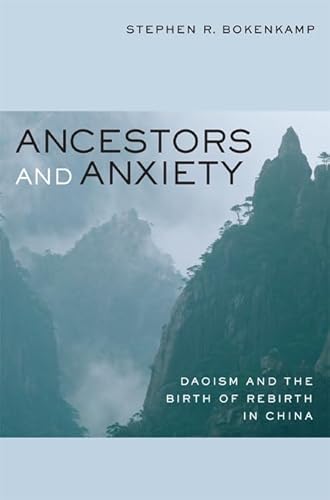
This innovative work on Chinese concepts of the afterlife is the result of Stephen Bokenkamp's groundbreaking study of Chinese scripture and the incorporation of Indic concepts into the Chinese worldview. Here, he explores how Chinese authors, including Daoists and non-Buddhists, received and deployed ideas about rebirth from the third to the sixth centuries C.E. In tracing the antecedents of these scriptures, Bokenkamp uncovers a stunning array of non-Buddhist accounts that provide detail on the realms of the dead, their denizens, and human interactions with them. Bokenkamp demonstrates that the motive for the Daoist acceptance of Buddhist notions of rebirth lay not so much in the power of these ideas as in the work they could be made to do.
"synopsis" may belong to another edition of this title.
About the Author
Stephen R. Bokenkamp is Professor in the Department of East Asian Languages and Cultures at Indiana University. He is the author of Early Daoist Scriptures (UC Press).
From the Back Cover
"Ancestors and Anxiety focuses on one of the most important periods in the history of Chinese religion, the third through sixth centuries C.E., when social and political changes were matched by innovation and an outpouring of textual production in Daoism and Buddhism. Steve Bokenkamp makes an innovative and unprecedented contribution to the study of Chinese concepts of the afterlife. Anyone with an interest in Buddhism, Daoism or other forms of Chinese religion should want to read this book. It is a mature work of historical and literary scholarship that draws on a wide range of genres: revealed poetry, liturgies, ghost stories and anecdotes, historical sources, and other forms of literature. Bokenkamp's superb research will unquestionably provide a stimulus for future work in related areas."—Stephen F. Teiser, D.T. Suzuki Professor of Buddhist Studies, Princeton University
"Stephen Bokenkamp's Ancestors and Anxiety is well-written, lucidly presented, and based on cutting edge scholarship from around the world. Focusing on key interactions of the nascent Daoist religion and the recently introduced Buddhist faith, this book will assist readers towards a clearer understanding of the complexities of early China's ancestral system and has the potential to mark a wholly new phase in the study of Chinese religions. It is sure to be of interest to a wide reading public, including specialists in Chinese religion, Buddhologists, social and intellectual historians, and general readers interested in world religions."—Terry Kleeman, University of Colorado
"Stephen Bokenkamp's Ancestors and Anxiety is well-written, lucidly presented, and based on cutting edge scholarship from around the world. Focusing on key interactions of the nascent Daoist religion and the recently introduced Buddhist faith, this book will assist readers towards a clearer understanding of the complexities of early China's ancestral system and has the potential to mark a wholly new phase in the study of Chinese religions. It is sure to be of interest to a wide reading public, including specialists in Chinese religion, Buddhologists, social and intellectual historians, and general readers interested in world religions."—Terry Kleeman, University of Colorado
From the Inside Flap
"Ancestors and Anxiety focuses on one of the most important periods in the history of Chinese religion, the third through sixth centuries C.E., when social and political changes were matched by innovation and an outpouring of textual production in Daoism and Buddhism. Steve Bokenkamp makes an innovative and unprecedented contribution to the study of Chinese concepts of the afterlife. Anyone with an interest in Buddhism, Daoism or other forms of Chinese religion should want to read this book. It is a mature work of historical and literary scholarship that draws on a wide range of genres: revealed poetry, liturgies, ghost stories and anecdotes, historical sources, and other forms of literature. Bokenkamp's superb research will unquestionably provide a stimulus for future work in related areas."Stephen F. Teiser, D.T. Suzuki Professor of Buddhist Studies, Princeton University
"Stephen Bokenkamp's Ancestors and Anxiety is well-written, lucidly presented, and based on cutting edge scholarship from around the world. Focusing on key interactions of the nascent Daoist religion and the recently introduced Buddhist faith, this book will assist readers towards a clearer understanding of the complexities of early China's ancestral system and has the potential to mark a wholly new phase in the study of Chinese religions. It is sure to be of interest to a wide reading public, including specialists in Chinese religion, Buddhologists, social and intellectual historians, and general readers interested in world religions."Terry Kleeman, University of Colorado
"Stephen Bokenkamp's Ancestors and Anxiety is well-written, lucidly presented, and based on cutting edge scholarship from around the world. Focusing on key interactions of the nascent Daoist religion and the recently introduced Buddhist faith, this book will assist readers towards a clearer understanding of the complexities of early China's ancestral system and has the potential to mark a wholly new phase in the study of Chinese religions. It is sure to be of interest to a wide reading public, including specialists in Chinese religion, Buddhologists, social and intellectual historians, and general readers interested in world religions."Terry Kleeman, University of Colorado
Excerpt. © Reprinted by permission. All rights reserved.
Ancestors and Anxiety
Daoism and The Birth of Rebirth in ChinaBy Stephen R. BokenkampUniversity of California Press
Copyright © 2007 The Regents of the University of CaliforniaAll right reserved.
ISBN: 978-0-520-24948-6
Contents
Acknowledgments....................................................................ixNote on Translation................................................................xiIntroduction: The Problem of Rebirth...............................................11. Envisioning the Dead............................................................332. The Unquiet Dead and Their Families, Political and Agnate.......................603. Questionable Shapes: How the Living Interrogated Their Dead.....................954. Doomed for a Certain Term: The Intimate Dead....................................1305. Rebirth Reborn..................................................................158Postscript.........................................................................193List of Abbreviations..............................................................199Bibliography.......................................................................203Index..............................................................................215
Chapter One
Envisioning the Dead
The living and the dead form a single moral community, divided by visibility and frequency of contact perhaps, but not by obligation, affection, emotion, or even aesthetic taste. -Robert Campany, Strange Writing
One of the most intimate descriptions of the underworld abode of the dead in all of Chinese letters is to be found among the visionary transcripts of Yang Xi (330-86?), as assembled and annotated by Tao Hongjing. In book 5 of his Declarations of the Perfected (Zheng'gao), Tao has transcribed for us the revelations Yang received, both from his celestial informants and by other, unknown means, concerning the six palaces of Mount Luofeng, or Fengdu, as the administrative center of the dead was known.
Located on and under a massive mountain in the far north, the direction of winter, darkness, and seasonal death according to five-phase thought, the six palaces of Fengdu are all under the control of the Northern Thearch. Under his imperial oversight are a number of functionaries, men of remote as well as recent memory, who enjoy titles and functions similar to those they held in the sunlit world. Indeed, when Yang's informants do not reveal the offices to which underworld titles correspond, Tao Hongjing sometimes does.
Much of the administrative work of Fengdu seems to consist of judging new arrivals and assigning them to appropriate positions in the teeming land of the dead. We hear, of course, only of the elite. For Yang, as for Dante, the common folk are invisible. Presumably they are subject to the administration that forms the sole concern of Yang's informants. Like Dante, too, Yang is quite aware of the political and social stakes involved when someone is assigned to this or that position in the underworld. Placement might be higher or lower than the rank that person achieved in life. Postmortem promotions and demotions, too, are possible. Yang differs from Dante, however, in that, given Chinese ideas of clan responsibility and ancestor cult, the living prove to be even more closely implicated in the fates of the dead than were the citizens of fourteenth-century Italy. Then, too, Yang's material was not meant to be simply allegorical. He presents his revealed material as factual, and Tao Hongjing takes the information Yang provides as an accurate record of the underworld. In his annotations he compares what Yang reports with earlier revelations, allowing us to trace to some extent the tradition within which Yang worked.
That tradition, composed of reports on the underworld-by ghosts, usually family members of the person receiving the revelations, or by those who had died and somehow been resuscitated-is known to us from as early as the fourth century BCE. Because such reports from the underworld were, by their nature, oral and not the sort of anecdote regularly recorded for posterity, we have no way of judging just how widespread or early the phenomenon might have been. The documentary record that does survive suggests that from the third century CE on, either the number of returnees increased dramatically or the impulse to record and circulate such stories became much stronger. As we saw in the introduction, the tendency among modern scholars is to attribute this apparent new interest in the structure and denizens of the underworld to the influence of Buddhism and the consequent changes in attitudes toward the dead. As we shall see, Yang Xi's account of Fengdu does not easily support this hypothesis.
FENGDU AND BUDDHIST "HELLS"
Among the gifts of religious imagination brought to China with the Buddhist religion was a distinct vision of hell as a place-or rather a network of places-where the dead were held for a period of brutal punishment in retribution for the sins that they had individually committed during their lifetimes. The term coined to designate these infernal regions was diyu, "earth prisons," a term some have suggested should be translated as "purgatories," since the damned were confined there for set terms. But even my preferred translation-"earth prisons"-is not quite accurate, since the yu of ancient China were not penal institutions, but rather courts of inquisition where complaints were lodged, the accused questioned, and punishments determined. Suspects were incarcerated in the yu during this process, usually in shackles, but the administration of punishment was often carried out elsewhere. Nonetheless, the use of torture to extract true information made the ancient yu similar to Buddhist hells (naraka in Sanskrit), where the dead underwent hideous retribution and were tortured over and over as they recalled the transgressions of their previous lives.
These ideas, introduced at least by the second century CE, found fertile ground for acceptance because the Chinese already entertained several roughly compatible notions concerning lands of the dead. There was the subterranean Yellow Springs, where commoners were believed to labor, as they had in life on the banks of the Yellow River, governed by those who had governed them before. This labor was not punitive, but rather a continuation of their lives above ground. Another account finds the underworld administrative center ruled by the Lord of Mount Tai, a mountain in Shandong province, while those who managed to avoid death altogether enjoyed an equally bureaucratically organized existence on mysterious isles floating in the seas off the east coast of the Chinese mainland. The extent to which these traditional, otherworldly geographies were seen as suggestive of Buddhist concepts of hell is evident in the fact that early translators sometimes used the term "Offices of Mount Tai" to translate what must have been "hells" in their sources.
Since Fengdu, as we shall see, arrived on the scene rather later than the Yellow Springs or Mount Tai, we might expect to find traces of Buddhist conceptions, but we do not. Compared with the postmortem delights that Yang Xi had to offer those who followed his way, Fengdu is not entirely pleasant, but it is not a place of punishment. Instead, those who serve there, the "lords below the ground" [TEXT NOT REPRODUCIBLE IN ASCII], occupy administrative posts similar to those they held in life. They may even, through hundreds of years of study, advance in the bureaucracy to the point where they are transferred to more attractive afterlife destinations. Yang Xi was aware of the notion of diyu, for the Perfected beings mention the term once in a series of poems they recite at a gathering in the heavens on the autumnal equinox. But this is Yang's sole mention of diyu in the Declarations of the Perfected. He does not use the term in referring to Fengdu. It is likely, then, that Yang and many of his contemporaries believed concurrently in several postmortem destinations. Yang Xi's description of Fengdu and the several accounts of his predecessors identified by Tao Hongjing actually deal with different postmortem destinations. Nonetheless, Tao treats them as if they were all part of the same system.
It will thus not serve us here to attempt a history of these Chinese abodes of the departed-they are at any rate poorly documented for the earliest periods, and what is known has been ably presented and analyzed by a number of scholars. Our focus on the roles of ancestral practice in traditional Chinese religion does, however, require that we keep in mind the highly moralistic, personal, and retributive character of the Buddhist afterlife. As we shall see, the underworld presented in the stories we examine first features none of the punitive elements so common in Buddhist descriptions of the hells. These Chinese underworlds are, despite some signs of conflation with the hells, desirable destinations.
EXPLORING THE UNDERWORLDS
The earliest story that Tao Hongjing mentions in his annotations to Yang Xi's revelations of the underworld involves the return of a dead ancestor who appeared to one of his sons both to report on the afterlife and to request a certain disposition of his physical remains. Receiving visions of deceased ancestors was as common in China as elsewhere in the world. Indeed, there is evidence that such visualizations formed part of normal ancestral practice.
The Records of Ritual (Liji), a Confucian compendium of practice compiled ca. 50 BCE from ancient materials, provides a touching description of the procedures by which ancestors were to be visualized, nourished, and thus made a living presence in the quotidian life of their families. The text begins with recommendations for the period of purification preceding the feeding of the ancestors and moves on to the actual day of the sacrifice:
On the day of the purification ritual, one thinks of the ancestors seated, thinks of their smiles and speech, thinks of their will and intentions, thinks of that which pleases them. On the third day, one will see those for whom he is conducting the purification ritual. On the day of offering, when one enters the chamber, the images [of the ancestors] will indeed appear on the seats provided. As one makes his rounds and is about to go out, with a sense of reverence one will hear the ancestor's voices. When one has gone into the front hall, one will hear their faint sighs.
This passage is important for the evidence it provides of the ubiquity of the visualization of spirits in early Chinese society, but it reveals only one part of how ancestor rites were meant to work. Proper ritual offerings to the ancestors fostered correct remembrance on the part of descendants. But Confucian family rituals also enacted remembrance on the part of the ancestors for their descendants. The voices of the ancestors were heard through the mouths of lineal male descendants, as in the story we discuss below. In traditional ritual, at least as hallowed in the approved ritual corpus, the voices of the dead were scripted, issuing from the "personators" (shi [[TEXT NOT REPRODUCIBLE IN ASCII]]; literally, "corpses") in time-honored cadence and in terms that invariably announced the ancestors' "enjoyment" of the sacrifice.
Significantly, while our story's vision of a dead ancestor occurs outside of this tightly controlled ritual context, familial sacrifice does play a prominent role in the tale. And, for all their evidential weight, visions of the dead can be doubted. When this happens, memory is again foregrounded.
SU SHAO [TEXT NOT REPRODUCIBLE IN ASCII]
Su Shao, byname Xiaoxian, was a person of Anping. His highest rank was that of Governor of Zhongmou. He died early in the Xianning [TEXT NOT REPRODUCIBLE IN ASCII] reign period [275-280]. Shao's paternal uncle was Cheng , who died holding the title Southern Palace Attendant and Military Adjutant [TEXT NOT REPRODUCIBLE IN ASCII].
When all of Shao's sons were escorting [their father's] body home for the funeral and had reached Xiangcheng [TEXT NOT REPRODUCIBLE IN ASCII], the ninth son, Jie [TEXT NOT REPRODUCIBLE IN ASCII], dreamt he saw the armed retinue of an official procession, its ranks extremely regal. Then he saw Shao. An outrider called to Jie, saying, "You are encroaching upon the procession! For this crime, your head should be shaved." Jie lowered his head and accepted the tonsure. Then, startled awake, he rubbed his head. It was in fact bereft of hair in spots. The next evening, he was sleeping together with others when he dreamt that Shao said to him, "Not all of your hair has been cut." Then he was again shaved as on the previous night.
The next night, Jie made diligent preparations. He lit a lamp and arrayed talismans and interdictions. Again, he dreamt of Shao, who had him shaved as before. This went on for five nights. Originally, Jie had beautiful hair, but after five nights it was all gone. Then, for six or seven nights, he had no further dreams.
The tale of Su Shao's return begins by drawing on traditional Chinese methods of mediumistic communication with the dead and on the emerging prestige of Buddhism. In addition to visions of the dead made possible through family ritual, there were also established liturgies that allowed the dead to respond. This was effected through selecting a younger male member of the family, usually the grandson of the deceased, as impersonator of the dead. The shi passively allowed the ancestors to animate him. He accepted the offerings meant for the ancestor, eating and drinking the deceased's portion. His utterances, generally involving a recital of the blessings to be granted in response to the ritual feeding, would then be interpreted by a ritual specialist.
In China, possessions by spirits that occurred outside of this ritual scenario often involved younger members of the family as well. As in instances of mediumism around the world, the youthful and illiterate were regarded as more reliable conduits to the dead, since they could hardly be suspected of having fabricated their utterances and writings themselves. This fact brings to the fore questions of power. Women and junior male members of a family frequently found that mediumism was a way to bring attention to their own, otherwise easily ignored, concerns. Given that Jie was the ninth son of Su Shao, we suspect he might have harbored such motives himself. Though the tale naturally provides no evidence of this, it is likely that the messages Su Shao brings to the brothers through Jie represent Jie's own views.
Jie's period of preparation and his assumption of the role of family medium might thus be fruitfully analyzed in psychological and sociological terms. For our purposes, however, it is more important to note the role played by the image of Buddhism (though not the actual religion itself). Jie's gradual hair loss, while it may have been a hysterical response to the grief of losing a parent, serves to transform him into a simulacrum of a Buddhist monk. This hint that a knowledge of Buddhist practice might somehow lurk in the background of these events is underscored by the fact mentioned later on that Su Shao, when he causes Jie to write the language of the dead, produces only the incomprehensible horizontal writing of the hu ("western barbarians"), the pejorative ethnic designation regularly applied to foreign Buddhist monks at this time. Since these hints are never made explicit in the account and there are no further references to the religion, Buddhist claims to control the fate of the dead figure as little more than a backdrop, lending an air of prestige and believability to the visual and auditory hallucinations (if such they were) of Jie.
Despite these odd, foreign embellishments, Jie responds to the appearance of his father in traditional Chinese fashion-he prepares "talismans and interdictions" to rid himself of the demonic vapors that accompanied death. Nonetheless, the hair-cutting continued, and the visions became even more vivid:
Later, Jie was boarding a carriage in broad daylight when Shao came riding in on a horse from outside the gates. He was wearing the black headwrap of a civil official, an unlined robe of brown brocade, white stockings and silk slippers. He drew near to the axle of Jie's carriage. Jie said to his brothers, "The Governor is here." They all looked around in astonishment, but saw nothing. So Jie asked Shao why he had come, to which Shao replied, "I want you to rebury me." Then he took his leave, saying that he would come again. When he went out of the gate, he could no longer be seen.
After a number of days, Shao came again. The brothers sat together with him. Jie said, "If you want to be reburied, you will have to order it yourself." Shao replied, "I will write a letter." Jie gave him a brush, but Shao was unwilling to take it, saying, "The dead write differently than do the living." Then he caused Jie to draw some characters-they were like the writing of the Western barbarians [TEXT NOT REPRODUCIBLE IN ASCII]. At this, Shao smiled and ordered Jie to write at his dictation as follows:
Of old, the Martial Marquis of Wei [TEXT NOT REPRODUCIBLE IN ASCII] [r. 387-72 BCE] was floating along the Western River. When he came to the middle stretches, he looked over his shoulder and said to [his general] Wu Qi [TEXT NOT REPRODUCIBLE IN ASCII], "These fastnesses between the river and the mountains are truly beautiful! This is the treasure of the Wei!" Now, by nature I love the eastern capital and the Lo river. Each time I left or returned, I looked up at Mount Mang with pleasure. There are the tombs of ten-thousand generations! To the north, the Meng ford backs them-the river so vast; to the south, they look out on the Celestial Citadel, with its throngs so bustling. Even though I never spoke of this aspiration, it has been inscribed in my heart. I did not count on life's brevity and so I was not able to realize my sentiments. In the coming tenth month, I would like to be reburied. Buy several mou of land next to the Adjutant [my uncle, Su Cheng]-that should be enough.
(Continues...)
Excerpted from Ancestors and Anxietyby Stephen R. Bokenkamp Copyright © 2007 by The Regents of the University of California. Excerpted by permission.
All rights reserved. No part of this excerpt may be reproduced or reprinted without permission in writing from the publisher.
Excerpts are provided by Dial-A-Book Inc. solely for the personal use of visitors to this web site.
"About this title" may belong to another edition of this title.
Other Popular Editions of the Same Title

Search results for Ancestors and Anxiety – Daoism and the Birth...

Stock Image
Ancestors and Anxiety : Daoism and the Birth of Rebirth in China
Published by
University of California Press, 2007
ISBN 10: 0520249488
ISBN 13: 9780520249486
Used
Hardcover
Seller: Better World Books, Mishawaka, IN, U.S.A.
Seller rating 5 out of 5 stars

Condition: Good. Former library copy. Pages intact with minimal writing/highlighting. The binding may be loose and creased. Dust jackets/supplements are not included. Includes library markings. Stock photo provided. Product includes identifying sticker. Better World Books: Buy Books. Do Good. Seller Inventory # 16338165-6
Stock Image
Ancestors and Anxiety: Daoism and the Birth of Rebirth in China
Published by
University of California Press, 2007
ISBN 10: 0520249488
ISBN 13: 9780520249486
Used
Hardcover
Seller: ThriftBooks-Atlanta, AUSTELL, GA, U.S.A.
Seller rating 5 out of 5 stars
Hardcover. Condition: Very Good. No Jacket. May have limited writing in cover pages. Pages are unmarked. ~ ThriftBooks: Read More, Spend Less. Seller Inventory # G0520249488I4N00
Stock Image
Ancestors and Anxiety: Daoism and the Birth of Rebirth in China (A Philip E. Lilienthal Book)
Published by
University of California Press, Berkeley, CA, 2007
ISBN 10: 0520249488
ISBN 13: 9780520249486
Used
Hardcover
First Edition
Seller: Fahrenheit's Books, Denver, CO, U.S.A.
Seller rating 5 out of 5 stars
Hardcover. Condition: Very Good+. Dust Jacket Condition: Very Good+. 1st Edition. First edition, hardcover, has a very minor skew to the binding, and slight bumps to spine ends and upper cover corners, otherwise a solid, tight, clean VG+ copy in a like dust jacket, which has very slight bumps to spine ends and corners, mild rubbing with a touch of edgewear to covers, and very faint sunning to the spine. Jacket is wrapped in a removable Mylar cover. Seller Inventory # 102664