
Items related to A Problem from Hell: America and the Age of Genocide...
Synopsis
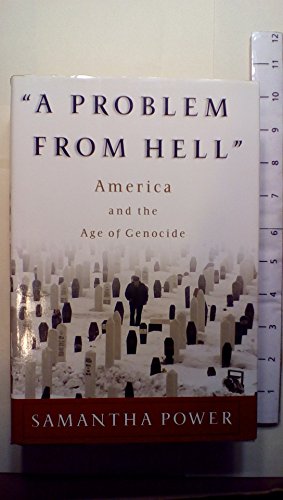
About this book:In 1993, as a 23-year-old correspondent covering the wars in the Balkans, I was initially comforted by the roar of NATO planes flying overhead. President Clinton and other western leaders had sent the planes to monitor the Bosnian war, which had killed almost 200,000 civilians. But it soon became clear that NATO was unwilling to target those engaged in brutal "ethnic cleansing. " American statesmen described Bosnia as "a problem from hell," and for three and a half years refused to invest the diplomatic and military capital needed to stop the murder of innocents. In Rwanda, around the same time, some 800,000 Tutsi and opposition Hutu were exterminated in the swiftest killing spree of the twentieth century. Again, the United States failed to intervene. This time U. S. policy-makers avoided labeling events "genocide" and spearheaded the withdrawal of UN peacekeepers stationed in Rwanda who might have stopped the massacres underway. Whatever America's commitment to Holocaust remembrance (embodied in the presence of the Holocaust Museum on the Mall in Washington, D. C. ), the United States has never intervened to stop genocide. This book is an effort to understand why. While the history of America's response to genocide is not an uplifting one, "A Problem from Hell" tells the stories of countless Americans who took seriously the slogan of "never again" and tried to secure American intervention. Only by understanding the reasons for their small successes and colossal failures can we understand what we as a country, and we as citizens, could have done to stop the most savage crimes of the last century. -Samantha Power
"synopsis" may belong to another edition of this title.
About the Author
Samantha Power is the executive director of the Carr Center for Human Rights Policy atthe John F. Kennedy School of Government at Harvard University. From 1993 to 1996 she covered the wars in the former Yugoslavia as a reporter for U.S. News and World Report and The Economist. In 1996 she worked for the International Crisis Group (ICG) as a political analyst, helping launch the organization in Bosnia. She is a frequent contributor to The New Republic and is the editor, with Graham Allison, of Realizing Human Rights: Moving from Inspiration to Impact. A native of Ireland, she moved to the United States in 1979 at the age of nine, and graduated from Yale University and Harvard Law School. She lives in Winthrop, Massachusetts.
"About this title" may belong to another edition of this title.
Search results for A Problem from Hell: America and the Age of Genocide...

Stock Image
A Problem from Hell: America and the Age of Genocide
Seller: World of Books (was SecondSale), Montgomery, IL, U.S.A.
Seller rating 5 out of 5 stars

Hardback. Condition: Good. In 1993, as a 23-year-old correspondent covering the wars in the Balkans, I was initially comforted by the roar of NATO planes flying overhead. President Clinton and other western leaders had sent the planes to monitor the Bosnian war, which had killed almost 200,000 civilians. But it soon became clear that NATO was unwilling to target those engaged in brutal ethnic cleansing. American statesmen described Bosnia as a problem from hell, and for three and a half years refused to invest the diplomatic and military capital needed to stop the murder of innocents. In Rwanda, around the same time, some 800,000 Tutsi and opposition Hutu were exterminated in the swiftest killing spree of the twentieth century. Again, the United States failed to intervene. This time U.S. policy-makers avoided labeling events genocide and spearheaded the withdrawal of UN peacekeepers stationed in Rwanda who might have stopped the massacres underway. Whatever America's commitment to Holocaust remembrance (embodied in the presence of the Holocaust Museum on the Mall in Washington, D.C.), the United States has never intervened to stop genocide. This book is an effort to understand why. While the history of America's response to genocide is not an uplifting one, A Problem from Hell tells the stories of countless Americans who took seriously the slogan of never again and tried to secure American intervention. Only by understanding the reasons for their small successes and colossal failures can we understand what we as a country, and we as citizens, could have done to stop the most savage crimes of the last century. Seller Inventory # 00104088637
Stock Image
A Problem from Hell: America and the Age of Genocide
Seller: World of Books (was SecondSale), Montgomery, IL, U.S.A.
Seller rating 5 out of 5 stars
Hardback. Condition: Fair. In 1993, as a 23-year-old correspondent covering the wars in the Balkans, I was initially comforted by the roar of NATO planes flying overhead. President Clinton and other western leaders had sent the planes to monitor the Bosnian war, which had killed almost 200,000 civilians. But it soon became clear that NATO was unwilling to target those engaged in brutal ethnic cleansing. American statesmen described Bosnia as a problem from hell, and for three and a half years refused to invest the diplomatic and military capital needed to stop the murder of innocents. In Rwanda, around the same time, some 800,000 Tutsi and opposition Hutu were exterminated in the swiftest killing spree of the twentieth century. Again, the United States failed to intervene. This time U.S. policy-makers avoided labeling events genocide and spearheaded the withdrawal of UN peacekeepers stationed in Rwanda who might have stopped the massacres underway. Whatever America's commitment to Holocaust remembrance (embodied in the presence of the Holocaust Museum on the Mall in Washington, D.C.), the United States has never intervened to stop genocide. This book is an effort to understand why. While the history of America's response to genocide is not an uplifting one, A Problem from Hell tells the stories of countless Americans who took seriously the slogan of never again and tried to secure American intervention. Only by understanding the reasons for their small successes and colossal failures can we understand what we as a country, and we as citizens, could have done to stop the most savage crimes of the last century. Seller Inventory # 00106680274
Seller Image
A Problem From Hell: America and the Age of Genocide
Seller: Dream Books Co., Denver, CO, U.S.A.
Seller rating 5 out of 5 stars
Condition: good. Gently used with minimal wear on the corners and cover. A few pages may contain light highlighting or writing, but the text remains fully legible. Dust jacket may be missing, and supplemental materials like CDs or codes may not be included. May be ex-library with library markings. Ships promptly! Seller Inventory # DBV.0465061508.G
Seller Image
A Problem From Hell: America and the Age of Genocide
Seller: Bay State Book Company, North Smithfield, RI, U.S.A.
Seller rating 5 out of 5 stars
Condition: good. The book is in good condition with all pages and cover intact, including the dust jacket if originally issued. The spine may show light wear. Pages may contain some notes or highlighting, and there might be a "From the library of" label. Boxed set packaging, shrink wrap, or included media like CDs may be missing. Seller Inventory # BSM.1BTK1
Stock Image
A Problem From Hell: America and the Age of Genocide
Seller: New Legacy Books, Annandale, NJ, U.S.A.
Seller rating 5 out of 5 stars
hardcover. Condition: Acceptable. The dust jacket shows normal wear. The pages show normal wear. Fast shipping and order satisfaction guaranteed. A portion of your purchase benefits Non-Profit Organizations, First Aid and Fire Stations! Seller Inventory # mon0000178629
Seller Image
A Problem From Hell: America and the Age of Genocide
Seller: Zoom Books Company, Lynden, WA, U.S.A.
Seller rating 5 out of 5 stars
Condition: very_good. Book is in very good condition and may include minimal underlining highlighting. The book can also include "From the library of" labels. May not contain miscellaneous items toys, dvds, etc. . We offer 100% money back guarantee and 24 7 customer service. Seller Inventory # ZBV.0465061508.VG
Seller Image
A Problem From Hell: America and the Age of Genocide
Seller: Goodwill Books, Hillsboro, OR, U.S.A.
Seller rating 5 out of 5 stars
Condition: acceptable. Fairly worn, but readable and intact. If applicable: Dust jacket, disc or access code may not be included. Seller Inventory # GICWV.0465061508.A
Stock Image
A Problem from Hell: America and the Age of Genocide
Seller: World of Books Inc, Montgomery, IL, U.S.A.
Seller rating 4 out of 5 stars

Hardback. Condition: Good. In 1993, as a 23-year-old correspondent covering the wars in the Balkans, I was initially comforted by the roar of NATO planes flying overhead. President Clinton and other western leaders had sent the planes to monitor the Bosnian war, which had killed almost 200,000 civilians. But it soon became clear that NATO was unwilling to target those engaged in brutal ethnic cleansing. American statesmen described Bosnia as a problem from hell, and for three and a half years refused to invest the diplomatic and military capital needed to stop the murder of innocents. In Rwanda, around the same time, some 800,000 Tutsi and opposition Hutu were exterminated in the swiftest killing spree of the twentieth century. Again, the United States failed to intervene. This time U.S. policy-makers avoided labeling events genocide and spearheaded the withdrawal of UN peacekeepers stationed in Rwanda who might have stopped the massacres underway. Whatever America's commitment to Holocaust remembrance (embodied in the presence of the Holocaust Museum on the Mall in Washington, D.C.), the United States has never intervened to stop genocide. This book is an effort to understand why. While the history of America's response to genocide is not an uplifting one, A Problem from Hell tells the stories of countless Americans who took seriously the slogan of never again and tried to secure American intervention. Only by understanding the reasons for their small successes and colossal failures can we understand what we as a country, and we as citizens, could have done to stop the most savage crimes of the last century. Seller Inventory # CIN0465061508G
Stock Image
A Problem From Hell: America and the Age of Genocide
Seller: ThriftBooks-Phoenix, Phoenix, AZ, U.S.A.
Seller rating 5 out of 5 stars
Hardcover. Condition: Good. No Jacket. Former library book; Pages can have notes/highlighting. Spine may show signs of wear. ~ ThriftBooks: Read More, Spend Less. Seller Inventory # G0465061508I3N10
Stock Image
A Problem From Hell: America and the Age of Genocide
Seller: ThriftBooks-Dallas, Dallas, TX, U.S.A.
Seller rating 5 out of 5 stars
Hardcover. Condition: Good. No Jacket. Former library book; Pages can have notes/highlighting. Spine may show signs of wear. ~ ThriftBooks: Read More, Spend Less. Seller Inventory # G0465061508I3N10