
Items related to Burnt Mountain
Synopsis
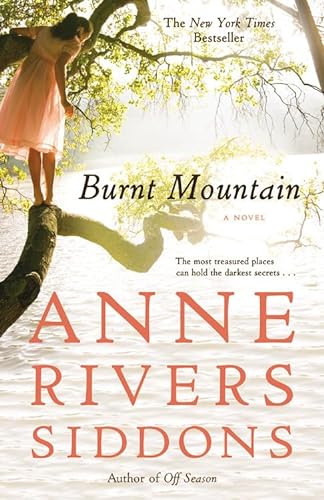
From one of our most acclaimed writers comes this dramatic tale of a well-born Southern woman whose life is forever changed by the betrayal of her mother and by the man she loves.
Growing up, the only place tomboy Thayer Wentworth felt at home was at her summer camp - Camp Sherwood Forest in the North Carolina Mountains. It was there that she came alive and where she met Nick Abrams, her first love...and first heartbreak. Years later, Thayer marries Aengus, an Irish professor, and they move into her deceased grandmother's house in Atlanta, only miles from Camp Edgewood on Burnt Mountain where her father died years ago in a car accident. There, Aengus and Thayer lead quiet and happy lives until Aengus is invited up to the camp to tell old Irish tales to the campers. As Aengus spends less time at home and becomes more distant, Thayer must confront dark secrets-about her mother, her first love, and, most devastating of all, her husband."synopsis" may belong to another edition of this title.
About the Author
Burnt Mountain is Anne Rivers Siddons's 18th novel. Her previous bestselling novels include Off Season, Sweetwater Creek, Islands, Nora Nora, Low Country, Up Island, Fault Lines, Downtown, Hill Towns, Colony, Outer Banks, King's Oak, Peachtree Road, Homeplace, Fox's Earth, The House Next Door, and Heartbreak Hotel. She is also the author of a work of nonfiction, John Chancellor Makes Me Cry. She and her husband, Heyward, split their time between their home in Charleston, SC and Brooklin, ME. For more information, visit www.anneriverssiddons.net.
Excerpt. © Reprinted by permission. All rights reserved.
Burnt Mountain
By Anne Rivers SiddonsGrand Central Publishing
Copyright © 2012 Anne Rivers SiddonsAll right reserved.
ISBN: 9780446698306
Prologue
We heard it first on an early morning in June. I thought then that it might have been going on for many mornings, but given what we know about it now, I realize that this must have been one of the first times that it sounded, perhaps the very first. This year, anyway.
It wafted into our bedroom on a soft green wind, along with the sleepy twitter of songbirds and the heartbreaking sweetness of wild honeysuckle from the woods behind the house. We had had one of Atlanta’s not-infrequent and unadvertised long, cold springs and had only slept with our windows open for the past month.
We had moved into our house just recently, and the sounds and smells of our new neighborhood were still unfamiliar to us, exotic in their strangeness. But we were learning. The sleep-murdering a.m. roar down the street had become the Suttles’ scowling teenage son starting his motorcycle; the choking miasma that often drifted over the lower end of the street was old Mr. Christian Wells, who had a widely known fear of West Nile virus, spraying his extensive lawn with a virulent pesticide; the shrill shriek that set every dog on Bell’s Ferry Road barking was Isobel Emmett across the street, who had forgotten once again that she had armed the house alarm.
This morning’s sound was different, though. This was the sound of children, many children, far away. Singing.
I lay for a moment without opening my eyes, trying to see if the sound tasted of dreams. It didn’t; the singing children seemed to be coming nearer, from somewhere in the west, and their song grew louder. I could almost make it out. It was a raucous shouted noise, somehow a summer song. I felt that. I knew it.
I turned over and looked at Aengus. He did not move, but his eyes were open. Even in the dimness, they burned the banked-fire blue that I had fallen in love with, the blue of the hot embers of coal. His crow’s wing of black hair fell over one eye. I had fallen in love with that, too. And the straight thick black eyebrows. I even loved the scattering of black freckles across his nose and cheeks. Aengus at the time I met him was as unlike any of the other young men in my small southern town and only slightly larger southern college as a raven to a flock of sparrows. The fact that my mother was appalled by him when I first brought him home from school lit my budding infatuation into a bonfire.
“Angus,” she had murmured sweetly, looking up at him from under her celebrated inch-long lashes. “Like the cows?”
“I wouldn’t be surprised,” Aengus said agreeably, in the rich lilt that could not have been cultivated in the Deep South or possibly anywhere else in the country.
Mother lifted her perfectly arched eyebrows and smiled.
“I don’t believe we know any Anguses, do we, Mother?” she said to my grandmother, who lay reading on the chaise on the screened porch where we had gathered.
“He has fire in his head,” my grandmother murmured, not looking up from her magazine.
We believe she’s starting Alzheimer’s, Mother mouthed confidently to Aengus. Don’t mind anything she says.
Grand gave a disgusted sniff, still not looking up. She was wearing one of the bright silk caftans she had brought home from India, and her vermeil hair was piled on top of her small, elegant head. I thought she looked beautiful.
“Well, she certainly knows her Yeats.” Aengus grinned. “I spell it that way, too, Mrs. Wentworth. With an A before the e. Nobody uses it like that but my mother, but there it is. Will you come dance with me in Ireland?”
“I have no idea what either of you is talking about,” my mother said dismissively. “Thayer, go get us some iced tea. The sweet, in the pitcher. There’s mint in the fridge.”
I got up, but before I left the porch I saw my grandmother lift her head and give Aengus her dazzling full smile. She had been a great beauty; everybody said so. When she smiled like that she still was.
“I will dance with you anywhere, Mr. O’Neill,” she said, and from that moment on she loved him almost as much as I did, until the day she died.
Aengus looked over at me now, half-smiling in the dimness.
“Do you hear that?” I said.
“Yep.”
“What on earth do you think it is?”
“The children of Llyr,” he said, stretching luxuriously. “Grieving for the human children they were before the Dagda turned them into swans.”
“I don’t want to hear any more of your damned Irish bog fairy tales,” I said. “Really, what do you think that is?”
We listened for a moment. The singing children were coming closer. Their song was a real shout now. Its familiarity tickled my tongue.
“Kids having a good time. They’re obviously going somewhere in a car or something, the way they’re moving closer.”
Another moment passed, and then I said, “I know what it is! It’s ‘The Cannibal King’! It’s a great kids’ song; we used to sing it endlessly on the bus to camp and coming home….”
Just then we heard the shushhhh of air brakes and the grinding of big gears changing.
“It is a bus,” I said. “Where on earth are those kids going this early in the morning on a bus? There aren’t that many kids around here….”
“Isn’t there a camp or something that all those assholes in Happy Hollow whomped up for their little darlings?” Aengus said peevishly. “God knows there are enough toddling scions and scionesses over there.”
Our street, Bell’s Ferry Road, ran through the hilly river forest surrounding the Chattahoochee River just to the west of Atlanta. Many of the big old houses had been summer places for well-to-do Atlantans for decades—ours was one of those—and the newer ones were gracefully and conservatively built to blend in. It was a cool ribbon of a street, winding its way down to the bridge that spanned the river.
On the other side of the bridge there was a gated community of houses so jaw-droppingly expensive and baroquely designed that first-time visitors were often stricken to silence—the few who were invited into the enclave. It was called Riverwood, and it gleamed, as my grandfather used to say, like new money on a bear’s behind and was as impenetrable as Gibraltar. It was a mark of distinction among many people we knew not to know anyone who lived there.
To get anywhere near the city or the freeway, the Riverwoodies had to drive back east up Bell’s Ferry Road toward town, and it was all I could do to stop Aengus from throwing rocks or squirrel turds at their Jaguars and Land Rovers and chauffeured limos. I don’t know why Riverwood and its denizens riled him so. Aengus had no temper to speak of, and had never seemed to care who lived where.
But Riverwood maddened him.
“I think it does have a camp,” I said now. “Up in North Georgia near Burnt Mountain, maybe. It’s private; only their kids can go. This would be the time of year for it to start and that was a bus, and that song…”
He grinned again.
“ ‘The Cannibal King’?”
“Yes. I don’t think there’s a southern kid alive who doesn’t know it.”
“Sing it.”
“Oh, Aengus…”
“Sing it, Thayer. I’ll perish if I can’t hear it.”
So I sat down on my side of the bed and sang:
Oh, the Cannibal King with the big nose ring
Fell in love with a dusky mai-ai-aid,
And every night in the pale moonlight
Across the lake he’d wa-a-a-ade.
He’d hug and kiss his pretty little miss
In the shade of the bamboo tree-ee-eee,
And every night, in the pale moonlight,
It sounded like this to mee-eee-eee:
“Aye-oomph! Aye-oomph! Aye-oomph-tiddy i-dee-aye…
Aye-oomph! Aye-oomph! Aye-oomph-tiddy i-dee-aye-aye-ay!”
“You were supposed to give your arm a big sloppy smack after all the ‘aye-oomphs,’ ” I said. I was smiling slightly; I could feel it on my lips. The hot, dusty cocoon of the yellow bus, and the blue and green young mountains of North Georgia flying by, and the smell of suntan oil and Popsicles, and sweet young voices shrieking at the tops of their lungs. Camp. Going to camp.
He laughed.
“I’ll never hear ‘The Cannibal King’ again without thinking of you,” he said.
I looked over at him, and suddenly, unaccountably, my eyes filmed with tears and my chest and throat constricted, and I saw, not Aengus’s dark, sloe-eyed face but another one: tanned nose peeling, sun-bleached hair hanging over gray-green eyes, chipped front tooth, a slow smile that made my breath stop. Always.
This is where we should get married, a deep voice said from the other pillow. A top bunk, I remembered…
I jumped to my feet and went to the window and looked out, not seeing the tender new green or smelling the sweet honey of the sun dappling through the branches onto our lawn. I was stony with pain and surprise. I had buried it all so deep…. It was so long ago….
Up at the end of the street I heard the bus’s air brakes hiss again and the gears growl as it made the turn onto the road that would take it to the freeway north. A last banner of song floated behind it: “Oh, the Cannibal King with the big nose ring…”
It did not sound cheeky and summer-day and young now. It sounded somehow menacing. Knowing, in a crawling, terrible way. Wrong.
I turned and ran across the rug and slipped into bed and buried my face in Aengus’s neck. He pulled me close to him, holding me hard against the long length of him.
“What’s the matter?” he said. “You’re shaking.”
“Cold,” I whispered. “Just cold.”
He held me that way for a long time, but I did not get warm again. At least not that day.
CHAPTER 1
You don’t know my mother.”
Once, in my freshman year at Sewanee, I lay in the infirmary shaking with influenza and tried to estimate the number of times I might conceivably have said those words to someone. Within five minutes I realized that even without the burning forehead and the throbbing bones I would have had more luck tallying stars.
“Why are you still wearing shoes? It’s the middle of June.”
“You don’t know my mother.”
“Those pigtails are geeky. I wouldn’t wear them if I was dead.”
“You don’t know my mother.”
“You told Sonny Etheridge you didn’t want to go to the prom with him? Are you out of your mind?”
“You don’t know my mother.”
“Sewanee? Nobody even knows where that is! Everybody else is going to Georgia. You could be a cheerleader without even trying out.”
“You don’t know my mother.”
I stopped there. It was a rhetorical statement, anyway. By that time almost everybody in my world knew my mother. Everyone except, perhaps, me.
She was the prettiest girl in Lytton. Everybody said so. Even today there are still people who will tell you that there was never a prettier girl in town than Crystal Thayer, and for all I know she still may be. I don’t go back to Lytton now and it has been a long time since I have seen my mother, but by the time I came along it was one of those small-town dogmas that had been repeated so often that it had passed into local mythology, like our toehold on history (“All them rails was twisted into knots by the Yankees; Sherman’s Neckties, they called ’em”) and the obligatory haunt in our cemetery. (“Nat Turnipseed. Folks have seen him skulkin’ around in that graveyard since he passed, and that’s been eighty, ninety years now. Wring your neck soon as he’d look at you.”)
And so: “Crystal Thayer is the prettiest girl we ever had in Lytton, and everybody thought we’d up and lose her when she married that schoolteacher from Atlanta. Reckon she kept him on a short rope, though, ’cause they never left there.”
They were right. Finch Wentworth never took his pretty bride back to Atlanta with him. Everything that came after turned on that, like a ball bearing.
My grandfather Thayer was a druggist, a kind, absentminded man who would have run a prosperous small-town drugstore if he had not been so bewildered by his flock of clamoring daughters and so apt to hand out healing potions free of charge to afflicted neighbors who could not pay for them. I don’t remember much about him; he died, still kind and still bewildered, when I was four. But I could remember the smell of the lemon drops he kept in his shirt pocket for my older sister, Lily, and me and feel on my cheek the white stubble of his chin.
My grandmother Leona I remember not at all. She slid away on the wings of one of her famous vapors before I was born. It was said around town, I heard later, that many of the women thought the sheer grandeur and excessiveness of my mother’s wedding to my father simply sank her.
“Don’t know what she expected, Crystal marrying one of those highfalutin Atlanta Wentworths,” was a consensus, if not the general one. “Ought to have known she couldn’t just put around some flowers and light a few candles.”
But in truth it had been my mother, and not the highfalutin Atlanta Wentworths, who had insisted on the spectacle of her marriage to Finch Wentworth III.
“Half the Piedmont Driving Club was there,” I heard my mother say silkily more than once. That they were there out of a sort of wincing allegiance to their Wentworth friends and not because “that’s the way they do it in Buckhead” never occurred to my mother. My father must have known, but he was oblivious to almost everything but the pretty, rose-gilt creature in his bed and was nearly as absentminded in his own scholarly way as my grandfather Thayer had been in his. If the thought struck my father, he never mentioned it.
And my mother’s open-armed welcome into the fabled Piedmont Driving Club, to which the baroque wedding was the springboard, never happened.
That she never thought to blame my grandmother Wentworth for that came to surprise me, for by the time I was old enough to speculate on the motivations of the adults in my family I knew that she blamed Grand for everything else that was awry in her marriage. But her most corrosive disappointment was aimed, always, at my father.
“We could have moved there,” I heard her say to him over and over. “You know your mother wanted you there with her. Everything in your world is there. All your friends. All your clubs. Your relatives back to Adam. It wasn’t me who wanted to stay in this one-horse town; I told you that over and over. You think I wanted my daughters to grow up where they could marry dry cleaners, or… feed sellers, for God’s sake? There’s not even a Junior League here.”
“I like Lytton,” my father would say in his mild, slow voice. It was a voice that I loved; many people did. I think it may have been one of the reasons he was such a good history teacher, and later such an effective school administrator. His voice promised, somehow, safety and acceptance.
“And,” he would go on, “I need to live where my school is. There’s no question of that. How would it look if I taught at Hamilton and lived in Atlanta? It would look like I didn’t think Lytton was good enough.”
“It isn’t!” I have heard my mother nearly scream, in exasperation. “Your precious mama would tell you that, if you asked her.”
But in truth my father’s mother had told him just the opposite.
“Your life is in Lytton with your wife and your work and your children,” she told him, even before he and my mother married. “Believe me when I say this. Crystal is a girl of great strength and purpose, and she would never be able to exercise those qualities effectively in Atlanta. She can at home; it’s her turf. She’s already a princess there. In the long run she would be bitterly disappointed here. And I believe you and perhaps your children would suffer for that. You have just the temperament to fit perfectly into a small town; it’s not as though you’d never see Atlanta again. You’d be plenty close to keep up with all your friends. And we’ll visit back and forth often.”
“Mom,” my father said, “she wants a big house. She wants nice things. For some reason she thinks we can’t have them in Lytton….”
“She shall have them in Lytton,” my grandmother Caroline said to her son, hugging him. “Your father and I are going to give you the grandest house we can in Lytton, and see that it’s fittingly furnished. Wouldn’t she like that?”
“I’d love it, Ma, but I just don’t know about Crystal….”
“Crystal cannot live with us on Habersham Road,” his mother said crisply and finally. “Nor, I don’t think, anywhere else in Atlanta.”
“I just don’t see how I can tell her that,” my father said miserably. “She’s practically packed up already.”
“Don’t tell her,” Grand said. “Let her find out when we tell her about our wedding present. Surely a lovely furnished house of her own right there at home, where everyone can see how well she’s done, will take her mind off Atlanta.”
“You don’t really like her, do you?” my father said, and his mother hugged him harder.
“No, I really don’t, not much,” she said into his soft hair. “But you love her, and I’ll do anything I can to see that she’s happy, so that you will be, too.”
“Except have her here,” he whispered.
“Yes. Except that.”
(All this I learned later, in a talk with my grandmother Wentworth before she died.)
“So it was you all along, and not Daddy.” I smiled, picking up her thin hand.
“Oh yes,” she said. “But I really don’t think she suspected; do you?”
“No. Otherwise she’d have been all over you like a duck on a June bug. You were smart not to let her know.”
“It wasn’t because I was afraid of her, Thayer,” Grand said, reaching up to trace my face with her forefinger. “I’ve never seen the day that I couldn’t handle your mother six ways to Sunday. No, I did it for you. Believe it or not, Lytton is a much… sweeter place to grow up than the Northwest of Atlanta; at least as it was in those days.”
“But I wasn’t even born yet. How’d you know there would even be me?”
“I knew,” she said very softly. “I always knew there’d be you.”
Somehow, I always believed that she did know. I didn’t believe that of anyone else, though. I was born nine years after my older sister, Lily—the afterthought baby, the accidental child. Not that anyone ever called me those things, but I overheard my mother’s fluting laughter more than once, at this bridge game or that dinner party: “Oh, Thayer, my little wild child. We’d resigned ourselves to the fact that Lily would be an only, and then, poof! Here she comes, our little redheaded caboose. Didn’t even look like any of us; Finch used to tease me about the mailman. I was planning Lily’s wedding before Thayer even needed a bra.”
And she would ruffle my carroty hair and laugh, so that everyone would know it was our little joke. I learned to laugh, too, a dreadful, false little trill as much like my mother’s lilt as I could manage.
It did not occur to me until much later that being the family joke was not really anything to aspire to. It got you fond laughter but little else.
My father didn’t think I was a joke. My earliest memories are of him walking around the house or the garden with me in his arms and later riding piggyback on his shoulders, choking by then in a miasma of makeup and perfume and wet stockings and slips hanging corpselike on shower and towel rails, his naturally soft voice drowned under dinner-table talk of boys and dates and clothes and the shalts and shalt-nots of burgeoning genteel womanhood. I knew that he meant it when he said, “Come on, Red. Let’s get some fresh air and spit tobacco and tell lies.”
“You’ll be sorry when she grows up thinking she’s a boy!” Mother would call after us.
“Not in a million years!” my father would toss back. “This one’s going to leave them all in the shade.”
“Yeah, like that’s going to happen!” I heard Lily call after us once.
“What does she mean?” I asked my father, reaching up from my perch on his shoulders to snatch a chinaberry off the tree in our garden.
“She means she doesn’t want you to turn out prettier than she is,” Daddy said. “Think she’s scared you will.”
I could not get my mind around this. Nobody could be prettier than my mother and my older sister; everybody knew that. People called them the Wentworth girls, and indeed, they did seem of a piece, silkily blond and gentian eyed, with incredible complexions. In those days of “laying out” slathered with a mixture of baby oil and iodine, my mother and sister never let the sun fall on their faces if they could help it. Their skins were the translucent milkiness of Wedgwood or Crown Derby. My own face was, almost from the beginning, dusted with freckles. My hair burned in the sun like a supernova. My eyes were not blue but the amber of sea glass.
“Your grandmother Wentworth’s eyes,” my father would tell me. “Hair, too, before hers got the gray in it. In fact, you look almost exactly like the photos I’ve seen of her when she was your age.”
“That’s good, isn’t it?” I said. I did not see a lot of my grandmother Wentworth in those days. She spent a great deal of time traveling abroad, usually alone, to places with names like songs and poetry to me… Samarkand. Galapagos. Sri Lanka. Dubrovnik.
“Outrageous!” My mother sniffed. “What on earth do people think of her?”
“That she’s rich enough to do what she damn well pleases,” my father replied once, weary of it all. “And I very much doubt that she is alone, usually.”
“That’s just what I mean,” Mother said, but scarcely loud enough to be heard. My father would brook no complaints about his mother.
“Oh yes, that’s good,” he said to me that day in the garden. “That’s the best. Your grandmother is a great beauty. Always has been.”
“I thought that was Mama.”
“Your mama’s very pretty. It’s not the same thing.”
“You think that’s why she doesn’t like me?” I said. “Because I look like Grand? I don’t think she likes Grand very much.”
He swung me down and we sat together on the stone bench that overlooked the fishpond. It flashed with fat orange shapes, some black speckled. My mother called them koi. My father called them goldfish.
“Your mother loves you,” he said into my hair as I squirmed on his lap. “Don’t ever think she doesn’t. It’s just that she’s more tied up with Lily right now because Lily’s at an age when it’s really important to get things right. You don’t need that kind of fussing over. You’re a pretty easy little customer to deal with.”
“What would happen if Lily didn’t get things right?”
“God knows. She might run off and join the circus.”
“Cool! We could all get in free!”
He laughed.
“So we could, my funny valentine, but I don’t think that’s what your mother has in mind for her. Best we just go on our way rejoicing and leave them to it.”
“Okay.” I shrugged. “But if I look like Grand I don’t think Mama will like that much. She thinks Grand looks like one of those women Pisossa painted, all neck and eyes. I heard her tell Mrs. Etheridge that.”
He laughed again. “She does, does she? Well, in that case, you’ll be a raving beauty. His women are famous all over the world. It’s Picasso, by the way.”
After that, none of my mother’s carelessly chirped little darts hurt me. I looked like my grandmother Wentworth, and she looked like a lady this Picasso painted. We were famous all over the world.
There are maybe ten small towns and communities orbiting Atlanta like dwarf moons. Most of them are close enough to the city to lie, figuratively, under its canopy, like fruit dropped from a great tree. Since their settling, many of them have had a love-hate relationship with the city, insisting on their own uniqueness and autonomy but fed by the life force of the mother tree. If you could have bitten into one of them, like an apple, I think you would have tasted first Atlanta. But few Lytton dwellers ever admitted to wishing they lived in Atlanta instead.
“Too big, too loud, too smelly,” went the litany of my acquaintances. “Either Yankee tackpots or too good to piss in the same pot as anybody else. I wouldn’t live there for a million dollars. Lytton has everything you could ever want, without the traffic.”
Fully half of them shopped weekly in Atlanta, though, and sometimes more often. Dressed defiantly in their Sunday best, gloved, hatted, and handbagged, they surged into the city in waves, on Greyhound buses and in newly washed family sedans. A few of the Lytton men who were not merchants or farmers or makers or repairers of objects worked there. A scattering of lawyers, a big-town banker or two, airline personnel, toilers in the huge industries that besmirched the municipal skies with smoke and stink. But my father was the only Atlanta native I ever knew who chose to leave it and live and work in Lytton.
The Alexander Hamilton Academy, a well-endowed and-regarded boys’ preparatory school on Lytton’s northern outskirts, drew students from all over the South. The school was known to have been founded by an eccentric Atlanta millionaire who believed that the bucolic drowsiness of a small town would be the best atmosphere for learning, unfettered as it was by such distracting amenities as movie theaters, soda shops, or gaming establishments. Most students boarded, and undoubtedly would have mutinied and fled in droves except that the educations they received were first-rate.
To a man—or boy—they howled at the lack of recreational amenities, but most went on to colleges of their choice, and so, in turn, they sent their scowling sons there.
Lytton boys did not attend Hamilton Academy. Not that there were none qualified; a few would have done well. But the school was still owned by the family of the founding millionaire, and the curse of Atlanta still hovered over it. Lytton High had been good enough for generations of Lyttoners, and it was good enough, by God, for their sons. Or maybe that nice military school down in Newnan that was said to be stricter than the army itself.
How many Lytton boys might have found their futures smothered and shaped by Hamilton Academy will never be known.
I still wonder if any of the other Atlanta satellite towns could possibly have had the sheer animus toward it that Lytton pumped out. After all these years I still don’t understand. But it did not surprise me that none of Hamilton’s faculty lived in Lytton; no rental opportunities were ever offered them. I imagine most of them figured they were well out of Lytton, anyway.
And then came my father.
It was his great-grandfather, known to his associates to be crazier than batshit, who had founded the academy, and the family down to and including Finch’s mother and father had kept it viable, not as much for fun as for profit. Hamilton added a nice heft to the bag of profitable endeavors that the enterprising Wentworth men had cobbled together. By the time young Finch Wentworth, the only son of his generation, graduated from Princeton, the Wentworth clan was coining money and living at the top of Atlanta’s scanty social heap, on Habersham Road. Finch, who had studied history at Princeton and wanted only to teach it, was a natural for Hamilton, not only for a faculty position but also as incumbent owner of the school.
He had been teaching for scarcely two weeks, living at home on Habersham Road and beginning to think he should be nearer to Hamilton, both in fact and spirit, when he walked into my grandfather Thayer’s drugstore on Lytton’s main street and asked to see the owner. My grandfather Owen sauntered out from behind the drug window and asked what he could do to help him.
My mother, Crystal, sampling colognes behind the gift counter, sauntered out to see who this tall stranger might be.
My father saw my mother and forgot what he had come for.
“I think I need some Band-Aids,” he said, still looking at Crystal Thayer. In the soft artificial lighting of the gift department, smelling of My Sin, she burned on his retinas like a solar flare.
Recognizing the symptoms of his affliction—for she was by then almost MGM pretty—she smiled at him and faded back behind the counter. But she kept her ears open. Not too many tall, well-dressed strangers walked into her father’s drugstore.
My father jerked his head back around at my grandfather Thayer, waiting politely beside him, and stammered, “… Uh, uh—Oh! And some iodine and Mercurochrome, too, and aspirin, and a whole bunch of first-aid stuff, and soap and things like that, and I guess vitamins and cotton swabs… lots of those…”
My grandfather lifted his eyebrows.
“I’m buying them for the school,” my father said. “For Hamilton Academy. I guess I’ll be buying a good bit of stuff in bulk every month. Maybe I should open an account….”
“And your relationship to the school would be…?” my grandfather said a trifle coolly. This addled young man could be setting up a field hospital for terrorists, for all he knew.
“Well,” my father said, “I guess I own it. Or at least my family does. And I teach history there. Finch Wentworth,” he added hastily, putting his hand out.
“Owen Thayer,” my grandfather said, taking it.
My mother came out from behind her counter and wafted up beside her father.
“I’m Crystal Thayer,” she said, cocking her head winsomely up at my father. Her silvery hair swung over her cheek like a bell.
“You’re from Atlanta, aren’t you?”
“Ah… yeah,” he said. “But I’m thinking I really ought to find a place here, you know, with the school here and everything.”
“Well.” She dimpled. “That shouldn’t be any problem, should it, Daddy?”
“I don’t know of any places right off, honey,” Dr. Thayer said, “but I suppose I could look around….”
“Oh, shoot, Daddy, I can think of one place right off. You know our garage apartment’s just been sitting here since Memaw died. You were saying just the other day we ought to do something with it.”
“Well, you know, your mother…”
“I’ll talk to Mama.”
My grandfather went back behind his window to start gathering up my father’s supplies. He knew a done deal when he heard one.
CHAPTER 2
Even now, with all that has passed between and around us, I sometimes think that I am not entirely fair to my mother. Is any daughter, ever? What girl child can ever see the woman who bore her whole? The mask of mother is a totality; there are no fissures in it where the vast complexity of otherness can show through. I think comprehension can come later, on both sides, if both mother and daughter are willing to do the work. I never was. I think I simply grew too comfortable with the role of victim—dependent on it, really. It defined me so early that I never had to search for a legitimate self until much later.
But my mother was never simply a victimizer; she was a wife, a lover, and a mother in the best sense of the words, as well as the worst, a daughter and a dreamer, a yearner. Oh, a great, great yearner. As a larva might, if such things were possible, yearn for the completion of butterfly wings and endless nectar, my mother yearned for the perfect complexion and habitat for her specialness.
No one had ever told her that she was not special; from the time she could understand words, her mother told her of her beauty, her gifts, her talents, her destiny. She was to be, though I doubt if my grandmother ever came right out and said it, all that plain, frail little Leona Brumby was not and never had been. My grandmother Leona was in one respect a very tough cookie. I think she could have bent silver spoons if it had been her will. That will got her a handsome, wellborn druggist husband and one of Lytton’s more substantial homes. And as for all the other things… the looks, the vitality, the promise… she would have them. She knew this. If not for herself, through this last, porcelain daughter.
Like my father, my mother was a late-born child. Her clamorous older sisters were away at school or, in one case, married, so there was no competition for Crystal Thayer’s throne. She had childhood virtually to herself.
Leona Thayer was by then often bedridden with the frightening spells that left her white and gasping and kept Owen Thayer’s worried attention constantly upon her. The son of a physician, he adored medicine and he would have studied it himself if his IQ had matched his father’s. The drugstore was the next best thing, and fussing over Leona came as naturally to him as breathing. No doctor had ever seemed to diagnose her debilitating spells with any degree of certainty, but there could be no doubt that Leona Thayer was chronically and gravely afflicted. Most of Lytton thought she was lucky to have a handsome, attentive husband, a beautiful youngest child, and free medicine all her life. And everyone said how sweet that pretty child was to her mother, not going away to school as her sisters had done but staying close to her mother’s side. Crystal often politely refused invitations with a shy smile.
“I promised Mama I’d read to her this afternoon,” she would say. “We’re reading Wind in the Willows. Mama’s Ratty and I’m being Mole.”
By the time she was grammar-school age her bewitched father had offered boarding schools in six states, but Crystal refused to leave her mother.
“There’s plenty of time for that later, Daddy,” she would say tremulously, the “later” tolling like a funeral bell with import. And Owen Thayer would hug her with tears in his eyes. He knew that his wife would not live a great deal longer, even if he was not and never would be quite sure what it was she died from.
“You’re our special angel,” he would say to his daughter. The special angel would hug him back and go, sighing audibly, back to her classes at the little Lytton school. The truth was, she loved being head cheerleader, homecoming queen, best all-around everything, booked up months ahead for every dance, and being courted by every eligible young man in the area. Achieving all this in Lytton was a cakewalk. She was not entirely sure how she might have fared elsewhere.
She knew where elsewhere would be, though.
“Atlanta,” Leona would say to her over and over. “Atlanta was just made for you. You could have the richest husband and the biggest house in town. The Piedmont Driving Club, that’s where you belong. You can have it all without lifting a finger; you just wait and see. It won’t be too long now.”
Both Thayer women would allow tears to stand in their eyes for a moment. Both knew what Leona meant.
“What’s the Piedmont Driving Club, Mama?” Crystal had asked early on. “What do they drive?”
“It’s one of the fanciest private clubs in the world,” her mother assured her. “Everybody who’s anybody in Atlanta belongs to it. They don’t drive anything; it’s just an old-fashioned name. But there’s no other club like it.”
Leona Thayer had never been inside the sacred walls of the Piedmont Driving Club, but she had read the Atlanta Journal and Constitution society pages until she memorized them, every day.
And because she heard the litany so often and there was no one to disabuse her of it, the Piedmont Driving Club shone in Crystal’s not-too-capacious mind like the names of Paris, London, and Monte Carlo by the time she was in her teens. She also knew the names of the streets she would choose from to have her showplace of a home, and even the family names of some of the young men she might, with impunity, consider marriageable.
She did not recall at the time she met Finch Wentworth in her father’s store if his had been among the names, but she knew with her infallible butterfly antennae that this was what she had been bred and groomed for. The white satin knot was tied before the first feathering of My Sin smote my father’s nostrils.
He did indeed, without much coaching, rent the apartment over the garage where Crystal’s grandmother Thayer had lived. It seemed an arrangement made in heaven. For him my grandmother Leona rallied herself and wore crisp cottons and kitten heels and cologne, though never My Sin. She had her hair done and her nails lacquered pale rose at Ginger’s Beauty Nook, and hung on to my father’s every syllable with a murmuring interest Crystal had never seen before. In fact, she had never seen this woman before at any time. She could see now exactly why her father had married Leona Brumby; she had always wondered.
For Finch Wentworth, my grandfather lit up like a harvest moon and told seemingly endless stories of his own boyhood in Lytton, and took him duck hunting in the rich swamp of the Chattahoochee River where it cut in close around Lytton on its way to join the sea. I could never imagine my father hunting anything, but I know that he went. For him my grandmother’s cook, Bermuda, set dinners upon the mahogany dining room table that he still talked of when I was a child. No more meals at the yellow breakfast room table. Mahogany and starched linen for this young man.
For him my mother untied her pale hair from its ponytail and let it brush her shoulders. And doubled up on My Sin and shone like a pearl. It was all she had to do.
Finch Wentworth took her home to Buckhead to meet his parents before that quarter at Hamilton Academy was a month old. He may not have been able to read his future in that jewel-like October afternoon around his parents’ pool, but Caroline Wentworth did.
“I knew the minute she walked in that she was going to be my daughter-in-law,” Grand told me while I was still small.
“Were you excited?” I asked.
“Oh yes.” She smiled, putting on her sunglasses so I could not see the slanted amber eyes. “I was very excited.”
Whatever else she felt she never told me, but later I came to see that evening in Fellini-like detail. I did not know how, but I knew I was right. I’ve never had cause to doubt that.
My mother wore her black silk sheath, matchstick slim, that bared her golden shoulders, and her mother’s pearls around her neck. She had black high-heeled silk pumps to match, and a slim black satin clutch dotted with rhinestones. My grandfather took a picture of them as they got into my father’s modest blue Plymouth to leave for Atlanta. Daddy looks like just what he was: a tall, gangly young man in gray slacks and a blue blazer, his nice Coca Cola–ad face tilted down to my mother, beaming. My mother looked like a Vogue model out for a shimmering evening at the Pierre or the Carlyle.
My grandmother Leona had taken her daughter on many excursions to Atlanta, to shop at Rich’s and J.P. Allen and to drive the length of Peachtree Road, out to where it lost itself in the tangle of Buckhead. There were many fine and even palatial homes to see along its length, but they had never turned left off Peachtree and onto Peachtree Battle Avenue and the warren of quiet, curving, deep-forested streets that made up what Atlantans called, simply, the Northwest. I imagine my mother’s chatter slowing and finally stopping as Finch Wentworth turned the car onto Habersham Road and drove slowly up it.
Habersham, of all the golden streets in the Northwest, still shines brightest. It is a beautiful road, winding, swooping up small hills and down over little bridges, arched over with magnificent old hardwoods that have been fed and pruned almost since their birth. Deep emerald lawns sweep far back to large houses set like jewels into perfect flowering shrubbery and vibrant borders. More huge trees mass gracefully beside and behind them, spilling not a leaf anywhere and hiding, but hinting at, magnificent gardens and pools and who-knows-what-else… statuary, fountains, gazebos, guesthouses… all pristine and camera ready. There is nothing raw or raucous or ragged in the Northwest.
My father parked on the circular drive before the big gray stone house and carefully decanted my gaping mother.
“Everybody’s out back,” he said. “Let’s cut through the house.”
“Everybody?” squeaked my mother.
“Well, some friends of mine and I think Mom and Dad’s, too,” he said. “Everybody wants to meet you.”
“How nice,” Crystal said. It came out in a sheeplike bleat.
He took her hand and led her up the curved marble steps. The carved mahogany doors were closed but opened silently as he turned the knob. It flitted foolishly through Crystal’s head that she would never leave these doors unlocked if they were hers. She looked up and saw an ivy-covered turret with deep shuttered windows on either side of the house, decided then and there she would sleep in one of the rooms one day, and followed Finch into the cool dimness.
She could scarcely see but got the impression of a vast drawing room with dark, gleaming furniture; a silvery-green papered dining room with the largest oval table she had ever seen, shining like a skating pond, and two great cabinets holding intricate crystal and china in patterns that reminded her vaguely of the Renaissance; an enormous kitchen, all blinding white and as clean as an operating theater. The entire house had an indefinable smell, one she had never smelled but would never forget: rich, deep wood polish, the museum-like scent of old and very good fabric, a diffuse sweetness like the breath of flowers, and something else… money?
“Hi, Corella,” Finch said to the smiling black woman at the stove, who wore the only honest-to-God maid’s uniform Crystal had ever seen, complete with little frilled cap.
“This is Crystal; you be sweet to her. She’s special,” Finch said.
“She sho’ is,” Corella said. “Tell that by lookin’ at her. You mama ’n’ them are out by the pool.”
Crystal put out her hand and the black woman took it slowly, looking down at their joined hands, then back up with a wide smile.
“It’s nice to meet you,” Crystal trilled, realizing by Corella’s look and Finch’s small pause that one apparently did not shake hands with the help in Buckhead.
They stepped out onto a large, cool back porch carpeted with a faded Kilim and set about with flowered, deep-cushioned wicker sofas and chairs. Great bouquets of garden flowers and foliage—zinnias, asters, sunflowers, chrysanthemums, eucalyptus stems, feathery grasses—sat on the low glass tables. Small, shapely potted trees gave the porch the appearance of being nestled into an intimate forest. A ceiling fan turned lazily. Beyond the porch, down another flight of steps, lay the garden… and the pool, and the fountains, and the statuary and gazebo, and the guesthouse. It was the largest garden Crystal had ever seen outside House Beautiful. The sounds of splashing water and tinkling ice and low, amused conversation floated up to her. When it stopped, she knew that they had seen her.
There were perhaps ten of them: a striking woman sitting under an umbrella who looked nothing like Finch but was nevertheless undoubtedly his mother; a squat, dark man with a thick mat of wet hair over almost every inch of him, with a face like Julius Caesar’s and wet bathing trunks, who had Finch’s dark hair and profile and was, of course, his father; another couple of adults, deeply tanned and in swimsuits with half-filled glasses of something lime garnished; two tall, bronzed young men with crew cuts, also in tartan and madras swimsuits; and four girls with perfect white smiles, glowing tans, and little makeup, in swimsuits or sundresses. Every foot in the group was bare or sandaled. Most hair was wet and slicked simply back.
Every inch of Crystal felt as though she had had hot, shining black tar poured over her. The silk shoes seemed to have been suddenly magnified to Clydesdale proportions. She was able to furtively toss the flossy clutch into a potted ficus tree beside the back door, but otherwise there was no salvation at all for Crystal Thayer, come to be presented to the world of Habersham Road and the Piedmont Driving Club looking, as Bermuda would have said, like a mule dressed up in buggy harness.
“Why didn’t you tell me?” she hissed at Finch, who had taken her arm preparatory to leading her down into the fatal garden.
“Tell you what?” he asked, mystified.
But his friends were streaming up the stairs to meet them and she did not reply. She herself did not know quite what she meant, only that her otherness was bone-deep and ineradicable, and always would be no matter what she wore.
They were wonderful to her. Never by so much as a raised eyebrow or the faltering of a smile did they let their condescension show. But Crystal heard it in every drawled syllable, saw it in every attentively cocked head. Perhaps it was not even there, but by the time the evening was over it did not matter. Hatred and a determination of a degree she had never known had been born in her breast. It did not truly die for as long as she lived.
“You’re just as pretty as Finch told us,” Caroline Wentworth said, hugging her lightly. Caroline’s skin against Crystal’s cheek was sun warmed and satiny, and she smelled of sun oil and tuberoses, and her amber eyes swallowed you whole. Her body, in a faded copper racing suit, was small and curved and neatly muscled. Crystal had never seen a muscular woman in her life. If a Lytton girl was so unfortunate as to have chiseled shoulders, she covered them no matter where she was. There was a vivid white scar like a lightning bolt that ran down Caroline’s polished calf; she did not seem to notice it.
The imperial-faced, frog-bodied man who was indeed Finch’s father hugged Crystal, too, a trifle too long and hard, and said, “No wonder that boy didn’t let you wear a bathing suit. You’d cause a riot.”
Crystal went hot all over, at both his frank appraisal of her body and what she wore on it. The lack of respect was like a pinch on a buttock. She could not imagine her father saying it to anyone, most certainly the person his child was in love with. She could not imagine anyone saying it, for that matter, except maybe Sonny Prichard and his crowd in Lytton, who hung around Buddy Slattery’s gas station and only dated girls from other towns, and only certain kinds of girls at that.
She darted a look at Finch, to see if he was going to defend her honor, but he only laughed, and the rest of the crowd did, too.
“Don’t mind Finch’s horrible father,” Caroline Wentworth said, raising her beautiful coppery eyebrows and flicking her husband lightly with the corner of a towel. “His testosterone level is sky-high. He’s been on the road too long.”
Everyone laughed again, so Crystal did, too. The dialogue might have come straight from a Cary Grant movie. No, not Cary Grant. Steve McQueen, maybe. Nobody in Lytton…
They ate at a long table under two vast umbrellas beside the pool. It was laid with a vividly colored runner Caroline Wentworth said was a tribal scarf from Morocco. Tiny white lights fringing the umbrella sparkled off heavy, square crystal tumblers and the heaviest and most ornate silver Crystal had ever seen. Japanese lanterns glowed from the low branches of the nearest trees, and the candles were set about everywhere. It was a lush blue velvet night and the mothy, warm darkness was fragrant with the thick scent of ivory magnolias in a bowl at the table’s center.
“Ron at Quelques Fleurs got them for me,” Finch’s mother said. “God knows where this time of year. But the garden at night has a kind of Moorish feel to it, I’ve always thought, and that thick, waxy smell always seems to me sort of exotic and Oriental. Besides, it covers up the bug spray. Wouldn’t you think the damned mosquitoes would be gone by now?”
The evening did seem out of the world entirely to Crystal. Shawls and soft sweaters had come out to bloom over the women’s shoulders, and the men had drawn polo shirts over their swimsuits. There was absolutely no sound besides the gentle lap of the pool and fountains and the droning of cicadas and the talk. Not a single street noise penetrated into the enchanted duskiness behind the house. There was not even the chink of silver on fine china. The perfectly broiled filets in mustard sauce Corella passed around were served on paper plates.
“Nobody but you, darling,” said one of the older women to Caroline.
“Well, it’s just a little backyard cookout, after all,” she replied.
The evening seemed endless to Crystal, stopped in time. Swimming in candlelight. She sat near one end of the table, with Finch opposite his mother at the far other one. His friends were grouped around them. They drank what looked to be endless glasses of a pale green wine, and leaned in to talk to one another so that the candles underlit their sun-flushed faces, and laughed, and chatted, and laughed some more. Crystal smiled brilliantly the entire evening. None of the talk seemed to be about her.
Oh, they tried. She could see them remembering, breaking off in mid-warble and turning to her and saying something like, “Are your men in Lytton as awful as they are here? Well, of course they are. All men are awful.”
And Crystal smiled.
All of them were, like Finch, out of college and into their lives. Crystal caught mention of bond sales and law clerking and volunteering at the Junior League. But all the talk seemed to center on schools.
“Do you remember him from freshman year? He told everybody his father was in oil and it turned out that he ran a gas station in Opp, Alabama, for God’s sake….”
“… no, no, he did date her for a long time, but he ended up marrying some girl he met at his cousin’s debut in Newark. I didn’t know they had debuts in Newark….”
“… swear to God she did; I saw it with my own eyes. She was at the Old South Ball with Corny Jarrett and they were doing this really fast jitterbug and he swung her around and one stocking just popped right out of her bra and dangled down the front of her dress to her waist. It looked like somebody was stuck down in there trying to get out….”
A long silence fell into the candlelight and they all stopped and wiped their eyes and shook their heads and then, as if given a cue, looked over at Crystal.
“Oh, my God, we are all so rude,” chirped a curly haired, snub-nosed girl who was, Crystal thought, some kind of docent somewhere, whatever that was.
“We’ve just been sitting here all night yucking it up about our own precious selves and leaving you out completely. You must think we’re barbarians….”
“No, no,” Crystal said, still smiling. “It’s all so interesting.”
“So where did you go to school?” the docent said, seeming to quiver slightly with interest.
They all looked at Crystal.
Crystal played her ace. She had been wondering desperately how to work it into the conversation. Her smile faded slightly and she looked down.
“I haven’t gone. Not yet. My… my mother is very ill and I’ve just sort of been, you know, sticking close. She… I… don’t think it will be forever….”
There was a hush, and then they flocked to her and hugged her and kissed her cheeks and murmured what an angel she was, and how brave, and how hard it must be.
“I don’t know how you do it,” one of the other girls whispered.
“Oh, you’d do the same, if it was your mother,” Crystal said softly, letting her gentian eyes slowly fill with tears and looking away.
When they said good night they all hugged her again and said they hoped her mother would be better soon and that they would look forward to seeing Crystal whenever Finch brought her home. More than one pair of eyes glistened.
Crystal smiled shyly around at them, stopping when she came to Caroline Wentworth. There were no tears in those amber eyes. Instead they sparkled with what appeared, incredibly, to be suppressed mirth. Slowly she inclined her head to Crystal.
After the good-byes and the plans to meet again and another too-hard, too-long hug from Finch’s father, Crystal and Finch got into the car and ghosted down the drive and back down Habersham Road. It was true dark and smelled of honeysuckle, and a few of the huge houses had lit windows, but the purring of the motor was the only sound that broke the sweet autumn night. They rode in silence until they turned back out onto Peachtree Road again and the world flowed abruptly back around them.
“Well,” Finch said, taking her small, warm hand in his. “What do you think?”
“About what?” she said carelessly, hugging herself in secret glee. No matter how it had started out, this night was hers.
“Oh, everybody. You know. The house…”
“I thought it must be like living in the Taj Mahal,” she said with a rich little hill of laughter in her voice. “What happened to your mother’s leg?”
“Oh… she fell off a racing camel in Kabul. It was a long time ago. I’m still not sure where that is.”
Crystal threw back her head and laughed, a throaty little laugh of sheer exuberance with a sort of purr in it. In a moment he joined in, hugging her hard. She knew he had no idea under the sun why she laughed but loved the laughter anyway. And she knew that when they got home, before they went into her father’s house, Finch would ask her to marry him. She knew that as surely as she knew that the sun would rise the next morning, or that the night would follow.
And of all the scenes from the jeweled, faultless tapestry of her life that unrolled before her, this was indeed her finest hour.
But she did not know that.
CHAPTER 3
About an hour and fifteen minutes above Atlanta, on State Highway 575, a smaller road, Talking Rock Road, cuts east and up into the ragged edges of the Blue Ridge Mountains. These are old mountains, among the oldest on earth, and they have been gentled by aeons of weather so that their peaks, though high, are rounded, voluptuous, instead of jagged like the newer, more savage, and often still-smoking mountains of the West. You will not drive long before you come to Burnt Mountain, the last of that dying chain, a great, wild excrescence that did not go gentle into the good night as its sister hills did but raged against the dying of the light.
Burnt Mountain is high, smoke blue from far away, a wild disgorged green when you are upon it. Its right flank, facing the distant bowl that holds the city, is gentler, the spiraling road open to wide vistas and scenic overlooks and friendly little lanes leading off through the woods to undoubtedly even friendlier places. For the first part of your ascent, the hollows and the foothills themselves are drowned, throttled in virulent seas of kudzu. It has taken houses, barns, cars, whole farms, a few telephone poles. Even these toy topiary habitats are beautiful, in a surreal way, if you don’t think of them as ever having harbored life, ever having been slowly strangled by the inexorable green.
The left slope of Burnt Mountain is an almost sheer drop of shale and gravel ledges and great green cliffs to the valley floor. In that valley robust signs of human enterprise—gated communities, tiny strip malls—flourish. If human life flourishes up on that slope of the mountain proper, there is very little sign of it.
It was to Burnt Mountain that Finch Wentworth brought his bride, still in her car-spilling soufflé of seed-pearled white satin, for their honeymoon. They were headed for a small colony of old cottages in an enclave called Burnt Cove that rode the ridge of Burnt Mountain down to an icy little blue inlet of War Woman Lake. Burnt Cove had been the wilderness retreat for a small number of Atlanta families for many generations. There had always been Wentworths in the Cove, Finch said.
“Is it private?” Crystal asked when he told her about it, envisioning gates mounted with carved eagles and a discreet log sentry house. Beyond it, bridle paths and a low stone clubhouse.
“Jesus, no… or I don’t think so, anyway,” Finch said. “It’s just kind of always been the same bunch of people. I don’t guess all that many new people would appreciate the Cove now. It’s seen better days. But I’ve always loved it. I used to come here with Dad a lot when I was a kid. You know I told you it’s not fancy, honey, but it’s all I have time for in the rest of Christmas break. Later on, in the summer, I’ll take you anywhere you want to go. Mexico, the Caribbean… anywhere.”
“The Piedmont Driving Club?”
“Food’s awful and the nearest wildlife are the mosquitoes on the tennis court.”
He laughed, liking it that his new wife was relaxing enough to joke about the lares and penates of his privileged life.
She wasn’t.
A gravel road dipped down into the hollow that sheltered the approach to Burnt Cove. The road wound around a kudzu-garlanded shack—“caretaker’s place,” Finch said—and past a small, canted white board church. Its bare, swept yard had a hand-lettered sign that read: Holiness Church of the Pentecostal Fire.
“Isn’t that great?” Finch said, looking over at Crystal. Her face was blank.
“Is that where y’all go to church?” she said finally.
“Well, no,” he said, looking closer to see if she was still making jokes. It was impossible to tell.
“It’s just an old mountain Pentecostal church; I’m not sure who goes to it. I’m sure of this, though: Whoever they are, they holler. It’s been there as long as I’ve been coming up here. I just kind of like it.”
“We could have gotten married there,” Crystal said, and this time she was smiling.
He laughed aloud with relief. “Oh, right. That wedding would have blown the roof right off old Holiness.”
“It was pretty, wasn’t it?” Crystal said dreamily.
“It was spectacular,” he said.
The little gray stone Methodist church in Lytton sat on the corner across from the post office. It was as old as the town, well over a century. Crystal had fretted when her mother insisted on having the wedding there.
“It won’t hold half of Finch’s friends and family,” Crystal said. “And everything inside is all dull and… old. And Reverend Lively snorts when he inhales.”
“It won’t look dull and old when I’m through with it,” Leona said. “And Reverend Lively won’t have enough to say to snort. Besides, a woman is always married in her own church. Where were you thinking of having it, the Piedmont Driving Club?”
“Well, the Wentworths go to St. Philip’s Cathedral in Buckhead….”
Continues...
Excerpted from Burnt Mountain by Anne Rivers Siddons Copyright © 2012 by Anne Rivers Siddons. Excerpted by permission.
All rights reserved. No part of this excerpt may be reproduced or reprinted without permission in writing from the publisher.
Excerpts are provided by Dial-A-Book Inc. solely for the personal use of visitors to this web site.
"About this title" may belong to another edition of this title.
Search results for Burnt Mountain

Stock Image
Burnt Mountain
Published by
Grand Central Publishing, 2012
ISBN 10: 044669830X
ISBN 13: 9780446698306
Used
Softcover
Seller: World of Books (was SecondSale), Montgomery, IL, U.S.A.
Seller rating 5 out of 5 stars

Condition: Good. Item in good condition and has highlighting/writing on text. Used texts may not contain supplemental items such as CDs, info-trac etc. Seller Inventory # 00101079703
Stock Image
Burnt Mountain
Published by
Grand Central Publishing, 2012
ISBN 10: 044669830X
ISBN 13: 9780446698306
Used
Softcover
Seller: World of Books (was SecondSale), Montgomery, IL, U.S.A.
Seller rating 5 out of 5 stars
Condition: Very Good. Item in very good condition! Textbooks may not include supplemental items i.e. CDs, access codes etc. Seller Inventory # 00094243603
Stock Image
Burnt Mountain
Published by
Grand Central Publishing, 2012
ISBN 10: 044669830X
ISBN 13: 9780446698306
Used
Softcover
Seller: World of Books (was SecondSale), Montgomery, IL, U.S.A.
Seller rating 5 out of 5 stars
Condition: Good. Item in good condition. Textbooks may not include supplemental items i.e. CDs, access codes etc. Seller Inventory # 00094378843
Stock Image
Burnt Mountain
Published by
Grand Central Publishing, 2012
ISBN 10: 044669830X
ISBN 13: 9780446698306
Used
Softcover
Seller: World of Books (was SecondSale), Montgomery, IL, U.S.A.
Seller rating 5 out of 5 stars
Condition: Very Good. Item in very good condition! Textbooks may not include supplemental items i.e. CDs, access codes etc. Seller Inventory # 00096091551
Seller Image
Burnt Mountain
Published by
Grand Central Publishing, 2012
ISBN 10: 044669830X
ISBN 13: 9780446698306
Used
Softcover
Seller: Aspen Book Co., Denver, CO, U.S.A.
Seller rating 5 out of 5 stars
Condition: good. A well-loved companion. Corners and cover might show a little wear, and you could find some notes or highlights. The dust jacket might be MIA, it might have been a library book and extras aren't guaranteedâ"but the story's all there! Seller Inventory # PKV.044669830X.G
Stock Image
Burnt Mountain
Published by
Grand Central Publishing (edition Reprint), 2012
ISBN 10: 044669830X
ISBN 13: 9780446698306
Used
Paperback
Seller: BooksRun, Philadelphia, PA, U.S.A.
Seller rating 5 out of 5 stars
Paperback. Condition: Very Good. Reprint. It's a well-cared-for item that has seen limited use. The item may show minor signs of wear. All the text is legible, with all pages included. It may have slight markings and/or highlighting. Seller Inventory # 044669830X-8-1
Seller Image
Burnt Mountain
Published by
Grand Central Publishing, 2012
ISBN 10: 044669830X
ISBN 13: 9780446698306
Used
Softcover
Seller: Greenworld Books, Arlington, TX, U.S.A.
Seller rating 5 out of 5 stars
Condition: good. Fast Free Shipping â" Good condition. It may show normal signs of use, such as light writing, highlighting, or library markings, but all pages are intact and the book is fully readable. A solid, complete copy that's ready to enjoy. Seller Inventory # GWV.044669830X.G
Seller Image
Burnt Mountain
Published by
Grand Central Publishing, 2012
ISBN 10: 044669830X
ISBN 13: 9780446698306
Used
Softcover
Seller: Greenworld Books, Arlington, TX, U.S.A.
Seller rating 5 out of 5 stars
Condition: very_good. Fast Free Shipping â" Very Good condition book with a firm cover and clean pages. Shows normal use and some light wear or limited notes markings. A solid, nice copy to enjoy. Seller Inventory # GWV.044669830X.VG
Stock Image
Burnt Mountain
Published by
Grand Central Publishing, 2012
ISBN 10: 044669830X
ISBN 13: 9780446698306
Used
Softcover
Seller: Better World Books, Mishawaka, IN, U.S.A.
Seller rating 5 out of 5 stars
Condition: Good. Reprint. Pages intact with minimal writing/highlighting. The binding may be loose and creased. Dust jackets/supplements are not included. Stock photo provided. Product includes identifying sticker. Better World Books: Buy Books. Do Good. Seller Inventory # 558418-6
Stock Image
Burnt Mountain
Published by
Grand Central Publishing, 2012
ISBN 10: 044669830X
ISBN 13: 9780446698306
Used
Paperback
Seller: Tangled Web Mysteries and Oddities, Kennebuunkport, ME, U.S.A.
Seller rating 5 out of 5 stars
Paperback. Condition: Very Good. . Providing superior service since 2001. Dropshippers heartily welcomed. Seller Inventory # 115266