
Items related to The 9th Judgment: 9 (A Women's Murder Club Thriller)
Synopsis
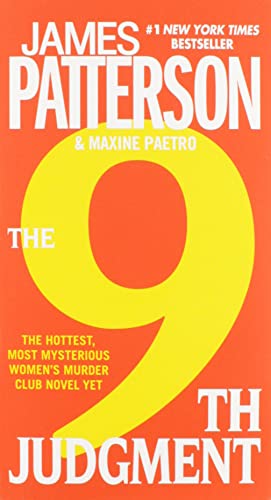
The Women's Murder Club takes on two deranged killers, but Detective Lindsay Boxer begins to wonder if the mysterious case is also breaking apart her closest friendships.
During an intimate dinner party, a cat burglar breaks into the home of A-list actor Marcus Dowling. When his wife walks in on the thief, the situation quickly teeters out of control, leaving an empty safe and a lifeless body.
The same night, a woman and her infant child are ruthlessly gunned down in an abandoned garage. The killer hasn't left a shred of evidence, except for a foreboding and cryptic message: WCF, the letters written in blood-red letters.
With two deranged killers on the loose Detective Lindsay Boxer calls on the Women's Murder Club to help her stop the insane killers. But someone is leaking information to the press-details that only those on the inside could know. As allegations fly that Lindsay is the source, she has to wonder: how much she can trust her closest friends?
"synopsis" may belong to another edition of this title.
About the Author
James Patterson has had more New York Times bestsellers than any other writer, ever, according to Guinness World Records. Since his first novel won the Edgar Award in 1977 James Patterson's books have sold more than 300 million copies. He is the author of the Alex Cross novels, the most popular detective series of the past twenty-five years, including Kiss the Girls and Along Came a Spider. He writes full-time and lives in Florida with his family.
Excerpt. © Reprinted by permission. All rights reserved.
The 9th Judgment
By Patterson, JamesVision
Copyright © 2012 Patterson, JamesAll right reserved.
ISBN: 9780446565660
Prologue
A THIEF IN THE NIGHT
One
SARAH WELLS STOOD on the roof of the carport and snaked her gloved hand through the hole she’d cut in the glass. Her pulse was thudding in her ears as she unlocked the double-hung window, opened the sash, and slid quietly into the darkened room. Once inside, she flattened herself against the wall and listened.
Voices rose from the floor below, and she heard the clanking of silverware against china. Good timing, Sarah thought. In fact, perfect.
But timing and execution were two different things entirely.
She switched on her miner’s headlamp and took a 180-degree illuminated tour of the bedroom. She noted the console table to her left, which was loaded with whatnots. She had to watch out for that table and the scatter rugs on the slick hardwood floors.
The lithe young woman quickly crossed the space, shut the door between the bedroom and hallway, and headed to the open closet, which smelled faintly of perfume. Leaving the door open just a crack, Sarah played her light over racks of clothing. She parted a curtain of long, beaded gowns, and there it was: a safe in the closet wall.
Sarah had bet on this. If Casey Dowling was like most socialites, she dressed for her dinner parties and wore her jewels. Chances were that she’d left her safe unlocked so she could put her jewels away later without having to punch in the combination again. Sarah tugged lightly on the safe’s handle—and the heavy door swung open.
It was a go.
But she had to work fast. Three minutes, no more.
Sarah’s headlamp lit up the contents of the safe while leaving her hands free to frisk the jumble of satin envelopes and silk-covered boxes. Way in the back was a brocaded box the size of a small loaf of bread. She undid the latch and lifted the lid on the mother lode.
Sarah gasped.
She’d read stories about Casey Dowling for two months and seen dozens of photos of her at society events, glittering with jewels. But she hadn’t expected the sheer weight of diamonds and precious stones, the gleaming mounds of baroque pearls.
It was cra-zzzy. Casey Dowling owned all of this.
Well, not for long.
Sarah plucked bracelets and earrings and rings out of the box and stowed them in one of her two small duffel bags, the straps of which crisscrossed her chest. She paused to study a particular ring in its own leather case, to marvel at the frickin’ wonder of it—when lights flashed on in the bedroom only yards from where she stood in the closet.
Sarah snapped off her light and dropped to a crouch, her heart rate shooting into overdrive as she heard the living, booming voice of Marcus Dowling, superstar actor of theater and the silver screen, bickering with his wife as he came into the room.
Sarah tucked all five feet eight of herself into a ball behind gowns and garment bags.
God, she was stupid.
While she’d been ogling the jewels, the Dowlings’ dinner party had ended, and now she was going to get caught and be imprisoned for grand larceny. Her. A high school English teacher. It would be a scandal—and that was the least of it.
Sweat broke out under Sarah’s knit cap. Drops of it rolled from her underarms down the sides of her black turtleneck as she waited for the Dowlings to switch on the closet light and find her squatting there, a thief in the night.
Two
CASEY DOWLING WAS trying to squeeze an admission from her husband, but Marcus wasn’t having it.
“What the hell, Casey?” he snapped. “I wasn’t staring at Sheila’s boobs, for Christ’s sake. Every single time we get together with people, you complain that I’m leering, and frankly, sweetheart, I find your paranoia very unattractive.”
“Ohhhh no, Marcus. You? Leer at another woman? I’m soooo ashamed of myself for even having had the thought.” Casey had a lovely laugh, even when it was colored with sarcasm.
“Silly cow,” Marcus Dowling muttered.
Sarah imagined his handsome face, the thick gray hair falling across his brow as he scowled. She imagined Casey, too—her willowy shape, her white-blond hair falling in a silvery sheet to her shoulder blades.
Casey cooed, “There, there. I’ve hurt your feelings.”
“Forget it, love. I’m not in the mood now.”
“Oh. Sorry. My mistake.”
Sarah felt the rebuff as if it had happened to her. Then Marcus said, “Oh, for pity’s sake. Don’t cry. Come here.”
The room went quiet for a few minutes, until Sarah heard a whoosh of bodies falling into plumped bedding, then murmuring—words she couldn’t make out. Then the headboard began to tap against the wall, and Sarah thought, Oh dear God, they’re doing it.
Images came to her of Marcus Dowling in Susan and James with Jennifer Lowe and in Redboy with Kimberly Kerry. She thought of Casey in Marcus’s arms, her long legs wrapped around him. The tapping became more rhythmic and the moaning became louder and then there was a long, groaning exhalation from Marcus, and then—mercifully—it was over.
Someone used the bathroom after that, and finally the room went black.
Sarah squatted quietly behind the curtain of gowns for at least twenty minutes, and when the breathing outside the closet settled into sputters and snores, she opened the door and crawled to the window.
She was almost home free—but not there yet.
Sarah was quick and quiet as she vaulted to the windowsill, but when one leg followed the other, she hit the side of the console table—and it all went wrong.
There was the tinkling of sliding whatnots as the table tipped and then crashed, sending its load of picture frames and perfume bottles to the floor.
Holy crap.
Sarah froze, mind and body, as Casey Dowling bolted into a sitting position and yelled, “Who’s there?”
Sarah’s stark fear propelled her out the window. She hung on to the roof of the carport with all the strength in her fingertips, then released her grip and made the ten-foot drop.
She landed on grass, knees bent, no pain. And as the Dowlings’ bedroom light came on overhead, Sarah ran. She ripped off her headlamp and stuffed it into one of the duffels as she sprinted through the upscale San Francisco neighborhood of Nob Hill.
A few minutes later Sarah found her old Saturn where she’d left it in the parking lot outside a drugstore. She got into the car, closed the door, and locked it, as if that could keep out her fear. She started up the engine and released the hand brake, still panting, trying not to throw up as she drove toward home.
When she hit the straightaway of Pine Street, Sarah pulled off her cap and gloves, wiped her brow with the back of her hand, and thought hard about her escape from the Dowlings’ bedroom.
She’d left nothing: no tools, no prints, no DNA. No nothing.
For now, at least, she was safe.
Honestly. She didn’t know whether to laugh or to cry.
Three
CASEY’S EYES FLEW open in the dark.
Something had crashed. The table by the window! She felt a breeze on her face. The window was open. They never opened that window.
Someone was inside the house.
Casey sat up. “Who’s there?” She clutched the blankets to her chin and screamed, “Marc! Someone is in the room.”
Her husband groaned, “You’re dreaming. Go back to sleep.”
“Wake up! Someone is here,” she hissed.
Casey fumbled with the table lamp, knocked her glasses onto the floor, found the switch, and turned on the light. There. The console table was turned over, everything broken, curtains blowing in the breeze.
“Do something, Marc. Do something.”
Marcus Dowling worked out every day. He could still bench-press two hundred pounds, and he knew how to use a gun. He told his wife to be quiet, then opened his nightstand drawer and removed the .44 he kept fully loaded in a soft leather bag. He shucked the sack and gripped the gun.
Casey grabbed the bedside phone and pressed the numbers 9-1-1 with a shaking hand. She misdialed, then tried again as Marc, still half drunk, bellowed, “Who’s there?” Even when he was serious, he sounded scripted. “Show yourself.”
Marcus looked in the bathroom and the hallway, then said, “There’s no one here, Casey. Just what I said.”
Casey dropped the phone back into its cradle, shoved at the bedcovers, and went to the closet for her robe—and screamed.
“What is it now?”
White-faced, naked, Casey turned to her husband and said, “Oh my God, Marc, my jewelry is gone. The safe is almost empty.”
A look came over Marc’s face that was hard for Casey to read. It was as if he’d had an idea, and the idea was catching fire. Did he know who robbed them?
“Marc? What is it? What are you thinking?”
“Ah, I was thinking, You can’t take it with you.”
“What kind of bullshit is that? What do you mean?”
Dowling extended his right arm and aimed the gun at a mole between his wife’s breasts. He pulled the trigger. Boom.
“That’s what I mean,” he said.
Casey Dowling opened her mouth, sucked in air, and exhaled as she looked down at her chest, at the blood pumping and bubbling out of the wound. She clasped her hands to her chest. She looked at her husband and gasped, “Help me.”
He shot her again.
Then her knees buckled and she went down.
Part One
SNEAKY PETE
Chapter 1
PETER GORDON FOLLOWED the young mom out of Macy’s and into the street outside the Stonestown Galleria. Mom was about thirty, her brown hair in a messy ponytail, wearing a lot of red: not just shorts but red sneakers and a red purse. Shopping bags hung from the handles of her baby’s stroller.
Pete was behind the woman when she crossed Winston Drive, still almost on her heels as she entered the parking garage, talking to the infant as if he could understand her, asking him if he remembered where Mommy parked the car and what Daddy was making for dinner, chattering away, the whole running baby-talk commentary like a fuse lit by the woman’s mouth, terminating at the charge inside Petey’s brain.
But Petey stayed focused on his target. He listened and watched, kept his head down, hands in his pockets, and saw the woman unlock the hatch of her RAV4 and jam her shopping bags inside. He was only yards away from her when she hoisted the baby out of the stroller and folded the carriage into the back, too.
The woman was strapping the boy into the car seat when Pete started toward her.
“Ma’am? Can you help me out, please?”
The woman drew her brows together. What do you want? was written all over her face as she saw him. She got into the front seat now, keys in hand.
“Yes?” she said.
Pete Gordon knew that he looked healthy and clean and wide-eyed and trustworthy. His all-American good looks were an asset, but he wasn’t vain. No more than a Venus flytrap was vain.
“I’ve got a flat,” Pete said, throwing up his hands. “I really hate to ask, but could I use your cell phone to call Triple-A?”
He flashed a smile and got the dimples going, and at last she smiled, too, and said, “I do that—forget to charge the darned thing.”
She dug into her purse, then looked up with the cell phone in hand. Her smile wavered as she read Pete’s new expression, no longer eager to please but hard and determined.
She dropped her eyes to the gun he was holding—thinking that somehow she’d gotten it wrong—looked back into his face, and saw the chill in his dark eyes.
She jerked away from him, dropping her keys and her phone into the foot well. She climbed halfway into the backseat.
“Oh my God,” she said. “Don’t—do anything. I’ve got cash—”
Pete fired, the round whizzing through the suppressor, hitting the woman in the neck. She grabbed at the wound, blood spouting through her fingers.
“My baby,” she gasped.
“Don’t worry. He won’t feel anything. I promise,” Pete Gordon said.
He shot the woman again, poof, this time in the side of her chest, then opened the back door and looked at the bawler, nodding off, mouth sticky with cotton candy, blue veins tracing a road map across his temple.
Chapter 2
A CAR SCREAMED down the ramp and squealed around the corner, speeding past Pete as he turned his face toward the concrete center island. He was sure he hadn’t been seen, and anyway he’d done everything right. Strictly by the book.
The woman’s open bag was lying inside the car. With his hand in his jacket pocket, using it as a kind of glove, he dug around in her junk, looking for her lipstick.
He found it, then swiveled up the bright-red tube.
He waited as a couple of gabby women in an Escalade drove up the ramp looking for a spot, then he took the lipstick tube between his thumb and forefinger and considered what he would write on the windshield.
He thought of writing FOR KENNY but changed his mind. He laughed to himself as he also considered and rejected PETEY WAS HERE.
Then he got real.
He printed WCF in bold red letters, four inches high, and underscored the writing with a smeary red line. Then he closed the lipstick and dropped it into his pocket, where it clicked against his gun.
Satisfied, he backed out of the car, shut the doors, wiped down the handles with the soft flannel lining of his baseball jacket, and walked to the elevator bank. He stood aside as the door opened and an old man wheeled his wife out onto the main floor of the garage. He kept his head down, avoiding eye contact with the old couple, and they ignored him.
That was good, but he wished he could tell them.
It was for Kenny. And it was by the book.
Pete Gordon got into the elevator and rode it up to the third floor, thinking he was having a really good day, the first good one in about a year. It had been a long time coming, but he’d finally launched his master plan.
He was exhilarated, because he was absolutely sure it would work.
WCF, people. WCF.
Chapter 3
PETE GORDON DROVE down the looping ramp of the garage. He passed the dead woman’s car on the ground floor but didn’t even brake, confident that there was no blood outside the car, nothing to show that he’d been there.
With the garage as packed as it was, it could be hours before the mom and her bawler were found in that tidy spot near the end of the row.
Pete took it nice and slow, easing the car out of the garage and accelerating onto Winston, heading toward 19th Avenue. He reviewed the shooting in his mind as he waited at the light, thinking about how easy it had been—no wasted rounds, nothing forgotten—and how crazed it was going to make the cops.
Nothing worse than a motiveless crime, huh, Kenny?
The cops were going to bust their stones on this one, all right, and by the time they figured it out, he’d be living in another country and this crime would be one of the cold cases some old Homicide dick would never solve.
Pete took the long way home, up Sloat Boulevard, up and over Portola Drive, where he waited for the Muni train to pass with commuters all in a row, and finally up Clipper Street toward his crappy apartment in the Mission.
It was almost dinnertime, and his own little bawlers would be puffing up their cheeks, getting ready to sound the alarm. He had his key out when he got to the apartment. He opened the lock and gave the door a kick.
He could smell the baby’s diapers from the doorway, the little stinker standing in the kiddie cage in the middle of the floor, hanging on to the handrail, crying out as soon as he saw his dad.
“Daddy!” Sherry called. “He needs to be changed.”
“Goody,” Peter Gordon said. “Shut up, stink bomb,” he told the boy. “I’ll get to you in a minute.” He took the remote control from his daughter’s hand, switched from the cartoons, and checked the news.
The stock market was down. Oil prices were up. He watched the latest Hollywood update. Nothing was said about two bodies found in the Stonestown Galleria parking lot.
“I’m hungry,” Sherry said.
“Well, which is it first? Dinner or poop?”
“Poop first,” she said.
“All right, then.”
Pete Gordon picked up the baby, as dear to him as a sack of cement, not even sure the little shit was his, although even if he was, he still didn’t care. He put the baby on its back on the changing table and went through the ritual, holding the kiddo by the ankles, wiping him down, dusting his butt with powder, wrapping him up in Pampers, then putting him back in the kiddie cage.
“Franks and beans?” he asked his daughter.
“My absolute favorite,” Sherry said, putting a pigtail in her mouth.
“Put a shirt on the stink bomb,” Pete Gordon said, “so your mother doesn’t have a gas attack when she gets home.”
Gordon microwaved some formula for the stink bomb and opened the canned franks and beans. He turned on the undercabinet TV and the stove, what wifey should be doing instead of him, the bitch, and dumped the contents of the can into a pot.
The beans were burning when the breaking news came on.
Huh. Look at that, Pete thought.
Some dork from ABC was holding a microphone, standing in front of Borders. College kids mugged behind him as he said, “We have learned that there has been a shooting at the Stonestown garage. Sources report a gruesome double homicide that you will not believe. We’ll keep you posted as details are released. Back to you, Yolanda.”
Chapter 4
YUKI CASTELLANO STEPPED out of her office and called down the line of cubicles to Nicky Gaines, “You ready, Wonder Boy? Or do you want to meet me downstairs?”
“I’m coming,” Gaines said. “Who said I wasn’t coming?”
“How do I look?” she asked him, already moving toward the elevator that would take them from the DA’s office to the courtroom.
“You look fierce, Batwoman. Miss Hot Multicultural USA.”
“Shut up.” She laughed at her protégé. “Just be ready to prompt me if I blank, God forbid.”
“You’re not going to blank. You’re going to send Jo-Jo to the big house.”
“Ya think?”
“I know. Don’t you?”
“Uh-huh. I just have to make sure the jury knows it, too.”
Nicky stabbed the elevator button, and Yuki went back to her thoughts. In about twenty minutes, she was going to make her closing argument in the state’s case against Adam “Jo-Jo” Johnson.
Since she’d been with the DA’s office, she’d taken on more than a few crappy cases that the DA was determined to try: she’d work eighteen-hour days, earning “atta girls” from her boss, Leonard “Red Dog” Parisi, and score points with the jury, all of which would give her high expectations.
And then she’d lose.
Yuki was becoming famous for losing—and that stank because she was a fighter and a winner. And she just frickin’ hated to lose. But she never thought she’d lose—and this time was no different.
Her case was solid. She’d laid it out like a hand of solitaire. The jury had an easy job. The defendant wasn’t just guilty, he was guilty as sin.
Nicky held open the studded leather door to the courtroom, and Yuki walked smartly down the center aisle of the oak-paneled chamber. She noticed that the gallery was filling up with spectators, mostly press and law students. And as she approached the prosecution table, she saw that Jo-Jo Johnson and his attorney, Jeff Asher, were in their seats.
The stage was set.
She nodded to her opponent and noted the defendant’s appearance. Jo-Jo’s hair was combed and he was wearing a nice suit, but he looked dazed as only a mope who’d fried his brain on drugs could look. She hoped that very soon he would look worse, once she nailed him on manslaughter in the first degree.
“Jo-Jo looks like he’s been smoking ganja,” Nicky murmured to Yuki as he pulled out her chair.
“Or else he believes his lawyer’s bull,” Yuki said loud enough for her opponent to hear. “Jo-Jo may think he’s going to walk, but he’ll be busing it to Pelican Bay.”
Asher looked at her and smirked, showing Yuki with his body language that he thought he was going to whip her.
It was an act.
Yuki hadn’t gone up against Asher before, but after less than a year in the public defender’s office, Asher had gotten a reputation as a “bomb”—a killer attorney who blew up the prosecution’s case and got his client off. Asher was formidable because he had it all: charisma, boyish good looks, and a Harvard Law degree. And he had his father, a top-notch litigator who was coaching his son from the sidelines.
But none of that mattered today.
The evidence, the witnesses, and the confession were all on her side. Jo-Jo Johnson was hers.
Chapter 5
JUDGE STEVEN RABINOWITZ took a last look at the pictures of his new condo in Aspen, then turned off his iPhone, cracked his knuckles, and said, “Are the People ready, Ms. Castellano?”
“We are, Your Honor,” said Yuki.
She stood, her glossy black hair with the new silver streak in front falling forward as she straightened the hem of her suit jacket. Then she stepped quickly to the lectern in the center of the well.
She turned her eyes toward the jury box and gave the jurors a smile. A couple of them smiled back, but for the most part they were expressionless. She couldn’t read them at all.
But that was okay.
She just had to give the greatest closing of her life, as if the dead scumbag victim were the best and brightest of men, and as if this were the last case she would ever try.
“Ladies and Gentlemen,” she said, “Dr. Lincoln Harris is dead because this man, Adam J. Johnson, knew Dr. Harris was in mortal danger and let him die with willful disregard for his life. In California, that’s manslaughter in the first degree.
“We know what happened on the night of March fourteenth because, after waiving his right to remain silent, after waiving his right to counsel, Mr. Johnson told the police how and why he let Dr. Harris expire when he could have easily saved his life.”
Yuki let her words resonate in the chamber, shuffling her cards on the lectern before continuing her closing argument.
“On the evening in question, the defendant, who had been employed by Dr. Harris as a handyman, went out to get cocaine for the doctor and himself.
“He returned within the hour, and the defendant and the plaintiff ingested this cocaine. Shortly after that, Dr. Harris OD’d. How do we know that?
“The defendant told the police—and it was borne out by medical experts—that it was clear Dr. Harris was in extremis. He was foaming at the mouth and eventually lost consciousness. But, rather than call an ambulance, the defendant used this opportunity to remove a thousand dollars and an ATM card from Dr. Harris’s wallet.
“Mr. Johnson then used Dr. Harris’s ATM card, took another thousand dollars, and bought himself a new leather jacket and a pair of boots at Rochester Big & Tall.
“After that,” Yuki told them, “the defendant bought more cocaine and hired a prostitute, Elizabeth Wu, whom he brought back to Dr. Harris’s home.
“Over the next several hours, Ms. Wu and Mr. Johnson snorted coke, had sex a few times, and at one point, according to Mr. Johnson’s statement, discussed how to dispose of Dr. Harris’s body once he died. That, Ladies and Gentlemen, shows ‘consciousness of guilt.’
“Adam Johnson absolutely knew that the doctor was dying. But he didn’t call for help for fifteen hours,” Yuki said, slapping the lectern. “Fifteen hours. Finally, at the behest of Ms. Wu, Mr. Johnson finally called nine one one, but it was too little, too late. Dr. Harris died in the ambulance en route to the hospital.
“Now, we all know that the defense has no defense.
“When facts are against them, defense lawyers resort to theatrics and to blaming the victim.
“Mr. Asher has told you that Dr. Harris lost his license to practice medicine because he used drugs. And that he cheated on his wife. That’s true, and so what? The victim wasn’t a saint, but even imperfect people have a right to humane treatment. And they have a right to justice.
“The defense has portrayed Adam Johnson as a hapless gofer who didn’t know an OD from a CD.
“That’s fiction. Adam Johnson knew what he was doing. He’s admitted to all of it: the willful disregard as well as the fun he had that night, stealing and shopping and snorting coke and having sex while Dr. Harris lay dying.
“That’s why there can be only one verdict. The People ask you to find Adam Johnson guilty on three counts: of grand larceny, of intent to deal narcotics, and of reckless disregard for the life of a human being—that is, manslaughter in the first degree.”
Chapter 6
YUKI HUDDLED WITH Gaines in the hallway outside the courtroom during the ten-minute recess.
“You knocked their socks off,” Gaines told her.
Yuki nodded. She combed her mind for mistakes and didn’t find any. She hadn’t blanked, hadn’t sputtered or blown her lines, hadn’t come off as rehearsed. She had no regrets. She only wished her mom could have been here to see her.
She said to her number two, “Jo-Jo did it. He said he did it, and we proved it.” Yuki’s heart was still pumping adrenaline, the good kind. A bit like champagne.
Nicky nudged her, and Yuki looked up. She saw that the bailiff had opened the leather-paneled door. The pair reentered the courtroom and took their seats. Yuki’s mouth went suddenly dry as the court was called into session.
And now the fear factor started nibbling at her confidence. Asher would have the last word. Could he convince the jury to let Johnson off? She thought ahead to the worst possible result—a finding in favor of the defendant. After that, Asher’s dad would give his son a party at the Ruby Skye, and she would slink home alone.
The humiliation would be all hers.
Beside her, Nicky doodled a caricature of her with a star on her chest and a halo behind her head. She managed a smile, and then the room fell silent.
Judge Rabinowitz asked Asher if the defense was ready to close, and he answered, “Yes, Your Honor, we are.”
Like a Thoroughbred into the starting gate, Asher nearly pranced toward the jury box. He put his hand on the railing and—while standing no more than a yard away from the jurors in the front row, close enough for the foreperson to see the comb marks in his hair and the sparkle on his dental veneers—began his summation.
“Folks, I don’t have any notes because Adam Johnson’s defense is as simple and as clear as day.
“He’s not a doctor. He doesn’t know anything about sick people or about medicine. He didn’t know that Dr. Harris was in serious distress.
“Adam Johnson is a handyman.
“Lincoln Harris was a doctor of medicine.
“And, as the medical examiner told you, Lincoln Harris didn’t die from cocaine overdose. He died from cocaine and a self-injected dose of heroin.
“What happened is that those drugs interacted, and that proved fatal. Dr. Harris knew what drugs did to the body, and he took them anyway. For all anyone knows, he intended to die.
“I think Mr. Johnson would agree that if he had it to do again, when he saw that Dr. Harris was ill, he would have immediately called nine one one. He probably would have done everything different that night, but he made some mistakes.
“Yes, he’s guilty of stealing two thousand dollars from a rich boss who had given him his ATM pin number.
“Yes, he’s guilty of giving those drugs to Ms. Wu, a known drug user and a prostitute, and while this is true, it’s a technicality. He wasn’t actually dealing. He used drugs for recreation.
“As for consciousness of guilt, I submit to you folks that my client was just shooting the bull with Ms. Wu when they discussed ‘dumping the body.’
“They didn’t do it, did they?” Asher asked rhetorically. “Mr. Johnson called for an ambulance. The facts are clear. My client didn’t know if Dr. Harris was dying or if he was going to wake up with a bad headache. He’s no genius, but he’s not a bad guy.
“And so we ask you to find him ‘not guilty’ of manslaughter, because he simply did not do it.”
Chapter 7
I LEFT THE Homicide squad room in a hurry that evening, determined to get out of Jacobi’s line of sight before I got drafted into someone else’s case. I’d just stepped into the elevator when, damn it, my cell phone buzzed.
It was Yuki; she was funny, passionate, and going through a rough time, so I pressed the phone to my ear and she peppered me with her customary rat-a-tat speech.
“Lindsay, my head’s spinning off my neck. Can you meet me at MacBain’s? Like, now?”
“What’s wrong?”
“You’re busy.”
“I’ve got plans,” I said, “but I can have a quick beer—”
“I’ll meet you in five.”
MacBain’s Beers O’ the World Pub is a cops-and-lawyers hangout two blocks from the Hall of Justice. I got my car out of the all-day lot and headed east on Bryant, telling myself that I’d still have time to pick up the shrimp on the way home.
I entered the bar, found a tiny table near the window, and had just ordered two Coronas from the waitress when I saw Yuki elbowing her way through the crowd, coming toward me. She was talking before she sat down.
“You ordered? Good. How are you? Okay?”
The waitress brought the beer, and Yuki asked for a burger well-done with cheese fries.
“You’re not eating?” she said.
“I’m cooking a late dinner for Joe.”
“Ah.”
She put a hand to her brow as if shielding her eyes from the light bouncing off my engagement ring.
“Must be nice.”
“Yeah,” I said, grinning at her.
Being engaged was still new to me after months and months of a cross-country roller-coaster romance. Now Joe and I lived together, and we still hadn’t sat down to dinner at the same time in two weeks. I’d promised him shrimp pomodoro tonight, and I was looking forward to the whole deal: the cooking, the supping, the afterglow. “So what’s going on?” I asked Yuki.
She drained half her glass before answering. “My victim isn’t just scum, he’s dead scum, and Jo-Jo is cute and stupid. The women jurists looked at him, Linds, like they wanted to breast-feed him.”
I’d stopped by the courtroom to watch Yuki’s closing argument, and I had to agree. Dr. Lincoln Harris was dead slime, and while Jo-Jo Johnson was hardly better—he was alive. And he looked like a man without a clue.
“Asher could actually win,” Yuki wailed. “I quit private practice for this? Help me, Linds. Should I find a good-paying job in a corporate law firm?”
My phone vibrated on my hip again. I looked down at the caller ID. Jacobi. My ex-partner and current boss, whose gut reaction to everything is to call me. Old habits die hard. I keyed the button and said, “Boxer,” into the mouthpiece.
“There’s been a double homicide, Lindsay. It’s got ‘psycho’ written all over it.”
“Did you call Paul Chi? He’s back from vacation. I’ll bet he’s home right now.”
“I want you on this,” Jacobi growled.
After more than ten years of working together, we were almost able to read each other’s mind. Jacobi sounded freaked out, like someone had walked over his grave.
“What’s this about, Warren?” I asked him, already knowing my best-laid plans for the evening were shot.
“One of the vics is a young kid,” Jacobi said.
He gave me the address—the parking garage near the galleria. “Conklin just left. He’ll be there in a couple of minutes.”
“I’m on my way,” I told him.
Chapter 8
I CLOSED MY phone and promised Yuki a longer, better talk about her career after the jury came back. I said, “Your closing was outstanding, girlfriend. Don’t quit.” I kissed her cheek and fled the bar.
I drove my Explorer toward Market and got gridlocked. I put the Kojak light on my roof and hit the siren. Vehicles parted reluctantly, and I finally reached the entrance to the garage near the Stonestown Galleria.
The mouth of the garage was cordoned off and blocked by a grumbling crowd of car owners. I held up my shield, ducked under the tape, and signed the log. Officer Joe Sorbera looked gray, as if he’d never seen death before.
“You’re the first officer on the scene?”
“Yes, ma’am.”
“You okay, Joe?”
“I’ve been better, Sergeant,” he said, smiling weakly. “I’ve got kids, you know.” He pointed out a blue RAV4 parked toward the far end of the row. “Your next nightmare is right over there.”
I followed Sorbera’s finger and saw Inspector Rich Conklin standing between a couple of vehicles at the end of the aisle, peering into the driver’s-side window of the RAV4.
When Jacobi moved up to lieutenant, Conklin became my partner. He’s smart and disturbingly handsome, and he’s got the makings of a first-class detective. It wouldn’t shock anyone if he made captain one day, but right now he reports to me.
He came toward me before I could reach the scene.
“Brace yourself, Linds.”
“Fill me in.”
“White female, about thirty, name of Barbara Ann Benton. The other victim is an infant. Might be a year old. Both were shot point-blank. The ME and CSU are on the way.”
“Who called it in?”
“A lady who was parked in the spot next to the RAV4. I interviewed her and sent her home. She didn’t see anything. So far, no one did. Unis are going through the trash cans, and we’ve collected the surveillance tape.”
“Are you thinking the baby was collateral damage?”
“No way,” Conklin said. “He was capped on purpose.”
I approached the SUV and sucked in my breath as I looked inside. Barbara Ann Benton was slumped awkwardly in the front seat, half facing the rear as if she’d tried to climb over the divide.
I saw two obvious gunshot wounds: one to the neck and another to the side of her chest. Then I forced myself to look past the mom to the child in his car seat.
The baby boy had a glaze of pink candy on his lips and on the fingers of his right hand. The rear window was spattered with blood. The child had been shot through the temple at close range.
Conklin was right.
The baby’s death was no accident. In fact, the shot was so precise, the kid could have been the prime target.
I hoped that the little boy hadn’t realized what was happening.
I hoped he hadn’t had time to be afraid.
Chapter 9
“WHAT DO YOU make of this, Linds?”
Conklin called to my attention the vivid red letters printed on the windshield. I stared, riveted by the sight. This is what Jacobi had been talking about when he’d said that the crime scene had “ ‘psycho’ written all over it.”
He hadn’t said it was written in lipstick.
The letters “WCF” meant nothing to me, except the fact that only wacko killers deliberately leave a signature. It reminded me of cases I’d caught where the killer had signed his crimes. And it brought back the bad old days when the Backstreet Killer had terrified San Francisco in the ’90s, a murderer who took eight innocent lives, left signatures and notes for the police, and was never caught. A chill went down the back of my neck.
“Those shopping bags in the rear,” I said to Conklin. “Were they looted?” I was hoping.
My partner shook his head no and said, “Looks like a hundred bucks in the victim’s wallet. This wasn’t a robbery. This was an execution. Two of them.”
Questions were flooding my mind. Why hadn’t gunshots been reported? Why had the killer targeted these people? Was it random or personal? Why had he killed a child?
I turned toward the sound of an engine’s roar and saw the coroner’s van heading toward us, tires screeching as it braked twenty feet away.
Dr. Claire Washburn got out of the van wearing blue scrubs and a Windbreaker—black with white letters spelling out MEDICAL EXAMINER front and back. Despite the odds of a black woman succeeding in her profession when she first got started, Claire had done it. In my opinion, she’s the finest forensic pathologist west of the Rockies. She’s also the friend of my heart, and although we work three flights and eighty feet away in adjoining buildings, I hadn’t seen her in more than a week.
“Jesus God, what is this?” she asked as she hugged me and took in the scene over my shoulder.
Continues...
Excerpted from The 9th Judgment by Patterson, James Copyright © 2012 by Patterson, James. Excerpted by permission.
All rights reserved. No part of this excerpt may be reproduced or reprinted without permission in writing from the publisher.
Excerpts are provided by Dial-A-Book Inc. solely for the personal use of visitors to this web site.
"About this title" may belong to another edition of this title.
Search results for The 9th Judgment: 9 (A Women's Murder Club Thriller)

Stock Image
The 9th Judgment
Published by
Time Warner Trade Publishing, 2012
ISBN 10: 0446565660
ISBN 13: 9780446565660
Used
Softcover
Seller: World of Books (was SecondSale), Montgomery, IL, U.S.A.
Seller rating 5 out of 5 stars

Condition: Very Good. The Women's Murder Club takes on two deranged killers, but Detective Lindsay Boxer begins to wonder if the mysterious case is also breaking apart her closest friendships in this thriller from the world's #1 bestselling author. During an intimate dinner party, a cat burglar breaks into the home of A-list actor Marcus Dowling. When his wife walks in on the thief, the situation quickly teeters out of control, leaving an empty safe and a lifeless body. The same night, a woman and her infant are gunned down in an abandoned garage. The killer hasn't left a shred of evidence, except for a foreboding and cryptic message: WCF, the letters written in blood-red letters. With two deranged killers on the loose Detective Lindsay Boxer calls on the Women's Murder Club to help her stop them. But someone is leaking information to the press--details that only those on the inside could know. As allegations fly that Lindsay is the source, she has to wonder: how much she can trust her closest friends? Seller Inventory # 00101905048
Stock Image
The 9th Judgment
Published by
Time Warner Trade Publishing, 2012
ISBN 10: 0446565660
ISBN 13: 9780446565660
Used
Softcover
Seller: World of Books (was SecondSale), Montgomery, IL, U.S.A.
Seller rating 5 out of 5 stars
Condition: Good. The Women's Murder Club takes on two deranged killers, but Detective Lindsay Boxer begins to wonder if the mysterious case is also breaking apart her closest friendships in this thriller from the world's #1 bestselling author. During an intimate dinner party, a cat burglar breaks into the home of A-list actor Marcus Dowling. When his wife walks in on the thief, the situation quickly teeters out of control, leaving an empty safe and a lifeless body. The same night, a woman and her infant are gunned down in an abandoned garage. The killer hasn't left a shred of evidence, except for a foreboding and cryptic message: WCF, the letters written in blood-red letters. With two deranged killers on the loose Detective Lindsay Boxer calls on the Women's Murder Club to help her stop them. But someone is leaking information to the press--details that only those on the inside could know. As allegations fly that Lindsay is the source, she has to wonder: how much she can trust her closest friends? Seller Inventory # 00095590296
Stock Image
The 9th Judgment: 9 (A Women's
Published by
Little, Brown and Company, 2012
ISBN 10: 0446565660
ISBN 13: 9780446565660
Used
Softcover
Seller: World of Books (was SecondSale), Montgomery, IL, U.S.A.
Seller rating 5 out of 5 stars
Condition: Acceptable. Item in acceptable condition! Textbooks may not include supplemental items i.e. CDs, access codes etc. Seller Inventory # 00107558143
Stock Image
The 9th Judgment (Women's Murder Club, 9)
Seller: Orion Tech, Kingwood, TX, U.S.A.
Seller rating 5 out of 5 stars
Mass Market Paperback. Condition: Fair. Seller Inventory # 0446565660-4-20124487
Stock Image
The 9th Judgment (Women's Murder Club)
Seller: Your Online Bookstore, Houston, TX, U.S.A.
Seller rating 5 out of 5 stars
Mass Market Paperback. Condition: Good. Seller Inventory # 0446565660-3-18813035
Stock Image
The 9th Judgment (Women's Murder Club, 9)
Seller: Your Online Bookstore, Houston, TX, U.S.A.
Seller rating 5 out of 5 stars
Mass Market Paperback. Condition: Fair. Seller Inventory # 0446565660-4-20218817
Stock Image
The 9th Judgment (Women's Murder Club)
Seller: Orion Tech, Kingwood, TX, U.S.A.
Seller rating 5 out of 5 stars
Mass Market Paperback. Condition: Good. Seller Inventory # 0446565660-3-18388245
Stock Image
The 9th Judgment (Women's Murder Club, 9)
Seller: Gulf Coast Books, Cypress, TX, U.S.A.
Seller rating 5 out of 5 stars
Mass Market Paperback. Condition: Fair. Seller Inventory # 0446565660-4-21022161
Seller Image
The 9th Judgment (A Women's Murder Club Thriller, 9)
Published by
Little, Brown and Company, 2012
ISBN 10: 0446565660
ISBN 13: 9780446565660
Used
Softcover
Seller: Used Book Company, Egg Harbor Township, NJ, U.S.A.
Seller rating 5 out of 5 stars
Condition: Very Good. Shows minimal signs of wear and previous use. Can include minimal notes/highlighting. A portion of your purchase benefits nonprofits! - Note: Edition & format may differ from what is shown in stock photo & item details. May not include supplementary material (toys, access code, dvds, etc). Seller Inventory # 584ZSU000G6M_ns
Seller Image
The 9th Judgment (A Women's Murder Club Thriller, 9)
Published by
Little, Brown and Company, 2012
ISBN 10: 0446565660
ISBN 13: 9780446565660
Used
Softcover
Seller: Zoom Books East, Glendale Heights, IL, U.S.A.
Seller rating 5 out of 5 stars
Condition: very_good. Book is in very good condition and may include minimal underlining highlighting. The book can also include "From the library of" labels. May not contain miscellaneous items toys, dvds, etc. . We offer 100% money back guarantee and 24 7 customer service. Seller Inventory # ZEV.0446565660.VG