
Synopsis
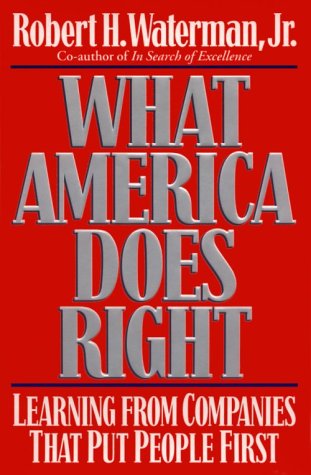
True or false? "America is falling behind in world competition." The surprise answer is "false." Recent research on industrialized nations shows that American workers outproduce workers in Germany and France by 20 percent, workers in Britain by over 30 percent, and Japanese workers by over 60 percent. The reason has nothing to do with technology, worker attitude, or worker skill. In this incisive, anecdotal book Robert H. Waterman, Jr., looks at some of the best American firms and concludes that the key to strategic advantage is organization: they are organized to focus on the things that motivate their own people, and organized to anticipate customer needs. Waterman's crisp case studies give us an insider's view of why these firms are so good. For example, we'll see how Procter & Gamble gets a productivity advantage of 30-40 percent through a work force that's essentially self-managing. (Procter & Gamble developed this system over thirty years ago and considered it so strategic that they wouldn't talk about it until now.) We'll see how a set of strongly held, shared values - not strategy - built the AES Corporation from a start-up eleven years ago to a company whose market value today is close to $1.7 billion. Waterman also gives us an in-depth look at how companies such as Merck and Rubbermaid maintain a strategic edge through raw innovation. In 1993 Rubbermaid invented 365 new products, one for every day of the year. How did they manage it? Waterman's argument is firmly grounded in specific details and in firsthand observation. But his message about American competitiveness transcends any particular case history or industry. All of us can learn from the example of these firms that inone way or another strike out into new frontiers of excellence.
"synopsis" may belong to another edition of this title.
From the Back Cover
True or false? "America is falling behind in world competition". The surprise answer is "false". Recent research on industrialized nations shows that American workers outproduce workers in Germany and France by 20 percent, workers in Britain by over 30 percent, and Japanese workers by over 60 percent. The reason has nothing to do with technology, worker attitude, or worker skill. In this incisive, anecdotal book Robert H. Waterman, Jr., looks at some of the best American firms and concludes that the key to strategic advantage is organization: they are organized to focus on the things that motivate their own people, and organized to anticipate customer needs. Waterman's crisp case studies give us an insider's view of why these firms are so good. For example, we'll see how Procter & Gamble gets a productivity advantage of 30-40 percent through a work force that's essentially self-managing. (Procter & Gamble developed this system over thirty years ago and considered it so strategic that they wouldn't talk about it until now.) We'll see how a set of strongly held, shared values - not strategy - built the AES Corporation from a start-up eleven years ago to a company whose market value today is close to $1.7 billion. Waterman also gives us an in-depth look at how companies such as Merck and Rubbermaid maintain a strategic edge through raw innovation. In 1993 Rubbermaid invented 365 new products, one for every day of the year. How did they manage it? Waterman's argument is firmly grounded in specific details and in firsthand observation. But his message about American competitiveness transcends any particular case history or industry. All of us can learn from the example of these firms that inone way or another strike out into new frontiers of excellence.
"About this title" may belong to another edition of this title.
Other Popular Editions of the Same Title

Search results for What America Does Right – Learning from Companies...

Stock Image
What America Does Right : Lessons from Outstanding Enterprise
Published by
New York, NY, U.S.A.: W. W. Norton & Company, Incorporated, 1994, 1994
ISBN 10: 0393035972
ISBN 13: 9780393035971
Used
Hardcover
Seller: Books to Die For, The Woodlands, TX, U.S.A.
Seller rating 5 out of 5 stars

Hardcover. Condition: Very Good. Dust Jacket Included. VG+/VG. Book Club edition. 318 pp. DJ lightly rubbed; top edges lightly creased. Spine tight, square. Interior very clean, bright. No marks. Very nice reading/reference copy. Seller Inventory # 6210
Stock Image
What America Does Right
Seller: Bellwetherbooks, McKeesport, PA, U.S.A.
Seller rating 5 out of 5 stars
hardcover. Condition: Fine. LIKE NEW!!! Has a red or black remainder mark on bottom/exterior edge of pages. Seller Inventory # 176057
Stock Image
What America Does Right
Seller: Wonder Book, Frederick, MD, U.S.A.
Seller rating 5 out of 5 stars
Condition: Very Good. Very Good condition. Good dust jacket. A copy that may have a few cosmetic defects. May also contain light spine creasing or a few markings such as an owner's name, short gifter's inscription or light stamp. Seller Inventory # R01J-01832
Stock Image
What America Does Right
Seller: ThriftBooks-Atlanta, AUSTELL, GA, U.S.A.
Seller rating 5 out of 5 stars
Hardcover. Condition: Good. No Jacket. Missing dust jacket; Pages can have notes/highlighting. Spine may show signs of wear. ~ ThriftBooks: Read More, Spend Less. Seller Inventory # G0393035972I3N01
Stock Image
What America Does Right
Seller: Bellwetherbooks, McKeesport, PA, U.S.A.
Seller rating 5 out of 5 stars
hardcover. Condition: New. Seller Inventory # IN-176057
Stock Image
What America Does Right
Seller: Half Price Books Inc., Dallas, TX, U.S.A.
Seller rating 5 out of 5 stars
hardcover. Condition: Very Good. Connecting readers with great books since 1972! Used books may not include companion materials, and may have some shelf wear or limited writing. We ship orders daily and Customer Service is our top priority! Seller Inventory # S_460064075
Stock Image
What America Does Right, learning from companies that put people first
Seller: BookDepart, Shepherdstown, WV, U.S.A.
Seller rating 5 out of 5 stars
Hardcover. Condition: Very Good. Hardback with dust jacket, like new with clean text, firm binding. Seller Inventory # 102651
Stock Image
What America Does Right : Lessons from Outstanding Enterprise
Published by
Norton & Company, Incorporated, W. W., 1994
ISBN 10: 0393035972
ISBN 13: 9780393035971
Used
Hardcover
Seller: Better World Books, Mishawaka, IN, U.S.A.
Seller rating 5 out of 5 stars
Condition: Good. Former library copy. Pages intact with minimal writing/highlighting. The binding may be loose and creased. Dust jackets/supplements are not included. Includes library markings. Stock photo provided. Product includes identifying sticker. Better World Books: Buy Books. Do Good. Seller Inventory # 38732859-6
Stock Image
What America Does Right â" Learning from Companies that Put People First
Seller: WorldofBooks, Goring-By-Sea, WS, United Kingdom
Seller rating 5 out of 5 stars
Paperback. Condition: Very Good. The book has been read, but is in excellent condition. Pages are intact and not marred by notes or highlighting. The spine remains undamaged. Seller Inventory # GOR005521791
Buy Used
£ 2.20
£ 5.60 shipping
Ships from United Kingdom to U.S.A.
Ships from United Kingdom to U.S.A.
Quantity: 1 available
Stock Image
What America Does Right Learning from Companies That Put People First
Published by
W W Norton, New York & London, 1994
ISBN 10: 0393035972
ISBN 13: 9780393035971
Used
Hardcover
Seller: Willis Monie-Books, ABAA, Cooperstown, NY, U.S.A.
Seller rating 5 out of 5 stars
Hardcover. Condition: Very Good. Dust Jacket Condition: Very Good. First Printing. Seller Inventory # 108321