
Synopsis
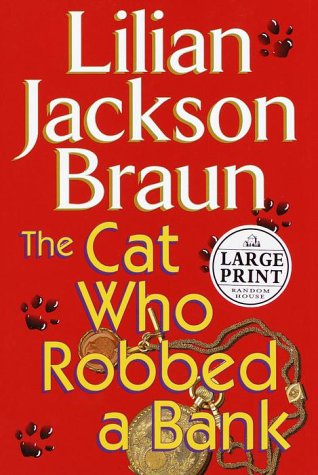
In this new installment in the bestselling Cat Who... mystery series Qwilleran and his brilliant Siamese put their whisker-twitching crime solving talents to task to find a killer.
The residents of Pickax are delighted that the old bombed-out Pickax Hotel is reopening with a whole new look. With new furnishings, a new chef, and even a new name, what could be more thrilling? Everyone is thrown into a topspin when one of the hotel's first guests, a jeweler who has come to town to buy heirloom jewelry from some of Pickax's oldest families, winds up the victim of murder. Who could have committed such a horrible crime? Could it be the hotel clerk, a recent winner of a gold medal for the caber toss at Highland Games?
Qwilleran and his snooping Siamese are willing to go to any length to find the killer and set the town at ease. But first they'll have to contend with a highjacked bookmobile, an attempted bank robbery... and a few of the cat's preoccupations. Koko has a newfound fondness for pennies and Koko and Yum Yum both are obsessed with chewing on gum wrappers - but for entirely different reasons, of course.
Sit back, relax and unwind with another fabulous feline mystery by Lilian Jackson Braun!
"synopsis" may belong to another edition of this title.
About the Author
The New York Times-bestselling author Lilian Jackson Braun lives in North Carolina with her two Siamese cats.
From the Back Cover
installment in the bestselling Cat Who... mystery series Qwilleran and his brilliant Siamese put their whisker-twitching crime solving talents to task to find a killer.
The residents of Pickax are delighted that the old bombed-out Pickax Hotel is reopening with a whole new look. With new furnishings, a new chef, and even a new name, what could be more thrilling? Everyone is thrown into a topspin when one of the hotel's first guests, a jeweler who has come to town to buy heirloom jewelry from some of Pickax's oldest families, winds up the victim of murder. Who could have committed such a horrible crime? Could it be the hotel clerk, a recent winner of a gold medal for the caber toss at Highland Games?
Qwilleran and his snooping Siamese are willing to go to any length to find the killer and set the town at ease. But first they'll have to contend with a highjacked bookmobile, an attempted bank robbery... and a few of the cat's preoccupations. Koko has a newfound fond
From the Inside Flap
installment in the bestselling Cat Who... mystery series Qwilleran and his brilliant Siamese put their whisker-twitching crime solving talents to task to find a killer.
The residents of Pickax are delighted that the old bombed-out Pickax Hotel is reopening with a whole new look. With new furnishings, a new chef, and even a new name, what could be more thrilling? Everyone is thrown into a topspin when one of the hotel's first guests, a jeweler who has come to town to buy heirloom jewelry from some of Pickax's oldest families, winds up the victim of murder. Who could have committed such a horrible crime? Could it be the hotel clerk, a recent winner of a gold medal for the caber toss at Highland Games?
Qwilleran and his snooping Siamese are willing to go to any length to find the killer and set the town at ease. But first they'll have to contend with a highjacked bookmobile, an attempted bank robbery... and a few of the cat's preoccupations. Koko has a newfound fond
Excerpt. © Reprinted by permission. All rights reserved.
The Cat Who Robbed a Bank
By Lilian Jackson BraunRandom House Large Print Publishing
Copyright © 2000 Lilian Jackson BraunAll right reserved.
ISBN: 9780375408786
Chapter One
It was a September to remember! In MooseCounty, 400 miles north of everywhere, planswere rife and hopes were high.
First, the historic hotel in Pickax City, the countyseat, was finally restored after the bombing of the previousyear, and it would reopen with a new name, a newchef, and a gala reception.
Then, a famous American (who may or may not haveslept there in 1895) was about to be honored with thecity's first annual Mark Twain Festival.
Next, a distinguished personage from Chicago had reservedthe presidential suite and would arrive on LaborDay, setting female hearts aflutter.
To top it off, the tri-county Scottish Gathering andHighland Games would be held at the fairgrounds: bagpipesskirling, strong men in kilts tossing the caber, andpretty young women dancing the Highland Fling on theballs of their feet.
The one unexpected happening was the homicide onthe Pickax police blotter, but that was a long story, startingtwenty-odd years before.
As September approached, the good folk of Pickax(population 3,000) were quoting Mark Twain aboutthe weather, suggesting ribald names for the hotel, andgossiping endlessly about a man named Delacamp; fewwould ever meet him, but all had something to say abouthim.
Jim Qwilleran, columnist for the Moose County Something,felt an air of anticipation when he made his roundsof downtown Pickax. When he went to the bank to casha check, the young woman who counted out his fiftiessaid, "Isn't it exciting? Mr. Delacamp is coming again,and he always comes into the bank. I hope he comes tomy window, but the manager usually handles his transactions.Anyway, it's all so thrilling!"
"If you say so," Qwilleran said. After a long career as anewspaperman he was seldom excited and certainlynever thrilled.
At the florist shop where he went to order a floweringplant for a sick friend, the wide-eyed assistant saidbreathlessly, "Did you hear? Mr. Delacamp is coming! Healways has to have fresh flowers in his hotel room, and hesends roses to his customers."
"Good!" said Qwilleran. "Anything that helps thelocal economy has my approval."
While picking up a New York Times at the drugstore heheard a woman customer saying she had received an engravedinvitation to Mr. Delacamp's afternoon tea, andshe wondered what kind of perfume to wear. The pharmacist'swife said, "They say he likes French perfumes.We don't carry anything like that. Try the departmentstore. They can special-order."
Qwilleran crossed the street to the department store,his newshound instincts scenting a good story with humaninterest and a touch of humor. Lanspeak's was a largefourth-generation store with new-fashioned merchandisebut old-fashioned ideas about customer service. He foundthe two owners in their cramped office on the mainfloor.
"Hi, Qwill! Come on in!" said Larry Lanspeak.
"Have a cup of coffee," said his wife, Carol.
Qwilleran took a chair. "No coffee, thanks, but pleasetell me something. Explain the Delacamp mystique." Heknew the couple were official hosts for the man's visit."Why all the excitement?"
Larry looked at his wife, and she made a helpless gesture."What can I say? He's an older man, but he's handsome—elegant—gallant!He sends women roses!"
"And kisses their hands," said Larry with raised eyebrows.
"He pays lavish compliments!"
"And kisses hands," Larry repeated derisively.
"Everything is very formal. Women have to wear hatsto his Tuesday afternoon tea, and we've sold out ofmillinery. We sell the basic felt that women wear tochurch, but our daughter said we should gussy them upwith feathers and flowers and huge ribbon bows. So wedid! Diane is a sober, dedicated M.D., but she has a madstreak."
"Takes after her mother," Larry said.
"The results are really wild! Sorry you can't write it up,Qwill, but everything is private, invitational, and exclusive.No publicity!"
"Okay. I'll forget it. No story," Qwilleran acquiesced."But he sounds like an interesting character ... You twogo back to work."
Larry accompanied him out of the office and towardthe front door, down the main aisle between cases ofmen's shirts and ties and women's scarves and earrings."Old Campo is harmless, although a trifle phony," hesaid. "Still, his visits every four or five years are good for acertain element in our community—and good public relationsfor the store. It's Carol's project, actually. I stayout of it."
The facts were that Delacamp was a dealer whobought and sold estate jewelry, making periodicvisits to remote areas with a history of affluence. In suchcommunities the descendants of old moneyed familiesmight be willing to part with an heirloom necklace of rubiesand emeralds, or a diamond tiara, in order to financea new car or a college education or an extravagant cruise.Artisans in Delacamp's Chicago firm could break up suchoutdated items and re-mount them in rings, pendants,earrings, and so forth for sale to a new generation—as aninvestment or status symbol.
Moose County fitted the picture, and Delacamp apparentlyhad found his visits worthwhile. It had been therichest county in the state in the nineteenth century,when natural resources were being exploited and therewas no income tax to pay. The old mining tycoons andlumber barons had built themselves mansions with largevaults in the basement. They had sent their offspring toeastern colleges and had taken their wives to Paris,where they bought them jewels that would appreciate invalue. When the mines closed in the early twentiethcentury, the economy collapsed and most families fled tothe big cities. Others elected to stay and live quietly ontheir private means, going into business or the professions—oreven bootlegging during Prohibition.
All of this convinced Qwilleran that Old Campo hada good thing going, and he enjoyed listening to gossip inthe coffee shops. Blue-collar and white-collar opinionswere freely expressed:
"He'll be puttin' on the dog and gettin' the old gals allhet up."
"They say he drinks nothin' but tea, but ten to one heputs a little somethin' in it."
"Yeah, I was night porter at the hotel a few years ago,and he used to send out for rum. He was a big tipper, I'llsay that for him."
"I know a guy—his wife drew ten thousand from theirjoint account and bought a diamond pin."
"I'm glad my wife's not on his list. Women go to thattea party of his and they're pushovers!"
"He always brings a female assistant, and she alwayshappens to be young and sexy. She's supposed to be hiscousin or niece or something, but you never notice anyfamily resemblance, if you know what I mean."
Gossip was the mainstay of Moose County culture, althoughit was called "caring and sharing." Men had theircoffee shops; women had their afternoon circles.
Qwilleran listened to it and nodded and chuckled. Hehimself had been the subject of gossip. He was a bachelorwho lived simply, and yet he was the richest man in thenortheast central United States. Through a twist of fatehe had fallen heir to the vast Klingenschoen fortunebased in Moose County. Previously he had managed on areporter's salary without any particular interest in wealth;in financial matters, moreover, he felt like a simpleton.He handled the situation by establishing the KlingenschoenFoundation with a mandate to give the moneyaway judiciously to benefit the community.
Needless to say, "Mr. Q" had become an icon in thenorth country, not only because of his generosity. Hewrote a twice-weekly column, "Straight from the QwillPen," that was the most popular feature in the newspaper.He had a genial disposition and a sense of humor,even though his brooding eyes gave him a look of melancholy.And he was his own man.
Pioneer blood had made the natives into a race of determinedindividualists, as a glance at the map wouldconfirm. There were places like Squunk Comers, LittleHope, Sawdust City, Chipmunk, and Ugley Gardens.Qwilleran belonged in this environment. He spelled hisname with a QW, lived in a barn with two cats, sportedan enormous pepper-and-salt moustache, and rode a recumbentbicycle which required him to pedal with feetelevated.
There were other characteristics in his favor. Beingtall and well-built, he had a distinct aura of authority.Being a journalist, he had trained himself to listen.Strangers felt they could confide in him, air their dreams,relate their woes. He always listened sympathetically.
One of Qwilleran's quirks was his desire for privacy.He needed solitude for thinking, writing, and reading,and his converted barn was effectively secluded. Thoughwithin the city limits and not far from Main Street, ithad acreage. It had once been a strip farm extendingfrom Main Street to Trevelyan Road, which was a half-mileto the east. Paving was unknown in those days.
Now Main Street divided into northbound and southboundtraffic lanes, called Park Circle. Around the rimwere two churches, the courthouse, a majestic old publiclibrary, and the original Klingenschoen mansion, nowfunctioning as a small theatre for stage productions. Tothe rear of the mansion was a four-stall carriage housewith servants' quarters upstairs. From there a rustic wagontrail wound its way through evergreen woods, ending in abarnyard.
The hundred-year-old apple barn rose like an ancientcastle—octagonal in design, four stories high, with afieldstone foundation and siding of weathered shingles.Odd-shaped windows had been cut in the walls, reflectingthe angled timbers that framed the interior.
The property to the east had been a thriving orcharduntil a mysterious blight struck the trees. Now it was reforested,and wild gardens attracted birds and butterflies.
On the last day of August Qwilleran walkeddown the old orchard lane to pick up his mailand newspaper on Trevelyan Road. On the site wherethe old farmhouse had burned down there was now arustic contemporary building housing the Pickax ArtCenter. County residents attended classes there, viewedexhibitions, and—in some cases—rented studios. AsQwilleran passed it, he counted the cars in the parkinglot. It looked as if they were having a good day.
The highway marked the city limits. Beyond it wasfarmland. He waved to a farmer chugging down the roadon a tractor and the driver of a farm truck traveling inthe opposite direction. His rural mailbox and a newspapersleeve were mounted on posts alongside the pavement.There were few letters in the box; his fan mailwent to the newspaper office, and official business andjunk mail went to the law firm that represented theKlingenschoen Foundation.
A boy carrying a grocery sack was running toward himfrom the direction of the McBee farm. "Mr. Q! Mr. Q!"he shouted. It was the ten-year-old Culvert McBee. "Ibrought you something!"
Qwilleran hoped it was not turnips or parsnips fromthe McBee kitchen garden. "That's very good of you,Culvert."
The chubby boy was breathing hard after running. "Imade something for you ... I took a summer class ...over there." He jerked his head toward the art center andthen handed over the sack.
"What is it?"
"Look inside."
Qwilleran was dubious about knickknacks made forhim by fond readers, and he peered into the sack with nogreat expectations. What he saw was a pad of paper stapledon a small board. The top sheet was computer-printedwith the well-known saying Thirty Days HathSeptember.
"It's a calendar," Culvert explained. "Every day youtear off a page and read what it says."
The second page had the date (September 1) and theday (Tuesday) and a brief saying: Let sleeping dogs lie.
"Well! This is really something!" Qwilleran said witha good show of enthusiasm. He flipped through the pagesand read: What's good for the goose is good for the gander ...You can lead a horse to water but you can't makehim drink ... A cat can look at a king. "Where did you getthese sayings, Culvert?"
"At the library. They're from all over the world."
"They're all about animals!"
"Yep."
"Well, I certainly appreciate your thoughtfulness!"
"There's a hole in the board. You can hang it on a nail."
"I'll do that."
"I made one for my mom, too."
"How are your parents? I haven't seen them lately."
"Dad's okay. Mom has a sore hand from using the computer."
"How about the dogs?" Culvert had a shelter for old,unwanted dogs.
"Dolly died of old age and I buried her behind theshed. I painted her name on a stone. You can come andlook at it if you want to. My aunt came and brought flowers."
"That was nice of her. Are you ready to go back toschool?"
"Yep."
Then Qwilleran praised the calendar once more, andCulvert walked back to his farm on Base Line Road.
* * *
At the art center there was a familiar car parkedon the lot, and Qwilleran went in to talk with hisfriend, Thornton Haggis. He was a retiree with a shockof white hair, now serving as interim manager until theycould find a replacement for Beverly Forfar.
"Still holding the fort, I see," Qwilleran said. "Hasanyone heard from Bev?"
"No. After the turmoil she experienced here, I believeshe was glad to wash her hands of our fair city."
The former manager had written to Qwilleran, however,thanking him profusely for his farewell gift, littleknowing it was something he had been trying to unload.
She had written, "It was so wonderful of you to arrangefor me to have The Whiteness of White. It hangs inmy apartment, where it is admired by everyone. You maybe interested to know I have found a small job in AnnArbor, Michigan, that could develop into somethingbig."
Qwilleran nodded. From what he knew of that city ithad the right climate for an esoteric intaglio. He hadwon it in a raffle at the art center, simply because he wasthe only one who bought a chance. He bought several,using the alias of Ronald Frobnitz. As the winner he wastrying to dispose of it discreetly without offending theartist who had donated it. Luckily Beverly Forfar wasleaving Pickax forever, and she was happy to acquire anartwork valued at a thousand dollars.
In a postscript to her letter she had written, "If you arein touch with Professor Frobnitz in Japan, please thankhim for his generosity. I'm sorry I didn't meet him whilehe was in Pickax. On the telephone he sounded positivelycharming."
Qwilleran asked Thornton, "Any good prospects forBeverly's successor?"
"They've interviewed a few applicants but can't seemto make a decision."
"You're doing too good a job, Thorn. Why hire a managerwhen good old Thom will do the work free?"
"Don't think that hasn't crossed my mind! After Septemberthirtieth, I quit! Meanwhile we're setting up thecraft fair. Are you coming to the opening? I'll have a fewof my own things on exhibit."
"Are you doing something creative in tombstones?"Qwilleran asked lightly.
Thornton was a retired stonecutter who had studiedart history at one time. "You can kid all you like," he retorted,"but I felt the need for a manual hobby. I bought alathe, and now I'm doing woodturning in my basement."
"That I've got to see!" Qwilleran said.
"Then come to the craft fair," his friend said. "Bringmoney."
When Qwilleran walked up the lane to the applebarn, he was approaching from the east. In its heyday ithad been a drive-through barn with huge doors east andwest, large enough to admit a horse-drawn wagon loadedwith apples. Now the huge openings had been filled inand equipped with human-size doors. On the east sidethere were handsome double doors flanked by glass panels.These were the front doors, opening into the foyer,although they were on the back of the building. Theback door was, of course, on the front, opening into thekitchen. (This kind of anomaly was common in MooseCounty, where Pickax was referred to as Paradox.) Twicethe Pickax voters had vetoed a proposal to change thenames of streets. "Old East Street" was west of "NewWest Street," and there was confusion about "NorthStreet East" and "South Street West." Only strangers werebefuddled, however, and befuddling strangers was a localpastime.
As Qwilleran approached the double doors, two Siamesecats watched from the sidelights, standing on theirhindlegs with their forepaws on the low windowsill. Enteringthe foyer he had to wade through weaving bodiesand waving tails, circling him, doubling back, rubbinghis ankles, and getting under his feet—all the while yowlingin the operatic voices of Siamese. The tumultuouswelcome would have been flattering if Qwilleran had notconsulted his watch. It was feeding time at the zoo!
"What have you guys been doing this afternoon?" heasked as he prepared their dinner. "Anything worthwhile?Solve any world problems? Who won the fifty-yarddash?" The more you talk to cats, the smarter theybecome, he believed.
The long, lean, lithe muscular one was Kao K'o Kung,familiarly known as Koko. His female companion wasYum Yum—small, dainty, shy, although she could shrieklike an ambulance siren when she wanted something andwanted it immediately. Both had pale fawn-colored furand seal brown masks, ears and tails. Her eyes were bluetinged with violet, and their appealing kittenish gazecould break hearts. Koko's deeper blue eyes had a depththat suggested secret intelligence and untold mysteries.
They were indoor cats, but the barn interior was as bigas all outdoors to a small creature weighing ten pounds orless. The space, a hundred feet in diameter, was open tothe roof. A ramp spiraled up the walls and connected thebalconies on three levels. In the center stood a hugewhite fireplace cube with white stacks soaring to thecupola, and it divided the main floor into functionalareas: dining, lounging, foyer, and library. The kitchenwas under a balcony, half hidden by an L-shaped snackbar.
In the daytime a flood of light came through trianglesand rhomboids of glass. Pale colors prevailed—in thebleached timbers, upholstered furniture, and Moroccanrugs. After dark, when a single switch activated indirectlights and artfully placed spotlights, the effect was nothingless than enchanting.
Qwilleran's favorite haunt was the library area. Onewall of the fireplace cube was covered with bookshelves,and the shelves were filled with secondhand classics purchasedfrom a local bookseller. A library table held thetelephone, answering machine, and writing materials. Ina capacious lounge chair with an ottoman Qwilleranliked to read aloud to the Siamese or draft his column ona legal pad with a soft lead pencil.
On the last day of August, before going out to dinner,he read to the cats from a book selected by Koko. Hewas the official bibliocat. He prowled the bookshelvesand liked to curl up between the biographies and thenineteenth-century English fiction. At reading time itwas his privilege to select the title, although Qwilleranhad the power of veto. They had been reading Greekdrama. Koko could sense which book was which, and herepeatedly sniffed The Frogs by Aristophanes.
"Okay, we'll do it once more," Qwilleran said, "butthis is the last time!" Both cats liked the froggy chorusthat he dramatized so colorfully: brekekekex koax koax.Yum Yum's eyes grew wide, and a rumble came fromKoko's chest.
"Those cats are just like little kids," Qwilleransaid at dinner that night. "When I was threeyears old, I wanted to hear Jack and the Beanstalk over andover again. It was in desperation that my mother taughtme to read so young."
He was dining with the chief woman in his life, acharming companion of his own age, whose gentle voice,soft smile, and agreeable disposition camouflaged a willas strong as Yum Yum's. She was Polly Duncan, directorof the public library. She always wore something specialfor their dates, and this time it was a green silk dress witha necklace of long slivers of silver alternating with beadsof green jade.
"You look lovely!" he said. He had learned not tosay, "You look lovely tonight." That would imply that sheusually looked unlovely. Polly was sensitive about theniceties of speech.
Pleased, she said, "Thank you, dear. And you' re lookingvery handsome!"
He always wore a coat and tie, well coordinated, whenhaving dinner with Polly. It was a compliment they paideach other.
They had a reservation at Onoosh's in downtownPickax, a café with the exotic murals, lamps, brasses, andaromas of the Mediterranean rim. Ethnic foods were finallybeing accepted 400 miles north of everywhere, althoughit had been a slow process. Seated at the brass-toppedtables were foodists with adventurous palates, vacationersfrom out of town, and students from MooseCounty Community College, who were eligible for a discount.
For starters Polly had a dry sherry and Qwilleran orderedSquunk water on the rocks with a twist, a localmineral water.
"What's the latest gossip at the library?" he asked. Itwas a center of information in more ways than one. "Hasthe Pickax grapevine blown a gasket over Mr. Delacamp?"
"No, no!" she corrected him with excitement. "Thelatest news is about Amanda! Haven't you heard?"
"I heard the rumor in July, while you were in Canada,but she denied it."
"She changed her mind several times after that, butI think she was building up suspense. There's nothingnaive about Amanda!"
"So what's the latest?" he asked impatiently. As a journalisthe always felt uncomfortable if he didn't know thelatest.
"Well! Today was the deadline, and she picked up herpetition at city hall at nine A.M. Eight hours later, she returnedit with the required number of signatures—fivepercent of registered voters! She stood in front of Toodle'sMarket and Lanspeak's and created quite a stir, asyou can well imagine."
"That's our Amanda!" Qwilleran gloated.
There was only one illustrious Amanda in Pickax. Asowner of the design studio on Main Street she had decoratedthe homes of well-known families for forty years.She had served on the city council for twenty years—alwaysoutspoken and sometimes cantankerous. The localsloved her for her fearless individualism, and that includedher eccentric dress and grooming. Now she was daring tochallenge the incumbent mayor in the November election—apolitician who had held office for five terms, simplybecause his mother was a Goodwinter.
That was the big name in Pickax. The four Goodwinterbrothers had founded the city in 1850.
But the mayor's name was Gregory Blythe. His challengerwas Amanda Goodwinter!
Qwilleran said, "I predict she'll win by a landslide."
A bright young woman in an embroidered vest servedthem baba ghanouj and spanokopetes, and he said, "Iwish my mother could see me now—eating spinach andeggplant. And liking it!" Then he asked, "What's the lateston Old Campo?"
"How can you be so derisive?" Polly rebuked him."The jealousy among our male population is ludicrous! Afew members of my library board are on his guest list, andthey say he's a grand gentleman with polished mannersand great charisma!"
"I hear he always has a girl Friday who travels withhim and happens to be young, sexy, and related byblood." He said this with an ounce of sarcasm.
Polly replied in all seriousness, "He's training familymembers to take over the business when he retires....Or so I'm told," she added. "But the big news is thatCarol has asked me to pour at his celebrated TuesdayTea! Those opals you gave me were ordered by Carolfrom a Chicago jeweler. That was Delacamp's firm, andso I'm suddenly in the inner circle."
"Just what does he do when he's in town?"
"Well, first he gives an exclusive tea for potential customers.Then families with heirloom jewelry to sell invitehim to their homes, and those who wish to buyvintage jewelry from his private collection make appointmentsto meet him in his hotel suite."
Qwilleran considered the situation briefly and thenasked, "If he's so discriminating, how did he react to the oldhotel with its broken-down elevators and wretched food?"
"He had the good taste not to criticize or make fun ofit.... I don't mind telling you, Qwill: I'm having stagefright about pouring tea for him."
"Nonsense, Polly. You're always in control, and nowthat you've had your surgery, you're healthier and livelierand more admirable than ever."
The young waitress serving the entrees grinned to see"an older couple" holding hands across the table.
"Don't snicker," Qwilleran told her. "It's an old Mediterraneancustom."
For a few moments they contemplated the presentationof food on the plate—stuffed grape leaves for her,curried lamb for him—and the subtlety of the flavors.Then he asked, "What are you wearing to the receptionSaturday night?"
"My white dinner dress and the opals. Are you wearingyour kilt with your dinner jacket?"
"I think it would be appropriate."
The grand opening of the refurbished hotel would be ablack-tie event at three hundred dollars a ticket, proceedsgoing to Moose County's Literacy Council. Therewould be champagne, music, and a preview of the renovatedfacility.
Qwilleran said, "I'm getting a preview of the preview.Fran Brodie is sneaking me in."
"It was a stroke of genius to rename the hotel, consideringits grim reputation in the past."
"The new sign is going up Thursday."
Conversation lapsed into trivia:
The theatre club was opening its season with NightMust Fall.
The art center had been unable to replace BeverlyForfar.
Celia Robinson had married Pat O'Dell and hadmoved into his big house on Pleasant Street, leaving thecarriage-house apartment vacant.
When finally they left the restaurant, Qwilleran asked,"Would you like to stop at the barn and see my new calendar?"
"For just a minute. I have to go home and feed thecats."
It was twilight when they drove into the barnyard. Afaint, dusky blue light seemed to bathe the world. It wasthe breathless moment after sunset and before the starsappeared, when all is silent ... waiting.
"Magical," Polly said.
"The French have a word for it: l'heure bleue."
"There's a French perfume by that name. I imagine it'slovely."
Eventually they went indoors to look at the calendar,and eventually Polly went home to feed Brutus andCatta. Qwilleran took the Siamese out to the screenedgazebo, and the three of them sat in the dark. The catsliked the nighttime. They heard inaudible sounds andsaw invisible movement in the shadows.
Suddenly Koko was alert. He ran to the rear of thegazebo and stared at the barn. In two or three minutesthe phone rang indoors. Qwilleran hurried back to themain building and grabbed the receiver after the sixth orseventh ring.
The caller was Celia Robinson O'Dell, who had beenhis neighbor in the carriage-house apartment. "Hi, Chief!"she said cheerfully, her voice sounding young for awoman of her advancing age. "How's everything at thebarn? How are the kitties?"
"Celia! I've been trying to call you and extend felicitationson your marriage, but you're hard to reach."
"We took a little honeymoon trip. We went to seePat's married daughter in Green Bay. He has three grandchildren."
"How do you like living on Pleasant Street?"
"Oh, it's a wonderful big house with a big kitchen,which I need now that I'm going into the catering businessseriously. But I enjoyed living in the carriage houseand running over with goodies for you and the kitties. Ican still cook a few things for your freezer, you know, andPat can deliver them when he does your yardwork."
"That'll be much appreciated by all three of us."
"And if there are any little ... secret ... missions thatI can handle for you ..."
"Well, we'll see how that works out. Give Pat my congratulations.He's a lucky guy."
As Qwilleran hung up the phone, he stroked hismoustache dubiously, fearing that his espionage stratagemwas collapsing. He liked to snoop in matters thatwere none of his business—propelled by curiosity or suspicion—andhe had relied on Celia to preserve hisanonymity. She was an ideal undercover agent, being arespectable, trustworthy, grandmotherly type. And, as anavid reader of spy fiction, she enjoyed being assigned tocovert missions. There had been briefings, cryptic phonecalls, hidden tape recorders, and secret meetings in theproduce department at Toodle's Market. Now, as a marriedwoman, how long could she retain her cover?
As for Qwilleran, there was nothing official about hisinvestigations. He simply had an interest in crime, stemmingfrom his years as a crime reporter for newspapersDown Below—as locals called the metropolitan areas tothe south. In recent years he had uncovered plenty of intriguein this small community, and in doing so he hadwon the trust and friendship of the Pickax police chief. Itwas an association that would continue, with or withouthis secret agent.
Continues...
Excerpted from The Cat Who Robbed a Bankby Lilian Jackson Braun Copyright © 2000 by Lilian Jackson Braun. Excerpted by permission.
All rights reserved. No part of this excerpt may be reproduced or reprinted without permission in writing from the publisher.
Excerpts are provided by Dial-A-Book Inc. solely for the personal use of visitors to this web site.
"About this title" may belong to another edition of this title.
Other Popular Editions of the Same Title

Search results for The Cat Who Robbed a Bank (Random House Large Print)

Stock Image
The Cat Who Robbed a Bank
Published by
Random House Large Print, 2000
ISBN 10: 0375408789
ISBN 13: 9780375408786
Used
Hardcover
Seller: HPB-Diamond, Dallas, TX, U.S.A.
Seller rating 5 out of 5 stars

hardcover. Condition: Very Good. Connecting readers with great books since 1972! Used books may not include companion materials, and may have some shelf wear or limited writing. We ship orders daily and Customer Service is our top priority! Seller Inventory # S_465967399
Stock Image
The Cat Who Robbed a Bank
Published by
Random House Large Print, 2000
ISBN 10: 0375408789
ISBN 13: 9780375408786
Used
Hardcover
Seller: ThriftBooks-Dallas, Dallas, TX, U.S.A.
Seller rating 5 out of 5 stars
Hardcover. Condition: Very Good. No Jacket. May have limited writing in cover pages. Pages are unmarked. ~ ThriftBooks: Read More, Spend Less. Seller Inventory # G0375408789I4N00
Stock Image
The Cat Who Robbed a Bank
Published by
Random House Large Print, 2000
ISBN 10: 0375408789
ISBN 13: 9780375408786
Used
Hardcover
Seller: ThriftBooks-Atlanta, AUSTELL, GA, U.S.A.
Seller rating 5 out of 5 stars
Hardcover. Condition: Good. No Jacket. Pages can have notes/highlighting. Spine may show signs of wear. ~ ThriftBooks: Read More, Spend Less. Seller Inventory # G0375408789I3N00
Stock Image
The Cat Who Robbed a Bank
Published by
Random House Large Print, 2000
ISBN 10: 0375408789
ISBN 13: 9780375408786
Used
Hardcover
Seller: World of Books (was SecondSale), Montgomery, IL, U.S.A.
Seller rating 5 out of 5 stars
Condition: Very Good. Item in very good condition! Textbooks may not include supplemental items i.e. CDs, access codes etc. Seller Inventory # 00092567463
Stock Image
The Cat Who Robbed a Bank
Published by
Random House Large Print, 2000
ISBN 10: 0375408789
ISBN 13: 9780375408786
Used
Hardcover
Seller: HPB-Ruby, Dallas, TX, U.S.A.
Seller rating 5 out of 5 stars
hardcover. Condition: Very Good. Connecting readers with great books since 1972! Used books may not include companion materials, and may have some shelf wear or limited writing. We ship orders daily and Customer Service is our top priority! Seller Inventory # S_475987149
Stock Image
The Cat Who Robbed a Bank
Published by
Random House Large Print, 2000
ISBN 10: 0375408789
ISBN 13: 9780375408786
Used
Hardcover
Seller: Better World Books, Mishawaka, IN, U.S.A.
Seller rating 5 out of 5 stars
Condition: Very Good. Large Print Edition. Pages intact with possible writing/highlighting. Binding strong with minor wear. Dust jackets/supplements may not be included. Stock photo provided. Product includes identifying sticker. Better World Books: Buy Books. Do Good. Seller Inventory # 7958950-75
Stock Image
The Cat Who Robbed a Bank
Published by
Random House Large Print, 2000
ISBN 10: 0375408789
ISBN 13: 9780375408786
Used
Hardcover
Seller: Better World Books, Mishawaka, IN, U.S.A.
Seller rating 5 out of 5 stars
Condition: Good. Large Print Edition. Former library copy. Pages intact with minimal writing/highlighting. The binding may be loose and creased. Dust jackets/supplements are not included. Includes library markings. Stock photo provided. Product includes identifying sticker. Better World Books: Buy Books. Do Good. Seller Inventory # 4325622-75
Seller Image
The Cat Who Robbed a Bank
Published by
Random House Large Print, NY, 1999
ISBN 10: 0375408789
ISBN 13: 9780375408786
Used
Hardcover
First Edition
Seller: Round Table Books, LLC, Gurnee, IL, U.S.A.
Seller rating 4 out of 5 stars

Hard Cover. Condition: As New. Dust Jacket Condition: As New. First Edition. First Printing. Large Print Edition. Both the volume and the unclipped dust jacket are in perfect, pristine condition; unread, unmarked, tight, square, and clean. AS NEW/AS NEW. 8vo 8" - 9" tall. 400 pp. Seller Inventory # 29140
Stock Image
The Cat Who Robbed a Bank (Random House Large Print)
Published by
Random House Large Print, 2000
ISBN 10: 0375408789
ISBN 13: 9780375408786
Used
Hardcover
Seller: medimops, Berlin, Germany
Seller rating 5 out of 5 stars
Condition: acceptable. Ausreichend/Acceptable: Exemplar mit vollständigem Text und sämtlichen Abbildungen oder Karten. Schmutztitel oder Vorsatz können fehlen. Einband bzw. Schutzumschlag weisen unter Umständen starke Gebrauchsspuren auf. / Describes a book or dust jacket that has the complete text pages (including those with maps or plates) but may lack endpapers, half-title, etc. (which must be noted). Binding, dust jacket (if any), etc may also be worn. Seller Inventory # M00375408789-B