
Synopsis
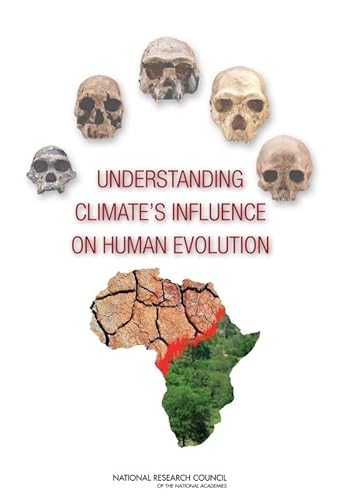
The hominin fossil record documents a history of critical evolutionary events that have ultimately shaped and defined what it means to be human, including the origins of bipedalism; the emergence of our genus Homo; the first use of stone tools; increases in brain size; and the emergence of Homo sapiens, tools, and culture. The Earth's geological record suggests that some evolutionary events were coincident with substantial changes in African and Eurasian climate, raising the possibility that critical junctures in human evolution and behavioral development may have been affected by the environmental characteristics of the areas where hominins evolved. Understanding Climate's Change on Human Evolution explores the opportunities of using scientific research to improve our understanding of how climate may have helped shape our species. Improved climate records for specific regions will be required before it is possible to evaluate how critical resources for hominins, especially water and vegetation, would have been distributed on the landscape during key intervals of hominin history. Existing records contain substantial temporal gaps. The book's initiatives are presented in two major research themes: first, determining the impacts of climate change and climate variability on human evolution and dispersal; and second, integrating climate modeling, environmental records, and biotic responses. Understanding Climate's Change on Human Evolution suggests a new scientific program for international climate and human evolution studies that involve an exploration initiative to locate new fossil sites and to broaden the geographic and temporal sampling of the fossil and archeological record; a comprehensive and integrative scientific drilling program in lakes, lake bed outcrops, and ocean basins surrounding the regions where hominins evolved and a major investment in climate modeling experiments for key time intervals and regions that are critical to understanding human evolution.
"synopsis" may belong to another edition of this title.
Search results for Understanding Climate's Influence on Human Evolution

Stock Image
Understanding Climate's Influence on Human Evolution
Published by
National Academies Press, 2010
ISBN 10: 0309148383
ISBN 13: 9780309148382
Used
Paperback
Seller: ThriftBooks-Atlanta, AUSTELL, GA, U.S.A.
Seller rating 5 out of 5 stars

Paperback. Condition: Very Good. No Jacket. Former library book; May have limited writing in cover pages. Pages are unmarked. ~ ThriftBooks: Read More, Spend Less. Seller Inventory # G0309148383I4N10
Stock Image
Understanding Climate's Influence on Human Evolution
Published by
National Academies Press, 2010
ISBN 10: 0309148383
ISBN 13: 9780309148382
Used
Softcover
Seller: Anybook.com, Lincoln, United Kingdom
Seller rating 5 out of 5 stars
Condition: Fair. This is an ex-library book and may have the usual library/used-book markings inside.This book has soft covers. In fair condition, suitable as a study copy. Please note the Image in this listing is a stock photo and may not match the covers of the actual item,400grams, ISBN:9780309148382. Seller Inventory # 4322694
Buy Used
£ 22
£ 13.60 shipping
Ships from United Kingdom to U.S.A.
Ships from United Kingdom to U.S.A.
Quantity: 1 available
Seller Image
Understanding Climate's Infulence on Human Evolution
Published by
National Academies Press, 2010
ISBN 10: 0309148383
ISBN 13: 9780309148382
Used
Softcover
Seller: GreatBookPrices, Columbia, MD, U.S.A.
Seller rating 5 out of 5 stars
Condition: As New. Unread book in perfect condition. Seller Inventory # 11491197
Stock Image
Understanding Climate's Infulence on Human Evolution
Published by
National Academies Press, 2010
ISBN 10: 0309148383
ISBN 13: 9780309148382
New
Softcover
Seller: GreatBookPrices, Columbia, MD, U.S.A.
Seller rating 5 out of 5 stars
Condition: New. Seller Inventory # 11491197-n
Stock Image
Understanding Climate's Influence on Human Evolution (Paperback)
Published by
National Academies Press, Washington, 2010
ISBN 10: 0309148383
ISBN 13: 9780309148382
New
Paperback
Seller: Grand Eagle Retail, Bensenville, IL, U.S.A.
Seller rating 5 out of 5 stars
Paperback. Condition: new. Paperback. The hominin fossil record documents a history of critical evolutionary events that have ultimately shaped and defined what it means to be human, including the origins of bipedalism; the emergence of our genus Homo; the first use of stone tools; increases in brain size; and the emergence of Homo sapiens, tools, and culture. The Earth's geological record suggests that some evolutionary events were coincident with substantial changes in African and Eurasian climate, raising the possibility that critical junctures in human evolution and behavioral development may have been affected by the environmental characteristics of the areas where hominins evolved. Understanding Climate's Change on Human Evolution explores the opportunities of using scientific research to improve our understanding of how climate may have helped shape our species. Improved climate records for specific regions will be required before it is possible to evaluate how critical resources for hominins, especially water and vegetation, would have been distributed on the landscape during key intervals of hominin history. Existing records contain substantial temporal gaps.The book's initiatives are presented in two major research themes: first, determining the impacts of climate change and climate variability on human evolution and dispersal; and second, integrating climate modeling, environmental records, and biotic responses. Understanding Climate's Change on Human Evolution suggests a new scientific program for international climate and human evolution studies that involve an exploration initiative to locate new fossil sites and to broaden the geographic and temporal sampling of the fossil and archeological record; a comprehensive and integrative scientific drilling program in lakes, lake bed outcrops, and ocean basins surrounding the regions where hominins evolved and a major investment in climate modeling experiments for key time intervals and regions that are critical to understanding human evolution. The hominin fossil record documents a history of critical evolutionary events that have ultimately shaped and defined what it means to be human, including the origins of bipedalism; the emergence of our genus Homo; the first use of stone tools; increases in brain size; and the emergence of Homo sapiens, tools, and culture. The Earth's geological record suggests that some evolutionary events were coincident with substantial changes in African and Eurasian climate, raising the possibility that critical junctures in human evolution and behavioral development may have been affected by the environmental characteristics of the areas where hominins evolved. Understanding Climate's Change on Human Evolution explores the opportunities of using scientific research to improve our understanding of how climate may have helped shape our species. Improved climate records for specific regions will be required before it is possible to evaluate how critical resources for hominins, especially water and vegetation, would have been distributed on the landscape during key intervals of hominin history. Existing records contain substantial temporal gaps. The book's initiatives are presented in two major research themes: first, determining the impacts of climate change and climate variability on human evolution and dispersal; and second, integrating climate modeling, environmental records, and biotic responses. Understanding Climate's Change on Human Evolution suggests a new scientific program for international climate and human evolution studies that involve an exploration initiative to locate new fossil sites and to broaden the geographic and temporal sampling of the fossil and archeological record; a comprehensive and integrative scientific drilling program in lakes, lake bed outcrops, and ocean basins surrounding the regions where hominins evolved and a major investment in clima Shipping may be from multiple locations in the US or from the UK, depending on stock availability. Seller Inventory # 9780309148382
Stock Image
Understanding Climate's Infulence on Human Evolution
Published by
National Academies Press, 2010
ISBN 10: 0309148383
ISBN 13: 9780309148382
Used
Softcover
Seller: GreatBookPricesUK, Woodford Green, United Kingdom
Seller rating 5 out of 5 stars
Condition: As New. Unread book in perfect condition. Seller Inventory # 11491197
Buy Used
£ 44.72
£ 15 shipping
Ships from United Kingdom to U.S.A.
Ships from United Kingdom to U.S.A.
Quantity: 1 available
Stock Image
Understanding Climate's Influence on Human Evolution
Published by
National Academies Press, 2010
ISBN 10: 0309148383
ISBN 13: 9780309148382
New
Softcover
Seller: Kennys Bookshop and Art Galleries Ltd., Galway, GY, Ireland
Seller rating 5 out of 5 stars
Condition: New. Num Pages: 128 pages, black & white illustrations, colour illustrations, maps, figures. BIC Classification: PS. Category: (P) Professional & Vocational. Dimension: 155 x 229 x 14. Weight in Grams: 278. . 2010. Illustrated. paperback. . . . . Seller Inventory # V9780309148382
Stock Image
Understanding Climate's Influence on Human Evolution
Published by
National Academies Press, 2010
ISBN 10: 0309148383
ISBN 13: 9780309148382
New
paperback
Seller: Russell Books, Victoria, BC, Canada
Seller rating 5 out of 5 stars
paperback. Condition: New. Illustrated. Special order direct from the distributor. Seller Inventory # ING9780309148382
Stock Image
Understanding Climate's Infulence on Human Evolution
Seller: Revaluation Books, Exeter, United Kingdom
Seller rating 5 out of 5 stars
Paperback. Condition: Brand New. 115 pages. 8.75x6.00x0.50 inches. In Stock. Seller Inventory # x-0309148383
Buy New
£ 52.30
£ 10 shipping
Ships from United Kingdom to U.S.A.
Ships from United Kingdom to U.S.A.
Quantity: 1 available
Stock Image
Understanding Climate's Infulence on Human Evolution
Published by
National Academies Press, 2010
ISBN 10: 0309148383
ISBN 13: 9780309148382
New
Softcover
Seller: GreatBookPricesUK, Woodford Green, United Kingdom
Seller rating 5 out of 5 stars
Condition: New. Seller Inventory # 11491197-n
Buy New
£ 53.56
£ 15 shipping
Ships from United Kingdom to U.S.A.
Ships from United Kingdom to U.S.A.
Quantity: 1 available