
Items related to Visual Aggression: Images of Martyrdom in Late Medieval...
Synopsis
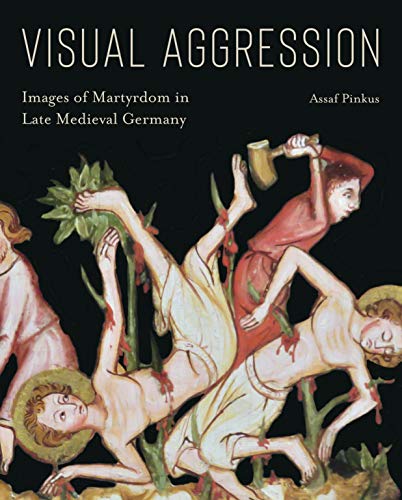
Why does a society seek out images of violence? What can the consumption of violent imagery teach us about the history of violence and the ways in which it has been represented and understood? Assaf Pinkus considers these questions within the context of what he calls galleries of violence, the torment imagery that flourished in German-speaking regions during the fourteenth and fifteenth centuries. Exploring these images and the visceral bodily responses that they produced in their viewers, Pinkus argues that the new visual discourse on violence was a watershed in premodern conceptualizations of selfhood.
Images of martyrdom in late medieval Germany reveal a strikingly brutal parade of passion: severed heads, split skulls, mutilated organs, extracted fingernails and teeth, and myriad other torments. Stripped from their devotional context and presented simply as brutal acts, these portrayals assailed viewers’ bodies and minds so violently that they amounted to what Pinkus describes as “visual aggressions.” Addressing contemporary discourses on violence and cruelty, the aesthetics of violence, and the eroticism of the tortured body, Pinkus ties these galleries of violence to larger cultural concerns about the ethics of violence and bodily integrity in the conceptualization of early modern personhood.
Innovative and convincing, this study heralds a fundamental shift in the scholarly conversation about premodern violence, moving from a focus on the imitatio Christi and the liturgy of punishment to the notion of violence as a moral problem in an ethical system. Scholars of medieval and early modern art, history, and literature will welcome and engage with Pinkus’s research for years to come.
"synopsis" may belong to another edition of this title.
About the Author
Assaf Pinkus is Professor of Art History at Tel Aviv University. He is the author of Sculpting Simulacra in Medieval Germany, 1250–1380 and Patrons and Narratives of the Parler School: The Marian Tympana, 1350–1400. His current studies focus on giants and the temporalities of salvation.
"About this title" may belong to another edition of this title.
Search results for Visual Aggression: Images of Martyrdom in Late Medieval...

Stock Image
VISUAL AGGRESSION Format: HC - HARDCOVER
Seller: INDOO, Avenel, NJ, U.S.A.
Seller rating 5 out of 5 stars

Condition: New. Brand New. Seller Inventory # 9780271083797
Seller Image
Visual Aggression
Published by
Pennsylvania State University Press, US, 2021
ISBN 10: 0271083794
ISBN 13: 9780271083797
New
Hardcover
Seller: Rarewaves.com USA, London, LONDO, United Kingdom
Seller rating 5 out of 5 stars
Hardback. Condition: New. Why does a society seek out images of violence? What can the consumption of violent imagery teach us about the history of violence and the ways in which it has been represented and understood? Assaf Pinkus considers these questions within the context of what he calls galleries of violence, the torment imagery that flourished in German-speaking regions during the fourteenth and fifteenth centuries. Exploring these images and the visceral bodily responses that they produced in their viewers, Pinkus argues that the new visual discourse on violence was a watershed in premodern conceptualizations of selfhood.Images of martyrdom in late medieval Germany reveal a strikingly brutal parade of passion: severed heads, split skulls, mutilated organs, extracted fingernails and teeth, and myriad other torments. Stripped from their devotional context and presented simply as brutal acts, these portrayals assailed viewers' bodies and minds so violently that they amounted to what Pinkus describes as "visual aggressions." Addressing contemporary discourses on violence and cruelty, the aesthetics of violence, and the eroticism of the tortured body, Pinkus ties these galleries of violence to larger cultural concerns about the ethics of violence and bodily integrity in the conceptualization of early modern personhood.Innovative and convincing, this study heralds a fundamental shift in the scholarly conversation about premodern violence, moving from a focus on the imitatio Christi and the liturgy of punishment to the notion of violence as a moral problem in an ethical system. Scholars of medieval and early modern art, history, and literature will welcome and engage with Pinkus's research for years to come. Seller Inventory # LU-9780271083797
Buy New
£ 44.12
Free Shipping
Ships from United Kingdom to U.S.A.
Ships from United Kingdom to U.S.A.
Quantity: 2 available
Stock Image
Visual Aggression (Hardcover)
Published by
Pennsylvania State University Press, University Park, 2021
ISBN 10: 0271083794
ISBN 13: 9780271083797
New
Hardcover
Seller: Grand Eagle Retail, Bensenville, IL, U.S.A.
Seller rating 5 out of 5 stars
Hardcover. Condition: new. Hardcover. Why does a society seek out images of violence? What can the consumption of violent imagery teach us about the history of violence and the ways in which it has been represented and understood? Assaf Pinkus considers these questions within the context of what he calls galleries of violence, the torment imagery that flourished in German-speaking regions during the fourteenth and fifteenth centuries. Exploring these images and the visceral bodily responses that they produced in their viewers, Pinkus argues that the new visual discourse on violence was a watershed in premodern conceptualizations of selfhood.Images of martyrdom in late medieval Germany reveal a strikingly brutal parade of passion: severed heads, split skulls, mutilated organs, extracted fingernails and teeth, and myriad other torments. Stripped from their devotional context and presented simply as brutal acts, these portrayals assailed viewers bodies and minds so violently that they amounted to what Pinkus describes as visual aggressions. Addressing contemporary discourses on violence and cruelty, the aesthetics of violence, and the eroticism of the tortured body, Pinkus ties these galleries of violence to larger cultural concerns about the ethics of violence and bodily integrity in the conceptualization of early modern personhood.Innovative and convincing, this study heralds a fundamental shift in the scholarly conversation about premodern violence, moving from a focus on the imitatio Christi and the liturgy of punishment to the notion of violence as a moral problem in an ethical system. Scholars of medieval and early modern art, history, and literature will welcome and engage with Pinkuss research for years to come. Explores images of torment and martyrdom that appeared in the German-speaking world in the late medieval period, tying them to premodern conceptualizations of individuality and selfhood. Shipping may be from multiple locations in the US or from the UK, depending on stock availability. Seller Inventory # 9780271083797
Stock Image
Visual Aggression: Images of Martyrdom in Late Medieval Germany
Published by
Pennsylvania State University Press, 2021
ISBN 10: 0271083794
ISBN 13: 9780271083797
New
Hardcover
Seller: Kennys Bookshop and Art Galleries Ltd., Galway, GY, Ireland
Seller rating 5 out of 5 stars
Condition: New. 2020. Illustrated. Hardcover. . . . . . Seller Inventory # V9780271083797
Buy New
£ 59.75
£ 8.04 shipping
Ships from Ireland to U.S.A.
Ships from Ireland to U.S.A.
Quantity: Over 20 available
Stock Image
Visual Aggression: Images of Martyrdom in Late Medieval Germany
Published by
Pennsylvania State University Press, 2021
ISBN 10: 0271083794
ISBN 13: 9780271083797
New
Hardcover
Seller: Kennys Bookstore, Olney, MD, U.S.A.
Seller rating 5 out of 5 stars
Condition: New. 2020. Illustrated. Hardcover. . . . . . Books ship from the US and Ireland. Seller Inventory # V9780271083797
Stock Image
Visual Aggression Images of Martyrdom in Late Medieval Germany
Published by
Pennsylvania State Univ Pr, 2020
ISBN 10: 0271083794
ISBN 13: 9780271083797
New
Hardcover
Seller: Revaluation Books, Exeter, United Kingdom
Seller rating 5 out of 5 stars
Hardcover. Condition: Brand New. sew edition. 216 pages. 10.00x8.00x0.85 inches. In Stock. Seller Inventory # x-0271083794
Buy New
£ 66.82
£ 15 shipping
Ships from United Kingdom to U.S.A.
Ships from United Kingdom to U.S.A.
Quantity: 2 available
Seller Image
Visual Aggression
Published by
Pennsylvania State University Press, 2021
ISBN 10: 0271083794
ISBN 13: 9780271083797
New
Hardcover
Seller: moluna, Greven, Germany
Seller rating 5 out of 5 stars
Gebunden. Condition: New. Explores images of torment and martyrdom that appeared in the German-speaking world in the late medieval period, tying them to premodern conceptualizations of individuality and selfhood.Über den Autor Assaf Pinkus. Seller Inventory # 395252454
Buy New
£ 53.51
£ 41.45 shipping
Ships from Germany to U.S.A.
Ships from Germany to U.S.A.
Quantity: Over 20 available
Seller Image
Visual Aggression : Images of Martyrdom in Late Medieval Germany
Published by
Pennsylvania State University Press Jan 2021, 2021
ISBN 10: 0271083794
ISBN 13: 9780271083797
New
Hardcover
Seller: AHA-BUCH GmbH, Einbeck, Germany
Seller rating 5 out of 5 stars
Buch. Condition: Neu. Neuware - Explores images of torment and martyrdom that appeared in the German-speaking world in the late medieval period, tying them to premodern conceptualizations of individuality and selfhood. Seller Inventory # 9780271083797
Seller Image
Visual Aggression
Published by
Pennsylvania State University Press, US, 2021
ISBN 10: 0271083794
ISBN 13: 9780271083797
New
Hardcover
Seller: Rarewaves.com UK, London, United Kingdom
Seller rating 5 out of 5 stars
Hardback. Condition: New. Why does a society seek out images of violence? What can the consumption of violent imagery teach us about the history of violence and the ways in which it has been represented and understood? Assaf Pinkus considers these questions within the context of what he calls galleries of violence, the torment imagery that flourished in German-speaking regions during the fourteenth and fifteenth centuries. Exploring these images and the visceral bodily responses that they produced in their viewers, Pinkus argues that the new visual discourse on violence was a watershed in premodern conceptualizations of selfhood.Images of martyrdom in late medieval Germany reveal a strikingly brutal parade of passion: severed heads, split skulls, mutilated organs, extracted fingernails and teeth, and myriad other torments. Stripped from their devotional context and presented simply as brutal acts, these portrayals assailed viewers' bodies and minds so violently that they amounted to what Pinkus describes as "visual aggressions." Addressing contemporary discourses on violence and cruelty, the aesthetics of violence, and the eroticism of the tortured body, Pinkus ties these galleries of violence to larger cultural concerns about the ethics of violence and bodily integrity in the conceptualization of early modern personhood.Innovative and convincing, this study heralds a fundamental shift in the scholarly conversation about premodern violence, moving from a focus on the imitatio Christi and the liturgy of punishment to the notion of violence as a moral problem in an ethical system. Scholars of medieval and early modern art, history, and literature will welcome and engage with Pinkus's research for years to come. Seller Inventory # LU-9780271083797
Buy New
£ 61.34
£ 65 shipping
Ships from United Kingdom to U.S.A.
Ships from United Kingdom to U.S.A.
Quantity: 2 available