
Items related to The Evolution of the Sensitive Soul – Learning...
The Evolution of the Sensitive Soul – Learning and the Origins of Consciousness (The MIT Press) - Hardcover
Synopsis
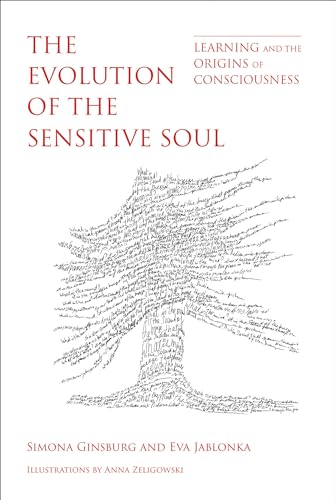
A new theory about the origins of consciousness that finds learning to be the driving force in the evolutionary transition to basic consciousness.
What marked the evolutionary transition from organisms that lacked consciousness to those with consciousness―to minimal subjective experiencing, or, as Aristotle described it, “the sensitive soul”? In this book, Simona Ginsburg and Eva Jablonka propose a new theory about the origin of consciousness that finds learning to be the driving force in the transition to basic consciousness. Using a methodology similar to that used by scientists when they identified the transition from non-life to life, Ginsburg and Jablonka suggest a set of criteria, identify a marker for the transition to minimal consciousness, and explore the far-reaching biological, psychological, and philosophical implications.
After presenting the historical, neurobiological, and philosophical foundations of their analysis, Ginsburg and Jablonka propose that the evolutionary marker of basic or minimal consciousness is a complex form of associative learning, which they term unlimited associative learning (UAL). UAL enables an organism to ascribe motivational value to a novel, compound, non-reflex-inducing stimulus or action, and use it as the basis for future learning. Associative learning, Ginsburg and Jablonka argue, drove the Cambrian explosion and its massive diversification of organisms. Finally, Ginsburg and Jablonka propose symbolic language as a similar type of marker for the evolutionary transition to human rationality―to Aristotle's “rational soul.”
"synopsis" may belong to another edition of this title.
About the Authors
Simona Ginsburg is Associate Professor in the Department of Natural Sciences, retired from the Open University of Israel.
Eva Jablonka is Professor at Tel-Aviv University. She is the coauthor of Evolution in Four Dimensions: Genetic, Epigenetic, Behavioral, and Symbolic Variation in the History of Life and the coeditor of Transformations of Lamarckism: From Subtle Fluids to Molecular Biology, both published by the MIT Press.
"About this title" may belong to another edition of this title.
Search results for The Evolution of the Sensitive Soul – Learning...

Stock Image
The Evolution of the Sensitive Soul Learning and the Origins of Consciousness
Seller: Tacoma Book Center, Tacoma, WA, U.S.A.
Seller rating 4 out of 5 stars

Hardcover. Condition: Near Fine. Dust Jacket Condition: Near Fine. First Printing. In dust jacket; Collectible - Very good condition. Hardback. Original 2019 edition. First Printing as signified by descending number line on the copyright page going down to the number 1. Book is in Near Fine condition, a tight bright attractive copy with no markings to the book. Dustjacket is in Near Fine condition, with no creasing and no chipping, Tight bright attractive copy with no markings to the book. ; Mit Press; 6.44 X 1.45 X 9.31 inches; 640 pages. Seller Inventory # 229299
Stock Image
The Evolution of the Sensitive Soul: Learning and the Origins of Consciousness
Seller: World of Books (was SecondSale), Montgomery, IL, U.S.A.
Seller rating 5 out of 5 stars

Hardback. Condition: Very Good. A new theory about the origins of consciousness that finds learning to be the driving force in the evolutionary transition to basic consciousness. What marked the evolutionary transition from organisms that lacked consciousness to those with consciousness-to minimal subjective experiencing, or, as Aristotle described it, "the sensitive soul"? In this book, Simona Ginsburg and Eva Jablonka propose a new theory about the origin of consciousness that finds learning to be the driving force in the transition to basic consciousness. Using a methodology similar to that used by scientists when they identified the transition from non-life to life, Ginsburg and Jablonka suggest a set of criteria, identify a marker for the transition to minimal consciousness, and explore the far-reaching biological, psychological, and philosophical implications. After presenting the historical, neurobiological, and philosophical foundations of their analysis, Ginsburg and Jablonka propose that the evolutionary marker of basic or minimal consciousness is a complex form of associative learning, which they term unlimited associative learning (UAL). UAL enables an organism to ascribe motivational value to a novel, compound, non-reflex-inducing stimulus or action, and use it as the basis for future learning. Associative learning, Ginsburg and Jablonka argue, drove the Cambrian explosion and its massive diversification of organisms. Finally, Ginsburg and Jablonka propose symbolic language as a similar type of marker for the evolutionary transition to human rationality-to Aristotle's "rational soul.". Seller Inventory # CIN0262039303VG
Seller Image
The Evolution of the Sensitive Soul: Learning and the Origins of Consciousness (Mit Press)
Seller: Goodbooks Company, Springdale, AR, U.S.A.
Seller rating 5 out of 5 stars
Condition: good. Book has corner dings. Seller Inventory # GBV.0262039303.G
Stock Image
The Evolution of the Sensitive Soul: Learning and the Origins of Consciousness
Seller: World of Books Inc, Montgomery, IL, U.S.A.
Seller rating 4 out of 5 stars
Hardback. Condition: Very Good. A new theory about the origins of consciousness that finds learning to be the driving force in the evolutionary transition to basic consciousness. What marked the evolutionary transition from organisms that lacked consciousness to those with consciousness-to minimal subjective experiencing, or, as Aristotle described it, "the sensitive soul"? In this book, Simona Ginsburg and Eva Jablonka propose a new theory about the origin of consciousness that finds learning to be the driving force in the transition to basic consciousness. Using a methodology similar to that used by scientists when they identified the transition from non-life to life, Ginsburg and Jablonka suggest a set of criteria, identify a marker for the transition to minimal consciousness, and explore the far-reaching biological, psychological, and philosophical implications. After presenting the historical, neurobiological, and philosophical foundations of their analysis, Ginsburg and Jablonka propose that the evolutionary marker of basic or minimal consciousness is a complex form of associative learning, which they term unlimited associative learning (UAL). UAL enables an organism to ascribe motivational value to a novel, compound, non-reflex-inducing stimulus or action, and use it as the basis for future learning. Associative learning, Ginsburg and Jablonka argue, drove the Cambrian explosion and its massive diversification of organisms. Finally, Ginsburg and Jablonka propose symbolic language as a similar type of marker for the evolutionary transition to human rationality-to Aristotle's "rational soul.". Seller Inventory # CIN0262039303VG
Seller Image
The Evolution of the Sensitive Soul: Learning and the Origins of Consciousness (Mit Press)
Seller: Greenworld Books, Arlington, TX, U.S.A.
Seller rating 5 out of 5 stars
Condition: very_good. Fast Free Shipping â" Very Good condition book with a firm cover and clean pages. Shows normal use and some light wear or limited notes markings. A solid, nice copy to enjoy. Seller Inventory # GWV.0262039303.VG
Seller Image
The Evolution of the Sensitive Soul
Seller: Blue Ridge Archives, Palmyra, VA, U.S.A.
Seller rating 5 out of 5 stars
Hardcover. Condition: Near Fine. Condition Notes: Text free of markings. Dust jacket included. Seller Inventory # 43
Seller Image
Evolution of the Sensitive Soul : Learning and the Origins of Consciousness
Seller: GreatBookPrices, Columbia, MD, U.S.A.
Seller rating 5 out of 5 stars
Condition: New. Seller Inventory # 33956351-n
Stock Image
Evolution of the Sensitive Soul : Learning and the Origins of Consciousness
Seller: GreatBookPrices, Columbia, MD, U.S.A.
Seller rating 5 out of 5 stars
Condition: As New. Unread book in perfect condition. Seller Inventory # 33956351
Stock Image
TheEvolutionoftheSensitiveSoul Format: ClothOverBoards
Seller: INDOO, Avenel, NJ, U.S.A.
Seller rating 5 out of 5 stars
Condition: New. Seller Inventory # 9780262039307
Stock Image
The Evolution of the Sensitive Soul (Hardcover)
Published by
MIT Press Ltd, Cambridge, Mass., 2019
ISBN 10: 0262039303
ISBN 13: 9780262039307
New
Hardcover
Seller: Grand Eagle Retail, Bensenville, IL, U.S.A.
Seller rating 5 out of 5 stars
Hardcover. Condition: new. Hardcover. A new theory about the origins of consciousness that finds learning to be the driving force in the evolutionary transition to basic consciousness.What marked the evolutionary transition from organisms that lacked consciousness to those with consciousness-to minimal subjective experiencing, or, as Aristotle described it, "the sensitive soul"? In this book, Simona Ginsburg and Eva Jablonka propose a new theory about the origin of consciousness that finds learning to be the driving force in the transition to basic consciousness. Using a methodology similar to that used by scientists when they identified the transition from non-life to life, Ginsburg and Jablonka suggest a set of criteria, identify a marker for the transition to minimal consciousness, and explore the far-reaching biological, psychological, and philosophical implications.After presenting the historical, neurobiological, and philosophical foundations of their analysis, Ginsburg and Jablonka propose that the evolutionary marker of basic or minimal consciousness is a complex form of associative learning, which they term unlimited associative learning (UAL). UAL enables an organism to ascribe motivational value to a novel, compound, non-reflex-inducing stimulus or action, and use it as the basis for future learning. Associative learning, Ginsburg and Jablonka argue, drove the Cambrian explosion and its massive diversification of organisms. Finally, Ginsburg and Jablonka propose symbolic language as a similar type of marker for the evolutionary transition to human rationality-to Aristotle's "rational soul." A new theory about the origins of consciousness that finds learning to be the driving force in the evolutionary transition to basic consciousness. Shipping may be from multiple locations in the US or from the UK, depending on stock availability. Seller Inventory # 9780262039307