
Items related to Poor Discipline (Studies in Crime and Justice)
Synopsis
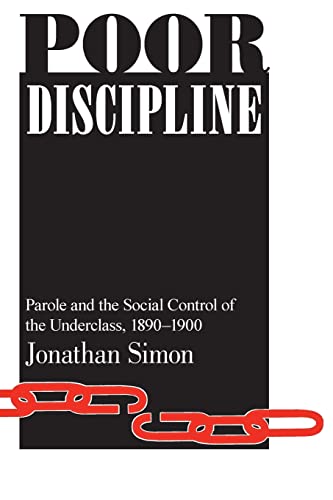
This powerful book reveals how modern strategies of punishment—and, by all accounts, their failure—relate to political and economic transformations in society at large. Jonathan Simon uses the practice of parole in California as a window to the changing historical understanding of what a corrections system does and how it works. Because California is representative of policies and practices on a national level, Simon explicitly presents his findings within a national framework.
When parole first emerged as a corrections strategy in the nineteenth century, work was supposed to keep ex-prisoners out of trouble. This strategy foundered in the changing economy after World War II. What followed was a rehabilitative strategy, where the clinical expertise of the parole agent replaced the discipline of the industrial labor market in defining and controlling criminal deviance. Today, Simon argues, as drastic changes in the economy have virtually locked out an entire class, rehabilitation has given way to mere management. The effect is isolation of the offender, either in jail or in an underclass community; the result is an escalating cycle of imprisonment, destabilization, and insecurity.
No significant improvement in the current penal crisis can be expected until we better understand the relationship between punishment and social order, a relationship which this book explores in theoretical, historical, and practical detail.
"synopsis" may belong to another edition of this title.
About the Author
Jonathan Simon is associate professor of law at the University of Miami.
"About this title" may belong to another edition of this title.
Search results for Poor Discipline (Studies in Crime and Justice)

Stock Image
Poor Discipline
Published by
The University of Chicago Press, 1997
ISBN 10: 0226758575
ISBN 13: 9780226758572
Used
Paperback
Seller: World of Books (was SecondSale), Montgomery, IL, U.S.A.
Seller rating 5 out of 5 stars

Paperback. Condition: Good. This book reveals how modern strategies of punishment - and, by all accounts, their failure - relate to political and economic transformations in society at large. Jonathan Simon uses the practice of parole in California as a window to the changing historical understanding of what a corrections system does and how it works. When parole first emerged as a corrections strategy in the 19th century, work was supposed to keep ex-prisoners out of trouble. What followed was a rehabilitative strategy, where the clinical expertise of the parole agent replaced the discipline of the industrial labour market in controlling criminal deviance. Today, Simon argues, as the economy has virtually locked out an entire class, rehabilitation has given way to mere management. The result is an escalating cycle of imprisonment, destabilization, and insecurity. No improvement in the current penal crisis can be expected until we better understand the relationship between punishment and social order, which this book explores in theoretical, historical, and practical detail. Seller Inventory # CIN0226758575G
Stock Image
Poor Discipline
Published by
The University of Chicago Press, 1997
ISBN 10: 0226758575
ISBN 13: 9780226758572
Used
Paperback
Seller: World of Books Inc, Montgomery, IL, U.S.A.
Seller rating 4 out of 5 stars

Paperback. Condition: Good. This book reveals how modern strategies of punishment - and, by all accounts, their failure - relate to political and economic transformations in society at large. Jonathan Simon uses the practice of parole in California as a window to the changing historical understanding of what a corrections system does and how it works. When parole first emerged as a corrections strategy in the 19th century, work was supposed to keep ex-prisoners out of trouble. What followed was a rehabilitative strategy, where the clinical expertise of the parole agent replaced the discipline of the industrial labour market in controlling criminal deviance. Today, Simon argues, as the economy has virtually locked out an entire class, rehabilitation has given way to mere management. The result is an escalating cycle of imprisonment, destabilization, and insecurity. No improvement in the current penal crisis can be expected until we better understand the relationship between punishment and social order, which this book explores in theoretical, historical, and practical detail. Seller Inventory # CIN0226758575G
Seller Image
Poor Discipline (Studies in Crime and Justice)
Published by
University of Chicago Press, 1997
ISBN 10: 0226758575
ISBN 13: 9780226758572
Used
Softcover
Seller: Windflower Bookstore, Rockford, IL, U.S.A.
Seller rating 4 out of 5 stars
Condition: like_new. Seller Inventory # WFBV.0226758575.LN
Stock Image
Poor Discipline
Published by
University of Chicago Press, 1997
ISBN 10: 0226758575
ISBN 13: 9780226758572
Used
Paperback
Seller: ThriftBooks-Dallas, Dallas, TX, U.S.A.
Seller rating 5 out of 5 stars
Paperback. Condition: Fair. No Jacket. Readable copy. Pages may have considerable notes/highlighting. ~ ThriftBooks: Read More, Spend Less. Seller Inventory # G0226758575I5N00
Stock Image
Poor Discipline
Published by
University of Chicago Press, 1997
ISBN 10: 0226758575
ISBN 13: 9780226758572
Used
Paperback
Seller: ThriftBooks-Dallas, Dallas, TX, U.S.A.
Seller rating 5 out of 5 stars
Paperback. Condition: Good. No Jacket. Pages can have notes/highlighting. Spine may show signs of wear. ~ ThriftBooks: Read More, Spend Less. Seller Inventory # G0226758575I3N00
Stock Image
Poor Discipline (Studies in Crime and Justice)
Published by
University of Chicago Press, 1997
ISBN 10: 0226758575
ISBN 13: 9780226758572
Used
paperback
First Edition
Seller: The Maryland Book Bank, Baltimore, MD, U.S.A.
Seller rating 5 out of 5 stars
paperback. Condition: Good. 1st Edition. Corners are bent. Used - Good. Seller Inventory # 6-W-1-0352
Stock Image
Poor Discipline
Published by
University of Chicago Press, 1997
ISBN 10: 0226758575
ISBN 13: 9780226758572
Used
Softcover
Seller: Better World Books, Mishawaka, IN, U.S.A.
Seller rating 5 out of 5 stars
Condition: Good. Pages intact with minimal writing/highlighting. The binding may be loose and creased. Dust jackets/supplements are not included. Stock photo provided. Product includes identifying sticker. Better World Books: Buy Books. Do Good. Seller Inventory # 4945607-6
Stock Image
Poor Discipline (Studies in Crime and Justice)
Published by
University of Chicago Press, 1997
ISBN 10: 0226758575
ISBN 13: 9780226758572
Used
Paperback
Seller: Textbook Bookie, Little Rock, AR, U.S.A.
Seller rating 5 out of 5 stars
Paperback. Condition: Good. Book in Good condition. Seller Inventory # 9780226758572-good
Stock Image
Poor Discipline
Published by
The University of Chicago Press, 1997
ISBN 10: 0226758575
ISBN 13: 9780226758572
Used
Paperback
Seller: World of Books (was SecondSale), Montgomery, IL, U.S.A.
Seller rating 5 out of 5 stars
Paperback. Condition: Very Good. This book reveals how modern strategies of punishment - and, by all accounts, their failure - relate to political and economic transformations in society at large. Jonathan Simon uses the practice of parole in California as a window to the changing historical understanding of what a corrections system does and how it works. When parole first emerged as a corrections strategy in the 19th century, work was supposed to keep ex-prisoners out of trouble. What followed was a rehabilitative strategy, where the clinical expertise of the parole agent replaced the discipline of the industrial labour market in controlling criminal deviance. Today, Simon argues, as the economy has virtually locked out an entire class, rehabilitation has given way to mere management. The result is an escalating cycle of imprisonment, destabilization, and insecurity. No improvement in the current penal crisis can be expected until we better understand the relationship between punishment and social order, which this book explores in theoretical, historical, and practical detail. Seller Inventory # 00107979278
Stock Image
Poor Discipline
Published by
The University of Chicago Press, 1997
ISBN 10: 0226758575
ISBN 13: 9780226758572
Used
Paperback
Seller: World of Books Inc, Montgomery, IL, U.S.A.
Seller rating 4 out of 5 stars
Paperback. Condition: Very Good. This book reveals how modern strategies of punishment - and, by all accounts, their failure - relate to political and economic transformations in society at large. Jonathan Simon uses the practice of parole in California as a window to the changing historical understanding of what a corrections system does and how it works. When parole first emerged as a corrections strategy in the 19th century, work was supposed to keep ex-prisoners out of trouble. What followed was a rehabilitative strategy, where the clinical expertise of the parole agent replaced the discipline of the industrial labour market in controlling criminal deviance. Today, Simon argues, as the economy has virtually locked out an entire class, rehabilitation has given way to mere management. The result is an escalating cycle of imprisonment, destabilization, and insecurity. No improvement in the current penal crisis can be expected until we better understand the relationship between punishment and social order, which this book explores in theoretical, historical, and practical detail. Seller Inventory # CIN0226758575VG