
Items related to Picturing Ourselves: Photography and Autobiography
Synopsis
Photography has transformed the way we picture ourselves. Although photographs seem to "prove" our existence at a given point in time, they also demonstrate the impossibility of framing our multiple and fragmented selves. As Linda Haverty Rugg convincingly shows, photography's double take on self-image mirrors the concerns of autobiographers, who see the self as simultaneously divided (in observing/being) and unified by the autobiographical act.
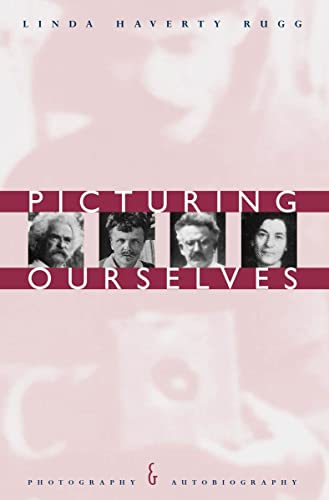
Rugg tracks photography's impact on the formation of self-image through the study of four literary autobiographers concerned with the transformative power of photography. Obsessed with self-image, Mark Twain and August Strindberg both attempted (unsuccessfully) to integrate photographs into their autobiographies. While Twain encouraged photographers, he was wary of fakery and kept a fierce watch on the distribution of his photographic image. Strindberg, believing that photographs had occult power, preferred to photograph himself.
Because of their experiences under National Socialism, Walter Benjamin and Christa Wolf feared the dangerously objectifying power of photographs and omitted them from their autobiographical writings. Yet Benjamin used them in his photographic conception of history, which had its testing ground in his often-ignored Berliner Kindheit um 1900. And Christa Wolf's narrator in Patterns of Childhood attempts to reclaim her childhood from the Nazis by reconstructing mental images of lost family photographs.
Confronted with multiple and conflicting images of themselves, all four of these writers are torn between the knowledge that texts, photographs, and indeed selves are haunted by undecidability and the desire for the returned glance of a single self.
"synopsis" may belong to another edition of this title.
About the Author
Linda Haverty Rugg is associate professor of German and Scandinavian at Ohio State University.
From the Back Cover
As Linda Haverty Rugg persuasively shows, photography's double take on self-image mirrors the concerns of autobiographers, who see the self as simultaneously divided (in observing/being) and unified by the autobiographical act. Rugg tracks photography's impact on the formation of self-image through the study of four literary autobiographers. Obsessed with self-image, Mark Twain and August Strindberg attempted (unsuccessfully) to integrate photographs into their autobiographies. While Twain encouraged photographers, he was wary of potential fakery. Strindberg, believing that photographs had occult power, preferred to photograph himself. Because of their experiences under National Socialism, Walter Benjamin and Christa Wolf feared the dangerously objectifying power of photographs and omitted them from their autobiographical writings. Yet Benjamin used them in his photographic conception of history, and Wolf's narrator in Patterns of Childhood tries to reclaim her childhood from the Nazis by reconstructing mental images of lost family photographs. Confronted with multiple and conflicting images of themselves, all four of these writers are torn between the knowledge that texts, photographs, and indeed selves are haunted by undecidability and the desire for the returned glance of a single self.
"About this title" may belong to another edition of this title.
Search results for Picturing Ourselves: Photography and Autobiography

Stock Image
Picturing Ourselves: Photography and Autobiography
Published by
University of Chicago Press, 1997
ISBN 10: 0226731472
ISBN 13: 9780226731476
Used
Softcover
Seller: World of Books (was SecondSale), Montgomery, IL, U.S.A.
Seller rating 5 out of 5 stars

Condition: Very Good. Item in very good condition! Textbooks may not include supplemental items i.e. CDs, access codes etc. Seller Inventory # 00097052945
Stock Image
Picturing Ourselves: Photography and Autobiography
Published by
University of Chicago Press, 1997
ISBN 10: 0226731472
ISBN 13: 9780226731476
Used
Paperback
Seller: ThriftBooks-Dallas, Dallas, TX, U.S.A.
Seller rating 5 out of 5 stars
Paperback. Condition: As New. No Jacket. Pages are clean and are not marred by notes or folds of any kind. ~ ThriftBooks: Read More, Spend Less. Seller Inventory # G0226731472I2N00
Stock Image
Picturing Ourselves : Photography and Autobiography
Published by
University of Chicago Press, 1997
ISBN 10: 0226731472
ISBN 13: 9780226731476
Used
Softcover
Seller: Better World Books, Mishawaka, IN, U.S.A.
Seller rating 5 out of 5 stars
Condition: Very Good. New Ed. Pages intact with possible writing/highlighting. Binding strong with minor wear. Dust jackets/supplements may not be included. Stock photo provided. Product includes identifying sticker. Better World Books: Buy Books. Do Good. Seller Inventory # 4090247-6
Stock Image
Picturing Ourselves : Photography and Autobiography
Published by
University of Chicago Press, 1997
ISBN 10: 0226731472
ISBN 13: 9780226731476
Used
Softcover
Seller: Better World Books, Mishawaka, IN, U.S.A.
Seller rating 5 out of 5 stars
Condition: Very Good. New Ed. Former library copy. Pages intact with possible writing/highlighting. Binding strong with minor wear. Dust jackets/supplements may not be included. Includes library markings. Stock photo provided. Product includes identifying sticker. Better World Books: Buy Books. Do Good. Seller Inventory # GRP89851431
Stock Image
Picturing Ourselves: Photography and Autobiography
Published by
University of Chicago Press, 1997
ISBN 10: 0226731472
ISBN 13: 9780226731476
Used
Paperback
Seller: Midtown Scholar Bookstore, Harrisburg, PA, U.S.A.
Seller rating 5 out of 5 stars
Paperback. Condition: Good. Good paperback, bumped/creased with shelfwear; may have previous owner's name inside. Standard-sized. Seller Inventory # mon0000289356
Stock Image
Picturing Ourselves: Photography and Autobiography
Published by
University of Chicago Press, 1997
ISBN 10: 0226731472
ISBN 13: 9780226731476
Used
Paperback
Seller: WorldofBooks, Goring-By-Sea, WS, United Kingdom
Seller rating 5 out of 5 stars
Paperback. Condition: Very Good. The book has been read, but is in excellent condition. Pages are intact and not marred by notes or highlighting. The spine remains undamaged. Seller Inventory # GOR005429711
Buy Used
£ 2.80
£ 5.60 shipping
Ships from United Kingdom to U.S.A.
Ships from United Kingdom to U.S.A.
Quantity: 3 available
Stock Image
Picturing Ourselves : Photography and Autobiography
Published by
University of Chicago Press, 1997
ISBN 10: 0226731472
ISBN 13: 9780226731476
Used
Softcover
Seller: Better World Books Ltd, Dunfermline, United Kingdom
Seller rating 5 out of 5 stars
Condition: Good. New Ed. Former library copy. Pages intact with minimal writing/highlighting. The binding may be loose and creased. Dust jackets/supplements are not included. Includes library markings. Stock photo provided. Product includes identifying sticker. Better World Books: Buy Books. Do Good. Seller Inventory # GRP81835516
Buy Used
£ 4.81
£ 5 shipping
Ships from United Kingdom to U.S.A.
Ships from United Kingdom to U.S.A.
Quantity: 1 available
Stock Image
Picturing Ourselves : Photography and Autobiography
Published by
University of Chicago Press, 1997
ISBN 10: 0226731472
ISBN 13: 9780226731476
Used
Softcover
Seller: Better World Books Ltd, Dunfermline, United Kingdom
Seller rating 5 out of 5 stars
Condition: Very Good. New Ed. Former library copy. Pages intact with possible writing/highlighting. Binding strong with minor wear. Dust jackets/supplements may not be included. Includes library markings. Stock photo provided. Product includes identifying sticker. Better World Books: Buy Books. Do Good. Seller Inventory # GRP89851431
Buy Used
£ 4.81
£ 5 shipping
Ships from United Kingdom to U.S.A.
Ships from United Kingdom to U.S.A.
Quantity: 1 available
Stock Image
Picturing Ourselves: Photography and Autobiography
Published by
University of Chicago Press, 1997
ISBN 10: 0226731472
ISBN 13: 9780226731476
Used
paperback
Seller: Taos Books, Santa Fe, NM, U.S.A.
Seller rating 5 out of 5 stars
paperback. Condition: Very Good. 2nd. No creases no slant, tight clean unmarked, small stain bottom edge of text block, Very Good. Seller Inventory # 37583
Stock Image
Picturing Ourselves: Photography and Autobiography
Published by
Univ of Chicago Pr, Chicago, Illinois, U.S.A., 1997
ISBN 10: 0226731472
ISBN 13: 9780226731476
Used
Paperback
Seller: Murphy-Brookfield Books, Iowa City SE, IA, U.S.A.
Seller rating 4 out of 5 stars

Paperback. Condition: Very Good. clean, unmarked copy. owner name front endpaper. Seller Inventory # 354529