
Items related to Last Lake (Phoenix Poets)
Synopsis
From Ritual
A slow parade of old west enthusiasts,
camp song and hymn, came in along the winding
way where rural declined to suburban, slow
riders and wagoners passing a cow staked
to graze, some penned cattle looking vacantly
up—not in vacant lots the ancient icons
of wealth they had been in odes, prayers and epics,
in sacrifices and customs of bride-price
or dowry. (It’s good people no longer make
blood sacrifices, at gas stations and stores,
for example, and in the crunching gravel
parking lots of small churches—oh but we do.)
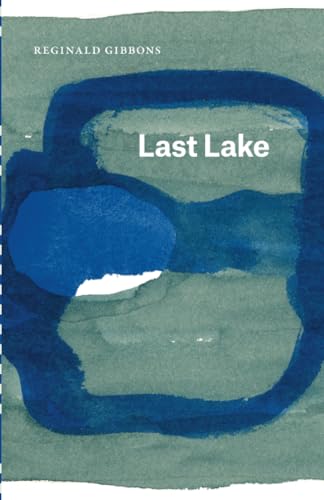
“The evening forgives the alleyway,” Reginald Gibbons writes in his tenth book of poems—but such startling simplicities are overwhelmed in us by the everyday and the epochal. Across the great range of Gibbons’s emblematic, vividly presented scenes, his language looks hard at and into experience and feeling. Words themselves have ideas, and have eyes—inwardly looking down through their own meanings, as the poet considers a lake in the Canadian north, a Chicago neighborhood, a horse caravan in Texas, a church choir, a bookshelf, or an archeological dig on the steppes near the Volga River. The last lake is the place of both awe and elegy.
"synopsis" may belong to another edition of this title.
About the Author
Reginald Gibbons is a Frances Hooper Professor of Arts and Humanities at Northwestern University. His poetry collections include National Book Award finalist Creatures of a Day and Slow Trains Overhead: Chicago Poems and Stories, the latter also published by the University of Chicago Press.
Excerpt. © Reprinted by permission. All rights reserved.
Last Lake
By Reginald GibbonsThe University of Chicago Press
Copyright © 2016 The University of Chicago
All rights reserved.
ISBN: 978-0-226-41745-5All rights reserved.
Contents
Acknowledgments,
ONE,
A Neighborhood in Chicago,
Memorial Day,
Belief,
Last Lake,
Canasta,
On Self and Soul,
Ritual,
A Bookshelf,
Divergence,
A Veteran,
TWO,
Dark Honey,
Note,
CHAPTER 1
A Neighborhood in Chicago
from a line of Gwendolyn Brooks
In its last halogen hours,
the evening forgives the alley-
ways ... wherein,
Every June morning, again,
here are new leaves, viridian.
They'll come to,
Tremble toward the brightening.
Instruments without musicians,
they will play
A silence, soothing last night's
bruised pianos and exhausted
horns. For your
instruction, each meager leaf,
shaped like, more intricate than, a
violin,
accompanies rats and moths
into the dawn, and a cougar,
hiding, with
wounded eye, a torn paw: in
halogen night, no escape — but
there's luck, grace.
Memorial Day
after Walt Whitman
A last formality is
running late, as a life can't,
this hot day. The final
ethereal glow of
the sun seems to come up from
underfoot in this parkland
of polysyllabic death.
These deep graves, two this time,
neatly cut into the earth,
await the arrivals,
and two adjacent heaps of
damp fertile glebe are half
blanketed by reticent
dark tarpaulins. After
the full moon's first moments of
horizon-magnified
fact and risen largesse, it
has contracted as our
heaven has passed it by and now
it floats above the crowns
of the inky trees and
well beyond bare roofs. It has
always been an entity
born dead — not a phantom, as
must be this son, a muddy
part of whom soared from cratered
waste lands far away before
landing here, and also
this veteran father,
whose heart staggered into
an ER and failed after
he heard what circumstance
had done to his one boy.
No horses — hearses, the first
two cars. A corps of six men —
they bear the heavy coffined
corpse of the father toward his
very small opening in
the planet; and six more
envoys of duty, with
much-practiced attentiveness,
slow-step the light son, an
imperfect cadaver with
handles, to his own last place.
White gloves lift up the draped
famed cloth, super-striped and
starry, from the younger
casket, fold it just so —
hands with hands over hands
in ritual honor,
a ceremony neither
of mystical creed nor
of doubter's midnights — then
they advance it to the one
who remains. She's looking
away from her burials,
down at the blades of moon grass.
She feels no great gut blows
from startled convulsive
big drums that shake the spirits
of mourners, nor any
whirring of equally
perilous small drums that
might reduce the silence.
The son is submitted as
lifeless organism to
dirt; the father's remains
descend into his pit
alongside, likewise on
tightly held ropes men slowly
let slip. (In foremost ranks of
a final unbecoming
these two fell alike.) The
ropes snake back up into
what's left of natural light —
remainder of the ancient
calculus of day and night.
From a boom box ten paces
away, the familiar
bugled notes say that the
journey of these remains
is done. Even if no grief
shadows the bugler, bugles
do sound it, word it — that
unacceptable sentence
of slow notes.
Distant, on
overtime, respectful, yet
much too near, a stranger
waits to start up a backhoe.
On such occasions, after
courage of soldiers or
folly of command or cold
wrong purposes among
patriarchs, lords, kings, and freed
madness in red valleys,
mountains, cities, villages,
in schools, shrines, sheds, beds, mud-brick
hearts, we have offered up our
mortally wounded, un-
comprehending remembrance.
We look down or away
and notice the impassive
grass under our bloody weight.
Belief
The lovely Director who
led us with her feathered hands
as she mouthed
the words we choir singers sang
to her and the families in
the pews — the
Director: a forbidding
figure, but forbidden, too,
who aroused
as she worshipped (and what she
aroused even in our own
hymnals was —
while bringing in the sheaves — damned
like drinking, chastised from the
high pulpit).
(Caesar's coin is still struck with
a dull clang: a new ruler's
greedy nose,
and preachers too need payment.
Some say wealth can prove the Word.)
Collection
bowls, wood, like dull shuttles down
slow pews wove the worshippers
together
as the choir hushed for three whole
verses and our organist,
reckless as
an angel, played her own ex-
uberant variations
on our self-
punishing themes. And with her
arms held up, the Director,
eyes big, brows
raised — she too, under Sunday
clothes, in her worshipful and
as far as
I could see voluptuous
Christian body — she had some
undaunted
gifted innocence in her
physical being, nothing
sordid, as
Paul said, and yet "Listen to
me!": commandments and righteous
assertions,
bringing in those sheaves, condemned
all that was against holy
laws, against
the holy Judge. Body was
anathematized in the
body of
worship. "Just as I am," just
as I will be, I hear shrill
weak voices,
the plaintive congregation,
where, joined by no one, I don't
believe it.
On Thursdays our practice at
sweeter singing, and Sundays
the brimstone,
the self-abasing desire
to be unworthy, and the
gratitude
for our misery and fear.
Or at least uneasiness.
Outside, sin
in hot streets, ditches, hot shade
or cold rain; and moccasins,
copperheads,
rattlers, once a coral snake,
even Satanish-seeming
hog-nose snakes
we had caught, when younger, to
scare others at school, or pet
blood-squirting
baby horny toads — I'd tie
one by a length of mother's
thread to a
shirt button and this tiny
wide lizard'd stand on my
shoulder all
morning, a mascot from what
they said was hell if it was
related
to snakes ... but no threat of blood
from its eyes, it asked for just
a moment's
taming (you stroked its belly) —
all those denizens of the
pagan earth,
so much just what they are, and
easier on it than we
because earth
was theirs, not ours, even then,
"when the dew was still on the"
phrases. And
the voice we heard, word by word,
and literal, rose by rose,
to fit us
for God's heaven, said "Believe!"
(It's here, it's all still with me!)
Did all the
fathers kill snakes? Or was cold
Satan turned into a snake
(like Cadmus
and beautiful Harmony)
so that we'd fear, hate, kill him?
(Cadmus and
gorgeous Harmony were not,
except to Dionysos
himself, true
evil.) And our tired, red-haired
Director, twelve years older
than I, the
tenor boy — or who was that
in the back row who had learned
that Paul spoke
Greek and wrote that it's better
to marry than to burn and
ache and burn? ...
The Director! While her hands
were hovering in the breath
of singers,
her body, too, what a friend
we had in her, her music-
mastering
impatience. She tightened us
into the sound of us as
a choir — fire
in our shrill harmonies, we
gave her our will and shall, but
we never
came up to the morals of
the music — great choral works
or dreck. We
half wrecked half of it, achieved
scant holy worship but did
audition
for it honestly. I was
burning then, mere creature, not
wanting to be saved from fire —
not her fire.
Last Lake
That cold time before, she and I could
still drink the clear river water —
reaching a tin cup over the side of the canoe.
The next year, where we put in,
people were talking of giardia,
and two days out, we paddled by a whole moose carcass
left in the water the previous autumn to rot —
hunters from elsewhere had taken only the head.
Straining to beat the dark under a low sun still hot,
we were moving upstream on
the hushed waterway,
we turned into an unnamed tributary
then into another, wishing
we had learned in some village a thousand years
before our birth a song
for our paddle strokes that we could have
sung back softly to the rippling current
that was whispering to us —
she in the bow, me in the stern,
a week's supplies between us.
To an osprey we were more and more
inconvenient as we approached flashing
reflections from our paddles.
We wished not to annoy it but needed to go on.
It leapt up from a bare eighty-foot pine top
and flew upriver to another high branch
that sagged under it, and it folded its great
black-wristed wings again
and again stared sharply down its late day,
watching for a fish. But again we ruined
its chances, apologizing as we paddled toward it.
Forced to three such stages of retreat,
it up and winged over us
away to another river it knew.
All of us have never stopped building and becoming
the things that no osprey can get over.
In the thick woods on the up-sloping bank,
a steep narrow beaver slide — a young bear coming down it
scoots into sight on its behind
then sees us so near that it thrashes the underbrush
as it spins around and escapes
back up the bank fast.
In four days we made three portages.
All that heavy human stuff that we carried —
loads of it and the cooler
and then the empty heavy canoe.
Drank something very cold after each time,
having started with a block of ice so big
only one beer, one soda, and the bacon would fit beside it.
We arrived at a wide reach of tall wild rice
standing two feet high above the water
with a few grains at the top of each stalk,
rich wildflower green,
and this water is so slow
and shallow it looks still to us — a side-pond filled
with the flourishing rice. Yet there's
one opening, five or six inches wide, among the crowding stems,
and she and I turn into it and see that this too is a tributary,
and we head up what will be, wherever it leads,
our last leg of the day,
a meandering water path through the green,
leading toward wherever this tiniest of currents comes from.
We keep the nose of the canoe in
that narrow snaking channel
and in twenty minutes of slow quiet strokes, pushing down as
gently as we can among the rice stems,
where our sliding plastic and aluminum paddles
hiss against the stems then
bubble the water, we reach the source,
almost a secret place, a tiny lake,
a last one, where no one
can hike in or make a ruckus with a motorboat —
a pair of loons are in the water, as antediluvian
as everything else. A good sign. It's late,
even at this high latitude the summer sun
is almost at the treetops,
we stow our paddles and we sit
still in the still canoe for a moment.
We pick up our rods, adjust the line, reach back,
and cast the lures in two long arcs, the little splash
sounds far away, and soon we hook
two pike, release the smaller one,
then paddle to shore at a great flat rock and she stands
and steps out of the bow, gets hold of the canoe,
then I stand and step forward and onto the rock, we both
haul the canoe halfway out, and as we do,
one long dull word comes from the keel.
We get the tent up, toss sleeping bags and packs inside,
set the lantern in it, zip the mesh door shut,
gather dry wood, build a fire.
She fillets the pike, lays it crackling in the frying pan,
I fling the remains
out into the water, crawfish come eat them.
Dark trees around this lake, almost a circle
maybe two hundred feet wide,
have repeated every sound
we've made, but as question.
From the cooler we retrieve the last beer
and last soda and we drain out the last melt
of what had been our block of ice.
Five days since we put in.
From here we'll just work at it,
without the leisure of camp mornings,
and we'll paddle back downstream in two.
Somewhere inside the low branch-shadows
of a tree that might be thinking
about the end of its long bright sun-time,
a hermit thrush offers everything it has
of notes and trills, singing about Now, Now, Now,
within the thick-grown,
dark blue-green trees,
almost black, that stand around the lake
leaning at it a little, and the thrush
is an imagination, or one of them,
in the woods, one mood of the woods,
of a many-mindedness.
Then the thrush goes quiet. It requires
no such magnificence of us.
Fried pike and canned green beans for dinner,
you remember something from when we met,
the evening's a memorial for whatever we want
to put in it. Or a promise.
It seems eternal, and the frying pan gets scoured and turned
upside down on the rock,
and we hang the food duffle high up between two trees,
we wash a little in the cold little lake,
everything's taken care of, the fire dies down,
last sparks fly and float up when she toes it,
and suddenly the mosquitoes are on us like rain,
it's their moment now,
and we hurry into the tent — the only haste
we have needed all day.
One of the loons
cries through the last of the twilight
with what would be grief if we, not it,
were to make that sound. But it's not.
Then — dimly through the thin
nylon of the tent and fly
come wavering pale green veils of light
high in the north, moving like a being.
For a while we watch through the mesh
this biggest thing that the human eye can get a sense of.
I didn't say, but will now, that beyond
our broad, flat, tilted rock, in the thin dirt
where we staked the tent,
there was wild mint, and on the rock itself
we found a ring of small stones already arranged
to contain a campfire.
When native men canoe in,
the one in the bow will turn around and sit backwards,
and they both catch the tall stems of the wild rice,
bend them down across the canoe, and with a stick
they gently knock the ripe grains off the tops of them
into the canoe, and reach another armful in,
and brush that one and another
and paddle a stroke
and do it again and again and again,
working the rice slowly, for this is slow work.
When I think of all this now I have to stop
what I'm doing and saying in the midst
of all the talk, I have to stop
hearing all the mechanical and emotional noise
around me, mine, too — behind my eyes
I feel such pressure of catastrophe and awe.
Canasta
Houston, 1953
Masses of one un-housed
household added to another, all abandoned and made
to abandon their names. A non-colonnade
of gray clods. An un-quadrangle
of neo-rational obliteration. An arcade
of ashes. Ditch-buried
hordes of kin left akimbo, a strangled
necropolis on the verge of the farthest acres of the settled
precincts of our planet — or maybe at the corner angle
of the poisoned field
of remembrance, only one little creaking shed.
And in the low gray corner inside, a weak tangle
of the last echoes of a last word
that ever was uttered to a beloved child,
or of that child's reply. "I know how to play," I said
to my grandmother, I lied —
so wanting to be included, and interrupting her card
game in America — the card table, the discard,
the talk in their languages, the tea — no more than a decade
after all that hate-whipped
grief without a shroud.
Her three card-playing women friends, as displaced
as she, did not (I remember this) like to be interrupted.
It might be too much for me to say I understand
that what they did,
their canasta and bridge, their mahjong, they did
so as, even then, not to be destroyed.
And they went out together, too — converged
with fellow Theosophists and singers and even tramped
off in pants to a mossy, snakey wood
to see a migrating bird.
If, as I stood near the card game, my grandmother reached
and touched my head —
I'm saying: if she did. I don't remember that she did.
Her own youngest son had gone all the way back there to be killed
in that war. If touch me she did,
it might have been because I, her blood-
descendant but knowing nothing, could
not have restored
to her for one second —
even if unwittingly I could have touched
her with the grace of a small child —
I could not have restored
"one iota," as she used to say, of the world
that had been obliterated, world
she never once mentioned.
(Continues...)
Excerpted from Last Lake by Reginald Gibbons. Copyright © 2016 The University of Chicago. Excerpted by permission of The University of Chicago Press.
All rights reserved. No part of this excerpt may be reproduced or reprinted without permission in writing from the publisher.
Excerpts are provided by Dial-A-Book Inc. solely for the personal use of visitors to this web site.
"About this title" may belong to another edition of this title.
Search results for Last Lake (Phoenix Poets)

Stock Image
Last Lake (Phoenix Poets)
Published by
University of Chicago Press (edition 1), 2016
ISBN 10: 022641745X
ISBN 13: 9780226417455
New
Paperback
Seller: BooksRun, Philadelphia, PA, U.S.A.
Seller rating 5 out of 5 stars

Paperback. Condition: New. 1. The item is brand new, never used or read. It's in perfect condition and may include supplements and/or access codes or come shrink-wrapped. Seller Inventory # 022641745X-10-1
Stock Image
Last Lake (Phoenix Poets)
Published by
University of Chicago Press (edition 1), 2016
ISBN 10: 022641745X
ISBN 13: 9780226417455
Used
Paperback
Seller: BooksRun, Philadelphia, PA, U.S.A.
Seller rating 5 out of 5 stars
Paperback. Condition: Very Good. 1. It's a well-cared-for item that has seen limited use. The item may show minor signs of wear. All the text is legible, with all pages included. It may have slight markings and/or highlighting. Seller Inventory # 022641745X-10-1-NAU
Stock Image
Last Lake (Phoenix Poets)
Published by
University of Chicago Press (edition 1), 2016
ISBN 10: 022641745X
ISBN 13: 9780226417455
Used
Paperback
Seller: BooksRun, Philadelphia, PA, U.S.A.
Seller rating 5 out of 5 stars
Paperback. Condition: Very Good. 1. It's a well-cared-for item that has seen limited use. The item may show minor signs of wear. All the text is legible, with all pages included. It may have slight markings and/or highlighting. Seller Inventory # 022641745X-8-1
Stock Image
Last Lake (Phoenix Poets)
Published by
University of Chicago Press, 2016
ISBN 10: 022641745X
ISBN 13: 9780226417455
Used
Paperback
Seller: Midtown Scholar Bookstore, Harrisburg, PA, U.S.A.
Seller rating 5 out of 5 stars
Paperback. Condition: Very Good. Very Good - Crisp, clean, unread book with some shelfwear/edgewear, may have a remainder mark - NICE Standard-sized. Seller Inventory # M022641745XZ2
Stock Image
Last Lake (Phoenix Poets)
Published by
University of Chicago Press, 2016
ISBN 10: 022641745X
ISBN 13: 9780226417455
Used
Paperback
Seller: Midtown Scholar Bookstore, Harrisburg, PA, U.S.A.
Seller rating 5 out of 5 stars
Paperback. Condition: Good. Good - Bumped and creased book with tears to the extremities, but not affecting the text block, may have remainder mark or previous owner's name - GOOD Standard-sized. Seller Inventory # M022641745XZ3
Stock Image
Last Lake (Phoenix Poets)
Published by
University of Chicago Press, 2016
ISBN 10: 022641745X
ISBN 13: 9780226417455
Used
Paperback
Seller: Midtown Scholar Bookstore, Harrisburg, PA, U.S.A.
Seller rating 5 out of 5 stars
Paperback. Condition: Acceptable. Acceptable - This is a significantly damaged book. It should be considered a reading copy only. Please order this book only if you are interested in the content and not the condition. May be ex-library. PAPERBACK Standard-sized. Seller Inventory # M022641745XZ4
Stock Image
Last Lake
Published by
University of Chicago Press, 2016
ISBN 10: 022641745X
ISBN 13: 9780226417455
Used
Soft cover
Seller: The Enigmatic Reader, Los Angeles, CA, U.S.A.
Seller rating 5 out of 5 stars
Soft cover. Condition: Very Good. Seller Inventory # 038784
Seller Image
Last Lake (Signed First Edition)
Published by
The University of Chicago Press, Chicago, IL, 2016
ISBN 10: 022641745X
ISBN 13: 9780226417455
Used
Softcover
First Edition
Signed
Seller: Jeff Hirsch Books, ABAA, Wadsworth, IL, U.S.A.
Seller rating 5 out of 5 stars
First Edition. First edition and first printing. Softcover. 77 pages. A paperback original collection of poems from this underappreciated writer who was also the longtime editor of TriQuarterly. A fine copy in wrappers. Signed and warmly inscribed by Gibbons on the title page. Uncommon signed. Signed. Seller Inventory # 194860
Stock Image
Last Lake (Phoenix Poets (Paperback))
Published by
University of Chicago Press, 2016
ISBN 10: 022641745X
ISBN 13: 9780226417455
New
Softcover
Seller: Majestic Books, Hounslow, United Kingdom
Seller rating 4 out of 5 stars

Condition: New. pp. 96. Seller Inventory # 371469198
Buy New
£ 14.62
£ 6.50 shipping
Ships from United Kingdom to U.S.A.
Ships from United Kingdom to U.S.A.
Quantity: 1 available
Stock Image
Last Lake (Phoenix Poets (Paperback))
Published by
University of Chicago Press, 2016
ISBN 10: 022641745X
ISBN 13: 9780226417455
New
Softcover
Seller: Books Puddle, Woodside, NY, U.S.A.
Seller rating 4 out of 5 stars
Condition: New. pp. 96. Seller Inventory # 26374576209