
Synopsis
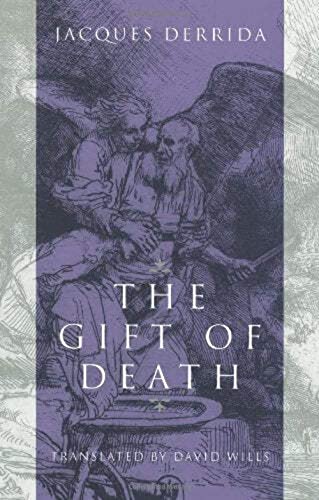
While continuing to explore questions introduced in "Given Time" such as the possibility, or impossibility, of giving and the economic and anthropological nature of gifts, this work focuses on the notion of responsibility and the ultimate gifts of life and death. Jacques Derrida divides the book into four parts, which deal respectively with: the development of the notion of responsibility in the Platonic and Christian traditions; the relation between sacrifice and mortality; the contemporary meaning of the story of Abraham and Isaac; and the relation between religious ideology and economic rationality. The texts under discussion include the Hebrew Bible and the New Testament, as well as writings from Patocka, Heidegger, Levinas and Kierkegaard. Derrida's main concern is with the meaning of moral and ethical responsibility in Western religion and philosophy. He questions the limits of the rational and the responsible that is reached in granting or accepting death, whether by sacrifice, murder, execution or suicide. Beginning with a discussion of Patocka's "Heretical Essays on the History of Philosophy", Derrida develops Patocka's ideas concerning the sacred and responsibility through comparisons with the works of Heidegger, Levinas and Kierkegaard. Derrida's treatment of Kierkegaard makes clear that the two philosophers share some of the same concerns. He then undertakes a reading of Kierkegaard's "Fear and Trembling", comparing and contrasting his own conception of responsibility with that of Kierkegaard, and extending and deepening his recent accounts of the gift and sacrifice. For Derrida, the very possibility of sacrifice, especially the ultimate sacrifice of one's own life for the sake of another, comes into question.
"synopsis" may belong to another edition of this title.
From the Inside Flap
In The Gift of Death, Jacques Derrida's most sustained consideration of religion to date, he continues to explore questions introduced in Given Time about the limits of the rational and responsible that one reaches in granting or accepting death, whether by sacrifice, murder, execution, or suicide. Derrida analyzes Patocka's Heretical Essays on the History of Philosophy and develops and compares his ideas to the works of Heidegger, Levinas, and Kierkegaard.
A major work, The Gift of Death resonates with much of Derrida's earlier writing and will be of interest to scholars in anthropology, philosophy, and literary criticism, along with scholars of ethics and religion.
"The Gift of Death is Derrida's long-awaited deconstruction of the foundations of the project of a philosophical ethics, and it will long be regarded as one of the most significant of his many writings." Choice
"An important contribution to the critical study of ethics that commends itself to philosophers, social scientists, scholars of relgion . . . [and those] made curious by the controversy that so often attends Derrida." Booklist
"Derrida stares death in the face in this dense but rewarding inquiry. . . . Provocative." Publishers Weekly
A major work, The Gift of Death resonates with much of Derrida's earlier writing and will be of interest to scholars in anthropology, philosophy, and literary criticism, along with scholars of ethics and religion.
"The Gift of Death is Derrida's long-awaited deconstruction of the foundations of the project of a philosophical ethics, and it will long be regarded as one of the most significant of his many writings." Choice
"An important contribution to the critical study of ethics that commends itself to philosophers, social scientists, scholars of relgion . . . [and those] made curious by the controversy that so often attends Derrida." Booklist
"Derrida stares death in the face in this dense but rewarding inquiry. . . . Provocative." Publishers Weekly
"About this title" may belong to another edition of this title.
Other Popular Editions of the Same Title

Search results for The Gift of Death (Paper) (Religion and Postmodernism)

Seller Image
The Gift of Death (Religion and Postmodernism)
Published by
University of Chicago Press, 1996
ISBN 10: 0226143066
ISBN 13: 9780226143064
Used
Softcover
Seller: Greenworld Books, Arlington, TX, U.S.A.
Seller rating 5 out of 5 stars

Condition: very_good. Fast Free Shipping â" Very Good condition book with a firm cover and clean pages. Shows normal use and some light wear or limited notes markings. A solid, nice copy to enjoy. Seller Inventory # GWV.0226143066.VG
Stock Image
The Gift of Death (Religion and Postmodernism)
Published by
University Of Chicago Press, 1996
ISBN 10: 0226143066
ISBN 13: 9780226143064
Used
Paperback
Seller: Sequitur Books, Boonsboro, MD, U.S.A.
Seller rating 5 out of 5 stars
Paperback. Condition: As New. Softcover. Good binding and cover. Light wear. Marks to FEP otherwise clean, unmarked pages. Seller Inventory # 2105110061
Seller Image
The Gift of Death (Religion and Postmodernism)
Published by
University of Chicago Press, 1996
ISBN 10: 0226143066
ISBN 13: 9780226143064
Used
Softcover
Seller: Best Peddler LLC, Huntsville, AL, U.S.A.
Seller rating 5 out of 5 stars
Condition: good. All pages and cover are intact with minor wear to the pages, binding, and possible minor marks within. 100% Satisfaction Guarantee!! **Ships SWIFTLY!**. Seller Inventory # PEDV.0226143066.G
Stock Image
The Gift of Death (Religion and Postmodernism)
Published by
University of Chicago Press, 1996
ISBN 10: 0226143066
ISBN 13: 9780226143064
Used
Softcover
Seller: PAPER CAVALIER US, Brooklyn, NY, U.S.A.
Seller rating 5 out of 5 stars
Condition: fair. Readable condition with clear signs of use. May contain notes, highlights, lack the dust jacket or extras like CDs, access codes or inserts. Seller Inventory # 9780226143064-5
Seller Image
The Gift of Death The Gift of Death (Religion and Postmodernism Series)
Published by
University of Chicago Press, Chicago, IL, 1996
ISBN 10: 0226143066
ISBN 13: 9780226143064
Used
Paperback
Seller: Dorley House Books, Inc., Hagerstown, MD, U.S.A.
Seller rating 4 out of 5 stars

Paperback. Condition: Near Fine. pictorial wraps; 115 clean, unmarked pages. Seller Inventory # 124211
Seller Image
The Gift of Death (Religion and Postmodernism)
Published by
University of Chicago Press, 1996
ISBN 10: 0226143066
ISBN 13: 9780226143064
Used
Paperback
Seller: boredom books, Portland, OR, U.S.A.
Seller rating 5 out of 5 stars
Paperback. Condition: Clean & Unmarked. A very clean and straight copy. Clean text and an uncreased spine. 115 pp. Seller Inventory # 250324015
Seller Image
The Gift of Death.
Published by
Chicago University Press, 1995
ISBN 10: 0226143066
ISBN 13: 9780226143064
Used
Paperback
Seller: Plurabelle Books Ltd, Cambridge, United Kingdom
Seller rating 5 out of 5 stars
Paperback. Condition: As New. viii 115p paperback, grey and purple cover, good condition, light wear, binding intact, light pencil marks in margins, all text clear and legible, good used copy Language: English Weight (g): 180. Seller Inventory # 217496
Stock Image
The Gift of Death
Published by
Univ of Chicago Press, London, 2004
ISBN 10: 0226143066
ISBN 13: 9780226143064
Used
Soft cover
Seller: Salsus Books (P.B.F.A.), Kidderminster, United Kingdom
Seller rating 5 out of 5 stars
Soft cover. Condition: Very Good. Dust Jacket Condition: Fair. 115pp hardback, cream cloth spine black-lettered over lilac boards in a wrapper with few creases, ownership inscription to half-title, reprinted. Seller Inventory # 069593
Seller Image
The Gift of Death (Religion and Postmodernism)
Published by
University of Chicago Press, 1996
ISBN 10: 0226143066
ISBN 13: 9780226143064
Used
Softcover
Seller: *bibliosophy*, Exeter, United Kingdom
Seller rating 5 out of 5 stars
1996, 115 pages | gently read or unread copy free of name, notes etc; graded 'very good' because of some puckering to front cover laminate layer - this appears to be a manufacturing flaw | carefully packaged and dispatched from UK within two working days. Seller Inventory # gift2602
Seller Image
The gift of death
Published by
The University of Chicago Press, CHICAGO, 1995
ISBN 10: 0226143066
ISBN 13: 9780226143064
Used
Softcover
Seller: Biblioteca di Babele, Tarquinia, VT, Italy
Seller rating 5 out of 5 stars
Condition: BUONO USATO. IED. INGLESE Brossura editoriale in cartonato flessibile, copertina ben tenuta, illustrata da figura in nero, con protezione in plastica trasparente. Molto buono lo stato conservativo, pagine perfettamente tenute e velate da tonalità brunita, traduzione di David Wills. Il volume potrebbe contenere timbri, il materiale è stato regolarmente acquisito dalla nostra Libreria. Numero pagine 115. Seller Inventory # TXM0567