
Items related to Oh, Play That Thing
Synopsis
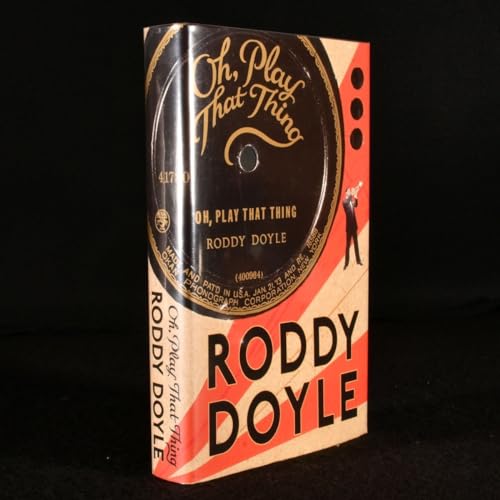
On the last page of A Star Called Henry, the first volume of the The Last Roundup trilogy, we left Henry Smart on the run from his Republican paymasters, the men for whom he had perpetrated murder and mayhem. He flees from Dublin to Liverpool and from thence to Ellis Island, New York, America. And this is where Oh, Play That Thing begins...
It's 1924, and New York is the centre of the universe. Henry falls on his feet, as a handsome man with a sandwich board, and - this being Prohibition - behind his sandwich board a stash of hooch for the speakeasies of the Lower East Side. When he starts hiring kids to carry boards for him, he catches the attention of the mobsters who run the district and soon there are eyes on his back and men in the shadows. It is time to leave, for another America: Chicago.
In Chicago there is no past waiting to jump on Henry. The place is wild, as new as he is, and newest of all is the music. Furious, wild, happy music played by a man with a trumpet and bleeding lips called Louis Armstrong. His music is everywhere, coming from every open door, every phonograph. But Armstrong is a prisoner of his colour; there are places a black man cannot go, things he cannot do. And the mob is in Chicago too: they own every stage - and they own the man up on the stage. Armstrong needs a man, a white man, and the man he chooses is Henry Smart.
This is a novel of prodigious energy and invention. Its language and its rhythms are as breathtaking as the music it celebrates. It shows yet again that as a writer Roddy Doyle is unequalled in his vision, his ambition, his ability to surprise us with each new novel. It is nothing less than a triumph.
"synopsis" may belong to another edition of this title.
About the Author
Roddy Doyle was born in Dublin in 1958. He is the author of twelve acclaimed novels including The Commitments, The Snapper, The Van and Smile, two collections of short stories, and Rory & Ita, a memoir about his parents. He won the Booker Prize in 1993 for Paddy Clarke Ha Ha Ha.
Excerpt. © Reprinted by permission. All rights reserved.
1
I could bury myself in New York. I could see that from the boat as it went under the Statue of Liberty on a cold dawn that grew quickly behind me and shoved the fog off the slate-coloured water. That was Manhattan, already towering over me. It made tiny things of the people around me, all gawking at the manmade cliffs, and the ranks of even higher cliffs behind them, stretching forever into America and stopping their entry. I could see the terror in their eyes.
I could stare into the eyes without fear of recognition. They weren't Irish faces and it wasn't Irish muck on the hems of their greatcoats. Those coats had been dragged across Europe. They were families, three and four generations of them; the Irish travelled alone. There were the ancient women, their faces collapsed and vicious, clutching bags they'd carried across the continent, full of string and eggshells and stones from the walls of lost houses. And their husbands behind them, hidden by beards, their eyes still young and fighting. They guarded the cases and boxes at their feet. And their sons and daughters, grandsons and granddaughters, under embroidered scarves and black caps, and younger children still, and pregnant girls with scrawny boys standing and sitting beside them, all cowed by the approaching city cliffs. Even the youngest sensed that their excitement was unwanted and stayed silent, as the Reliance sent small waves against Bedloe's Island and the big stone American woman - send these, the homeless, tempesttost to me - as their parents and grandparents shivered at the new world and tried to know if they were looking at its front or back. I was the only man alone, the only man not afraid of what was growing up in front of us. This was where a man could disappear, could die if he wanted to, and come back to quick, big life.
I had arrived.
But we turned from Manhattan and sailed, almost back into the night, towards the New Jersey shore. And the silence around me fell deeper as the island crept up in front of us. The last few square feet of the old, cruel world, the same name in all the languages on board as we were pulled closer and closer, isola delle lagrime, Tränen Insel, the isle of tears. Ellis Island.
Hundreds of shuffling feet trapped under the vaulted ceiling of the great hall, the air was full of the whispers of the millions who'd passed through, the cries of the thousands who'd been stopped and sent back. I listened for the tap of a famous leg, but I heard none. Old men tried to straighten long-crooked backs and mothers rubbed rough colour into the white cheeks of their children. Wild men ran fingers through long beards and regretted that they hadn't shaved before they'd disembarked. Jewish women caressed sons' ringlets and tried to push them under hats. Fragments of new language were tried, and passed from mouth to mouth.
-Yes, sir.
-No, sir.
-My cousin, he have a house.
-I am a farmer.
-Qu-eeeens.
The medical inspector stared into my eyes. I knew what he was looking for. I'd been told all about it, by a lame and wheezy anarchist who was making his seventh try at landing.
-They see the limp but never the brain, he'd said. -The fools. When they confront the fact that I am too dangerous for their country, then I will happily turn my back on it. But, until then, I commute between Southampton and their Ellis Island.
-If you could afford first or second class, I told him, -you wouldn't have to set foot on the island.
-You think I am not aware of this? he said. -I can afford it. But I won't afford it.
The inspector was looking for signs of trachoma in my eyes, and for madness behind them. He couldn't stare for long - no one could; he saw nothing that was going to send me back. To my left, another inspector drew a large L on a shoulder with a brand new piece of chalk. L was for lung. I knew the signs; I'd been seeing them all my life. The man with the brand new L had already given up. He collapsed and coughed out most of his remaining life. He had to be carried away. An E on the shoulder meant bad eyes, another L meant lameness. And behind those letters, other hidden letters, never chalked onto shoulders: J for too Jewish, C for Chinese, SE, too far south and east of Budapest. H was for heart, SC was for scalp, X was for mental.
And H was for handsome.
The guards stood back and I walked the few steps to the next desk. I let my heels clip the Spanish tiles. Two beautiful sisters held each other as they were pushed back. Without parents or children they were too likely to fall into bad hands waiting for them on the Manhattan or New Jersey wharfs. If they were lucky they'd be kept on the island until relatives were found to take them; less lucky, they'd be pawed, then let through; less lucky still, they'd be deported, sent back before they'd arrived.
I handed my passport and papers to the Immigration Bureau officer. He opened the passport and found the ten-dollar note I'd left in its centre. The note was gone before I saw it missing. I'd taken it from the wheezy anarchist; its loss didn't sting. Then came the catechism, the questions I couldn't get wrong.
-What is your name?
-Henry Drake.
-Where are you from?
-London.
-Why have you come to the United States?
-Opportunity.
So far, so easy.
But he stopped. He looked at me.
-Where are you travelling from, sir? he asked me.
It wasn't one of the questions.
-London, I said.
He seemed to be staring at the word as I spoke it.
-You are a born Englishman, sir?
He read my latest name.
-Mister Drake?
-Yes.
-Henry Drake.
-Yes.
-And where is Missis Drake, sir?
-She's in my dreams.
-So you're travelling alone, sir, is that right? You are an unmarried man.
-That's right.
-And how do you intend supporting yourself, sir?
We were back on track.
-By working very hard.
-Yes, and how, sir?
-I'm a salesman.
-And your speciality?
I shrugged.
-Everything, and anything.
-Alright. And do you have sufficient funds to sustain you until you commence selling everything?
-I do.
He handed me a sheet of paper.
-Could you read this for me, sir?
-We, the people of the United States, in order to form a more perfect union-
And as I strolled through the literacy test, I could feel Victor, my brother, beside me, his leg pressed against mine in the school desk, and Miss O'Shea at my shoulder, my teacher and wife, the mother of the daughter I suddenly missed, her wet fingers on my cheek.
- and secure the blessings of liberty to ourselves and our posterity, do ordain and establish this Constitution of-
He took the paper from my fingers. He picked up a rubber stamp and brought it down on top of a card. I read the stamp: ADMITTED.
-Welcome to America, he said.
It was America, not just the U.S.A. America was bigger than the states, bigger than the world. America was everything possible.
He handed me the passport and registration card, then held them back.
-But you'd want to work on your accent, sir. Slán leat.
That shook me, but only until I climbed the last few steps and walked out into my first American sunshine. And another accent hit me.
-Speakee American, bub?
-Fuck off.
-That answers my question, I guess, said the shark.
He was there to hijack the new Americans milling around and past me, train tickets pinned to their lapels, registration cards held in their teeth, their hands busy with cases and bags. He must have been good, this lad, to be allowed on the island, right under the portico. I studied him closely, the movie suit, the hat, the hidden accent. I handed him my cardboard suitcase. It was empty. I didn't look back but I heard him weigh its hollowness and lob it into the water. I took out my passport, to send it the same way. Then I changed my mind. I turned back.
-Hey, I said. -Want to buy a passport?
He put his hands in his pockets and pulled out forty or fifty passports.
-Your turn to fuck off, bub, he said.
I waved, turned and skimmed the passport onto the river. I watched it gather water and sink.
I was a clean sheet.
It was the 16th of March, 1924, two years since I'd sailed out of Dublin.
I looked back at the last of Dublin and, soon enough, there was no land and the boat was just a thing on the sea. I stood on the deck, my back against the cold iron wall for all the rolling night and I watched trenchcoated men watching me, and other men watching them. I saw the swing that a gun gives to a coat, and the shine that fear gives to the eyes. I was still in Ireland, still a man on the run.
And Liverpool was worse. I'd thought the place would soak me up, but not a chance. At every corner, in every doorway. Distance didn't matter. They were always there before me. Ready for the chance to hit. I could never stop and know that I'd escaped.
I walked deeper into England. I found rooms in Blackburn, Bradford,Warrington. I found work and women but eventually, always, I had to move. A head turning, eyes staring, at everything but me; a face I'd last seen looking across Mary Street after I'd read my death sentence on a piece of paper.
I stayed out of the towns and went into the mountains. I stopped at farmhouses and did the work I'd learnt in Roscommon. The farmers admired my strength, but they weren't happy. My accent and unwillingness to use it made them nervous. They saw their wives and daughters glaring at me and knew that I was dangerous. I moved again, and again.
A man called Smith took me on just as his sheep were about to drop their lambs. He'd no daughter and his wife was dead; he could ignore the urge to look up whenever I walked past him. I liked Smith. I liked the cold up there and I liked the work. I thought I'd stay there until my head was clear of gunmen.
I was on Smith's rented hillside one night in early March, all night dragging lambs and their mothers out of snow with hands so cold they could feel no wool. I pushed open the door and walked into his kitchen an hour after dawn and, this time, he did look up.
He looked, and looked away.
-There were people looking for you, he said.
-People?
-Men, he said. -From your country. In a motor car.
-Did they say anything?
-No. Only. Are you Henry Smart?
-Yes.
-Yes, he said. -It was you they were looking for. I told them I didn't know you.
-Thank you, I said. -I'll go.
-Yes, he said. -I'll give you your money.
He stood up and went further into the house, to where he had his money hidden. He came back with a five-pound note, a lot more than he owed me.
-Those men. They want to kill you, do they?
-Yes.
-Stay until you're ready to go.
-Thanks.
-I had three sons, he said.
-I'm sorry, I said. -The war?
-Yes, he said. -The war. Go when you think it's best.
I left when it was dark. I stayed well off the roads and climbed through drifts of snow. Sometimes I could feel the earth hard under my boots. Other times I climbed shifting mountains, like slow waves in a black storm. But the thought of the men in the car gave me the anger and heat to melt a path in front of me. They weren't going to stop me and they wouldn't make me kill them. I'd been the expendable fool for years, the man who'd hopped when his betters called. No more. I was going to get away from that, even if I had to be buried. And I'd do the fuckin' burying, not them.
The river threw rubbish at the slick plank walls - torn vegetables, pale and soaked, squashed fruit, dead fish. And some of the new Americans looked down at the soup and were weak, almost angry at the thought that their new home could afford such waste.
The ferry from the island emptied the people, their bags and boxes, onto the crowded slip - pimps, cousins, conmen, housekeepers looking for kitchen staff.
-Need somewhere to stay?
-No.
-Need a job? Good money?
-Got a sister?
I climbed in among sacks and children, and the train brought me, slowly, to the heart of Manhattan.Through steam and whirling smoke and breath that licked the carriage window, I watched thick cables lifting girders, and I saw men riding the girders, taking on the sky, specks of men, but men like me, rising over the smoke, taking the freedom of the air. I leaned into Manhattan, pushed my weight against the train's fat crawl.
And I pushed through the beams of solid sunlight that hung from windows high above me, in the great hall of Grand Central Terminal. I looked around and swam in the noise. It was a long walk to the steps and the clock right over me - 2.47p.m. - and I was out again, out into the crazy air, and 42nd Street.
No ocean, no edges, no return.
I climbed into the back of a waiting cab. The driver spoke over his shoulder.
-Where to?
-I want an American suit, I told him.
-Suit?
I had the rest of the anarchist's cash burning a hole in the pocket of my old one.
-American, I told him. -A good one.
-Man wants a good suit, I'll take that man to the man who'll give him his suit.
-And after the suit, I want Douglas Fairbanks.
-The Thief of Baghdad? he said. -It's the latest.
-Sounds like my kind of town.
-The Grand Opera House sound good?
-Does it show the pictures?
-Well, it certainly don't show opera. I might even park the jalopy and join you.
-Let's go, I said.
And we rode out into America. I looked out the window of the covered car, up at the sheer walls, and the new walls going up as I watched, and I saw the tickertape falling - the rest of them thought it was snow - on the taxi, on the street, on everything, for me.
It was too early for stars but I knew that my voice, steered by the glass and concrete, would meet them as they came out later on. I opened the door and, right hand gripping the running board, I hung out over the street as the car turned onto Park Avenue.
-My name is Henry Smart!
"About this title" may belong to another edition of this title.
Search results for Oh, Play That Thing

Stock Image
Oh, Play That Thing
Published by
Jonathan Cape 02/09/2004, 2004
ISBN 10: 0224074369
ISBN 13: 9780224074360
Used
Hardcover
Seller: AwesomeBooks, Wallingford, United Kingdom
Seller rating 5 out of 5 stars

Condition: Very Good. Not Stated (illustrator). This book is in very good condition and will be shipped within 24 hours of ordering. The cover may have some limited signs of wear but the pages are clean, intact and the spine remains undamaged. This book has clearly been well maintained and looked after thus far. Money back guarantee if you are not satisfied. See all our books here, order more than 1 book and get discounted shipping. . Seller Inventory # 7719-9780224074360
Buy Used
£ 2.82
£ 4.12 shipping
Ships from United Kingdom to U.S.A.
Ships from United Kingdom to U.S.A.
Quantity: 1 available
Stock Image
Oh, Play That Thing
Published by
Penguin Random House, 2004
ISBN 10: 0224074369
ISBN 13: 9780224074360
Used
Hardcover
First Edition
Seller: Better World Books, Mishawaka, IN, U.S.A.
Seller rating 5 out of 5 stars
Condition: Good. Not Stated (illustrator). First Edition. Pages intact with minimal writing/highlighting. The binding may be loose and creased. Dust jackets/supplements are not included. Stock photo provided. Product includes identifying sticker. Better World Books: Buy Books. Do Good. Seller Inventory # GRP102298100
Stock Image
Oh, Play That Thing
Published by
Vintage Publishing, United Kingdom, London, 2004
ISBN 10: 0224074369
ISBN 13: 9780224074360
Used
Paperback
Seller: WorldofBooks, Goring-By-Sea, WS, United Kingdom
Seller rating 5 out of 5 stars
Paperback. Condition: Very Good. Not Stated (illustrator). On the last page of A Star Called Henry, the first volume of the The Last Roundup trilogy, we left Henry Smart on the run from his Republican paymasters, the men for whom he had perpetrated murder and mayhem. He flees from Dublin to Liverpool and from thence to Ellis Island, New York, America. And this is where Oh, Play That Thing begins. It's 1924, and New York is the centre of the universe. Henry falls on his feet, as a handsome man with a sandwich board, and - this being Prohibition - behind his sandwich board a stash of hooch for the speakeasies of the Lower East Side. When he starts hiring kids to carry boards for him, he catches the attention of the mobsters who run the district and soon there are eyes on his back and men in the shadows. It is time to leave, for another America: Chicago. In Chicago there is no past waiting to jump on Henry. The place is wild, as new as he is, and newest of all is the music. Furious, wild, happy music played by a man with a trumpet and bleeding lips called Louis Armstrong. His music is everywhere, coming from every open door, every phonograph. But Armstrong is a prisoner of his colour; there are places a black man cannot go, things he cannot do. And the mob is in Chicago too: they own every stage - and they own the man up on the stage. Armstrong needs a man, a white man, and the man he chooses is Henry Smart. This is a novel of prodigious energy and invention. Its language and its rhythms are as breathtaking as the music it celebrates. It shows yet again that as a writer Roddy Doyle is unequalled in his vision, his ambition, his ability to surprise us with each new novel. It is nothing less than a triumph. The book has been read, but is in excellent condition. Pages are intact and not marred by notes or highlighting. The spine remains undamaged. Seller Inventory # GOR001486862
Buy Used
£ 2.90
£ 5.60 shipping
Ships from United Kingdom to U.S.A.
Ships from United Kingdom to U.S.A.
Quantity: 6 available
Seller Image
Oh, Play That Thing
Seller: MusicMagpie, Stockport, United Kingdom
Seller rating 5 out of 5 stars
Condition: Very Good. Not Stated (illustrator). 1787731232. 8/26/2026 8:00:32 AM. Seller Inventory # U9780224074360
Buy Used
£ 3.45
£ 5.49 shipping
Ships from United Kingdom to U.S.A.
Ships from United Kingdom to U.S.A.
Quantity: 1 available
Stock Image
Oh, Play That Thing
Seller: SatelliteBooks, Burlington, VT, U.S.A.
Seller rating 5 out of 5 stars
Hardcover. Condition: As New. Not Stated (illustrator). First edition Hardcover near fine/near fine DJ Free of any markings and no writing. Minor shelf-wear. For Additional Information or pictures, Please Inquire. Seller Inventory # SKU02498
Stock Image
Oh, Play That Thing
Published by
Penguin Random House, 2004
ISBN 10: 0224074369
ISBN 13: 9780224074360
Used
Hardcover
First Edition
Seller: Better World Books Ltd, Dunfermline, United Kingdom
Seller rating 5 out of 5 stars
Condition: Very Good. Not Stated (illustrator). First Edition. Former library copy. Pages intact with possible writing/highlighting. Binding strong with minor wear. Dust jackets/supplements may not be included. Includes library markings. Stock photo provided. Product includes identifying sticker. Better World Books: Buy Books. Do Good. Seller Inventory # 51731147-20
Buy Used
£ 4.83
£ 5 shipping
Ships from United Kingdom to U.S.A.
Ships from United Kingdom to U.S.A.
Quantity: 2 available
Stock Image
Oh, Play That Thing
Seller: Reuseabook, Gloucester, GLOS, United Kingdom
Seller rating 5 out of 5 stars
Hardcover. Condition: Used; Good. Not Stated (illustrator). Dispatched, from the UK, within 48 hours of ordering. This book is in good condition but will show signs of previous ownership. Please expect some creasing to the spine and/or minor damage to the cover. Seller Inventory # CHL1237397
Buy Used
£ 2.95
£ 7 shipping
Ships from United Kingdom to U.S.A.
Ships from United Kingdom to U.S.A.
Quantity: 1 available
Stock Image
Oh, Play That Thing
Published by
Jonathan Cape 02/09/2004, 2004
ISBN 10: 0224074369
ISBN 13: 9780224074360
Used
Hardcover
Seller: Bahamut Media, Reading, United Kingdom
Seller rating 4 out of 5 stars

Condition: Very Good. Not Stated (illustrator). Shipped within 24 hours from our UK warehouse. Clean, undamaged book with no damage to pages and minimal wear to the cover. Spine still tight, in very good condition. Remember if you are not happy, you are covered by our 100% money back guarantee. Seller Inventory # 6545-9780224074360
Buy Used
£ 3.29
£ 6.98 shipping
Ships from United Kingdom to U.S.A.
Ships from United Kingdom to U.S.A.
Quantity: 1 available
Stock Image
Oh, Play That Thing
Seller: Wonder Book, Frederick, MD, U.S.A.
Seller rating 5 out of 5 stars
Condition: Very Good. Not Stated (illustrator). First edition copy. . Like New dust jacket. First printing. In protective mylar cover. (fiction, historical fiction, ireland, new york, chicago). Seller Inventory # NC02B-00310
Stock Image
Oh, Play That Thing
Seller: medimops, Berlin, Germany
Seller rating 5 out of 5 stars
Condition: good. Not Stated (illustrator). Befriedigend/Good: Durchschnittlich erhaltenes Buch bzw. Schutzumschlag mit Gebrauchsspuren, aber vollständigen Seiten. / Describes the average WORN book or dust jacket that has all the pages present. Seller Inventory # M00224074369-G