
Items related to The Smart Neanderthal: Bird catching, Cave Art, and...
Synopsis
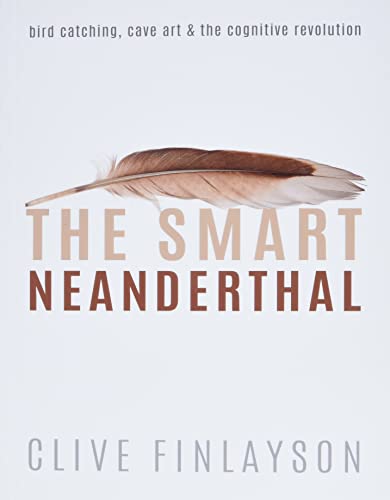
Since the late 1980s the dominant theory of human origins has been that a 'cognitive revolution' (C.50,000 years ago) led to the advent of our species, Homo sapiens. As a result of this revolution our species spread and eventually replaced all existing archaic Homo species, ultimately leading to the superiority of modern humans.
Or so we thought.
As Clive Finlayson explains, the latest advances in genetics prove that there was significant interbreeding between Modern Humans and the Neanderthals. All non-Africans today carry some Neanderthal genes. We have also discovered aspects of Neanderthal behaviour that indicate that they were not cognitively inferior to modern humans, as we once thought, and in fact had their own rituals and art. Finlayson, who is at the forefront of this research, recounts the discoveries of his team, providing evidence that Neanderthals caught birds of prey, and used their feathers for symbolic purposes. There is also evidence that Neanderthals practised other forms of art, as the recently discovered engravings in Gorham's Cave Gibraltar indicate.
Linking all the recent evidence, The Smart Neanderthal casts a new light on the Neanderthals and the "Cognitive Revolution". Finlayson argues that there was no revolution and, instead, modern behaviour arose gradually and independently among different populations of Modern Humans and Neanderthals. Some practices were even adopted by Modern Humans from the Neanderthals. Finlayson overturns classic narratives of human origins, and raises important questions about who we really are.
"synopsis" may belong to another edition of this title.
About the Author
Clive Finlayson is an evolutionary biologist whose research areas focus on birds and the behavioural ecology of Neanderthals. He has been the Director of Excavations at Neanderthal sites in Gibraltar since 1989, and has been involved in major recent discoveries, including that of the first known engraving made by a Neanderthal. A regular contributor to BBC News Online (Science and Environment), he is also the author of several books, including The Improbable Primate (OUP, 2014) and The Humans Who Went Extinct (OUP, 2010). He was elected to the Academia Europaea in 2010.
"About this title" may belong to another edition of this title.
Search results for The Smart Neanderthal: Bird catching, Cave Art, and...

Stock Image
The Smart Neanderthal: Bird catching, Cave Art, and the Cognitive Revolution
Published by
Oxford University Press, 2022
ISBN 10: 0198797532
ISBN 13: 9780198797531
Used
Paperback
Seller: Orion Tech, Kingwood, TX, U.S.A.
Seller rating 5 out of 5 stars

Paperback. Condition: Good. Seller Inventory # 0198797532-3-32918087
Seller Image
The Smart Neanderthal: Bird catching, Cave Art, and the Cognitive Revolution
Published by
Oxford University Press, 2022
ISBN 10: 0198797532
ISBN 13: 9780198797531
Used
Softcover
Seller: Zoom Books East, Glendale Heights, IL, U.S.A.
Seller rating 5 out of 5 stars
Condition: very_good. Book is in very good condition and may include minimal underlining highlighting. The book can also include "From the library of" labels. May not contain miscellaneous items toys, dvds, etc. . We offer 100% money back guarantee and 24 7 customer service. Seller Inventory # ZEV.0198797532.VG
Stock Image
The Smart Neanderthal: Bird catching, Cave Art, and the Cognitive Revolution
Published by
Oxford University Press (edition ), 2022
ISBN 10: 0198797532
ISBN 13: 9780198797531
Used
Paperback
Seller: BooksRun, Philadelphia, PA, U.S.A.
Seller rating 5 out of 5 stars
Paperback. Condition: Very Good. It's a well-cared-for item that has seen limited use. The item may show minor signs of wear. All the text is legible, with all pages included. It may have slight markings and/or highlighting. Seller Inventory # 0198797532-11-1
Stock Image
Smart Neanderthal : Bird Catching, Cave Art & The Cognitive Revolution
Published by
Oxford University Press, 2022
ISBN 10: 0198797532
ISBN 13: 9780198797531
Used
Softcover
Seller: GreatBookPrices, Columbia, MD, U.S.A.
Seller rating 5 out of 5 stars
Condition: As New. Unread book in perfect condition. Seller Inventory # 42254326
Stock Image
Smart Neanderthal : Bird Catching, Cave Art & The Cognitive Revolution
Seller: GreatBookPrices, Columbia, MD, U.S.A.
Seller rating 5 out of 5 stars
Condition: New. Seller Inventory # 42254326-n
Stock Image
The Smart Neanderthal
Seller: PBShop.store US, Wood Dale, IL, U.S.A.
Seller rating 5 out of 5 stars
PAP. Condition: New. New Book. Shipped from UK. Established seller since 2000. Seller Inventory # FU-9780198797531
Seller Image
The Smart Neanderthal
Published by
Oxford University Press, GB, 2021
ISBN 10: 0198797532
ISBN 13: 9780198797531
New
Paperback
Seller: Rarewaves.com USA, London, LONDO, United Kingdom
Seller rating 5 out of 5 stars
Paperback. Condition: New. Since the late 1980s the dominant theory of human origins has been that a 'cognitive revolution' (C.50,000 years ago) led to the advent of our species, Homo sapiens. As a result of this revolution our species spread and eventually replaced all existing archaic Homo species, ultimately leading to the superiority of modern humans.Or so we thought.As Clive Finlayson explains, the latest advances in genetics prove that there was significant interbreeding between Modern Humans and the Neanderthals. All non-Africans today carry some Neanderthal genes. We have also discovered aspects of Neanderthal behaviour that indicate that they were not cognitively inferior to modern humans, as we once thought, and in fact had their own rituals and art. Finlayson, who is at the forefront of this research, recounts the discoveries of his team, providing evidence that Neanderthals caught birds of prey, and used their feathers for symbolic purposes. There is also evidence that Neanderthals practised other forms of art, as the recently discovered engravings in Gorham's Cave Gibraltar indicate.Linking all the recent evidence, The Smart Neanderthal casts a new light on the Neanderthals and the "Cognitive Revolution". Finlayson argues that there was no revolution and, instead, modern behaviour arose gradually and independently among different populations of Modern Humans and Neanderthals. Some practices were even adopted by Modern Humans from the Neanderthals. Finlayson overturns classic narratives of human origins, and raises important questions about who we really are. Seller Inventory # LU-9780198797531
Buy New
£ 16.40
Free Shipping
Ships from United Kingdom to U.S.A.
Ships from United Kingdom to U.S.A.
Quantity: 1 available
Stock Image
The Smart Neanderthal: Bird catching, Cave Art, and the Cognitive Revolution
Seller: Chiron Media, Wallingford, United Kingdom
Seller rating 5 out of 5 stars
paperback. Condition: New. Brand new book, sourced directly from publisher. Dispatch time is 24-48 hours from our warehouse. Book will be sent in robust, secure packaging to ensure it reaches you securely. Seller Inventory # 6666-GRD-9780198797531
Buy New
£ 12
£ 4.49 shipping
Ships from United Kingdom to U.S.A.
Ships from United Kingdom to U.S.A.
Quantity: 2 available
Stock Image
The Smart Neanderthal: Bird catching, Cave Art, and the Cognitive Revolution
Seller: Sharehousegoods, Colgate, WI, U.S.A.
Seller rating 5 out of 5 stars
Condition: New. NEW! paperbackNew2022. Seller Inventory # MO-11-02-00010
Seller Image
The Smart Neanderthal
Published by
Oxford University Press, GB, 2021
ISBN 10: 0198797532
ISBN 13: 9780198797531
New
Paperback
Seller: Rarewaves USA, HEBRON, KY, U.S.A.
Seller rating 5 out of 5 stars
Paperback. Condition: New. Since the late 1980s the dominant theory of human origins has been that a 'cognitive revolution' (C.50,000 years ago) led to the advent of our species, Homo sapiens. As a result of this revolution our species spread and eventually replaced all existing archaic Homo species, ultimately leading to the superiority of modern humans.Or so we thought.As Clive Finlayson explains, the latest advances in genetics prove that there was significant interbreeding between Modern Humans and the Neanderthals. All non-Africans today carry some Neanderthal genes. We have also discovered aspects of Neanderthal behaviour that indicate that they were not cognitively inferior to modern humans, as we once thought, and in fact had their own rituals and art. Finlayson, who is at the forefront of this research, recounts the discoveries of his team, providing evidence that Neanderthals caught birds of prey, and used their feathers for symbolic purposes. There is also evidence that Neanderthals practised other forms of art, as the recently discovered engravings in Gorham's Cave Gibraltar indicate.Linking all the recent evidence, The Smart Neanderthal casts a new light on the Neanderthals and the "Cognitive Revolution". Finlayson argues that there was no revolution and, instead, modern behaviour arose gradually and independently among different populations of Modern Humans and Neanderthals. Some practices were even adopted by Modern Humans from the Neanderthals. Finlayson overturns classic narratives of human origins, and raises important questions about who we really are. Seller Inventory # LU-9780198797531