
Items related to Volume II: Asia and Latin America: 02 (Trade Shocks...
Synopsis
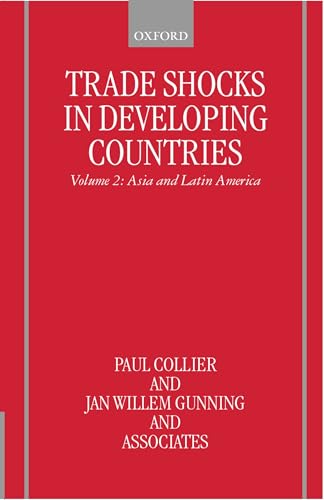
Developing countries frequently experience trade shocks and the policy implications of this have been debated for decades.This important book is Volume 2 of a comparative study covering 23 countries, using a common methodology to estimate the effects of shocks. The conventional wisdom has been that private agents, in particular peasant farmers, could not be trusted to use windfalls wisely. This was, and continues to be, the main rationale for stabilising taxation of export crops. The convention was also that windfalls accruing to the public sector were a bane since governments had low savings rates. The evidence in this definitive study supports neither generalisation. Trade shocks typically lead to high savings rates, irrespective of whether they accrue to private producers or to the government. However, the case studies find substantial policy errors so that windfalls are often not translated efficiently into permanent income increases and indeed often lead to a reduction in output. The studies argue for a drastic revision of the case for government action in response to trade shocks.
Volume 1 deals with Africa, Volume 2 with Asia and Latin America.
"synopsis" may belong to another edition of this title.
Search results for Volume II: Asia and Latin America: 02 (Trade Shocks...

Seller Image
Trade Shocks In Developing Countries Volume 2 Asia And Latin America
Published by
Oxford University Press, 1999
ISBN 10: 0198294638
ISBN 13: 9780198294634
New
Hardcover
First Edition
Seller: Eastleach Books, Newbury, BER, United Kingdom
Seller rating 5 out of 5 stars

Condition: New. 1st edition. Cloth, dj, F/F. x+360pp, tables & charts, index, fine copy in a fine dustjacket. New. Detailed economic study of Trade Shocks, [ the bust & boom of market forces acting on commodity prices ]. The book argues that the old ideas that peasant farmers would not wisely use windfalls thus leading to an unstable economy is not true. Volume 2 covers the experiences of 11 countries in Asia & Latin America. 700 grams. Seller Inventory # 63787
Buy New
£ 12.50
£ 11.10 shipping
Ships from United Kingdom to U.S.A.
Ships from United Kingdom to U.S.A.
Quantity: 1 available
Stock Image
Trade Shocks in Developing Countries: Asia and Latin America (Volume 2)
Published by
Oxford University Press, 1999
ISBN 10: 0198294638
ISBN 13: 9780198294634
Used
Hardcover
Seller: Anybook.com, Lincoln, United Kingdom
Seller rating 5 out of 5 stars
Condition: Good. Volume 2. This is an ex-library book and may have the usual library/used-book markings inside.This book has hardback covers. In good all round condition. Please note the Image in this listing is a stock photo and may not match the covers of the actual item,750grams, ISBN:0198294638. Seller Inventory # 9450742
Buy Used
£ 12.30
£ 13.60 shipping
Ships from United Kingdom to U.S.A.
Ships from United Kingdom to U.S.A.
Quantity: 1 available
Seller Image
Trade Shocks in Developing Countries: Volume 2: Asia and Latin America.
Seller: Kloof Booksellers & Scientia Verlag, Amsterdam, Netherlands
Seller rating 4 out of 5 stars

Condition: good. Oxford & New York : Clarendon Press, 1999. Hardcover. Dustjacket. 376 pp.- This second volume of a two-volume work gathers together 23 detailed case studies from Africa, Asia, and Latin America, presenting the background causes, descriptions, results, and implications of all the recent economic upheavals in the developing world. English text. Library stamps. Condition ± very good. Condition : good copy. ISBN 9780198294634. Keywords : , Seller Inventory # 212560
Buy Used
£ 18.53
£ 25.76 shipping
Ships from Netherlands to U.S.A.
Ships from Netherlands to U.S.A.
Quantity: 1 available
Stock Image
Trade Shocks in Developing Countries. Volume 2: Asia and Latin America.
Published by
-Oxford University Press -, 1999
ISBN 10: 0198294638
ISBN 13: 9780198294634
Used
Hardcover
Seller: Paul Brown, Ramsgate, United Kingdom
Seller rating 4 out of 5 stars
First edition 1999. ix+360 pages with index. Cloth. Near fine in very good dustjacket. Ask to see our other Economics titles. Seller Inventory # 14783
Buy Used
£ 20
£ 25.35 shipping
Ships from United Kingdom to U.S.A.
Ships from United Kingdom to U.S.A.
Quantity: 1 available
Stock Image
Trade Shocks in Developing Countries: Volume 2: Asia and Latin America
Published by
OUP Clarendon Press, Oxford, UK, 1999
ISBN 10: 0198294638
ISBN 13: 9780198294634
Used
Hardcover
Seller: SAVERY BOOKS, Brighton, East Sussex, United Kingdom
Seller rating 5 out of 5 stars
Hardback. Condition: Good. Hardback 1999. SPINE HAS DAMAGE AT THE BOTTOM END. Pages are not affected. Clean & tight. No inscriptions. Flat pages. Dispatched ROYAL MAIL FIRST CLASS with TRACKING next working day or sooner securely boxed in cardboard. ref 116. 3. Seller Inventory # 040453
Buy Used
£ 15.89
£ 37 shipping
Ships from United Kingdom to U.S.A.
Ships from United Kingdom to U.S.A.
Quantity: 1 available
Stock Image
Trade Shocks in Developing Countries: Volume II: Asia and Latin America (eng)
Print on DemandSeller: Brook Bookstore On Demand, Napoli, NA, Italy
Seller rating 5 out of 5 stars
Condition: new. Questo è un articolo print on demand. Seller Inventory # 574f7c923820b8c2f469b26202992d12
Buy New
£ 67.42
£ 5.84 shipping
Ships from Italy to U.S.A.
Ships from Italy to U.S.A.
Quantity: Over 20 available
Seller Image
Trade Shocks in Developing Countries : Asia and Latin America
Seller: GreatBookPrices, Columbia, MD, U.S.A.
Seller rating 5 out of 5 stars
Condition: New. Seller Inventory # 79256-n
Seller Image
Trade Shocks in Developing Countries : Asia and Latin America
Seller: GreatBookPrices, Columbia, MD, U.S.A.
Seller rating 5 out of 5 stars
Condition: As New. Unread book in perfect condition. Seller Inventory # 79256
Stock Image
Trade Shocks in Developing Countries: Volume II: Asia and Latin America
Print on DemandSeller: PBShop.store UK, Fairford, GLOS, United Kingdom
Seller rating 5 out of 5 stars
HRD. Condition: New. New Book. Delivered from our UK warehouse in 4 to 14 business days. THIS BOOK IS PRINTED ON DEMAND. Established seller since 2000. Seller Inventory # IG-9780198294634
Buy New
£ 74.24
£ 5.02 shipping
Ships from United Kingdom to U.S.A.
Ships from United Kingdom to U.S.A.
Quantity: 15 available
Stock Image
Trade Shocks in Developing Countries: Volume II: Asia and Latin America (Hardcover)
Published by
Oxford University Press, Oxford, 1999
ISBN 10: 0198294638
ISBN 13: 9780198294634
New
Hardcover
Seller: Grand Eagle Retail, Bensenville, IL, U.S.A.
Seller rating 5 out of 5 stars
Hardcover. Condition: new. Hardcover. Developing countries frequently experience trade shocks and the policy implications of this have been debated for decades.This important book is Volume 2 of a comparative study covering 23 countries, using a common methodology to estimate the effects of shocks. The conventional wisdom has been that private agents, in particular peasant farmers, could not be trusted to use windfalls wisely. This was, and continues to be, the main rationale for stabilising taxation of export crops. The convention was also that windfalls accruing to the public sector were a bane since governments had low savings rates. The evidence in this definitive study supports neither generalisation. Trade shocks typically lead to high savings rates, irrespective of whether they accrue to private producers or to the government. However, the case studies find substantial policy errors so that windfalls are often not translated efficiently into permanent income increases and indeed often lead to a reduction in output. The studies argue for a drastic revision of the case for government action in response to trade shocks. Volume 1 deals with Africa, Volume 2 with Asia and Latin America. The second volume of a comparative study of trade shocks covering 23 countries. This volume examines Asia and Latin America, and challenges common generalizations. Trade shocks are shown to lead to high savings rates, though policy errors often mean windfalls lead to a reduction in output. This item is printed on demand. Shipping may be from multiple locations in the US or from the UK, depending on stock availability. Seller Inventory # 9780198294634