
Items related to The Eternal Decline and Fall of Rome: The History of...
Synopsis
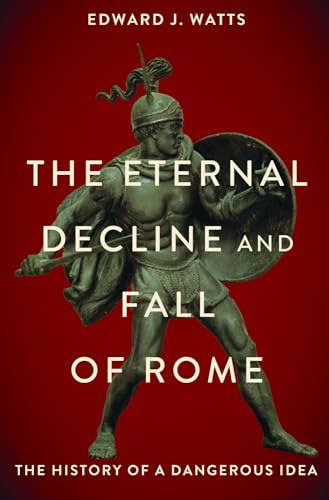
As this book intriguingly explores, for those who would make Rome great again and their victims, ideas of Roman decline and renewal have had a long and violent history.
The decline of Rome has been a constant source of discussion for more than 2200 years. Everyone from American journalists in the twenty-first century AD to Roman politicians at the turn of the third century BC have used it as a tool to illustrate the negative consequences of changes in their world. Because Roman history is so long, it provides a buffet of ready-made stories of decline that can help develop the context around any snapshot. And Rome did, in fact, decline and, eventually, fall. An empire that once controlled all or part of more than 40 modern European, Asian, and African countries no longer exists. Roman prophets of decline were, ultimately, proven correct-a fact that makes their modern invocations all the more powerful. If it happened then, it could happen now.
The Eternal Decline and Fall of Rome tells the stories of the people who built their political and literary careers around promises of Roman renewal as well as those of the victims they blamed for causing Rome's decline. Each chapter offers the historical context necessary to understand a moment or a series of moments in which Romans, aspiring Romans, and non--Romans used ideas of Roman decline and restoration to seize power and remake the world around them. The story begins during the Roman Republic just after 200 BC. It proceeds through the empire of Augustus and his successors, traces the Roman loss of much of western Europe in the fifth century AD, and then follows Roman history as it runs through the Eastern Roman Empire (Byzantium) until its fall in 1453. The final two chapters look at ideas of Roman decline and renewal from the fifteenth century until today. If Rome illustrates the profound danger of the rhetoric of decline, it also demonstrates the rehabilitative potential of a rhetoric that focuses on collaborative restoration, a lesson of great relevance to our world today.
"synopsis" may belong to another edition of this title.
About the Author
Edward J. Watts is Alkiviadis Vassiliadis Endowed Chair and Professor of History at the University of California, San Diego. His previous books include Mortal Republic: How Rome Fell into Tyranny, The Final Pagan Generation, and Hypatia: The Life and Legend of an Ancient Philosopher.
"About this title" may belong to another edition of this title.
Search results for The Eternal Decline and Fall of Rome: The History of...

Seller Image
The Eternal Decline and Fall of Rome: The History of a Dangerous Idea
Published by
Oxford University Press, 2023
ISBN 10: 0197691951
ISBN 13: 9780197691953
Used
Softcover
Seller: Gate City Books, GREENSBORO, NC, U.S.A.
Seller rating 5 out of 5 stars

Condition: very_good. Used - Very Good: Item may have minor cosmetic defects. Seller Inventory # GCM.3K8A
Seller Image
The Eternal Decline and Fall of Rome: The History of a Dangerous Idea
Published by
Oxford University Press, 2023
ISBN 10: 0197691951
ISBN 13: 9780197691953
Used
Softcover
Seller: Dream Books Co., Denver, CO, U.S.A.
Seller rating 5 out of 5 stars
Condition: acceptable. This copy has clearly been enjoyedâ"expect noticeable shelf wear and some minor creases to the cover. Binding is strong, and all pages are legible. May contain previous library markings or stamps. Seller Inventory # DBV.0197691951.A
Seller Image
The Eternal Decline and Fall of Rome: The History of a Dangerous Idea
Published by
Oxford University Press, 2023
ISBN 10: 0197691951
ISBN 13: 9780197691953
Used
Softcover
Seller: ZBK Books, Carlstadt, NJ, U.S.A.
Seller rating 5 out of 5 stars
Condition: very_good. Fast & Free Shipping â" Very Good condition book with a firm cover and clean pages. Shows normal use and some light wear or limited notes markings. A solid, nice copy to enjoy. Seller Inventory # ZWV.0197691951.VG
Stock Image
The Eternal Decline and Fall of Rome: The History of a Dangerous Idea
Published by
Oxford University Press, 2023
ISBN 10: 0197691951
ISBN 13: 9780197691953
Used
paperback
Seller: HPB Inc., Dallas, TX, U.S.A.
Seller rating 5 out of 5 stars
paperback. Condition: Very Good. Connecting readers with great books since 1972! Used books may not include companion materials, and may have some shelf wear or limited writing. We ship orders daily and Customer Service is our top priority! Seller Inventory # S_480211512
Seller Image
The Eternal Decline and Fall of Rome: The History of a Dangerous Idea
Published by
Oxford University Press, 2023
ISBN 10: 0197691951
ISBN 13: 9780197691953
Used
Softcover
Seller: Goodwill of Ventura and Santa Barbara Counties, Oxnard, CA, U.S.A.
Seller rating 5 out of 5 stars
Condition: very_good. Very good: The book does not look new and has been read but is in excellent condition. There is no obvious damage to the cover the dust jacket if applicable is included for hard covers. There are no missing or damaged pages, no creases or tears, and no underlining highlighting of text or writing in the margins. It may have very minimal identifying marks on the inside cover as well as very minimal wear and tear. See the seller's listing for full details and a description of any imperfections. Seller Inventory # VSBV.0197691951.VG
Stock Image
Eternal Decline and Fall of Rome : The History of a Dangerous Idea
Seller: GreatBookPrices, Columbia, MD, U.S.A.
Seller rating 5 out of 5 stars
Condition: New. Seller Inventory # 45986729-n
Stock Image
The Eternal Decline and Fall of Rome Format: Hardback
Seller: INDOO, Avenel, NJ, U.S.A.
Seller rating 5 out of 5 stars
Condition: New. Brand New. Seller Inventory # 9780197691953
Seller Image
The Eternal Decline and Fall of Rome: The History of a Dangerous Idea (Paperback or Softback)
Published by
Oxford University Press, USA 11/1/2023, 2023
ISBN 10: 0197691951
ISBN 13: 9780197691953
New
Paperback or Softback
Seller: BargainBookStores, Grand Rapids, MI, U.S.A.
Seller rating 5 out of 5 stars
Paperback or Softback. Condition: New. The Eternal Decline and Fall of Rome: The History of a Dangerous Idea. Book. Seller Inventory # BBS-9780197691953
Stock Image
The Eternal Decline and Fall of Rome: The History of a Dangerous Idea
Seller: California Books, Miami, FL, U.S.A.
Seller rating 5 out of 5 stars
Condition: New. Seller Inventory # I-9780197691953
Stock Image
Eternal Decline and Fall of Rome : The History of a Dangerous Idea
Published by
Oxford University Press, 2023
ISBN 10: 0197691951
ISBN 13: 9780197691953
Used
Softcover
Seller: GreatBookPrices, Columbia, MD, U.S.A.
Seller rating 5 out of 5 stars
Condition: As New. Unread book in perfect condition. Seller Inventory # 45986729