
Items related to The Rise and Fall of the Neoliberal Order: America...
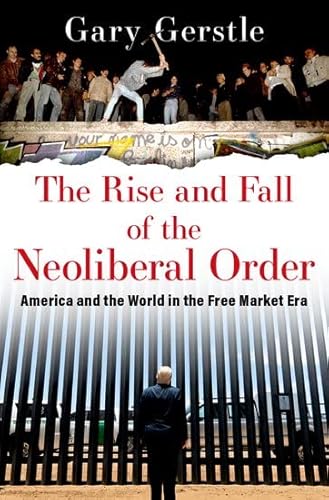
Synopsis
Shortlisted for the 2022 FT Business Book of the Year Award
"synopsis" may belong to another edition of this title.
About the Author
Gary Gerstle is Paul Mellon Professor of American History Emeritus and Paul Mellon Director of Research at the University of Cambridge. He is the author and editor of more than ten books, including two prizewinners, American Crucible (2017) and Liberty and Coercion (2015). He is a Guardian columnist and has also written for the Atlantic Monthly, the New Statesman, Dissent, The Nation, and Die Zeit ,among others. He frequently appears on BBC Radio 4, BBC World Service, ITV 4, Talking Politics, and NPR.
"About this title" may belong to another edition of this title.
Search results for The Rise and Fall of the Neoliberal Order: America...

Stock Image
The Rise and Fall of the Neoliberal Order: America and the World in the Free Market Era
Published by
Oxford University Press Inc, 2022
ISBN 10: 0197519644
ISBN 13: 9780197519646
Used
Hardcover
Seller: World of Books (was SecondSale), Montgomery, IL, U.S.A.
Seller rating 5 out of 5 stars

Hardback. Condition: Good. Best Books of 2022: Financial Times Best Non-Fiction Books of 2022: De Tijd Shortlisted for Financial Times Best Business Book of the Year The most sweeping account of how neoliberalism came to dominate American politics for nearly a half century before crashing against the forces of Trumpism on the right and a new progressivism on the left. The epochal shift toward neoliberalism-a web of related policies that, broadly speaking, reduced the footprint of government in society and reassigned economic power to private market forces-that began in the United States and Great Britain in the late 1970s fundamentally changed the world. Today, the word "neoliberal" is often used to condemn a broad swath of policies, from prizing free market principles over people to advancing privatization programs in developing nations around the world. To be sure, neoliberalism has contributed to a number of alarming trends, not least of which has been a massive growth in income inequality. Yet as the eminent historian Gary Gerstle argues in The Rise and Fall of the Neoliberal Order, these indictments fail to reckon with the full contours of what neoliberalism was and why its worldview had such persuasive hold on both the right and the left for three decades. As he shows, the neoliberal order that emerged in America in the 1970s fused ideas of deregulation with personal freedoms, open borders with cosmopolitanism, and globalization with the promise of increased prosperity for all. Along with tracing how this worldview emerged in America and grew to dominate the world, Gerstle explores the previously unrecognized extent to which its triumph was facilitated by the collapse of the Soviet Union and its communist allies. He is also the first to chart the story of the neoliberal order's fall, originating in the failed reconstruction of Iraq and Great Recession of the Bush years and culminating in the rise of Trump and a reinvigorated Bernie Sanders-led American left in the 2010s. An indispensable and sweeping re-interpretation of the last fifty years, this book illuminates how the ideology of neoliberalism became so infused in the daily life of an era, while probing what remains of that ideology and its political programs as America enters an uncertain future. Seller Inventory # 00110592754
Seller Image
The Rise and Fall of the Neoliberal Order: America and the World in the Free Market Era
Published by
Oxford University Press, 2022
ISBN 10: 0197519644
ISBN 13: 9780197519646
Used
Hardcover
Seller: -OnTimeBooks-, Phoenix, AZ, U.S.A.
Seller rating 5 out of 5 stars
Condition: good. A copy that has been read, remains in good condition. All pages are intact, and the cover is intact. The spine and cover show signs of wear. Pages can include notes and highlighting and show signs of wear, and the copy can include "From the library of" labels or previous owner inscriptions. 100% GUARANTEE! Shipped with delivery confirmation, if you're not satisfied with purchase please return item! Ships via media mail. Seller Inventory # OTV.0197519644.G
Stock Image
The Rise and Fall of the Neoliberal Order: America and the World in the Free Market Era
Published by
Oxford University Press, 2022
ISBN 10: 0197519644
ISBN 13: 9780197519646
Used
Hardcover
Seller: Bookmans, Tucson, AZ, U.S.A.
Seller rating 5 out of 5 stars
hardcover. Condition: Acceptable. Highlighting/Underlining/Notes etc. Satisfaction 100% guaranteed. Seller Inventory # mon0002769603
Stock Image
The Rise and Fall of the Neoliberal Order: America and the World in the Free Market Era
Published by
Oxford University Press, 2022
ISBN 10: 0197519644
ISBN 13: 9780197519646
Used
Hardcover
Seller: Open Books, Chicago, IL, U.S.A.
Seller rating 5 out of 5 stars
hardcover. Condition: Good. Contains some, or all, of the following: highlights, notes, and underlining. Open Books is a nonprofit social venture that provides literacy experiences for thousands of readers each year through inspiring programs and creative capitalization of books. Seller Inventory # mon0000854705
Seller Image
The Rise and Fall of the Neoliberal Order: America and the World in the Free Market Era
Published by
Oxford University Press, 2022
ISBN 10: 0197519644
ISBN 13: 9780197519646
Used
Hardcover
Seller: clickgoodwillbooks, Indianapolis, IN, U.S.A.
Seller rating 4 out of 5 stars

Condition: acceptable. Used - Acceptable: All pages and the cover are intact, but shrink wrap, dust covers, or boxed set case may be missing. Pages may include limited notes, highlighting, or minor water damage but the text is readable. Item may be missing bundled media. Seller Inventory # CSIV.0197519644.A
Stock Image
The Rise and Fall of the Neoliberal Order : America and the World in the Free Market Era
Published by
Oxford University Press, Incorporated, 2022
ISBN 10: 0197519644
ISBN 13: 9780197519646
Used
Hardcover
Seller: Better World Books, Mishawaka, IN, U.S.A.
Seller rating 5 out of 5 stars
Condition: Good. Pages intact with minimal writing/highlighting. The binding may be loose and creased. Dust jackets/supplements are not included. Stock photo provided. Product includes identifying sticker. Better World Books: Buy Books. Do Good. Seller Inventory # 42486669-6
Stock Image
The Rise and Fall of the Neoliberal Order: America and the World in the Free Market Era
Published by
Oxford University Press Inc, 2022
ISBN 10: 0197519644
ISBN 13: 9780197519646
Used
Hardcover
Seller: World of Books Inc, Montgomery, IL, U.S.A.
Seller rating 4 out of 5 stars
Hardback. Condition: Good. Best Books of 2022: Financial Times Best Non-Fiction Books of 2022: De Tijd Shortlisted for Financial Times Best Business Book of the Year The most sweeping account of how neoliberalism came to dominate American politics for nearly a half century before crashing against the forces of Trumpism on the right and a new progressivism on the left. The epochal shift toward neoliberalism-a web of related policies that, broadly speaking, reduced the footprint of government in society and reassigned economic power to private market forces-that began in the United States and Great Britain in the late 1970s fundamentally changed the world. Today, the word "neoliberal" is often used to condemn a broad swath of policies, from prizing free market principles over people to advancing privatization programs in developing nations around the world. To be sure, neoliberalism has contributed to a number of alarming trends, not least of which has been a massive growth in income inequality. Yet as the eminent historian Gary Gerstle argues in The Rise and Fall of the Neoliberal Order, these indictments fail to reckon with the full contours of what neoliberalism was and why its worldview had such persuasive hold on both the right and the left for three decades. As he shows, the neoliberal order that emerged in America in the 1970s fused ideas of deregulation with personal freedoms, open borders with cosmopolitanism, and globalization with the promise of increased prosperity for all. Along with tracing how this worldview emerged in America and grew to dominate the world, Gerstle explores the previously unrecognized extent to which its triumph was facilitated by the collapse of the Soviet Union and its communist allies. He is also the first to chart the story of the neoliberal order's fall, originating in the failed reconstruction of Iraq and Great Recession of the Bush years and culminating in the rise of Trump and a reinvigorated Bernie Sanders-led American left in the 2010s. An indispensable and sweeping re-interpretation of the last fifty years, this book illuminates how the ideology of neoliberalism became so infused in the daily life of an era, while probing what remains of that ideology and its political programs as America enters an uncertain future. Seller Inventory # CIN0197519644G
Stock Image
The Rise and Fall of the Neoliberal Order: America and the World in the Free Market Era
Published by
Oxford University Press Inc, 2022
ISBN 10: 0197519644
ISBN 13: 9780197519646
Used
Hardcover
Seller: World of Books (was SecondSale), Montgomery, IL, U.S.A.
Seller rating 5 out of 5 stars
Hardback. Condition: Very Good. Best Books of 2022: Financial Times Best Non-Fiction Books of 2022: De Tijd Shortlisted for Financial Times Best Business Book of the Year The most sweeping account of how neoliberalism came to dominate American politics for nearly a half century before crashing against the forces of Trumpism on the right and a new progressivism on the left. The epochal shift toward neoliberalism-a web of related policies that, broadly speaking, reduced the footprint of government in society and reassigned economic power to private market forces-that began in the United States and Great Britain in the late 1970s fundamentally changed the world. Today, the word "neoliberal" is often used to condemn a broad swath of policies, from prizing free market principles over people to advancing privatization programs in developing nations around the world. To be sure, neoliberalism has contributed to a number of alarming trends, not least of which has been a massive growth in income inequality. Yet as the eminent historian Gary Gerstle argues in The Rise and Fall of the Neoliberal Order, these indictments fail to reckon with the full contours of what neoliberalism was and why its worldview had such persuasive hold on both the right and the left for three decades. As he shows, the neoliberal order that emerged in America in the 1970s fused ideas of deregulation with personal freedoms, open borders with cosmopolitanism, and globalization with the promise of increased prosperity for all. Along with tracing how this worldview emerged in America and grew to dominate the world, Gerstle explores the previously unrecognized extent to which its triumph was facilitated by the collapse of the Soviet Union and its communist allies. He is also the first to chart the story of the neoliberal order's fall, originating in the failed reconstruction of Iraq and Great Recession of the Bush years and culminating in the rise of Trump and a reinvigorated Bernie Sanders-led American left in the 2010s. An indispensable and sweeping re-interpretation of the last fifty years, this book illuminates how the ideology of neoliberalism became so infused in the daily life of an era, while probing what remains of that ideology and its political programs as America enters an uncertain future. Seller Inventory # 00110006697
Stock Image
The Rise and Fall of the Neoliberal Order: America and the World in the Free Market Era
Published by
Oxford University Press (edition ), 2022
ISBN 10: 0197519644
ISBN 13: 9780197519646
Used
Hardcover
Seller: BooksRun, Philadelphia, PA, U.S.A.
Seller rating 5 out of 5 stars
Hardcover. Condition: Very Good. With dust jacket. It's a well-cared-for item that has seen limited use. The item may show minor signs of wear. All the text is legible, with all pages included. It may have slight markings and/or highlighting. Seller Inventory # 0197519644-8-1-29
Stock Image
The Rise and Fall of the Neoliberal Order: America and the World in the Free Market Era
Published by
Oxford University Press Inc, 2022
ISBN 10: 0197519644
ISBN 13: 9780197519646
Used
Hardcover
Seller: World of Books Inc, Montgomery, IL, U.S.A.
Seller rating 4 out of 5 stars
Hardback. Condition: Very Good. Best Books of 2022: Financial Times Best Non-Fiction Books of 2022: De Tijd Shortlisted for Financial Times Best Business Book of the Year The most sweeping account of how neoliberalism came to dominate American politics for nearly a half century before crashing against the forces of Trumpism on the right and a new progressivism on the left. The epochal shift toward neoliberalism-a web of related policies that, broadly speaking, reduced the footprint of government in society and reassigned economic power to private market forces-that began in the United States and Great Britain in the late 1970s fundamentally changed the world. Today, the word "neoliberal" is often used to condemn a broad swath of policies, from prizing free market principles over people to advancing privatization programs in developing nations around the world. To be sure, neoliberalism has contributed to a number of alarming trends, not least of which has been a massive growth in income inequality. Yet as the eminent historian Gary Gerstle argues in The Rise and Fall of the Neoliberal Order, these indictments fail to reckon with the full contours of what neoliberalism was and why its worldview had such persuasive hold on both the right and the left for three decades. As he shows, the neoliberal order that emerged in America in the 1970s fused ideas of deregulation with personal freedoms, open borders with cosmopolitanism, and globalization with the promise of increased prosperity for all. Along with tracing how this worldview emerged in America and grew to dominate the world, Gerstle explores the previously unrecognized extent to which its triumph was facilitated by the collapse of the Soviet Union and its communist allies. He is also the first to chart the story of the neoliberal order's fall, originating in the failed reconstruction of Iraq and Great Recession of the Bush years and culminating in the rise of Trump and a reinvigorated Bernie Sanders-led American left in the 2010s. An indispensable and sweeping re-interpretation of the last fifty years, this book illuminates how the ideology of neoliberalism became so infused in the daily life of an era, while probing what remains of that ideology and its political programs as America enters an uncertain future. Seller Inventory # CIN0197519644VG