
Items related to Pseudo-Dionysius: A Commentary on the Texts and an...
Synopsis
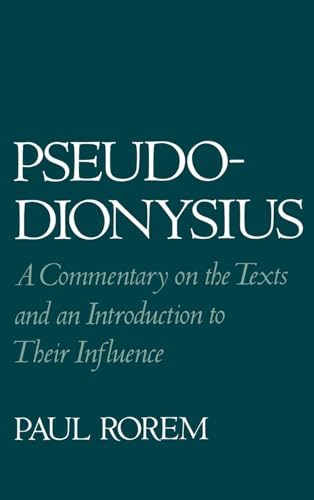
Dionysius the Areopagite is the peudonymous author of an influential body of early (about 500 AD) Christian theological texts. The Pseudo-Dionysian writings offer a synthesis of Christian dogma and Neo-platonic thought. Their leading idea which has made them the charter of Christian mysticism, is the intimate union between God and the soul and the progressive deification of man. In this book, Paul Rorem examines and elucidates these difficult texts and explores their profound influence on medieval theology both in the East and west. As Rorem shows, the Pseudo-Dionysian writings were regarded almost as a "Summa Theologica" in the Eastern Church. In the West, they were commented on by virtually all of the great medieval theologians. Thomas Aquinas alone cites Dionysius is some 1,700 places.
Rorem is co-translator of the 1984 edition (Paulist Press) of the complete Pseudo-Dionysius (the first English-language edition in modern times) and provided the notes, indices, and bibliography. The present book will make these texts more accessible to both scholars and students. A comprehensive bibliography of secondary sources will be included.
"synopsis" may belong to another edition of this title.
From the Back Cover
Pseudo-Dionysius is the name given to the author of an influential body of theological texts, dating from around 500 C.E. For centuries, the works were falsely attributed to "Dionysius the Areopagite", the biblical name chosen by the pseudonymous author - that of the Athenian who was converted to Christianity by St. Paul in Acts 17. Written some five hundred years later than the biblical account, The Celestial Hierarchy, The Ecclesiastical Hierarchy, The Divine Names, and the Mystical Theology offer a synthesis of biblical interpretation, liturgical spirituality and Neoplatonic philosophy. Their central motif, which has made them the charter of Christian mysticism, is the upward progress of the soul toward God through the spiritual interpretation of the Bible and the liturgy. Dionysius continually reminds his readers, however, that all human concepts fall short of the transcendence of God. In this book, Rorem provides a commentary on all of the Dionysian writings, chapter by chapter, paying special attention to their complex inner coherence. The Dionysian influence on medieval theology is introduced in essays on specific topics: hierarchy, biblical symbolism, angels, Gothic architecture, liturgical allegory, the scholastic doctrine of God, and the mystical theology of the western Middle Ages. Rorem's book makes these important texts more accessible to both scholars and students and includes a comprehensive bibliography of secondary sources.
"About this title" may belong to another edition of this title.
Search results for Pseudo-Dionysius: A Commentary on the Texts and an...

Seller Image
Pseudo-Dionysius: A Commentary on the Texts and an Introduction to Their Influence
Published by
Oxford University Press, 1993
ISBN 10: 0195076648
ISBN 13: 9780195076646
Used
Hardcover
Seller: Griffin Rare Books, Charleston, SC, U.S.A.
Seller rating 5 out of 5 stars

Hardcover. Condition: Fine. Dust Jacket Condition: Fine. Fine copy. Clean and bright throughout. Probably never read. Jacket shows virtually no shelf wear. "'Dionysius the Areopagite' is the biblical name chosen by the pseudonymous author of an influential body of Christian theological texts, dating from around 500 C.E. The Celestial Hierarchy, The Ecclesiastical Hierarchy, The Divine Names, and The Mystical Theology offer a synthesis of biblical interpretation, liturgical spirituality, and Neoplatonic philosophy. Their central motif, which has made them the charter of Christian mysticism, is the upward progress of the soul toward God through the spiritual interpretation of the Bible and the liturgy. Dionysius continually reminds his readers, however, that all human concepts fall short of the transcendence of God and must therefore be abandoned in negotiations and silence. In this book, Rorem provides a commentary on all of the Dionysian writings, chapter by chapter, and examines especially their complex inner coherence. The Dionysian influence on medieval theology is introduced in essays on specific topics: hierarchy, biblical symbolism, angels, Gothic architecture, liturgical allegory, the scholastic doctrine of God, and the mystical theology of the western Middle Ages. Rorem's book makes these texts more accessible to both scholars and students and includes a comprehensive bibliography of secondary sources." -- ?c From publisher's description. Seller Inventory # GRB-pseudo-dionysius-a-comme-867237
Stock Image
Pseudo-Dionysius : A Commentary on the Texts and an Introduction to Their Influence
Published by
Oxford University Press, Incorporated, 1993
ISBN 10: 0195076648
ISBN 13: 9780195076646
Used
Hardcover
Seller: Better World Books, Mishawaka, IN, U.S.A.
Seller rating 5 out of 5 stars
Condition: Very Good. Pages intact with possible writing/highlighting. Binding strong with minor wear. Dust jackets/supplements may not be included. Stock photo provided. Product includes identifying sticker. Better World Books: Buy Books. Do Good. Seller Inventory # 16166900-6
Seller Image
Pseudo-Dionysius: A Commentary on the Texts and an Introduction to Their Influence
Published by
Oxford University Press, 1993
ISBN 10: 0195076648
ISBN 13: 9780195076646
Used
Hardcover
Seller: Lacey Books Ltd, Cirencester, United Kingdom
Seller rating 5 out of 5 stars
Hardcover. Condition: Fair. No Jacket. 1993 OUP hardcover edition. Ex library copy with stamps and labels and without dustjacket else good condition. Dionysius the Areopagite is the peudonymous author of an influential body of early (about 500 AD) Christian theological texts. The Pseudo-Dionysian writings offer a synthesis of Christian dogma and Neo-platonic thought. Their leading idea which has made them the charter of Christian mysticism, is the intimate union between God and the soul and the progressive deification of man. In this book, Paul Rorem examines and elucidates these difficult texts and explores their profound influence on medieval theology both in the East and west. As Rorem shows, the Pseudo-Dionysian writings were regarded almost as a "Summa Theologica" in the Eastern Church. In the West, they were commented on by virtually all of the great medieval theologians. Thomas Aquinas alone cites Dionysius is some 1,700 places. Rorem is co-translator of the 1984 edition (Paulist Press) of the complete Pseudo-Dionysius (the first English-language edition in modern times) and provided the notes, indices, and bibliography. The present book will make these texts more accessible to both scholars and students. A comprehensive bibliography of secondary sources will be included. Seller Inventory # 6C-527R-Z8GG
Seller Image
Pseudo-Dionysius (Hardcover)
Published by
Oxford University Press Inc, New York, 1993
ISBN 10: 0195076648
ISBN 13: 9780195076646
New
Hardcover
Seller: AussieBookSeller, Truganina, VIC, Australia
Seller rating 5 out of 5 stars
Hardcover. Condition: new. Hardcover. "Dionysius the Areopagite" is the biblical name chosen by the pseudonymous author of an influential body of Christian theological texts, dating from around 500 C.E. The Celestial Hierarchy, The Ecclesiastical Hierarchy, The Divine Names, and The Mystical Theology offer a synthesis of biblical interpretation, liturgical spirituality, and Neoplatonic philosophy. Their central motif, which has made them the charter of Christianmysticism, is the upward progress of the soul toward God through the spiritual interpretation of the Bible and the liturgy. Dionysius continually reminds his readers, however, that all human concepts fall short of the transcendence of God andmust therefore be abandoned in negotiations and silence. In this book, Rorem provides a commentary on all of the Dionysian writings, chapter by chapter, and examines especially their complex inner coherence. The Dionysian influence on medieval theology is introduced in essays on specific topics: hierarchy, biblical symbolism, angels, Gothic architecture, liturgical allegory, the scholastic doctrine of God, and the mystical theology of the western Middle Ages. Rorem's book makes these texts moreaccessible to both scholars and students and includes a comprehensive bibliography of secondary sources. Dionysius the Areopagite is the pseudonymous author of an influential body of early (about 500 AD) Christian theological texts. Paul Rorem here explores the influence of these texts on medieval theology in the East and the West. This item is printed on demand. Shipping may be from our Sydney, NSW warehouse or from our UK or US warehouse, depending on stock availability. Seller Inventory # 9780195076646
Buy New
£ 132.04
£ 27.89 shipping
Ships from Australia to U.S.A.
Ships from Australia to U.S.A.
Quantity: 1 available
Stock Image
Pseudo-Dionysius: A Commentary on the Texts and an Introduction to Their Influence
Seller: BennettBooksLtd, Los Angeles, CA, U.S.A.
Seller rating 5 out of 5 stars
Hardcover. Condition: New. In shrink wrap. Looks like an interesting title! Seller Inventory # Q-0195076648
Stock Image
Pseudo-Dionysius: A Commentary on the Texts and an Introduction to Their Influence (eng)
Print on DemandSeller: Brook Bookstore On Demand, Napoli, NA, Italy
Seller rating 5 out of 5 stars
Condition: new. Questo è un articolo print on demand. Seller Inventory # af27a31299fd2b9c45f2f2e3622134a3
Buy New
£ 173.15
£ 5.81 shipping
Ships from Italy to U.S.A.
Ships from Italy to U.S.A.
Quantity: Over 20 available
Stock Image
Pseudo-Dionysius
Published by
Oxford University Press Inc, 1993
ISBN 10: 0195076648
ISBN 13: 9780195076646
New
Hardcover
Seller: Kennys Bookshop and Art Galleries Ltd., Galway, GY, Ireland
Seller rating 5 out of 5 stars
Condition: New. Dionysius the Areopagite is the pseudonymous author of an influential body of early (about 500 AD) Christian theological texts. Paul Rorem here explores the profound influence of these texts on medieval theolgy in the East and the West. Num Pages: 288 pages, black & white illustrations. BIC Classification: HRCC1; HRCG; HRCM. Category: (P) Professional & Vocational. Dimension: 243 x 164 x 26. Weight in Grams: 599. . 1993. Hardback. . . . . Seller Inventory # V9780195076646
Buy New
£ 171.85
£ 8.11 shipping
Ships from Ireland to U.S.A.
Ships from Ireland to U.S.A.
Quantity: Over 20 available
Seller Image
Pseudo-Dionysius; a commentary on the texts and an introduction to their influence / Paul Rorem
Published by
New York [u.a.] : Oxford Univ. Press,, 1993
ISBN 10: 0195076648
ISBN 13: 9780195076646
Used
Hardcover
Seller: Licus Media e.K., Utting a. Ammersee, Germany
Seller rating 4 out of 5 stars

Gebundene Ausgabe. Condition: Gut. eng, Literaturverz. S. 245 - 267. XIII, 267 S. In english language. Hardback with title to spine, without dust jacket. Former library copy with external labelings removed from boards. Colour of spine slightly discoloured, otherwise with clean text and well kept. Signatur stamps on endpapers, title and page edges. + + + Originalleineneinband mit Rückenbetitelung, ohne Schutzumschlag. Ordentlich ausgesondertes Bibliotheksexemplar m. entfernten äußerlichen Kennzeichnungen. Einbandrückeen etwas aufgehellt und m. geringf. Restspuren einer entfernten Inventarnummer, Buchblock geringf. schief, sonst sauber und gepflegt. Signatur- / Entwidmungstempel a. Vorsatz, Titel und Schnitt. 0195076648 Werktäglicher Versand. Jede Lieferung m. ordentl. Rechnung und ausgew. MwSt. Der Versand erfolgt als Büchersendung / Einschreiben mit der Deutschen Post bzw. als Päckchen / Paket mit DHL. Die Lieferzeit ist abhängig von der Versandart und beträgt innerhalb Deutschlands 3-5 Tage, in der EU 5 - 12 Tage. KEIN Versand an Packstationen. Körperschaften und juristische Personen werden auf Wunsch per offener Rechnung beliefert. ***ATTENTION U.S. CUSTOMERS: Due to the new tariffs, we are unable to ship packages to the USA at this time. Thank you for understanding.*** Sprache: Englisch Gewicht in Gramm: 550. Seller Inventory # 99841
Stock Image
Pseudo-Dionysius
Print on DemandSeller: PBShop.store UK, Fairford, GLOS, United Kingdom
Seller rating 5 out of 5 stars
HRD. Condition: New. New Book. Delivered from our UK warehouse in 4 to 14 business days. THIS BOOK IS PRINTED ON DEMAND. Established seller since 2000. Seller Inventory # L1-9780195076646
Buy New
£ 210.11
£ 5.02 shipping
Ships from United Kingdom to U.S.A.
Ships from United Kingdom to U.S.A.
Quantity: Over 20 available
Stock Image
Pseudo-Dionysius
Published by
Oxford University Press Inc, 1993
ISBN 10: 0195076648
ISBN 13: 9780195076646
New
Hardcover
Seller: Kennys Bookstore, Olney, MD, U.S.A.
Seller rating 5 out of 5 stars
Condition: New. Dionysius the Areopagite is the pseudonymous author of an influential body of early (about 500 AD) Christian theological texts. Paul Rorem here explores the profound influence of these texts on medieval theolgy in the East and the West. Num Pages: 288 pages, black & white illustrations. BIC Classification: HRCC1; HRCG; HRCM. Category: (P) Professional & Vocational. Dimension: 243 x 164 x 26. Weight in Grams: 599. . 1993. Hardback. . . . . Books ship from the US and Ireland. Seller Inventory # V9780195076646