
Items related to A History of the World in 100 Objects
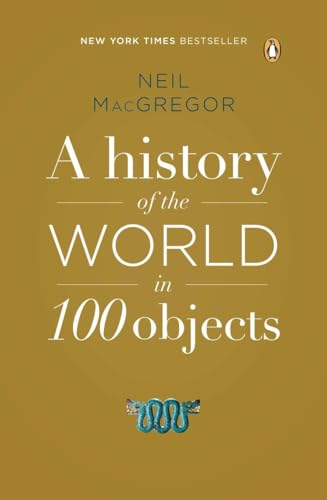
Synopsis
"An enthralling and profoundly humane book that every civilized person should read."
--The Wall Street Journal
When did people first start to wear jewelry or play music? When were cows domesticated, and why do we feed their milk to our children? Where were the first cities, and what made them succeed? Who developed math--or invented money?
The history of humanity is one of invention and innovation, as we have continually created new things to use, to admire, or leave our mark on the world. In this groundbreaking book, Neil MacGregor turns to objects that previous civilizations have left behind to paint a portrait of mankind's evolution, focusing on unexpected turning points. Beginning with a chopping tool from the Olduvai Gorge in Africa and ending with a recent innovation that is transforming the way we power our world, he urges us to see history as a kaleidoscope--shifting, interconnected, constantly surprising. A landmark bestseller, A History of the World in 100 Objects is one f the most unusual and engrossing history books to be published in years. "None could have imagined quite how the radio series would permeate the national consciousness. Well over 12.5 million podcasts have been downloaded since the first programme and more than 550 museums around Britain have launched similar series featuring local history. . . . MacGregor's voice comes through as distinctively as it did on radio and his arguments about the interconnectedness of disparate societies through the ages are all the stronger for the detail afforded by extra space. A book to savour and start over."--The Economist
"synopsis" may belong to another edition of this title.
About the Author
Neil MacGregor has blazed an unusual path to international renown. As director of the British Museum, he organized an exhibit that aimed to tell the history of humanity through the stories of one hundred objects made, used, venerated, or discarded by man. The exhibit and its accompanying BBC radio series broke broadcasting records and MacGregor's book became a bestselling sensation on both sides of the Atlantic. He is also the author of Shakespeare's Restless World.
"About this title" may belong to another edition of this title.
Search results for A History of the World in 100 Objects

Stock Image
A History of the World in 100 Objects
Seller: New Legacy Books, Annandale, NJ, U.S.A.
Seller rating 4 out of 5 stars

paperback. Condition: Good. The cover shows normal wear. Fast shipping and order satisfaction guaranteed. A portion of your purchase benefits Non-Profit Organizations, First Aid and Fire Stations! Seller Inventory # mon-ug-0143124153
Stock Image
A History of the World in 100 Objects
Seller: World of Books (was SecondSale), Montgomery, IL, U.S.A.
Seller rating 5 out of 5 stars

Paperback. Condition: Good. "An enthralling and profoundly humane book that every civilized person should read." --The Wall Street Journal The blockbuster New York Times bestseller and the companion volume to the wildly popular radio series When did people first start to wear jewelry or play music? When were cows domesticated, and why do we feed their milk to our children? Where were the first cities, and what made them succeed? Who developed math--or invented money? The history of humanity is one of invention and innovation, as we have continually created new things to use, to admire, or leave our mark on the world. In this groundbreaking book, Neil MacGregor turns to objects that previous civilizations have left behind to paint a portrait of mankind's evolution, focusing on unexpected turning points. Beginning with a chopping tool from the Olduvai Gorge in Africa and ending with a recent innovation that is transforming the way we power our world, he urges us to see history as a kaleidoscope--shifting, interconnected, constantly surprising. A landmark bestseller, A History of the World in 100 Objects is one f the most unusual and engrossing history books to be published in years. "None could have imagined quite how the radio series would permeate the national consciousness. Well over 12.5 million podcasts have been downloaded since the first programme and more than 550 museums around Britain have launched similar series featuring local history. . . . MacGregor's voice comes through as distinctively as it did on radio and his arguments about the interconnectedness of disparate societies through the ages are all the stronger for the detail afforded by extra space. A book to savour and start over." --The Economist. Seller Inventory # 00109648325
Stock Image
A History of the World in 100 Objects
Seller: Hawking Books, Edgewood, TX, U.S.A.
Seller rating 5 out of 5 stars
Condition: Very Good. Very Good Condition. Five star seller - Buy with confidence! Seller Inventory # X0143124153X2
Stock Image
A History of the World in 100 Objects
Seller: ThriftBooks-Phoenix, Phoenix, AZ, U.S.A.
Seller rating 5 out of 5 stars
Paperback. Condition: Good. No Jacket. Pages can have notes/highlighting. Spine may show signs of wear. ~ ThriftBooks: Read More, Spend Less. Seller Inventory # G0143124153I3N00
Stock Image
A History of the World in 100 Objects
Seller: Idaho Youth Ranch Books, Boise, ID, U.S.A.
Seller rating 5 out of 5 stars
Condition: Good. A copy that has been read, but remains in clean condition. All pages are intact, and the cover is intact (including dust cover, if applicable). The spine may show signs of wear. Pages can include limited notes and highlighting, and the copy can include "From the library of" labels or limited small stickers. Book may have a remainder mark or be a price cutter. Seller Inventory # CU-03-05-03-0364
Stock Image
A History of the World in 100 Objects
Seller: ThriftBooks-Atlanta, AUSTELL, GA, U.S.A.
Seller rating 5 out of 5 stars
Paperback. Condition: Very Good. No Jacket. May have limited writing in cover pages. Pages are unmarked. ~ ThriftBooks: Read More, Spend Less. Seller Inventory # G0143124153I4N00
Stock Image
A History of the World in 100 Objects
Seller: ThriftBooks-Atlanta, AUSTELL, GA, U.S.A.
Seller rating 5 out of 5 stars
Paperback. Condition: Fair. No Jacket. Readable copy. Pages may have considerable notes/highlighting. ~ ThriftBooks: Read More, Spend Less. Seller Inventory # G0143124153I5N00
Stock Image
A History of the World in 100 Objects
Seller: ThriftBooks-Dallas, Dallas, TX, U.S.A.
Seller rating 5 out of 5 stars
Paperback. Condition: Good. No Jacket. Pages can have notes/highlighting. Spine may show signs of wear. ~ ThriftBooks: Read More, Spend Less. Seller Inventory # G0143124153I3N00
Stock Image
A History of the World in 100 Objects
Seller: ThriftBooks-Atlanta, AUSTELL, GA, U.S.A.
Seller rating 5 out of 5 stars
Paperback. Condition: Good. No Jacket. Pages can have notes/highlighting. Spine may show signs of wear. ~ ThriftBooks: Read More, Spend Less. Seller Inventory # G0143124153I3N00
Stock Image
A History of the World in 100 Objects
Seller: World of Books Inc, Montgomery, IL, U.S.A.
Seller rating 4 out of 5 stars
Paperback. Condition: Good. "An enthralling and profoundly humane book that every civilized person should read." --The Wall Street Journal The blockbuster New York Times bestseller and the companion volume to the wildly popular radio series When did people first start to wear jewelry or play music? When were cows domesticated, and why do we feed their milk to our children? Where were the first cities, and what made them succeed? Who developed math--or invented money? The history of humanity is one of invention and innovation, as we have continually created new things to use, to admire, or leave our mark on the world. In this groundbreaking book, Neil MacGregor turns to objects that previous civilizations have left behind to paint a portrait of mankind's evolution, focusing on unexpected turning points. Beginning with a chopping tool from the Olduvai Gorge in Africa and ending with a recent innovation that is transforming the way we power our world, he urges us to see history as a kaleidoscope--shifting, interconnected, constantly surprising. A landmark bestseller, A History of the World in 100 Objects is one f the most unusual and engrossing history books to be published in years. "None could have imagined quite how the radio series would permeate the national consciousness. Well over 12.5 million podcasts have been downloaded since the first programme and more than 550 museums around Britain have launched similar series featuring local history. . . . MacGregor's voice comes through as distinctively as it did on radio and his arguments about the interconnectedness of disparate societies through the ages are all the stronger for the detail afforded by extra space. A book to savour and start over." --The Economist. Seller Inventory # CIN0143124153G