
Items related to Principles of Financial Engineering (Academic Press...
Synopsis
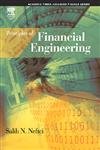
Principles of Financial Engineering presents a fresh, original, informative, and up-to-date introduction to financial engineering.
Rather than introducing financial instruments, this book describes the methods of synthetically creating assets in static and in dynamic environments, and shows how to use them. It offers clear links between intuition and underlying mathematics and an outstanding mixture of market insights and mathematical materials. It emphasizes developing methods that can be used to solve risk management, taxation, regulation, and above all, pricing problems. It explains issues involved in the day-to-day life of traders, using non-mathematical language. It provides a careful and concise analysis of the LIBOR market model and of volatility engineering problems. Exercises and case studies at end of each chapter as well as on-line Solutions Manual are available.
This book will be a useful resource for anyone learning about practical elements of financial engineering. It can also serve as a resource for professionals and academics in all areas of quantitative finance.
* Exercises and case studies at end of each chapter and on-line Solutions Manual provided* Explains issues involved in day-to-day life of traders, using language other than mathematics* Careful and concise analysis of the LIBOR market model and of volatility engineering problems"synopsis" may belong to another edition of this title.
About the Author
Professor Neftci completed his Ph.D. at the University of Minnesota and was head of the FAME Certificate program in Switzerland. He taught at the Graduate School, City University of New York; ICMA Centre, University of Reading; and at the University of Lausanne. He was also a Visiting Professor in the Finance Department at Hong Kong University of Science and Technology. Known his books and articles, he was a regular columnist for CBN daily, the most influential financial newspaper in China.
Salih Neftci was already suffering from gliosarcoma, a malignant brain cancer, while writing the second edition. It published just 5 months before his death on April 15, 2009.
From the Back Cover
On a topic where there is already a substantial body of literature, Salih Neftci succeeds in presenting a fresh, original, informative, and quite up-to-date introduction to financial engineering. Seeking not to introduce financial instruments but instead to describe the methods of synthetically creating assets in static and in dynamic environments and to show how to use them, his book complements all currently available textbooks, from John Hull's popular editions to more mathematical books such as one by Musiela-Rutkowski. The book introduces a rationale that can be used for obtaining synthetic instruments for any purpose. It emphasizes developing methods that can be used in order to solve risk management, taxation, regulation, and above all, pricing problems.
About the Author
Salih N. Neftci completed his Ph.D. at the University of Minnesota and subsequently taught at George Washington University, Boston College, and the Graduate Institute for International Studies in Geneva. He currently serves as a professor at the Graduate School of the City University of New York and at the ISMA Centre, University of Reading. Professor Neftci is also head of the FAME Certificate Program, an intensive 5-week training course of young market professionals and academics, and he participates in the FAME Ph.D. program as well. In addition to teaching, Professor Neftci works with financial institutions on applied pricing and risk management problems.
"Neftci's book captures much of the excitement of the recent surge of theoretical and practical work on financial engineering. A variety of readers
will be interested in this book, including lay people who are interested in better understanding how financial markets can be used to share and mitigate
risks and practitioners who are interested in constructing and valuing new securities."
- Thomas Sargent, Professor of Economics at NYU, and a Senior Fellow at the Hoover Institution, Stanford University
"About this title" may belong to another edition of this title.
Search results for Principles of Financial Engineering (Academic Press...

Stock Image
Principles of Financial Engineering
Published by
Elsevier Science & Technology, 2004
ISBN 10: 0125153945
ISBN 13: 9780125153942
Used
Hardcover
Seller: Better World Books, Mishawaka, IN, U.S.A.
Seller rating 5 out of 5 stars

Condition: Good. Former library copy. Pages intact with minimal writing/highlighting. The binding may be loose and creased. Dust jackets/supplements are not included. Includes library markings. Stock photo provided. Product includes identifying sticker. Better World Books: Buy Books. Do Good. Seller Inventory # 15312838-6
Stock Image
Principles of Financial Engineering (Academic Press Advanced Finance)
Seller: HPB-Red, Dallas, TX, U.S.A.
Seller rating 5 out of 5 stars
Hardcover. Condition: Good. Connecting readers with great books since 1972! Used textbooks may not include companion materials such as access codes, etc. May have some wear or writing/highlighting. We ship orders daily and Customer Service is our top priority! Seller Inventory # S_439742733
Stock Image
Principles of Financial Engineering
Seller: ThriftBooks-Dallas, Dallas, TX, U.S.A.
Seller rating 5 out of 5 stars
Hardcover. Condition: Good. No Jacket. Pages can have notes/highlighting. Spine may show signs of wear. ~ ThriftBooks: Read More, Spend Less. Seller Inventory # G0125153945I3N00
Seller Image
Principles of Financial Engineering
Seller: Goodwill of Central and Coastal Virginia, Richmond, VA, U.S.A.
Seller rating 4 out of 5 stars

Condition: acceptable. Seller Inventory # CCVV.0125153945.A
Seller Image
Principles of Financial Engineering
Seller: Optimon Books, Gravesend, KENT, United Kingdom
Seller rating 5 out of 5 stars
Hardcover. Condition: Very Good. Principles of Financial Engineering presents a fresh, original, informative, and up-to-date introduction to financial engineering. Rather than introducing financial instruments, this book describes the methods of synthetically creating assets in static and in dynamic environments, and shows how to use them. It offers clear links between intuition and underlying mathematics and an outstanding mixture of market insights and mathematical materials. It emphasizes developing methods that can be used to solve risk management, taxation, regulation, and above all, pricing problems. It explains issues involved in the day-to-day life of traders, using non-mathematical language. It provides a careful and concise analysis of the LIBOR market model and of volatility engineering problems. Exercises and case studies at end of each chapter as well as on-line Solutions Manual are available. This book will be a useful resource for anyone learning about practical elements of financial engineering. It can also serve as a resource for professionals and academics in all areas of quantitative finance. Copyright © Elsevier Science. Seller Inventory # 466467
Buy Used
£ 36.99
£ 18 shipping
Ships from United Kingdom to U.S.A.
Ships from United Kingdom to U.S.A.
Quantity: 1 available
Stock Image
Principles of Financial Engineering (Academic Press Advanced Finance)
Seller: Studibuch, Stuttgart, Germany
Seller rating 5 out of 5 stars
hardcover. Condition: Gut. 576 Seiten; 9780125153942.3 Gewicht in Gramm: 3. Seller Inventory # 1061910
Stock Image
Principles of Financial Engineering
Seller: YESIBOOKSTORE, MIAMI, FL, U.S.A.
Seller rating 5 out of 5 stars
hardcover. Condition: As New. Seller Inventory # 0125153945-VB
Stock Image
Principles of Financial Engineering
Seller: DeckleEdge LLC, Albuquerque, NM, U.S.A.
Seller rating 5 out of 5 stars
hardcover. Condition: new. Seller Inventory # Shelfdream0125153945
Stock Image
Principles of Financial Engineering
Seller: Majestic Books, Hounslow, United Kingdom
Seller rating 4 out of 5 stars
Condition: New. pp. 556. Seller Inventory # 7415520
Buy New
£ 88.04
£ 6.50 shipping
Ships from United Kingdom to U.S.A.
Ships from United Kingdom to U.S.A.
Quantity: 1 available
Stock Image
Principles of Financial Engineering
Seller: Revaluation Books, Exeter, United Kingdom
Seller rating 5 out of 5 stars
Hardcover. Condition: Brand New. 1st edition. 500 pages. 10.25x7.50x1.50 inches. In Stock. Seller Inventory # 0125153945
Buy New
£ 136.52
£ 15 shipping
Ships from United Kingdom to U.S.A.
Ships from United Kingdom to U.S.A.
Quantity: 1 available