
Items related to Ecological Paradigms Lost: Routes of Theory Change:...
Ecological Paradigms Lost: Routes of Theory Change: Volume 2 (Theoretical Ecology Series, Volume 2) - Hardcover
Synopsis
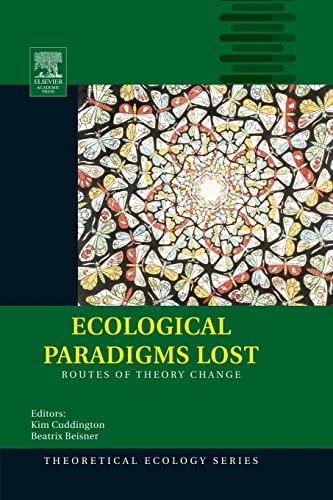
This edited volume in the Theoretical Ecology series addresses the historical development and evolution of theoretical ideas in the field of ecology. Not only does it recount the history of the discipline by practitioners of the science of ecology, it includes commentary on these historical reflections by philosophers of science. Even though the theories discussed are, in many cases, are at the forefront of research, the language and approach make this material accessible to non-theoreticians. The book is structured in 5 major sections including population ecology, epidemiology, community ecology, evolutionary biology and ecosystem ecology. In each section a chapter by an eminent, experienced ecologist is complemented by analysis from a newer, cutting-edge researcher.
"synopsis" may belong to another edition of this title.
Review
"Finally, here is a book taking ecology seriously enough also to investigate it from a philosophy of science point of view, and in particular taking a Kuhnian entrance point as also indicated by the title...an exciting book and an interesting idea to view our science as Kuhn would have done...highly recommended." --Soren Nors Nielsen, Danmarks Farmaceutiske Universitet "Each section of Ecological Paradigms Lost certainly has something to offer the specialist." --Joseph Craine, Unviersity of Minnesota, Department of Ecology, Evolution, and Behavior, in BIOSCIENCE
The editors of this volume commissioned papers by eminent ecologists, young and old, on theory development and cahnge in five subfields- population, epidemiological, community, evolutionary, and ecosystem ecology- and papers from philosophers of science commenting on the scientists' conclusions...a better perspective on ecology's past and, possibly, its future." --Thomas R. Dunlap, Texas A&M University, Department of History, in ECOLOGY
"About this title" may belong to another edition of this title.
Search results for Ecological Paradigms Lost: Routes of Theory Change:...

Stock Image
Ecological Paradigms Lost: Routes of Theory Change
Seller: oz5457, Norridge, IL, U.S.A.
Seller rating 5 out of 5 stars

Hardcover. Condition: Good. No Jacket. 2005 Elsevier hardcover; no dust jacket; light cover wear; pages clean/tight; good condition. Seller Inventory # 121
Stock Image
Ecological Paradigms Lost: Routes of Theory Change
Published by
Elsevier Academic Press, 2005
ISBN 10: 0120884593
ISBN 13: 9780120884599
Used
Hardcover
Seller: HPB-Red, Dallas, TX, U.S.A.
Seller rating 5 out of 5 stars
hardcover. Condition: Good. Connecting readers with great books since 1972! Used textbooks may not include companion materials such as access codes, etc. May have some wear or writing/highlighting. We ship orders daily and Customer Service is our top priority! Seller Inventory # S_478727820
Stock Image
Ecological Paradigms Lost Routes Of Theory Change
Seller: Basi6 International, Irving, TX, U.S.A.
Seller rating 5 out of 5 stars
Condition: Brand New. New. US edition. Expediting shipping for all USA and Europe orders excluding PO Box. Excellent Customer Service. Seller Inventory # ABEOCT25-55571
Stock Image
Ecological Paradigms Lost: Routes of Theory Change
Published by
Elsevier Academic Press, 2005
ISBN 10: 0120884593
ISBN 13: 9780120884599
Used
Hardcover
Seller: CONTINENTAL MEDIA & BEYOND, Ocala, FL, U.S.A.
Seller rating 5 out of 5 stars
Condition: Used: Very Good. 2005 hardcover no dust jacket as issued clean unmarked pages nice book 435 pages J-11. Seller Inventory # 1101FE9E4BR
Seller Image
Ecological Paradigms Lost: Routes of Theory Change (Theoretical Ecology).
Published by
Elsevier Academic Press., 2005
ISBN 10: 0120884593
ISBN 13: 9780120884599
Used
Hardcover
First Edition
Seller: Universitätsbuchhandlung Herta Hold GmbH, Berlin, Germany
Seller rating 3 out of 5 stars

First Edition. 16 x 23 cm. 435 pages. Hardcover. Versand aus Deutschland / We dispatch from Germany via Air Mail. Einband bestoßen, daher Mängelexemplar gestempelt, sonst sehr guter Zustand. Imperfect copy due to slightly bumped cover, apart from this in very good condition. Stamped. Sprache: Englisch. Seller Inventory # 6287VB
Stock Image
Ecological Paradigms Lost - vol 2 - 1st ed
Seller: Basi6 International, Irving, TX, U.S.A.
Seller rating 5 out of 5 stars
Condition: Brand New. New. US edition. Expediting shipping for all USA and Europe orders excluding PO Box. Excellent Customer Service. Seller Inventory # ABEOCT25-55572
Seller Image
Ecological Paradigms Lost
Print on DemandSeller: BuchWeltWeit Ludwig Meier e.K., Bergisch Gladbach, Germany
Seller rating 5 out of 5 stars
Taschenbuch. Condition: Neu. This item is printed on demand - it takes 3-4 days longer - Neuware -This edited volume in the Theoretical Ecology series addresses the historical development and evolution of theoretical ideas in the field of ecology. Not only does Ecological Paradigms Lost recount the history of the discipline by practitioners of the science of ecology, it includes commentary on these historical reflections by philosophers of science. Even though the theories discussed are, in many cases, are at the forefront of research, the language and approach make this material accessible to non-theoreticians. The book is structured in 5 major sections including population ecology, epidemiology, community ecology, evolutionary biology and ecosystem ecology. In each section a chapter by an eminent, experienced ecologist is complemented by analysis from a newer, cutting-edge researcher. 460 pp. Englisch. Seller Inventory # 9780120884599
Stock Image
Ecological Paradigms Lost: Routes of Theory Change
Seller: Chiron Media, Wallingford, United Kingdom
Seller rating 5 out of 5 stars
PF. Condition: New. Seller Inventory # 6666-IUK-9780120884599
Buy New
£ 87.95
£ 15.49 shipping
Ships from United Kingdom to U.S.A.
Ships from United Kingdom to U.S.A.
Quantity: 10 available
Seller Image
Ecological Paradigms Lost : Roots of Theory Change
Seller: GreatBookPrices, Columbia, MD, U.S.A.
Seller rating 5 out of 5 stars
Condition: New. Seller Inventory # 3361928-n
Stock Image
Ecological Paradigms Lost : Roots of Theory Change
Seller: GreatBookPricesUK, Woodford Green, United Kingdom
Seller rating 5 out of 5 stars
Condition: New. Seller Inventory # 3361928-n
Buy New
£ 90.26
£ 15 shipping
Ships from United Kingdom to U.S.A.
Ships from United Kingdom to U.S.A.
Quantity: Over 20 available