
Items related to Against Empathy: The Case for Rational Compassion
Synopsis
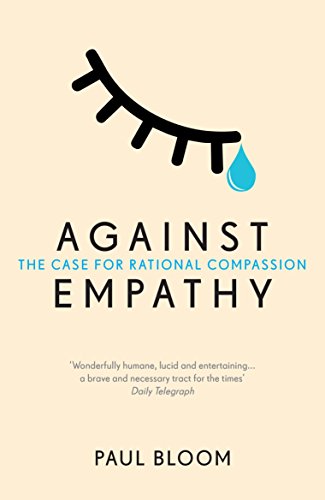
In a divided world, empathy is not the solution, it is the problem.
We think of empathy – the ability to feel the suffering of others for ourselves – as the ultimate source of all good behaviour. But while it inspires care and protection in personal relationships, it has the opposite effect in the wider world. As the latest research in psychology and neuroscience shows, we feel empathy most for those we find attractive and who seem similar to us and not at all for those who are different, distant or anonymous. Empathy therefore biases us in favour of individuals we know while numbing us to the plight of thousands. Guiding us expertly through the experiments, case studies and arguments on all sides, Paul Bloom ultimately shows that some of our worst decisions – in charity, child-raising, criminal justice, climate change and war – are motivated by this wolf in sheep's clothing.
Brilliantly argued, urgent and humane, Against Empathy overturns widely held assumptions to reveal one of the most profound yet overlooked sources of human conflict.
"synopsis" may belong to another edition of this title.
About the Author
Paul Bloom is Professor of Psychology at University of Toronto and the Brooks and Suzanne Ragen Professor Emeritus of Psychology at Yale University. His research explores the psychology of morality, identity and pleasure. Bloom is the recipient of multiple awards and honours, including most recently the million-dollar Klaus J. Jacobs Research Prize. He has written for scientific journals such as Nature and Science, and for the New York Times, New Yorker, Atlantic and Guardian. He is the author or editor of eight books, including Just Babies, How Pleasure Works, Descartes' Baby, Against Empathy and most recently The Sweet Spot.
"About this title" may belong to another edition of this title.
Search results for Against Empathy: The Case for Rational Compassion

Stock Image
Against Empathy: The Case for Rational Compassion
Seller: World of Books (was SecondSale), Montgomery, IL, U.S.A.
Seller rating 5 out of 5 stars

Paperback. Condition: Good. In a divided world, empathy is not the solution, it is the problem. We think of empathy ? the ability to feel the suffering of others for ourselves ? as the ultimate source of all good behaviour. But while it inspires care and protection in personal relationships, it has the opposite effect in the wider world. As the latest research in psychology and neuroscience shows, we feel empathy most for those we find attractive and who seem similar to us and not at all for those who are different, distant or anonymous. Empathy therefore biases us in favour of individuals we know while numbing us to the plight of thousands. Guiding us expertly through the experiments, case studies and arguments on all sides, Paul Bloom ultimately shows that some of our worst decisions ? in charity, child-raising, criminal justice, climate change and war ? are motivated by this wolf in sheep's clothing.Brilliantly argued, urgent and humane, Against Empathy overturns widely held assumptions to reveal one of the most profound yet overlooked sources of human conflict. Seller Inventory # 00110277397
Seller Image
Against Empathy: The Case for Rational Compassion
Seller: WeBuyBooks, Rossendale, LANCS, United Kingdom
Seller rating 5 out of 5 stars
paperback. Condition: Very Good. Most items will be dispatched the same or the next working day. A copy that has been read, but is in excellent condition. Pages are intact and not marred by notes or highlighting. The spine remains undamaged. Seller Inventory # rev2856439550
Buy Used
£ 1.73
£ 5.07 shipping
Ships from United Kingdom to U.S.A.
Ships from United Kingdom to U.S.A.
Quantity: 1 available
Stock Image
Against Empathy: The Case for Rational Compassion
Seller: AwesomeBooks, Wallingford, United Kingdom
Seller rating 5 out of 5 stars
paperback. Condition: Very Good. Against Empathy: The Case for Rational Compassion This book is in very good condition and will be shipped within 24 hours of ordering. The cover may have some limited signs of wear but the pages are clean, intact and the spine remains undamaged. This book has clearly been well maintained and looked after thus far. Money back guarantee if you are not satisfied. See all our books here, order more than 1 book and get discounted shipping. Seller Inventory # 7719-9780099597827
Buy Used
£ 3.49
£ 4.12 shipping
Ships from United Kingdom to U.S.A.
Ships from United Kingdom to U.S.A.
Quantity: 2 available
Stock Image
Against Empathy: The Case for Rational Compassion
Seller: WorldofBooks, Goring-By-Sea, WS, United Kingdom
Seller rating 5 out of 5 stars
Paperback. Condition: Fair. A readable copy of the book which may include some defects such as highlighting and notes. Cover and pages may be creased and show discolouration. Seller Inventory # GOR011991824
Buy Used
£ 2.50
£ 5.60 shipping
Ships from United Kingdom to U.S.A.
Ships from United Kingdom to U.S.A.
Quantity: 1 available
Stock Image
Against Empathy: The Case for Rational Compassion
Seller: WorldofBooks, Goring-By-Sea, WS, United Kingdom
Seller rating 5 out of 5 stars
Paperback. Condition: Very Good. The book has been read, but is in excellent condition. Pages are intact and not marred by notes or highlighting. The spine remains undamaged. Seller Inventory # GOR009089186
Buy Used
£ 2.50
£ 5.60 shipping
Ships from United Kingdom to U.S.A.
Ships from United Kingdom to U.S.A.
Quantity: 5 available
Stock Image
Against Empathy : The Case for Rational Compassion
Seller: Better World Books Ltd, Dunfermline, United Kingdom
Seller rating 5 out of 5 stars
Condition: Good. Former library copy. Pages intact with minimal writing/highlighting. The binding may be loose and creased. Dust jackets/supplements are not included. Includes library markings. Stock photo provided. Product includes identifying sticker. Better World Books: Buy Books. Do Good. Seller Inventory # 18806992-20
Buy Used
£ 5.01
£ 5 shipping
Ships from United Kingdom to U.S.A.
Ships from United Kingdom to U.S.A.
Quantity: 1 available
Stock Image
Against Empathy: The Case for Rational Compassion
Seller: Reuseabook, Gloucester, GLOS, United Kingdom
Seller rating 5 out of 5 stars
Paperback. Condition: Used; Good. Dispatched, from the UK, within 48 hours of ordering. This book is in good condition but will show signs of previous ownership. Please expect some creasing to the spine and/or minor damage to the cover. Aged book. Tanned pages and age spots, however, this will not interfere with reading. Damaged book. Slightly damaged in some way typically, a grazed corner or torn cover. Seller Inventory # CHL10920580
Buy Used
£ 3.64
£ 7 shipping
Ships from United Kingdom to U.S.A.
Ships from United Kingdom to U.S.A.
Quantity: 1 available
Stock Image
Against Empathy: The Case for Rational Compassion
Seller: Bahamut Media, Reading, United Kingdom
Seller rating 4 out of 5 stars

paperback. Condition: Very Good. This book is in very good condition and will be shipped within 24 hours of ordering. The cover may have some limited signs of wear but the pages are clean, intact and the spine remains undamaged. This book has clearly been well maintained and looked after thus far. Money back guarantee if you are not satisfied. See all our books here, order more than 1 book and get discounted shipping. Seller Inventory # 6545-9780099597827
Buy Used
£ 3.78
£ 6.98 shipping
Ships from United Kingdom to U.S.A.
Ships from United Kingdom to U.S.A.
Quantity: 2 available
Stock Image
Against Empathy
Seller: HPB-Ruby, Dallas, TX, U.S.A.
Seller rating 5 out of 5 stars
Paperback. Condition: Very Good. Connecting readers with great books since 1972! Used books may not include companion materials, and may have some shelf wear or limited writing. We ship orders daily and Customer Service is our top priority! Seller Inventory # S_482549156
Seller Image
Against Empathy : The Case for Rational Compassion
Seller: GreatBookPrices, Columbia, MD, U.S.A.
Seller rating 5 out of 5 stars
Condition: As New. Unread book in perfect condition. Seller Inventory # 30145664