
Items related to Forgotten Voices of the Great War (Bca Edition): A...
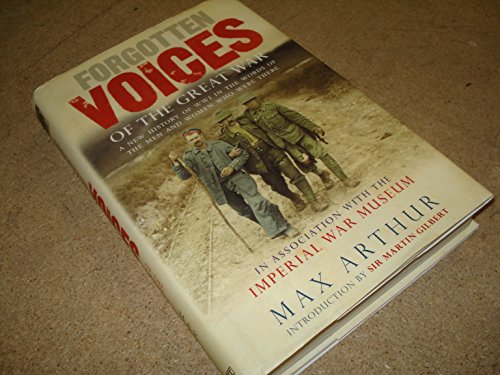
Forgotten Voices of the Great War (Bca Edition): A New History of World War I in the Words of the Men and Women Whowere There - Hardcover
Synopsis
In 1960, the Imperial War Museum began a momentous and important task. A team of academics, archivists and volunteers set about tracing WWI veterans and interviewing them at length in order to record the experiences of ordinary individuals in war. The IWM aural archive has become the most important archive of its kind in the world. Authors have occasionally been granted access to the vaults, but digesting the thousands of hours of footage is a monumental task. (There are over 2,500 interviews, some as long as 20 hours long). As a result, those seeking first person quotations for their works have only used a tiny fraction of the available pre-transcribed material. Now, forty years on, the Imperial War Museum has at last given author Max Arthur and his team of researchers unlimited access to the complete WWI tapes. These are the forgotten voices of an entire generation of survivors of the Great War. Their stories have rested unheard for almost half a century, and nearly all of those interviewed have since passed away. The resulting book is an important, unique and compelling story of WWI in the words of those who experienced it. Destined to become one of the non-fiction reads of 2002 and a classic for years to come.
"synopsis" may belong to another edition of this title.
Review
Max Arthur's compilation of First World War memories, Forgotten Voices of the Great War, offers a reminder of the scale of human experience within the 1914-18 conflict. Arthur, a military historian best known for his history of the RAF and his account of the Falklands campaign in 1982, has assembled hundreds of excerpts from the sound archives of the Imperial War Museum. Officers, rank-and-file troops, Australians, Americans, war widows, women in the munitions factories, and German soldiers too, all left oral testimony of their experiences, and these interviews provide the basis of the book. Arthur has put them in chronological and campaign order, and provided a general commentary, but beyond that, has left the rich and moving record to speak for itself.
The sheer humdrum ordinariness of modern warfare--the mud and rain, the relentless loss of life and inevitability of death, the pointless routine of attrition--come over in the matter-of-fact recollections of so many. But so too does the humanity and morality of the ordinary soldier--a factor that rather belies the recent emphasis amongst some historians on how soldiers loved to kill. Arthur might have intruded more. No biographical information is given about the owners of these "voices", nor does he say when, where and how this oral testimony was gathered.
These quibbles aside this is a worthwhile read and should encourage people not only to observe a minute's silence on Remembrance Day, but also to spend a few hours in the Imperial War Museum itself. --Miles Taylor
Review
‘..this is pure oral history: real people telling their own stories – with heart rendering, sometimes blood-chilling immediacy.’ -- The Times
‘These first-hand accounts exert a grip as powerful as the poems of the illustrious but now distant Sassoon and Owen.’ -- Carole Mansur, Daily Telegraph
"About this title" may belong to another edition of this title.