
Items related to Living Aboard Your Rv, 4th Edition (INTERNATIONAL MARINE-RMP...
Synopsis
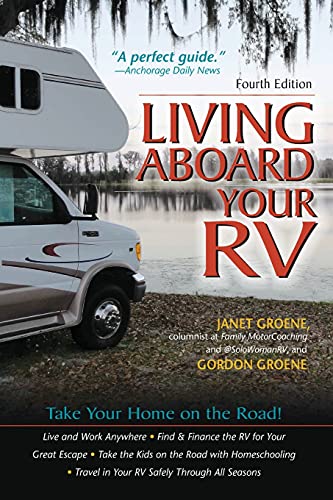
THE COMPLETE GUIDE TO A FABULOUS LIFE ON WHEELS
Imagine a life with no deadlines, no neighbors, no leaves to rake, and no lawn to mow. The open road beckons, and your home goes with you wherever you travel. Welcome to the world of fulltime RVing--self-sufficient, comfortable, and mobile. Living Aboard Your RV will help you decide if this lifestyle is the right choice for you, taking you through every step of hitting the road fulltime.
The fourth edition of this unique RV bestseller includes:
- The latest information and updated photos of new RV models and trends, especially the growing popularity of RV life for young families and people who make a living on the go
- What you need to know when choosing the best RV and equipment for your needs
- Expert advice for maintaining and securing your RV
- Fresh tips and new techniques for homeschooling your kids and keeping them involved and learning on the road
- How to use the Internet to keep in touch, make a living, manage your finances, and more
"Janet Groene inspired me to use my RV galley for living, not just making a sandwich. Novice RVers and veterans alike need Living Aboard Your RV." -- CHERYL NORMAN, RVer, award-winning crime novelist,and author of Hasty Tasty Meals in an RV
"If any of our family or friends were contemplating becoming fulltime RVers, the first thing I would give them is this book." -- Camping & RV
"Anyone who has dreamed of living on the road with a recreational vehicle will find Living Aboard Your RV invaluable in planning and living the lifestyle. Once again, author Janet Groene, with her vast experience as a fulltime RVer, has put all the essential information in one volume, making this a must-have for aspiring fulltimers. Even those who plan to travel only a few months of the year--or seasonally--should read this. We expect this new edition to be a bestseller at RVbookstore.com, just like the last one." -- CHUCK WOODBURY, RVbookstore.com
"synopsis" may belong to another edition of this title.
About the Authors
An award-winning travel writer/photographer team, Janet and Gordon Groene spent more than 10 years as full-time wanderers, living aboard a boat in the summer and 21-foot motorhome in the winter. Janet writes a nationally syndicated newspaper column about RVing. The Groenes have collaborated on more than a dozen travel books, 9 of which are still in print, and are at work on three other guides due out next year. Their writing has appeared in publications such as Ladies Home Journal, Travel America, Miami Herald, Providence Journal, and Family Motor Coaching.
Janet Groene has been a full-time freelance writer and author for thirty years. She is the co-author of Living Aboard Your RV, and author of many other titles. Additionally, she's the author of the long-running column Cooking on the Go for Family Motor Coaching magazine. Janet and her husband have lived full time on the go for many years now, splitting their time between cruising the tropics in their sailboat in the winter and cooling off on the mountains in summer aboard their twenty-one-foot RV. HOMETOWN: DeLand, FL
Excerpt. © Reprinted by permission. All rights reserved.
LIVING ABOARD YOUR RV
By Gordon Groene, Janet GroeneThe McGraw-Hill Companies, Inc.
Copyright ©2012 The McGraw-Hill Companies, Inc.
All rights reserved.
ISBN: 978-0-07-178473-3All rights reserved.
Contents
| Preface | |
| 1 Song of the Open Road | |
| 2 Get Ready | |
| 3 Fulltimer Case Histories | |
| 4 The Cost of RV Living | |
| 5 Where's Home? | |
| 6 Making the Break | |
| 7 Choosing a Home on Wheels | |
| 8 Equipping Your RV Home Your Way | |
| 9 Rest Insured | |
| 10 Managing Money on the Go | |
| 11 Keeping in Touch | |
| 12 Kids on Board | |
| 13 The Fulltimer's Pets | |
| 14 Driving the Big Ones | |
| 15 Mini-Hobbies for Your Mini-Home | |
| 16 Home, Sweet Campground | |
| 17 Put the RV in ConseRVation | |
| 18 Portable Professions | |
| 19 The Mysteries of Mobile Medicine | |
| 20 Housecleaning on Wheels | |
| 21 Tools for the Fulltimer | |
| 22 Your RV's Engine and Drive Train | |
| 23 Maintaining Your RV's Utility Systems | |
| 24 Safety and Security | |
| 25 The End of the Road | |
| Appendix 1 Useful Contacts and Addresses | |
| Appendix 2 What's Available in RVs | |
| Index |
Excerpt
CHAPTER 1
Song of the Open Road
We woke up to a thin, cold dawn and the pounding of a patrolman's fist on ourcamper door.
"Move along," he said, not unkindly. "I've let you sleep since two o'clock thismorning, but it's six now and time you hit the road."
No, we weren't homeless alcoholics sleeping off a cheap drunk under a tent ofyesterday's newspapers. We were young, able, self-sufficient adventurers who hadstopped late the night before in a highway rest plaza, and we had overslept thetwo-hour limit.
Our visit from that policeman was just another in a long series of remindersthat in shedding our old style of life and adopting a new role as full-timewanderers we had shed a lifelong mantle of respectability. Our new life baffledsome people, amused others, and enraged more than a few.
What had we gotten ourselves into?
What It's Got, What It's Not
Close your eyes and picture the free, roving life on wheels. Immediately youimagine a cozy, self-contained camper beside a rushing, trout-packed brook. Youhave no deadlines, no lawn to mow, no leaves to rake, no committees, noneighbors to be stuck with year after year. You fantasize about a life with noties, no traps, no taxes. The full-time RV life is all you hope for and much,much more. But it also means a break with treasured possessions, with status,with symbols, with Your Place In Life.
Can you handle it?
The RV itself is a red flag in the faces of politicians in some cities, wherespecial laws have been passed against RVs simply because they are RVs. In somecommunities you can't park an RV at the beach or the park even if it fits in acar-size parking place. Other communities have laws prohibiting RVs from stayingwithin the city limits overnight, and a few don't want you in townanytime. There have been times when we have been hassled, threatened,vandalized, and humiliated.
It isn't our aim to talk you out of following our mud flaps, but we do want toprick your dream balloon enough to bring you back to treetop level. Knowing thatthere will be bitter with the better will help you to make necessary adjustmentsin yourself, in your dealings with society, and in your relationships withfamily and spouse.
In the Beginning
For us it all began in Danville, Illinois, where Gordon was a professional pilotfor a large corporation. He liked the company and the job, and he valued hisprofessional relationship with his coworkers. We both liked friendly littleDanville, which was large enough to have good shopping and a nice mix of people,yet small enough that I could do most of my shopping by bicycle. We were onlyten minutes from the airport, our church, or a night on the town and an hourfrom a major university town with theater and concerts.
Still, we began to toy with the idea of early retirement. One of our friends haddied of a heart attack at 41, another of leukemia at 38. What if time ran outbefore the traditional retirement age of 65?
The Ties That Bind
You're probably wondering how we could even think of dropping off the edge ofthe world with all the family obligations one usually has at that stage in life.First it's the children, then the grandchildren, then the care of your elderlyparents—an unending treadmill of obligations. However, people differ inhow they handle such "obligations."
We met some young parents who became full-time travelers not despitetheir children but because of them—either because they wanted tospend precious years traveling and learning together while the kids were youngor because they were determined to get their children out of an environment theyperceived as too materialistic, too violent, or otherwise not up to thestandards they wanted for their families.
Homeschooling, once just an oddball way of educating kids whose parents weremissionaries or who traveled with the circus, is being used today by thousandsof parents at home and on the go. Most feel that they can provide a bettereducation than the schools can, citing such public-school problems as weapons,drugs, and overcrowded classrooms. With "home" schooling now available,affordable, and growing in popularity, children can travel full-time and stillget a first-class education.
We've met many liveaboard children who have received some or all of their earlyschooling through homeschooling, and there wasn't a brat or a dunce in thebunch. Do an Internet search on "home school" or "homeschool" and you'll uncovera huge treasure trove of accredited schools, learning options, resources, andsupport groups. Do your homework to make sure you get the best program for thebest price, with the most portable and credible credits for your child's futurecareer or entry into college.
If you own real estate check with your local school district, which may offerfree homeschooling programs providing you return once a year or meet otherrequirements. Do an Internet search for almost any homeschool topic from "home-school+prom"to "homeschool+math+tutor" to "homeschool+Lutheran" and you'll finda wealth of material ranging from free courses to forums specific to that topic.See chapter 12.
It's true that many people prefer to stay put until their children are grown.Others feel that they must stay with elderly parents, a shut-in sibling, or afamily business or farm. One of today's most common dilemmas is that of the"sandwich" generation, in which middle-aged people are saddled with the care oftheir aged parents just when their own children get divorced and move back homewith their children.
We've heard just about all the reasons why you can't go. They range from verygood ones to mere cop-outs. The truth is that you probably can take to the roadin an RV if you and your spouse or companion(s) or family make the effort towork it out.
If you think you can't go because you don't have a spouse or family totravel with, think again. Legions of singles, both men and women—widowed,divorced, never married, available, and unavailable—are out therefulltiming and having the time of their lives.
Hundreds of examples show that you can do it—alone or together,young or old, as a couple or with a group—as long as everyone is on thesame wavelength.
"But," you say, "I'm handicapped." Fulltiming is not only possible for you, it'ssometimes the best choice for persons with many types of disabilities.For one thing, it is the only lifestyle that allows the physically challenged ofany age to enjoy their share of camping, fishing, and sightseeing in our stateand national parks.
Financial problems? Fulltiming can cost pearls or peanuts, and we'll tell youhow.
Career not portable? We've met fulltimers with a variety of professions, frompublishing to plant care, catering to wood carving. The Internet makes itpossible to conduct business in thousands of fields, no matter where you live.
In the pages that follow, we focus on the who, why, when, where, and how of thisvery possible dream.
What Kind of Fulltiming Life for You?
RV living is not one lifestyle but many. Much of your happiness and success infull-timing depends on finding just the right niche for yourself. For manypeople the camping itself is the whole nine yards. They delight in campingclubs, camp meetings, RV shows, RV rallies, group caravans, and campground get-togethers.
At the opposite end of the spectrum are those who camp to get away from it all.They avoid destination campgrounds and memberships because they don't want toclump with other campers. They may be good neighbors, always willing to pitch inon a project or lend a hand with a repair problem, but they don't want to minglewith other RVers, either because they prefer to keep to themselves entirely orbecause they have a very full life quite separate from the camping scene.
Fulltimers come from all income and age brackets. Some are financiallyindependent retirees; some have reached retirement age but must work at leastpart-time. Some work at professions that require them to live in one place forseveral months at a time. Others live in an RV because it provides a movablehome while they pursue some special hobby or profession, such as sports carracing, fishing tournaments, surfing, lecturing, archaeology, working carnivalsor rodeos, or creating and selling artwork or crafts.
Some fulltimers are constantly on the move, never content to stay in one spotfor long and always excited about what they'll find around the next bend. Somecamp in one campground each summer and in another every winter. Still others buya campsite and rarely leave it. For us, the motorhome makes a comfortable homeand office when we're on assignment as a travel-writing team, but we've neverattended an RV rally (where thousands of rigs gather for a few days of tradingtips and camaraderie) or participated in an RV caravan (where a group of RVers,led by a trailmaster, travel together).
For some, the RV is merely the vehicle (pardon the pun) that serves a particularlifestyle. For you, the RV alone may provide the life you're seeking. We're allpart of the camping family, so vive la différence!
Exploding Some Myths
Before you get too far into your planning, we may as well hit you with some hardrealities, the kinds of things you don't read about in the ads.
Myth: By living in an RV full time you can live on almostnothing.
Reality: Fuel, oil, tires, insurance, and turnpike fees costmore all the time. Campgrounds are rarely free; it's not uncommon now to pay $60per night. You can't outrun the insatiable tax collector either. You'll paytaxes on almost everything you use or buy on the go: sales taxes when you buythe vehicle, yearly license fees, property taxes (because they are reflected incampground rates), and federal income taxes.
Myth: Wanderers have no responsibilities, no cares, no problems.
Reality: You'll have most of the same problems you've alwayshad—staying on a diet, cooking and cleaning, making ends meet, doing theChristmas shopping, touching up the gray, grooming the poodle—plus manynew ones, such as finding acceptable campsites, staying alive on the highway,and getting along with your mate in less space than a German shepherd isallotted at the dog pound. You'll be living in a very complex "house," thatincludes living quarters, sewer, waterworks, engine, and chassis, all of whichyou'll have to manage yourself.
Myth: It'll be like a second honeymoon, just the two of you onan endless highway of travel delights.
Reality: After a couple of weeks in close quarters you may startthinking about divorce, if not murder.
Myth: No more winter.
Reality: It is possible to follow the seasons, but so do crowdsand high prices. On the other hand, if you stay in a cold climate in winter,heating costs will be high and comforts elusive. Each of us must find his or herown affordable, practical, geographic comfort zone.
Myth: Wide-open spaces.
Reality: Only in RV ads is one camper given exclusive rights tothe entire Grand Canyon. In most campgrounds you'll be closer to your neighborsthan you ever were back home.
Myth: Personal problems will melt away once you're on the road.
Reality: Troubles are an unseen trailer that follows all of useverywhere. If you're in a bad marriage, are in debt over your head, or areaddicted to harmful substances or habits, fulltiming won't change you. Look atthe RV life as an avenue to new adventures and successes, not as an escape. Itisn't one.
We thrived on fulltiming for ten happy years. If there is a secret to oursuccess, it's that we not only expected difficulties but welcomed newchallenges. In exchange for the hardships of full-time travel we formedpriceless friendships with folks in many states and nations, and we were freedfrom former careers to develop an entirely new life as freelance writers. Bestof all, all those miles of roaming allowed us to live in many parts of thecountry and take a leisurely assessment of them before deciding where to putdown roots.
No matter how flexible you are, changing your lifestyle is a tough assignment.In the following pages we'll try and help you through the roadblocks,breakdowns, detours, and potholes ahead.
CHAPTER 2
Get Ready
Exactly how can you begin preparing, right now, for a fulltiming life that maybe months or even years away? First, get your priorities straight. Sit down withyour loved ones and decide what really matters to you. Then take the followingapproach to making your dream a reality.
Test the Waters
If your goal really is to live and travel in your RV, stop fantasizing and trythe real thing. Rent or borrow a suitable rig and take off for as long aspossible. (For more on choosing an RV, see chapter 7, Choosing a Home onWheels.) A trial run may sound expensive, but it's a bargain compared with whatit will cost to quit your job, sell everything you own, take off in an RV, andthen find out you hate the new life and want to recapture the old one. We metone couple who took off with great zest and fanfare. They flitted across thecountry visiting all their friends and partying with old army buddies and thenran out of things to do and people to visit. Somehow, they never came to termswith fulltiming as an ongoing way of life. They sold their rig at a big loss.
Stay "out there" for at least three weeks—more if possible. During thistime you'll encounter some of the realities of the fulltimer's life: rainy dayswhen you're shut in until you could scream, mechanical breakdowns, findingcampgrounds, putting up with campground neighbors, using coin laundries, gettingmail and keeping in touch with your family or business, paying bills online andkeeping an ample supply of cash, walking the dog, living in very limited space,and filling your days with meaningful activities. (Believe it or not, somepeople find it boring not to have a job and a schedule.)
At the end of this time you'll also have a good idea what expenses you'llencounter over the long term as you slip into this new lifestyle: camp fees,phone costs, fuel costs, changes in food and entertainment costs, and probablysome unpleasant surprises, such as an unexpected repair or replacement or a run-in with a nasty neighbor or uppity campground operator.
Even so, this is only a hint of true fulltiming. During this rehearsal you'llstill have a home to retreat to if things get too rough. You'll still have anaddress, an identity, perhaps a job waiting for you, and lots more elbow room inthe RV than you'll have when you're carrying everything you own. Still, it'senough of a preview to tell you, before you quit your job and sell the house, iffulltiming is what you expected it to be.
Live for Tomorrow, but Don't Sacrifice Today
From the moment we decided to change our lifestyle, we began shopping withresale in mind. Although we didn't have to give up a spacious home, good cars,occasional vacations—the good life in general—we weighed everypurchase not only for its present value but for its resale potential. We couldhave afforded a higher mortgage in a swankier section of town, but we choseinstead a big, old, five-bedroom house in a stable neighborhood near goodschools, knowing that it would sell readily to a large family when we were readyto go.
Our car was an expensive German make famous for holding its value. Gordongroomed it meticulously, washed off the salt after every winter trip, kept itgaraged, and generally treated it royally. It gave us endless hours of fun andgood service and then sold for the plum it was.
Our furniture was in solid woods, not veneers, in traditional styles that neverlose their popularity. Many pieces were antiques that we had refinishedourselves. Our appliances were good brand names. When the time came to sell out,everything brought top dollar.
That money was only part of our nest egg, but we met one family from Vermont whobankrolled an entire two-year trip for themselves and their two small daughterswith money they got by renovating and selling an old house and its antiquefurnishings.
Get Your Financial Picture in Order
It's easier said than done, but get out of debt. Start by hiding your creditcards. Don't borrow another cent for anything but a real emergency. Startmopping up all the little obligations—credit cards, time payments, pettyloans. Keep your eye on the real goal, which is fulltiming, and impulsepurchases will lose some of their luster.
Do financial planning for today and for a long line of tomorrows. One coupledidn't cut loose from "real life" until they had established trust funds to paytheir children's college tuition. Before another couple hit the road, theyhelped their elderly parents to sell a home they could no longer maintainproperly and to get into a life-care facility.
Such planning usually benefits from professional help. There are all kinds ofplanners, and the letters that follow their names can provide some clues totheir backgrounds and experience: an APFS is an accredited personal financialspecialist (a CPA who has done further study); a CFP is a certified financialplanner; a CPA is a certified public accountant (be sure to find one who hasadditional training in financial planning); and an MFS, or master of financialscience, has a master's degree in investment planning. Financial advisors mayhave other credentials, but often these apply to specialties, such as pensionsor insurance. Be sure to choose a reputable planner; try asking friends for arecommendation.
We went to a fee-only financial planner—one who doesn't also sell stocks,insurance, or other financial products—to get unbiased advice. TheNational Association of Personal Financial Advisors recommends interviewing atleast two individuals from different fee-only firms before making a choice. Feesare usually per hour or per consultation; expect to pay $1,000 for a one-timefinancial inventory.
(Continues...)
(Continues...)
Excerpted from LIVING ABOARD YOUR RV by Gordon Groene. Copyright © 2012 by The McGraw-Hill Companies, Inc.. Excerpted by permission of The McGraw-Hill Companies, Inc..
All rights reserved. No part of this excerpt may be reproduced or reprinted without permission in writing from the publisher.
Excerpts are provided by Dial-A-Book Inc. solely for the personal use of visitors to this web site.
"About this title" may belong to another edition of this title.
Search results for Living Aboard Your Rv, 4th Edition (INTERNATIONAL MARINE-RMP...

Stock Image
Living Aboard Your RV, 4th Edition
Published by
International Marine/Ragged Mountain Press, 2012
ISBN 10: 007178473X
ISBN 13: 9780071784733
Used
Softcover
Seller: World of Books (was SecondSale), Montgomery, IL, U.S.A.
Seller rating 5 out of 5 stars

Condition: Very Good. Item in very good condition! Textbooks may not include supplemental items i.e. CDs, access codes etc. Seller Inventory # 00100256276
Stock Image
Living Aboard Your RV, 4th Edition
Published by
International Marine/Ragged Mountain Press, 2012
ISBN 10: 007178473X
ISBN 13: 9780071784733
Used
Softcover
Seller: World of Books (was SecondSale), Montgomery, IL, U.S.A.
Seller rating 5 out of 5 stars
Condition: Good. Item in good condition. Textbooks may not include supplemental items i.e. CDs, access codes etc. Seller Inventory # 00095106781
Stock Image
Living Aboard Your RV, 4th Edition
Published by
International Marine/Ragged Mountain Press, 2012
ISBN 10: 007178473X
ISBN 13: 9780071784733
Used
Softcover
Seller: World of Books (was SecondSale), Montgomery, IL, U.S.A.
Seller rating 5 out of 5 stars
Condition: Acceptable. Item in acceptable condition! Textbooks may not include supplemental items i.e. CDs, access codes etc. Seller Inventory # 00108212200
Stock Image
Living Aboard Your RV, 4th Edition
Published by
International Marine/Ragged Mountain Press (edition 4), 2012
ISBN 10: 007178473X
ISBN 13: 9780071784733
Used
Paperback
Seller: BooksRun, Philadelphia, PA, U.S.A.
Seller rating 5 out of 5 stars
Paperback. Condition: Very Good. 4. It's a well-cared-for item that has seen limited use. The item may show minor signs of wear. All the text is legible, with all pages included. It may have slight markings and/or highlighting. Seller Inventory # 007178473X-11-1
Stock Image
Living Aboard Your RV, 4th Edition
Published by
International Marine/Ragged Moun, 2012
ISBN 10: 007178473X
ISBN 13: 9780071784733
Used
Paperback
Seller: Once Upon A Time Books, Siloam Springs, AR, U.S.A.
Seller rating 4 out of 5 stars

Paperback. Condition: Good. This is a used book in good condition and may show some signs of use or wear . This is a used book in good condition and may show some signs of use or wear . Seller Inventory # mon0000515870
Stock Image
Living Aboard Your RV, 4th Edition
Published by
International Marine/Ragged Mountain Press, 2012
ISBN 10: 007178473X
ISBN 13: 9780071784733
Used
Softcover
Seller: Wonder Book, Frederick, MD, U.S.A.
Seller rating 5 out of 5 stars
Condition: Very Good. Very Good condition. 4th edition. A copy that may have a few cosmetic defects. May also contain light spine creasing or a few markings such as an owner's name, short gifter's inscription or light stamp. Seller Inventory # E19A-02278
Stock Image
Living Aboard Your Rv, 4th Edition
Published by
International Marine Publishing, 2012
ISBN 10: 007178473X
ISBN 13: 9780071784733
Used
Paperback
Seller: ThriftBooks-Phoenix, Phoenix, AZ, U.S.A.
Seller rating 5 out of 5 stars
Paperback. Condition: Very Good. No Jacket. May have limited writing in cover pages. Pages are unmarked. ~ ThriftBooks: Read More, Spend Less. Seller Inventory # G007178473XI4N00
Stock Image
Living Aboard Your Rv, 4th Edition
Published by
International Marine Publishing, 2012
ISBN 10: 007178473X
ISBN 13: 9780071784733
Used
Paperback
Seller: ThriftBooks-Reno, Reno, NV, U.S.A.
Seller rating 5 out of 5 stars
Paperback. Condition: Very Good. No Jacket. May have limited writing in cover pages. Pages are unmarked. ~ ThriftBooks: Read More, Spend Less. Seller Inventory # G007178473XI4N00
Stock Image
Living Aboard Your Rv, 4th Edition
Published by
International Marine Publishing, 2012
ISBN 10: 007178473X
ISBN 13: 9780071784733
Used
Paperback
Seller: ThriftBooks-Dallas, Dallas, TX, U.S.A.
Seller rating 5 out of 5 stars
Paperback. Condition: Very Good. No Jacket. May have limited writing in cover pages. Pages are unmarked. ~ ThriftBooks: Read More, Spend Less. Seller Inventory # G007178473XI4N00
Stock Image
Living Aboard Your Rv, 4th Edition
Published by
International Marine Publishing, 2012
ISBN 10: 007178473X
ISBN 13: 9780071784733
Used
Paperback
Seller: ThriftBooks-Atlanta, AUSTELL, GA, U.S.A.
Seller rating 5 out of 5 stars
Paperback. Condition: Very Good. No Jacket. May have limited writing in cover pages. Pages are unmarked. ~ ThriftBooks: Read More, Spend Less. Seller Inventory # G007178473XI4N00